Early Childhood Education Newsletter September 2018

Having trouble viewing this email? View it as a Web page.

texas education agency

Early Childhood Education Newsletter

September 2018

Young Children

ECE Webinars

The Early Childhood Education Division regularly provides webinars to support professionals in the field. The last webinar held was titled “Is Your Classroom Ready for a 4-Year-Old?”. If you missed this webinar, you can find the recording on the TEA Early Childhood Webinar Page.

The next webinar titled “Use of Student Progress Monitoring Data and Reporting for Kindergarten BOY” is scheduled for September 19, 2018. Visit the TEA Early Childhood Webinar Page to register for this or other upcoming webinars.

Table of Contents


Contact Us

Jacquie Porter

Statewide Director

Early Childhood Education Division of the Texas Education Agency

Division Email

ECE Announcements

Medicaid Free/Reduced Guidance

One eligibility qualification for free prekindergarten is educationally disadvantaged status, which means a student is eligible to participate in the national free or reduced-price lunch program. A change in the national school lunch program will now allow age-eligible students who receive Medicaid Free or Medicaid Reduced benefits to be eligible for free prekindergarten by means of the same qualifier as students receiving Supplemental Nutrition Assistance Program, Disaster Supplemental Nutrition Assistance Program, or Temporary Assistance for Needy Families services.  TAA Correspondence


National School Lunch Program (NSLP)

National School Lunch Program Guidance from the Texas Department of Agriculture:

For School Year (SY) 2018-2019, USDA has approved automatic free meal eligibility for all students attending state-funded prekindergarten programs operated under the administration of the Texas Education Agency Early Childhood Program. To determine eligibility for these students, contracting entities (CEs) will need to (1) obtain an enrollment list with names of the enrolled students and official signature from the appropriate school district official or (2) verify the student’s enrollment in the state-funded prekindergarten participation if submitted on an application.

Free meals will be available to otherwise non-eligible prekindergarten students enrolled in a public prekindergarten (whether locally-funded or tuition-based), three-to-five-year-old students receiving Preschool Program for Children with Disabilities (PPCD) services, and three-to-five-year-olds enrolled, but not in membership.  TAA Correspondence

ECE News

Birth-2nd Grade Alignments

The Early Childhood Education Division is excited to announce its newest resource – Early Childhood Vertical Alignments. These resources show the vertical alignment across the Texas Early Learning Guidelines, Texas Prekindergarten Guidelines, and the kindergarten-grade 2 TEKS. Alignments are available for the following domains: language and literacy, physical health and development, health and wellness, mathematics, science, social studies, fine arts, and technology. View the alignments online here.

Parent Guides Now in SPANISH!

The Parent Guides released last month are now available in Spanish. The Parent Guides have been created to help families understand some of the things their child will learn each school year. These resource documents have been developed for Prekindergarten 3, Prekindergarten 4, Kindergarten, 1st Grade, and 2nd Grade.

The Parent Guides (English and Spanish versions) can be found on the TEA Early Childhood Family Resource Page.

Spotlight

From Parent Involvement to Parent Engagement

Sherry Palmer, Carver Early Education Center Principal

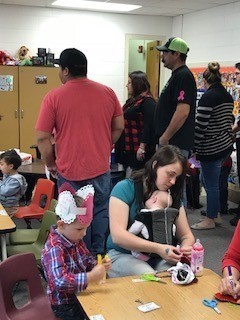
Carver Early Education Center (Ector County ISD, Odessa, Texas) began a journey 2 years ago, to move from Parent Involvement to Parent Engagement. Carver staff began to realize the difference as they studied Family/School Partnerships (Henderson, Mapp, Johnson, and Davies) and began to work with Consultant Melissa Williamson (Frog Street Press Professional Development Consultant). Carver has a track record of great family events. The staff took these events and laced each one with opportunities to teach families and students alike, link all they did with the philosophy of “linked to learning,” as well as place decisions regarding education in families’ hands. Rapidly, Carver staff realized they must go a step further to assist their families to begin to make a difference in the larger district educational community as they moved from Carver into different elementary schools. The practice of Academic Parent Teacher Team (APTT) Meetings was the platform chosen to catapult families toward setting goals beyond their own students to setting goals for the entire class. These meetings were data-driven. They included goal setting, teachers teaching parents and parents teaching parents and teachers. The APTT Meetings have become a movement at Carver and beyond to improve the education in our community.  APTT Meetings have changed the landscape of our school and command an impressive attendance at each meeting. Last spring, 457 of the 605 Carver families took part in these meetings. The foundation for this work was built over time with a series of professional development for staff, staff plus parents, parent leaders and finally parent leaders alongside recruited parents. 


Parents and Children in Class

The Academic Parent Teacher Team Meeting process is not the latest trend in attempting to engage parents in their student’s education. It is, rather, a model designed to create a community comprised of families and educators who will take on the responsibility of supporting the academic success of all children. Teachers invite and host an APTT Meeting at least two times per year. In the first meeting in early fall, the teacher and parents collaboratively study data at the classroom and individual level. After data study, the group chooses a critical skill determined to be essential to the success of all students. A classroom goal is set by the group. An individual student goal is set by the parents in collaboration with the teacher in a confidential manner. When goals have been agreed upon and set, the parents and teacher share ideas, strategies and activities to teach and support the skill toward goal attainment. Parents commit to utilize the strategies with which they feel comfortable. The second meeting is held mid-spring. Class and individual achievement data highlighting the chosen skill is reported. The team celebrates, sets another goal and shares additional strategies.

Each classroom team reported success on the goals they chose as measured by CIRCLE testing last year.

The 2017-2018 year was Carver’s initial year to engage in the APTT meeting process. Staff and Leadership collaborated with Melissa Williamson, Frog Street Press consultant, beginning Spring 2017 through Fall 2017. Coaching occurred in Spring 2018 and a projected follow up is scheduled for Fall 2018. 

Carver Early Education Center is committed to revolutionizing our community and improving education for all students through engaging parents, giving them a voice as they begin to expect an elevated partnership with school and equipping them with tools to support achievement as they build connections with other families.