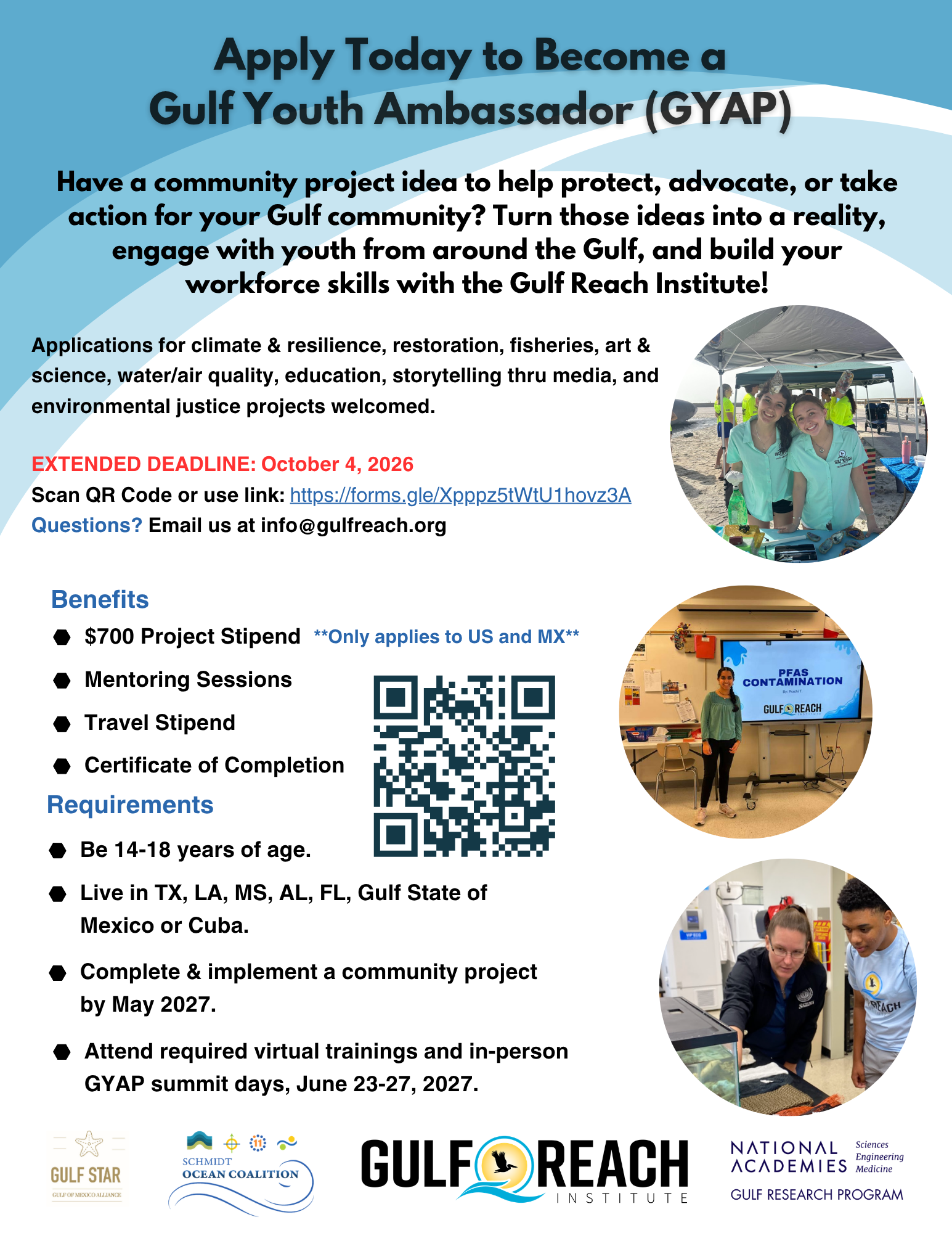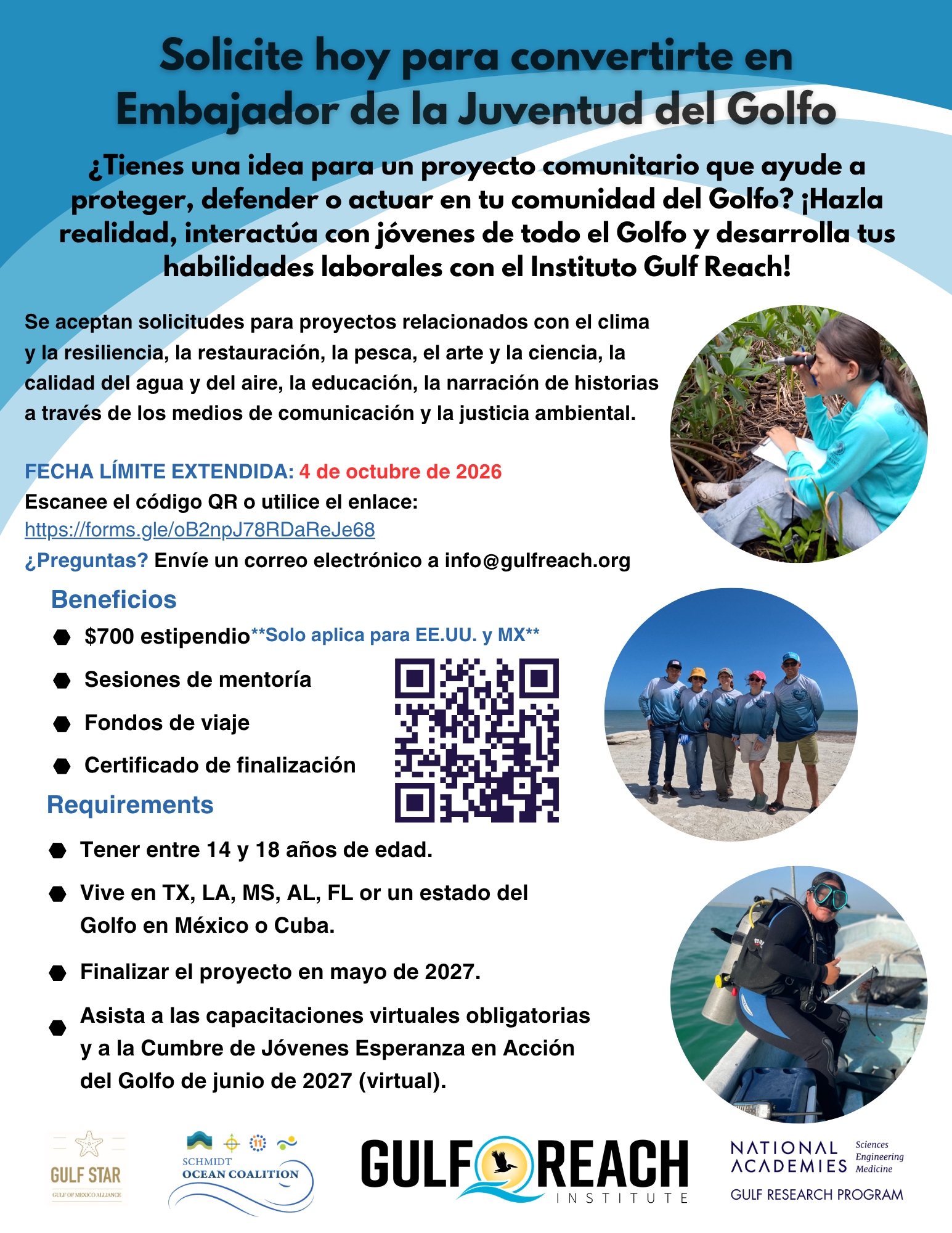
Gulf Reach Institute is accepting applications until to October 4, 2026 for the next cohort of our Gulf Youth Ambassador Program (GYAP).
The Gulf Youth Ambassador Program is a youth leadership and STEM program for students ages 14–18 who are interested in the Gulf, ocean and environmental science, community engagement, advocacy, and making a difference where they live. Students do not need to already consider themselves environmental experts or advocates. We are looking for curious, motivated young people who want to learn, bring their own experiences and ideas to the program, and create positive change in their communities.
|
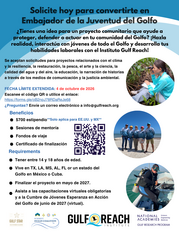
We especially encourage educators and partners to personally invite students who may not normally see themselves represented in STEM, environmental leadership, or advocacy spaces.
English application - scan QR code in top flyer or use link: https://forms.gle/Xpppz5tWtU1hovz3A
Spanish application - scan QR code in bottom flyer or use link: https://forms.gle/oB2npJ78RDaReJe68
|
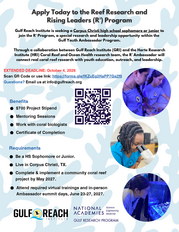
Gulf Reach Institute is seeking a Corpus Christi high school sophomore or junior to join the R³ Program, a special research and leadership opportunity within the Gulf Youth Ambassador Program.
Through a collaboration between Gulf Reach Institute (GRI) and the Harte Research Institute (HRI) Coral Reef and Ocean Health research team, the R³ Ambassador will connect real coral reef research with youth education, outreach, and leadership.
Application - scan QR code or use link: https://forms.gle/fKZuEg2HaPP7Gs2f9
|
Thank you for helping us connect more young people with opportunities to learn, lead, and help shape the future of the Gulf.
Questions, contact: info@gulfreach.org
The Gulf Literacy Principles (GLP) hope to bring awareness and understanding of the importance of the Gulf to the nation. Gulf partners developed a framework of fundamental concepts analogous to the Ocean Literacy framework, but regionally specific for the Gulf.
TPWD and partner agencies are reaching out to Texas teachers to review a draft version of TEKS crosswalk to the GLP's fundamental concepts and identify potential overlap or missed areas in TEKS.
- Seeking 2 classroom teachers
- 1 upper elementary science
- 1 high school science (aquatic science or environmental systems preferred)
- Compensation
- Each teacher will receive at least $100 for their time
- Not paid by TPWD
- Deadline to submit review: Wednesday, October 14
If interested, please contact Melissa.Felty@tpwd.texas.gov.
|
What is CAST? The Conference for the Advancement of Science Teaching is where Texas science educators come for hands-on learning during hundreds of educational sessions and workshops, a massive exhibit hall packed with tools and resources, and to build meaningful connections with science educators who believe in inspiring students to discover the world through science.
Join a TPWD session (must register for CAST)!
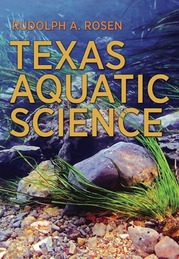
Texas Aquatic Science—Updates, Activities, and Supply Giveaways
- Friday, November 13 @ 2:00 pm
Texas Aquatic Science is a comprehensive curriculum, from molecules to ecosystems and headwaters to ocean, aligned to grades 6–8 science, aquatic science, and environmental systems TEKS. The curriculum consists of an online and hard copy student textbook, a teacher guide, videos, and supplementary materials. Join this session to review the new teacher guide, including more student worksheets, new website, participate in hands-on activities, and receive free supplies to implement activities in your classroom.
Building Gulf Literacy Principles - Cross-State Collaborations
- Saturday, November 14 @ 12:30 pm
Development of the Gulf Literacy Principles (GLP), a regionally focused version of the Ocean Literacy Principles, led to seven basic principles. Join us to review the draft GLP and fundamental concepts, share your knowledge and value of the Gulf, and identify overlap or missed areas between the GLP and the TEKS. Let your voice be heard to build a Gulf-literate society by forming the foundation for Gulf education and stewardship.
|
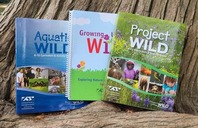
From Ponds to Oceans: Aquatic Learning with Project WILD (MS,HS)
- Saturday, November 14 @ 9:30 am
Join us to learn about how the Aquatic WILD curriculum can support water education and water topics in your classroom. Engage with 3 activities from this curriculum guide that will help you understand water distribution, land development, and conservation. Attendees will also get an overview of the 55-activity Aquatic WILD guide.
Growing Up WILD: Spider Web Wonders (PK-2)
- Saturday, November 14 @ 11:00 am
During this session we will dive into the fine motor world of creating and learning about spiders’ webs. This will be an opportunity to get a hands-on experience with the Texas Parks and Wildlife classroom resource book Growing Up WILD and to experience what one of the lessons would look like if you were to utilize it in your own classroom. Join us as we explore the world of spiders and Growing Up WILD.
|
All sessions sponsored by ISEA (Informal Science Education Association of Texas)

Texas Aquatic Science is supported by the U.S. Fish and Wildlife Service through the Sport Fish Restoration Program funds.
Know an angler or boater, thank them for contributing to aquatic education which allows TPWD to offer Texas Aquatic Science for free.
Would you like to support outdoor recreation, education, and conservation? 100% of Texas hunting and fishing license fees go to the Texas Parks and Wildlife Department for on-the-ground efforts. Aquatic habitat restoration & protection, fish stocking in Texas lakes, ponds and coastal bays, applied research for the study of freshwater and coastal fisheries, education & outreach, and access to public waters are just some of the initiatives funded in part by your license fees.
|
If you were forwarded this email and would like to receive future information about the TPWD educational opportunities, to be added to the News of the WILD distribution list.
Texas Aquatic Science l Water Education
Project WILD l TPWD Classroom Resources
Questions or comments:
Conservation Education Manager, ConservationEdu@tpwd.texas.gov
|