Aoudad in the Texas Hill Country
By: Austin Stolte, Wildlife Biologist - Val Verde County
The rugged hills, limestone cliffs, and brush-covered canyons of the Texas Hill Country are home to a surprising variety of wildlife, including Barbary sheep, more commonly known as aoudad. Native to North Africa, aoudad were introduced to Texas decades ago and have adapted remarkably well to the western 2/3’s of the state, as well as New Mexico, California, Oklahoma, and Mexico.
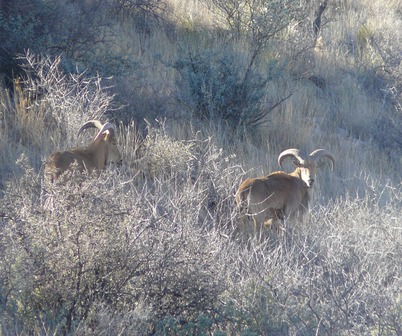
Aoudad are easily recognized by their tan to reddish-brown coats and the long hair that grows along their throat and chest called chaps. Both males and females have curved horns, although mature rams typically develop much larger, heavier horns. Their strong legs and excellent balance allow them to move quickly across steep slopes and rocky ledges that would be difficult for many other animals to navigate.
Although aoudad are often associated with the rugged country of far west Texas, established populations can be found across much of the Hill Country both in high fence and low fence settings. Aoudad are highly adaptable to various landscapes, require limited water, are skilled in avoiding predators, and have high reproductive rates, allowing their populations to expand. Like anywhere, the Texas Hill Country has carrying capacity limits and too many aoudad can have negative impacts on the vegetation, soil, and overall habitat health. Managers should watch aoudad populations closely and take action to reduce numbers if they begin observing negative impacts on the landscape.
Aoudad have also become a popular challenge for Texas hunters. They are alert, tough animals with excellent eyesight and an impressive ability to disappear into rocky or brushy terrain. Mature rams are especially prized for their heavy, sweeping horns and distinctive chaps. You will often find negative reviews about their meat quality; however not all find this to be the case. Aoudad make excellent table fare if butchered properly and serves as a great source for ground products such as hamburger and sausage.
Whether spotted high on a limestone ridge or deep in a cedar brake, aoudad have become an unmistakable part of Texas’ rugged wildlife landscape and are likely here to stay.
Up-Coming Events & Workshops
-
Plant Party: Sedges Have Hedges, Rushes are Round: September 30, 10:00am - 11:30am
-
Kerr WMA Fall Seminar: October 2, 1:00pm - 5:00pm
- Kerr WMA, Hunt, TX *RSVP Requested*
-
Wildlife Tax Valuation Workshop: October 9, 8:15am - 1:00pm
- Inks Dam National Fish Hatchery, 345 Clay Young Rd, Burnet, TX
-
Building Fire Resilience in the Hill Country: October 17, 10:00am - 3:00pm
- 110 N 17th Street, Junction, TX 76849 *RSVP Required*
Spotlight Habitat Management Practice: Oak Management & Results from an Oak Wilt Suppression Project
By: Deanna Pfeffer: Wildlife Biologist - Kerr WMA
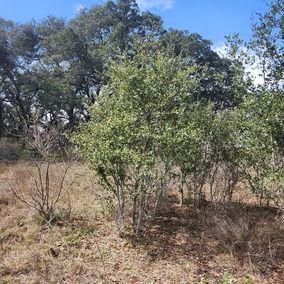
Can you really have too much of a good thing? For those of us in the Hill Country, our large, majestic live oak trees are one of the many reasons why we buy property, choose a homesite, or pick our favorite outdoor recreation areas. In parts of the Hill Country, we’ve also learned that when live oaks become too numerous, pests and diseases become a problem in those trees. Oak wilt has taken its toll in many places, especially in areas where live oak regrowth, in the form of dense motts of mid-size trees, have been allowed to take over areas that were traditionally grassland. Live oak is a species that can slowly become invasive if not managed properly.
Recently, staff at the Kerr WMA have started new projects with the objective of managing live oak regrowth in areas where it has become too thick as a mid-story species, in addition to addressing oak wilt with new techniques to suppress its spread. Oak management has taken priority in areas where they have formed large motts of smaller trees that create a monoculture over time. Creating breaks in larger motts and reducing the overall canopy became critical to maintaining and improving wildlife habitat for wildlife such as upland bird species. We chose to test practices such as mechanical mulching of oak and aerial herbicide treatments to reduce, not eradicate, the footprint of these oak motts. These practices are being followed up with additional management practices such as herbicide treatment or prescribed burning on mulched treatments and prescribed burning or mechanical removal of standing dead on herbicide treatments. We hope to have demonstratable results from these practices in a few years. As with any brush management project, results are rarely immediate and maintenance and follow-up treatments are a must!
Oak Wilt has also increased across the Hill Country, including a spot on the Kerr WMA. This fungus, once in a live oak, travels through the root system infecting trees until there is a break in the root system where there are no new trees to infect. Mechanical trenching has been the traditional method of breaking up root systems to stop the spread. We decided to aerially apply an herbicide to kill a ring of trees around our oak wilt area to stop the spread by creating a break in roots due to the dead trees instead of mechanical trenching. Using information on the rate of spread and herbicide effectiveness, we applied herbicide in a 150-foot-wide strip around our oak wilt area. After 7 years of monitoring and consultation with Texas Forest Service, we believe this treatment was as effective as a mechanical trench, with 2 breaches of the line at 6 years post treatment. Follow up treatment in those two areas will be used to try to mitigate the further spread of oak wilt. We will continue monitoring follow up treatments and hopefully report back with more news in the future!
|
From the Field: Supporting Texas Youth Hunting Program
By: Cody Stricker, Wildlife Biologist - Kendall & Blanco Counties
Calling all landowners:
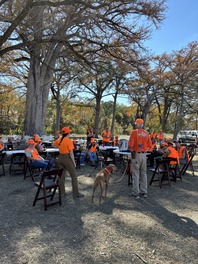
Each fall, the Texas Youth Hunting Program (TYHP) works to recruit new hunters aged 9-17 across the state. The goal of TYHP is to provide every youth in the state who wants to go hunting a safe, memorable, and educational hunt. They offer the young hunters the training, gear, education, and access necessary to become a safe and ethical hunter. TYHP works with willing landowners to coordinate the hunt, offer liability insurance, supply any needed equipment, and appoint a trained Huntmaster, guides, and cook to run the hunt.
If interested, there are many ways to support this program. Supporters can help spread the word to friends and family that may be interested in enrolling, volunteer at a hunt as a Huntmaster or guide, make a financial donation to the organization, or work with the program to host a hunt on your property. Every year, the number of youth applicants that apply exceeds the number of spots available on hunts, making land access the limiting factor for the program. The minimum requirements to host a TYHP hunt are 4 safe shooting lanes on the property/properties. If needed, TYHP can supply temporary feeders and blinds, and are equipped to camp if no other lodging is available on-site. The landowner sets the hunt dates, what game is allowed and in what quantities (doe only, does and spikes, any deer, hogs, exotics, varmints, etc.) and can request any other rules as preferred. The hunts typically start on a Friday and end after the Sunday morning hunt and clean-up.
If you have a few extra deer around and an open weekend this season, please consider the impact you can make on youth hunters that would love the opportunity to share in our hunting heritage, and provide memorable experiences that introduce them to nature, conservation, and responsible and safe hunting.
Interested in learning more?: https://tyhp.org/landowner-letter/ or call (210) 930-2177
|

Mineral Supplementation
By: Ian Witt, Wildlife Biologist - Kimble & Menard Counties
Mineral supplementation is a common practice amongst many hunters, landowners, and white-tailed deer managers and can be a useful component of a white-tailed deer management program in the Edwards Plateau. Minerals make up a relatively small portion of a white-tailed deer’s diet, but they are crucial in performing many essential biological functions. These essential functions include antler development, reproduction, lactation, and muscle and nerve function. Calcium, Phosphorus, Magnesium and Sodium are the most essential minerals that can be provided for white-tailed deer on rangelands. Calcium and Phosphorus are especially important during skeletal growth, lactation, and antler development.
There are three main ways to dispense mineral supplements for consumption: feed additives, mineral blocks, and granular minerals. The key timeframe for providing mineral supplementation is early spring through early fall, when many essential biological functions are taking place. During this time, white-tailed deer can also develop natural deficiencies due to the high potassium and water content in natural forage that is consumed on the landscape. Deer can obtain many nutrients naturally through the forage they consume, but mineral contents of plants vary greatly dependent on soil type, species, and season.
As with any type of supplementation, mineral supplementation should be viewed as a management tool, not a substitute for sound habitat management. Proper habitat management allows white-tailed deer to maximize the nutritional contents of their native forage diet. Minerals provided on rangelands can help fill nutritional gaps, however maintaining a healthy, diverse native plant community should remain the foundation of deer management in the Edwards Plateau.
|
From the WMA: What a Spring
By: Mark Mitchell, Wildlife Biologist - Mason Mountain WMA
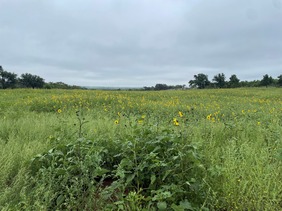
This has been a banner year for annual forbs which can produce high-quality seeds for birds. At Mason Mountain WMA, the fields that are managed for dove hunting have an exceptional stand of native sunflowers. Other high-quality seeds such as croton, ragweed, and goosefoot are abundant also.
The downside for hunters is these plants are doing well throughout the county, and birds won’t have to congregate on managed fields. The abundance of flowering plants also means an abundance of insects which translates into more food for young birds to include quail and turkey. The abundance of rainfall can have a negative impact on hunting success due to the increase in food availability.
Mason Mt WMA has 750 acres open for dove hunting with about 150 acres of fields managed for migratory birds. Native sunflowers are primarily planted for their low input and high return year after year. With minimal effort of plowing in December – February reseeding isn’t necessary once the sunflowers are established after 1-2 years. These fields can provide good hunting for dove but more importantly add to all the granivorous birds both local and migratory.
To establish a field, pick a spot that is at least 2 acres. Sandy loam seems to be a preferred soil type if possible. Plow and apply native sunflower seeds in November – January using a broadcast seeder and then a drag to lightly cover the seed.
Black oil sunflowers are typically only successful if deer are not present because deer will strip the heads when the seed is ripe. Maximillan sunflowers are established in some fields since they are late blooming sunflowers, and the color helps attract migratory birds and pollinators at a time when few other plants are blooming.
These fields will be open during the entire season for the Central Zone. In order to hunt, you need a valid hunting license with a migratory game bird endorsement, the HIP certification and an Annual Permit for Hunting (APH). There are no drawing or reservation requirements! Just show up with plenty of shells and enjoy!
|
Animal Spotlight: River Otter
By: Kirby Irvin, Wildlife Biologist - Coryell & Eastern Lampasas Counties
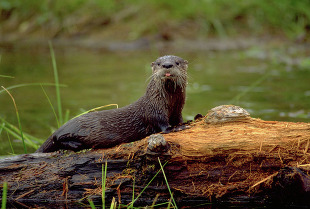
Often to the surprise of Hill Country residents and visitors alike is the presence of a long, slender creature called the River Otter (Lutra canadensis). River otters belong to the family Mustelidae which includes other species such as weasels, mink, and badgers. They spend most of their time in or near water, making the many creeks, rivers and lakes we have here in the Hill Country the perfect place to call home. River otters prefer slow moving water, abundant vegetation, and plenty of fish, which is descriptive of most of the riparian systems in our area. Considered an indicator species, the presence of river otters signals that an ecosystem is healthy and thriving.
River otters have a diverse diet including fish, crustaceans, mollusk, amphibians, reptiles, birds, and mammals. Their waterproof pelage, webbed feet, and long tail make them incredible swimmers and proficient underwater hunters. River otters are very social and playful, getting enjoyment from sliding down mud banks and splashing in the water!
Once found throughout much of Texas, River Otters now mainly inhabit the Eastern half of the state. While trapping pressure in the 19th and 20th century probably played a part in the reduction of their distribution, River Otters are very susceptible to habitat loss and water pollution. Good habitat management near riparian systems such as conscious grazing, native grass restoration, and brush control can increase the value of those areas for river otters and all other species who share the same space!
|
Follow Hill Country Wildlife on:
|