The Ever-changing Nature of Hill Country Deer Populations
By: Mike Miller, Wildlife District 5 Leader
We credit the ancient Greek philosopher Heraclitus with the phrase “Everything changes, nothing stays the same." He could have been describing white-tailed deer populations that fluctuate with changing habitat conditions. Timing and amount of rainfall largely determine forage availability, which in turn provides the nutrition that drives reproduction and herd health. As deer population size changes in response to resource availability, landowners and hunters may be left scratching their heads and wondering why they “don’t have any deer.”
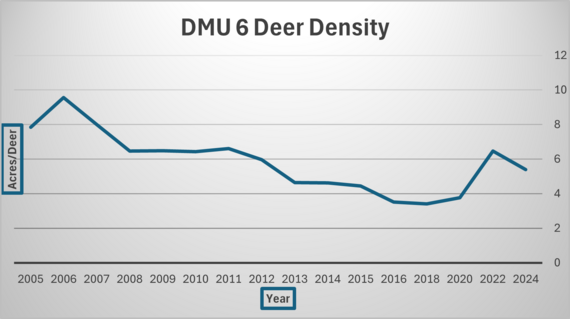
An examination of deer population trends in the Llano Uplift Region of the Texas Hill Country provides an interesting case study. For the past 16 years, the average deer density has been ~ 5.9 acres per deer (see DMU 6 Deer Density graph). However, beginning in 2016, deer populations crept higher than 4 acres per deer over a 5-year period. Although unsustainable in terms of available habitat, the high deer density established a “new normal” for many landowners and hunters who grew accustomed to viewing so many deer. Naturally, the drought conditions in 2022 reduced fawn recruitment (see DMU 6 Recruitment graph) and caused the deer population to retract. More recently, fawn recruitment and overall deer population size (5.4 acres/deer) have returned to the “old normal”, but it may leave some constituents still wondering where all the deer have gone.
When you combine precipitation with other local factors, like resource competition, predation and hunting pressure, deer populations may differ considerably even within a county. Although hunting seasons and bag limits are regulated by county, TPWD monitors white-tailed deer populations and harvest at a larger, more practical scale. This is done using Deer Management Units which are subsets of ecological regions that share similar habitat features and plant communities. Local deer populations found at a smaller scale are best monitored and managed through sound decision-making by landowners and hunters and often through cooperative management approaches like wildlife management associations.
Upcoming Events & Workshops
-
Prescribed Burn School, June 15-17, daily from 8:00am - 5:00pm
-
Bandera County Pest Update, June 23, 2:00pm - 5:00pm
- Mansfield Park Rec Hall, 2886 Hwy 16N, Bandera, TX 78003
-
Wild at Work: Disturbance for Diversity, June 24, Noon
-
Texas Prescribed Fire Field Day, September 25, 8:00am - 2:00pm
Prickly Pear Management
By: Kory Perlichek, Wildlife Biologist - Mason & McCulloch Counties
Prickly pear is one of the most recognizable, native plants in central Texas. Found throughout the Edwards Plateau, and surrounding rangelands, pricky pear thrives in hot, dry conditions and can spread quickly when pastures are overgrazed or poorly managed. Although prickly pear is beneficial to some wildlife species, it can form dense colonies that reduce the movement of livestock and their grazing capacity, compete with desirable vegetation, interfere with recreation, and create management challenges for landowners.
Prickly pear can be a nuisance and a valued plant. Persistence and a strategic, long-term commitment are needed for prickly pear control because of the plant’s ability to reproduce from both seeds and discarded pads. A single pad left on the ground can root and form a new colony, making management of this species extremely difficult. Managing prickly pear on your property can be a major headache and very frustrating at times. So, you ask yourself, “Where do I start?” The first step is to assess the severity of the infestation. Small, isolated colonies, scattered across a property, may only require grubbing or digging up these plants. Cutting the main root about 2–4 inches below the soil surface using a grub hoe or shovel is an effective method to remove individual plants. It’s best to grub during hot, dry conditions for maximum plant stress. Once grubbed, completely remove these plants from the pasture or pile the plant debris and burn later. Mechanical removal is one of the most dependable control practices for small to moderate infestations.
For large properties, selective herbicide treatments are often more practical and cost-effective. Herbicides containing picloram or fluroxypyr or a combination of both, offers 76% - 100% root kill when applied properly. The most effective method is individual plant treatments (IPT) applying herbicide directly to the pads and stems of the plant during the hot, dry months. Spot spraying individual plants instead of broadcast spraying helps protect desirable plants and minimizes environmental impacts. This method often requires 2-3 years of follow-up treatment. Prickly pear is very persistent and dies slowly, often taking 1- 2 years to see full results.
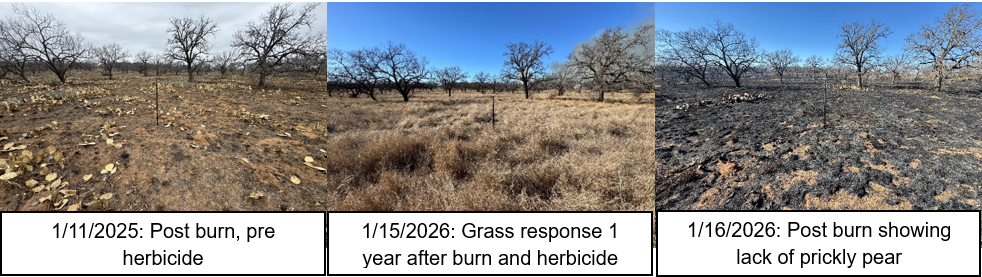
Prescribed burning can be a very useful method in controlling prickly pear in central Texas, especially when combined with follow-up herbicide treatments. Combining prescribed fire with herbicide is the most effective and economical method for managing prickly pear. Fire removes dead plant material and litter, allowing herbicides to better penetrate the plant and soil. Fire also weakens dense colonies and encourages native plant growth.
One of the most overlooked, best practices is improving the overall health of your rangelands. Prickly pear dominates areas where grass has been weakened by overgrazing or drought. Maintaining healthy grass cover, reduces open areas where prickly pear can establish and spread. Deferred rotational grazing systems, conservative stocking rates, and native grass restoration are critical for long-term management. Improving rangeland health significantly reduces future prickly pear problems.
Although prickly pear management has many challenges, it does provide important ecological value such as providing food and shelter for a variety of wildlife species such as quail, turkey, deer, pollinators, and others. Many landowners choose selective thinning instead of complete eradication. Maintaining balanced cactus populations can support both productive grazing and healthy wildlife habitat.
Balancing Energy Development and Wildlife Habitat in Texas
By: Rachel Douglass, Wildlife Biologist - Concho & Coleman Counties
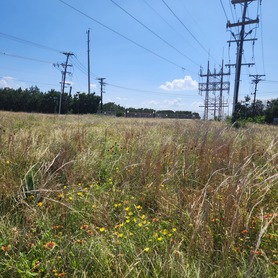
Balancing urban and energy growth with wildlife conservation is a significant challenge across Texas. Large-scale solar facilities, transmission lines, data centers, and related infrastructure are transforming landscapes and directly affecting many landowners. These changes often stir strong emotions over land use, property values, and impacts to native wildlife.
Each project type follows its own approval pathway. Most solar farms and data centers are privately funded and face primarily local regulation. Developers secure leases or purchase land, then obtain zoning and permitting approvals from city or county offices. In contrast, transmission lines that cross multiple properties require approval from the Public Utility Commission of Texas (PUCT) through a Certificate of Convenience and Necessity (CCN) process. These typically involve private environmental consultants who evaluate routes using wildlife databases and habitat models to find the least disruptive option. Planning often begins years before public notification. For transmission projects, the PUCT provides opportunities for landowners to file protests, voice specific concerns, or formally intervene in proceedings.
Texas Parks and Wildlife Department (TPWD) plays a valuable but limited role. TPWD is not a regulatory or permitting agency for such developments. Its primary function is to provide science-based recommendations that protect fish and wildlife resources to the local, state, and federal agencies that issue permits. There is no automatic requirement for developers to notify or consult TPWD unless the permitting agency mandates it.
Landowners facing potential easements can take proactive steps to protect and improve habitat. Negotiate wildlife-friendly terms during easement discussions, such as using native grasses and forbs for reseeding disturbed areas. While easements often require brush clearing, this can benefit wildlife in overgrown regions by creating valuable edge habitat. Consider establishing natural vegetation buffers or setback zones between the project and agricultural fields to offset lost habitat.
Growth and new infrastructure are inevitable in Texas. By staying engaged in local processes and collaborating with neighboring landowners, you can help steer projects toward better outcomes and actively enhance wildlife habitat on your own property.
|
Tree Health Updates: Hypoxylon Canker
By: Joyce Moore, Senior Wildlife Biologist
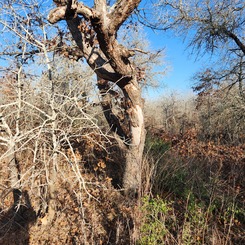
Although Texas is home to a diversity of woody landscapes, its changing weather patterns also create ideal conditions for fungal growth. Hypoxylon Canker (Biscogniauxia atropunctatum) is a deadly, opportunistic fungal disease, which targets drought-weakened hardwoods including oaks, elms, hickories, and pecans. Spread by microscopic spores carried by wind, water, or insects, the fungus becomes problematic only when secondary stressors disrupt nature’s delicate balance. Trees whose natural defenses are already stressed by drought, compacted soils, or root damage then allow the fungus to spread more easily. Once established within a tree’s vascular root system, essential life processes are disrupted, limiting water absorption, nutrient transport, and structural strength.
Fungal diseases often progress rapidly through a forest ecosystem, with airborne spores quickly affecting other healthy individuals. Trees infected with Hypoxylon canker experience weakened limbs, extensive bark decay & sloughing, crown dieback, and eventual mortality. Noticeable bark scars appear in more advanced stages of the disease, each scar covered with colorful, powdery fungal mats containing millions of spores. Once spores become visible and bark sloughing begins, tree mortality occurs quickly—usually in 4-8 weeks.
Management strategies to combat Hypoxylon canker include improving soil health through organic mulching, avoiding excessive fertilization, and deep watering during drought to improve tree vigor. Infected trees should be removed if crown or main trunk are visibly affected. With limited options to avoid naturally occurring stress factors, man-induced stressors, which cause root damage or soil compaction, should always be avoided. This includes root or trunk damage caused by mowers/trimmers/hand tools, or soil compaction caused by heavy machinery including dozers/excavators/trenchers. To prevent spore entry, minimize all mechanical damage to the bark. Prune trees only during dormancy (Winter months) and sterilize all pruning tools after each use. Firewood is considered safe for use as intense heat typically destroys the fungus. For more information regarding tree diseases, please contact a certified arborist or the Texas Forest Service at https://tfsweb.tamu.edu
|
From the WMA: The Black-capped Vireo Comeback
By: Josh Vasquez, Wildlife Biologist - Kerr WMA
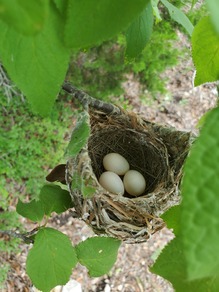
The black-capped vireo is a 4.5-inch insectivorous migratory songbird. They were listed as endangered in 1987 by the U.S. Fish and Wildlife due to habitat loss and nest parasitism by the brown-headed cowbird. That same year biologists on the Kerr Wildlife Management Area (WMA) recorded just 27 singing male territories on the property and what followed became a unique Texas wildlife recovery story.
The Kerr WMA covers 6,459-acres in Kerr County and was established in 1950 as a research and demonstration site owned and operated by Texas Parks and Wildlife Department. From the beginning, the WMA focused on restoring and maintaining healthy native ecosystems. Decades of research and management evolved into a "systems" approach, to the likeness of Aldo Leopold’s five tools of habitat management—the ax, cow, plow, fire and gun.
For black capped-vireos, habitat is everything. The birds depend on broad leaf woody brush and shrubs, usually 6 feet in height or less, intermixed within open grasslands. These birds are found to prefer shrub habitat at 30-60% interspersed with grasslands.
A systems approach to management involves mechanical cutting of Ashe juniper, rotational grazing with cattle, use of prescribed fire to keep woody plants in a shrubby growth stage, and deer population management to reduce excessive browsing. Just as important, the WMA operates seasonal cowbird traps to reduce nest parasitism on both black‑capped vireos and the endangered golden‑cheeked warbler.
Recovery of the species is a partnership, with private landowners leading the way. The adoption of systems management has improved land health and led to an increasing number of black-capped vireos across their range including Kerr WMA. Kerr WMA’s surveys jumped from 27 singing male territories in 1987 to ~400 territories since 2000, with surveys in recent decades pushing 500 territories. In 2018 USFWS delisted the black capped-vireo due to increased and stable populations across all portions of their geographic range which is a major win. Kerr WMA currently cooperates in the post delisting plan for the bird. Click here to learn more!
|
Plant Spotlight: Western Ragweed
By: Megan Huron, Wildlife Biologist - San Saba County
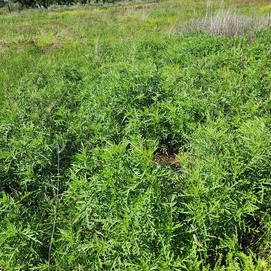
Although many people only associate western ragweed with allergies, the species provides significant benefits to many wildlife as a high-quality food source. The seeds are high in energy, protein, and fat content, making the plant a highly preferred food source for a variety of species ranging from bobwhite quail to white-tailed deer.
Western ragweed is a perennial forb native to most of the United States, southern Canada, and Mexico. The plant can reach up to 4.5 feet tall and is covered with long, soft hairs. Male and female florets are small and separated on different flower heads on the same plant. Male flower heads are densely packed along the top of the stem and resemble a column of small bells. Female flower heads occur in small clusters from leaf-like bracts below the male flower heads. Flowers grow in late summer to early fall. Western ragweed is a wind-pollinated plant. Therefore, rather than producing attractive flowers and scents to attract insects or birds, the plant produces small, light pollen grains that can easily be taken by the wind. This is what causes hay fever that the species is infamous for among humans.
Western ragweed can adapt to many soil types and climate conditions; however, it becomes most abundant in highly disturbed areas. The species often increases with high grazing pressure because of soil disturbance and decreased competition from lack of grass cover. If the species becomes overabundant, altering grazing management or using chemical control is best for management. For more information, please visit Plants of Texas Rangelands » Western ragweed.
|
Follow Hill Country Wildlife on:
|