Avian Migration in the Hill Country
By: Robert Booker- Wildlife Biologist, Real & Edwards Counties
Birds are an essential part of the planet, from their role as pollinators/seed dispersers, to regulating insect, rodent, and small mammal populations, to being indicators of healthy ecosystems.
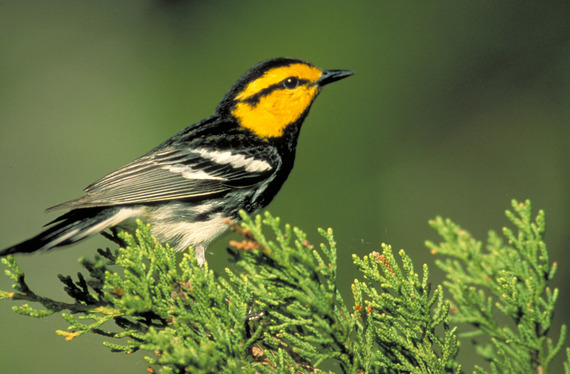
The Edwards Plateau is home to, or a migration pit-stop for, over four hundred species of birds. Our geographic location is well suited for the central flyway, one of the four main flyways of North America. From the Golden-cheeked Warbler who nests entirely within the hill country and winters in Central America (the only all-Texan bird), to the Common Nighthawk that calls our hills home for June and July before starting the journey back to the Amazon!
The avifauna of the western plateau is influenced by the arid habitats found farther west. Cactus Wren, Black-throated Sparrow, and Pyrrhuloxia are often associated with desert habitats, but are also found on the plateau. Some of the Southwestern specialties also reach the western plateau, such as Zone-tailed Hawk, Gray Vireo, Varied Bunting, and Scott’s Oriole. The riparian corridors of the region provide habitat to many species that are more common farther east, such as Barred Owl, Acadian Flycatcher, Red-eyed Vireo, and Northern Parula. Several species primarily found in South Texas can be found along the southern edge of the plateau. Green Kingfisher, Long-billed Thrasher and Olive Sparrow are probably the most common of these birds.
Habitat fragmentation is one of the leading threats to bird diversity, as they are particularly responsive to changes in the physical structure of where they nest and forage. Migratory birds vary widely in the type of habitat they require for nesting. Most of the species that seem to be declining require large tracts of forest or grassland. Still, backyard habitat remains important. Lawns are typically of limited value to wildlife and are large consumers of water, fertilizers, and pesticides. However, what can be done on the individual property level is promoting native flora species in your yard/property. Plants that produce berries (Ex. wild grapes), fruits, and flowers are especially useful.
Two other leading causes of bird declines is feral cat predation and collisions with man-made structures. To mitigate these issues, it helps to keep cats indoors when possible and apply screens, curtains, nets, or films on windows where bird strikes are common.
If you’d like to see some of the species mentioned, there are several Texas Parks and Wildlife Department state parks, state natural areas, and wildlife management areas within the Edwards Plateau that have specific bird checklists available and can point you in the right direction for when/where to have a sighting.
Up-Coming Events & Workshops
-
Wildlife Tax Valuation Workshop, March 20th, 8:00am - 1:00pm
-
Plant Party: Native Plants & Insects, March 25th, 10:00am - 11:30am
-
Small Landowner Workshop Series, Cibolo Nature Center, Boerne, TX
- Part 1: Valuing Your Land, March 28th, 8:30am - 2:00pm
- Part 2: Managing Your Land, April 18th, 8:30am - 2:00pm
- Part 3: Conserving Your Land, May 9th, 8:30am - 2:00pm
-
Wildlife Tax Valuation Workshop, March 30th, 8:00am - 12:30pm
-
Prescribed Fire Workshop, April 10th, 8:30am - 4:00pm
- Neasloney WMA, Gonzales, TX
-
Wildlife Tax Valuation Workshop, April 13th, 8:15am - 1:00pm
- Inks Lake National Fish Hatchery, Burnet, TX
Spotlight Habitat Management Practice: Getting to Know Your Land
By: Cody Stricker- Wildlife Biologist, Blanco & Kendall Counties
Spring has arrived and with it comes a great opportunity to get out and enjoy the lands you steward. Use the excitement of a new spring to take the time to observe what’s going on around you and really get to know your land. What soils are present? What wildflowers are beginning to bloom? What species of birds are returning for the summer? How much cover is left from last year for fawning and nesting? How many species of plants can be located and identified?
Questions like these can help you reflect on the current habitat conditions that you are providing for wildlife and provide context for the results of past and current management practices. These types of questions can also address areas that need improvement or practices that need to be adjusted to reach your management goals. For example, if a prominent browse line is present, it may be necessary to reduce the stocking rate of livestock or harvest more deer next season to reduce browsing pressure on desirable species of woody plants and forbs.
It all starts with the soil. The soil type is the basis for what vegetation will grow in an area, along with other factors such as climate and precipitation. Knowing what soils are present is vital to the success of habitat improvement projects. This allows us to manage expectations for the site and work with the land.
When it comes to plants, species diversity is important! It is essential to manage the land in a way that promotes native and nutritionally valuable vegetation for wildlife. The first step is knowing what species are currently on the property. Next, you’ll be able to decide if the landscape is healthy as is so you can manage to maintain current conditions, or you can implement management strategies that will help improve the overall quality of the vegetation community.
Determining what specific wildlife species are using your land can be an indicator of the overall habitat quality. Species are not going to stay in an area if it does not have the habitat requirements it needs to survive. The higher the native species diversity, the better. Look for all types of species on the property, not only game species. Birds can be great indicators of habitat quality because they are able to quickly fly and find the resources they need if they are not met where they are at. Species with very specific habitat needs like bobwhite quail can indicate that large tracts of diverse grasslands are present.
Data can be collected through species specific surveys or through incidental observations. Cameras, binoculars, and game cameras can be used to record observations and field guides or phone applications like iNaturalist and Seek can be used to identify the species and learn more about their ecology and habitat needs.
The information gathered from the process of getting to know your land helps to learn about the wildlife and plant species present, determine objectives to help you achieve your goals, and maintain a healthy habitat for native wildlife.
|
From the Field: Stake Planting for Flood Recovery
By: Evan McCoy- Senior Wildlife Biologist
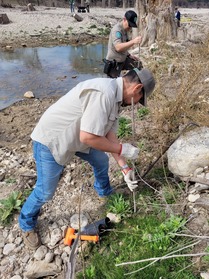
Following the historic July 4th floods of central Texas, miles of the Guadalupe River were left stripped of the thick vegetation that is important to the health of riparian habitats. These areas will naturally recover with time, but we have the ability to help speed up the process. Local community groups have been working with TPWD to organize a volunteer effort to plant hundreds of trees along targeted sites. However, these particular trees will not be part of the generous donation of trees from nurseries, but rather they will be collected from the watershed itself. You might think of it as a donation from healthy sections of the river system to heal itself. Volunteers went out and collected cuttings, or stakes, from select trees and later replanted them into the ground. Propagating from cuttings can work with many plant species, but this project targeted sycamore, cypress, buttonbush, dogwood, black willow and cottonwood. Here are some methods to help make a propagation project successful.
- Tools needed are clean loppers and pruning shears
- Collect in late winter to early summer
- Cuttings should be from live, lateral branches about 1-3 inches in diameter.
- Select native tree species appropriate for the planting site (collect from sites similar in habitat)
- Create stakes 1 to 4 feet in length
- Place directly in a bucket of water or moist, potted soil and kept in a cool, shaded location until replanted
- Plant the stakes in a narrow hole that can be created by hammering a piece of rebar into the soil
- Protect plantings from deer with mesh wire cages if needed
- Occasionally water the stakes, if possible, to increase survival
Here is link to more information on the practice from the Texas Forest Service Live Staking - Texas A&M Forest Service.
|
Practice Fire with Prescribed Burn Associations
By: Kel Hoffman, PhD- Director of Land Conservation at The Cibolo Nature Center
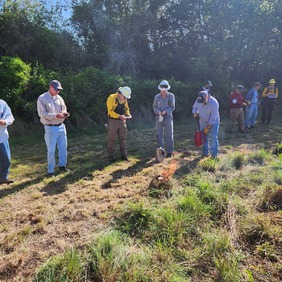
Prescribed fire is an important land management practice used by Texas landowners to improve habitat, manage woody encroachment, and maintain healthy grasslands. A successful prescribed burn requires advance planning, appropriate weather conditions, trained personnel, and careful oversight throughout the process.
While burn plans are developed ahead of time, conditions such as wind speed, humidity, fuel moisture, and terrain influence how fire behaves on the ground. During a burn, crew members monitor fire behavior and weather conditions and communicate regularly to ensure the fire remains within established parameters. Adjustments are made as needed to maintain safety and meet management objectives.
Landowners who are interested in using prescribed fire but do not yet have experience or sufficient personnel may benefit from participating in a Prescribed Burn Association (PBA).
PBAs are cooperative groups of landowners who assist one another in conducting prescribed burns. Members share labor and, in many cases, equipment. When a burn is planned on one member’s property, other members provide support. In turn, that landowner participates in burns on neighboring properties. This cooperative structure increases available manpower and supports safe, effective implementation.
PBAs also provide opportunities for landowners to gain practical experience. Members may begin by observing or assisting with basic tasks and gradually assume greater responsibility as they become more familiar with burn procedures and safety protocols. Many PBAs coordinate with natural resource professionals and follow established guidelines to help ensure that burns are conducted responsibly.
Across Texas, PBAs have supported prescribed fire on private lands by helping landowners access training, equipment, and additional personnel. For those interested in incorporating fire into their management plans, participation in a local PBA can provide a structured and supportive way to begin.
With proper planning, coordination, and training, prescribed fire can be conducted safely and can support long-term land management goals.
|
From the WMA: Texas Horned Lizard Habitat
By: Kelton Mote- Wildlife Biologist, Mason Mountain WMA
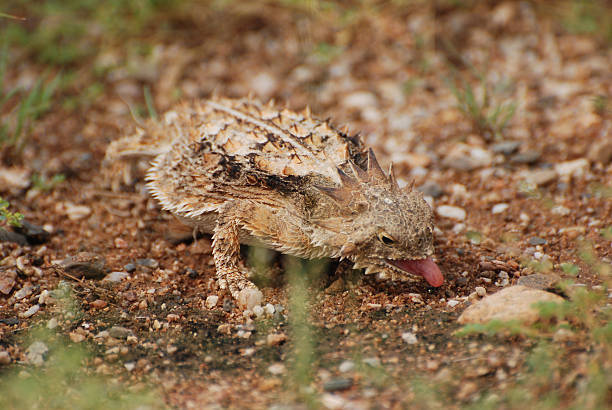
The Texas Horned Lizard (horny toad) is the state’s most widely recognized and admired lizard of Texas’s 45 native species, rightfully earning its status as a state symbol. Once occupying nearly the entire state, today it has largely been extirpated east of Interstate 35 and 37, causing it to become a state-listed threatened species. While much is still unknown as to why the horny toad is declining, the best practice for supporting horny toads is through habitat conservation.
The primary diet of the horny toad is the red harvester ant. Harvester ants are easily distinguished from other ants by their large size and nest, characterized as a circle of bare ground 2 to 3 feet in diameter. It is estimated that a single adult horny toad needs 20 harvester ant colonies. Managers should avoid poisoning these ants at all costs.
Moderate grazing is a great tool for horny toad conservation. Without grazing livestock, herbaceous vegetation can become too thick and impede horny toad movement. However, overgrazing can also be detrimental to survival by removing essential cover horny toads rely on for protection from the sun and predators. The old adage “Take half, leave half” is a good rule of thumb.
Woody brush encroachment and the spread of invasive grasses also degrade horny toad habitat. Chemical and mechanical control methods can be extremely effective in preserving grassland integrity; however, the most cost-effective tool is prescribed fire.
Habitat management can be difficult and sometimes slow to show progress. However, it remains the most effective and widely accepted conservation practice for horny toads and most other wildlife species. If you have a question about how or where to get started implementing habitat practices, reach out to your local TPWD biologist!
|
Animal Spotlight: Hognose Snakes
By: Nathan Rains- Diversity Biologist
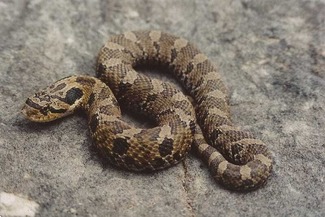
Hognose snakes have several colorful names here in Texas. From spreading adders to false cobras to drama noodles, hognose snakes are harmless and fascinating members of the colubrid snake family. Texas is home to two species of hognose snakes: Eastern hognose (Heterodon platirhinos) and western hognose (Heterodon nasicus). As the names imply, eastern hognose are found in the eastern half of Texas and western hognose are found mostly in the western half.
Hognose snakes are identified by their unique rostral scales giving them their characteristic upturned, pointed nose. This specialized design aids hognose snakes as they burrow for food or cover. They are in fact very adept burrowers, which is unusual for snakes. Hognose snakes are also particular in their diet preferences. Amphibians, especially toads, are the preferred food item for eastern hognose while westerns can be a little more varied in their diets. Both species have specialized, fang-like teeth in the back of their mouths that are designed to hold on to prey (especially toads).
Eastern hognose are generally larger than their western cousin and can come in a variety of color patterns depending on their locality, including brown, red, gray, and even almost entirely black. Western hognose on the other hand are almost uniformly brown with black blotches and look similar across their range. Both species show strong sexual dimorphism with females being much larger than males.
Hognose snakes also have quite a reputation for their defense behavior. While hognose snakes rarely, if ever, bite a would-be capturer, they do have quite an arsenal of defensive display antics. Both species can flatten their necks out (especially eastern hognose) to intimidate a predator. And if that doesn’t work, they utilize their most infamous display. Hognose will flail around portraying the lunges of death, then flop over on their backs, open their mouth, stick out their tongues…and play dead. And if rolled upright, they will immediately flop back over and continue the charade until the threat is gone.
Hognose snakes prefer short and mixed grasslands with loose, sandy soils they can burrow in. They are slow-moving snakes compared to most of their other serpentine brethren and are usually active in the morning and evenings. If you see one crossing the road, give some space to one of our most charismatic reptiles!
|
Follow Hill Country Wildlife on:
|