|
|
Welcome back to The Brushland Bulletin! Hopefully you had a wonderful holiday season with family and friends and enjoyed a successful deer season. With the season now behind us, there's a moment to pause, reflect, and catch your breath before preparations begin again for the season ahead.
Spring in South Texas is beginning to come alive; wildflowers are beginning to bloom, songbirds are filling the morning with songs, and rattlesnakes are beginning to make their presence known. It's one of the best times to get outdoors and appreciate the wild things and wild places that make Texas special.
We hope you enjoy this issue, and we look forward to sharing the next one with you.
- Javier O. Huerta, Dustin Windsor and Mary Beth Foerster; Editors of the Brushland Bulletin
|
|
Talking Turkey: Wild Turkey Management in South Texas
Article by: Austin Killam, Texas Parks and Wildlife Department Biologist; James E. Daughtrey Wildlife Management Area
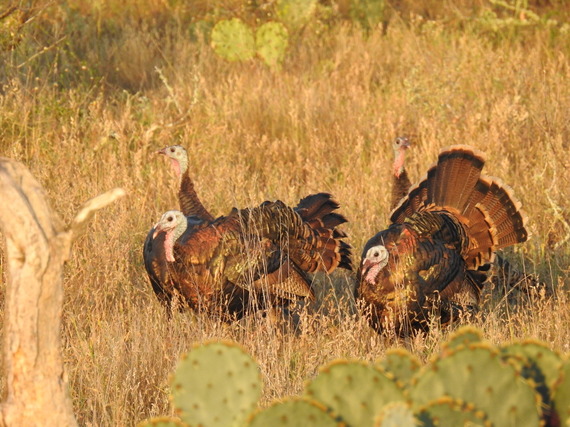 Spring is right around the corner, which means turkey season is coming with it. But why are wild turkeys in some fields and not others? Well, most likely it’s because of the habitat.
Here in South Texas, we have the Rio Grande Wild Turkey. They are non-migratory with large home-ranges that change between seasons and years. Like all animals on the landscape, they have four essential needs for good habitat: food, water, cover, and space. During spring and summer their focus is breeding, nesting, and brooding. They like areas with a mixture of open grasslands/pastures, brushy areas that are easily navigated for escape cover, and mature trees along creeks for roosting. Their primary habitat for brooding and poult rearing is like a quail’s brood-rearing habitat choice with herbaceous cover, a mixture of grasses and forbs for producing seeds and insects. During the winter, turkeys tend to concentrate in larger groups near riparian zones along dry arroyos, creeks, and rivers. The brush and full canopies attract them, serve as travel corridors, and often provide a constant water source.
If you are already improving and managing the habitat to increase a diversity of grasses, forbs, shrubs, and trees for other species like deer or quail, you’re on track for improving the habitat for wild turkeys as well. Wild turkeys begin roosting in trees at about 2-weeks old and will continue to roost in trees every night, with nesting being the only time a wild turkey (hens) doesn’t roost in a tree. So, access to roost sites is often the most limiting factor to sustaining wild turkeys and crucial for maintaining good turkey habitat.
Linear openings adjacent to tall roost trees serve as take-off and landing areas for wild turkeys. These openings also increase a sense of security that predators are not hiding in the brush. Brushy areas bordering those linear openings provide readily available escape cover and provide the mix of edge habitats that serve to create habitat quality and increased useable space for wild turkeys. If mature trees are scarce in your area, artificial roosts can be beneficial, but nothing can replace or provide the quality of native cover. And the more suitable roost trees you have, the more wild turkeys your property can support. Some management practices that largely benefit wild turkeys are:
- Mowing/Moderately grazing rangeland with livestock to control the height of grasses (if they cannot see over the herbaceous cover, they will not use that area as much)
- Rotating livestock between pastures to control how much vegetation is consumed in the pasture to prevent overgrazing (wild turkeys nest in areas with thicker herbaceous cover, but take their broods to areas with more disturbance)
- Prescribed burns to remove dead vegetation and promote new growth and forbs
- Brush control to thin out tall-dense brush areas while leaving mature trees for roosting
- Disking to turnover the soil and promote the growth of new forbs.
Texas has the highest density of wild turkeys in the country, with them now inhabiting 223 of the 254 counties in Texas. TPWD wildlife biologists perform annual summer turkey surveys with about 1,600 wild turkey observations across all regions. South Texas Region 5, on average accounts for 26% of the observations; seeing 2.87 poults per hen, 4.12 poults per brood, 0.61 hens with broods, and a 1.28 male to female sex ratio.
If you are looking to get out and hunt wild turkeys in South Texas, the James E. Daughtrey Wildlife Management Area offers drawn and stand-by spring turkey hunting opportunities. We offer three wild turkey hunts annually starting with one Youth-only Spring Turkey hunt and two General Spring Turkey hunts. Follow the link below for more information and to see a list of all the hunts our WMAs and other state and federal lands offer across Texas. Remember, it is now mandatory to report your harvest of wild turkey within 24 hours after harvest!
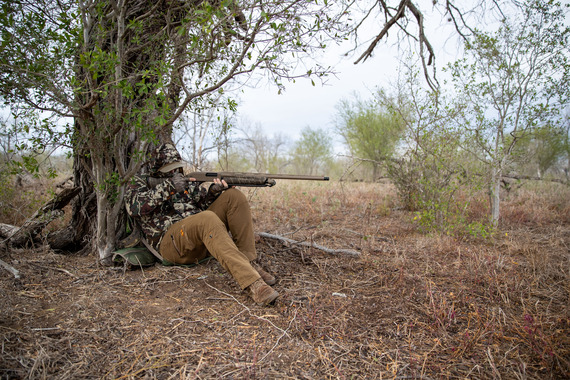 Photos: Top: Austin Killiam, TPWD, Bottom: Maegan Lanham, TPWD.
Make Water While The Rain Pours
Article by: Lori Massey and Diego Navarro; Texas Parks and Wildlife Department Biologists; Chaparral Wildlife Management Area
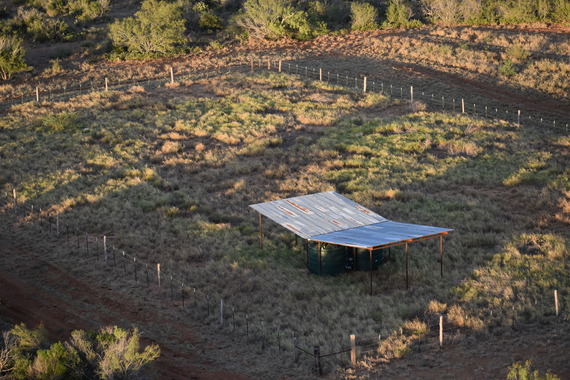 In South Texas, water is one of our most precious resources. Providing and maintaining water for livestock and wildlife is a common practice across the brush country. Common techniques include digging stock ponds to capture rainfall or pumping water from a well to fill troughs and ponds. However, South Texas rains are not consistent enough to keep our stock ponds as full as we would like. So why not take a note from our neighbors to the west in the Trans-Pecos and start benefitting from the rain we do get? Installing a simple rainwater catchment system can capture and store that precious water, while also providing a supplemental water source for wildlife or livestock.
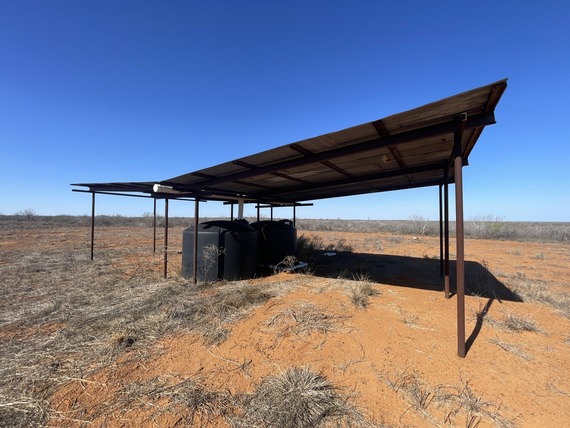
Rainwater catchment systems, or guzzlers as they are commonly referred to, are a great way to provide water without the need for electricity or ground water infrastructure. Guzzlers can be made in a variety of designs and styles depending on the goals of the landowner and budget. Common designs include a pitched roof and gutter system that captures rainfall and then stores it in a large poly tank. Ultimately, the larger the surface area of the roof, the more rainfall will be captured from each rain event. For example: 1 inch of rain on a 1,000 square foot roof will yield approximately 623 gallons of water.
If you’re on a budget then recycled materials can help reduce costs. Consider used drill stem pipe for posts or supports. Old roof panels can work for collecting rain since small holes in the material should have minimal effects on water capture. However, converting a shop, barn, or other structure to collect rainwater is a creative way to reduce costs as well!
When constructing a guzzler there are a few factors to consider. Will the water be provided for livestock or wildlife only? If for wildlife only, consider fencing the trough/guzzler off to keep livestock from potentially depleting the water much quicker than wildlife alone. Thinking about trough design; we specifically chose a trough with a smaller water surface area (pictured below) to decrease evaporation loss and prohibit feral hogs from wallowing in the water source.
Storage capacity is another factor to examine. The guzzler at the Chaparral Wildlife Management Area (pictured) has an 800 square foot inverted roof design that can capture approximately 500 gallons of water for each inch of rainfall. We have two 1,550 gallon poly storage tanks that provide a total capacity of 3,100 gallons. With this combination we balance the need to supply water during long dry periods while maintaining the capacity to capture large rainfall events (up to 6”).
Guzzlers are a great way to take advantage of opportunities while they last. Instead of making hay while the sun shines, let's make water while the rain pours, or even if it only sprinkles.
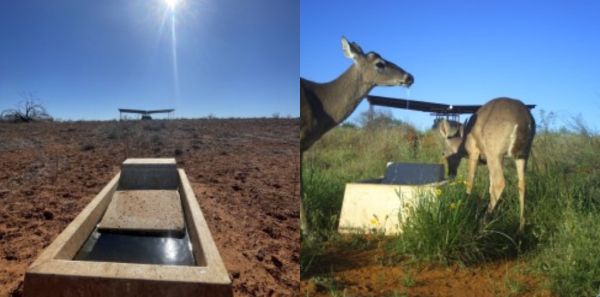 Guzzler trough installed at Chaparral Wildlife Management Area.
Click the link above to see a TPWD guzzler in action in West Texas!
Guzzler catchment at Chaparral Wildlife Management Area.
Photos: Lori Massey and Diego Navarro, TPWD.
|
|
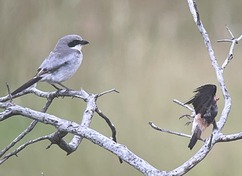
Could the Loggerhead Shrike Be Expanding Its Nesting Range Into Western South Texas?
Article by Matt Reidy; Texas Parks and Wildlife Department Biologist; Atascosa and Medina Counties
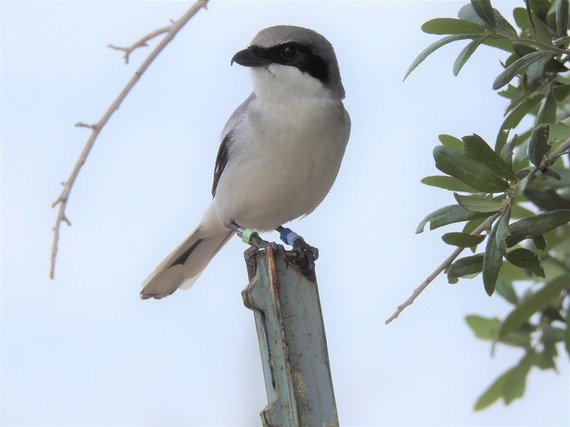 Photo: Tania Homayoun, TPWD. All banding, marking, and sampling is being conducted under a federally authorized Bird Banding Permit issued by the U.S. Geological Survey’s Bird Banding Lab.
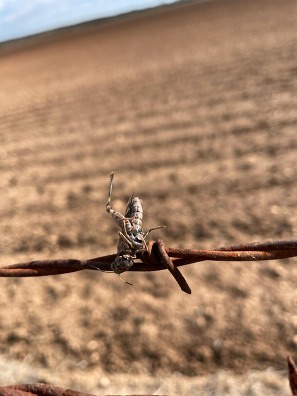
The Loggerhead shrike is a medium-sized, thick bodied songbird with a large, blocky head, and a thick bill. They are approximately 8 inches long with a mostly gray body, black face mask, and black wings with white at the base of the primaries. The bill is black, contrasting with a white throat. Loggerhead shrikes are known as the “butcherbird” due to their carnivorous diet and habit of impaling their prey on cactus spines, brush thorns, and barbed wire fences. They primarily prey on insects, lizards, rodents, and small birds.
Across its entire range in North America, the loggerhead shrike has declined by 76% since 1966. Habitat loss and changing land use practices are considered primary culprits. To our credit, Texas supports some of the only stable loggerhead shrike populations in the country. Loggerhead shrikes prefer open grassland habitats with a few interspersed trees and shrubs. They use trees and shrubs for hunting perches as well as nest sites and primarily capture prey in open grasslands. They can be found throughout Texas from the Panhandle to the Piney Woods, and even West Texas. They are also known to winter throughout South Texas.
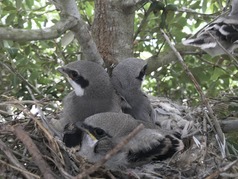
Loggerhead shrikes are seasonally monogamous. The pair will construct an open cup nest in a suitable tree or shrub with good vegetative cover. Nests are usually up high in a suitable tree in an open landscape. They will lay from 4-9 eggs with incubation lasting 15-17 days. Nestlings stay in the nest for another 17-20 days before they “branch out” into the surrounding tree foliage while they continue to be fed by the parents. At about 40 days of age the young can usually fly well and hunt on their own.
Loggerhead shrikes are adaptable and seem to be able to take advantage of our human altered landscapes. City parks, baseball fields, and natural areas around urban centers provide the shorter grass, and well dispersed shrubs and trees that these birds seem to prefer. Historical data indicates that loggerhead shrikes have not been known to nest in most of South Texas. However, Ebird, iNaturalist, and curious TPWD wildlife biologists have begun to notice loggerhead shrikes around South Texas during the spring and summer nesting season. Nests have already been found in previous years in parks and grassy areas in Devine, Jourdanton, and Charlotte.
This year, TPWD wildlife biologists hope to branch out to some of the other towns in Western South Texas to search for nests at ball fields, city parks, and natural areas around some of our cities. If you already know of a loggerhead shrike nest in South Texas or see these cool birds regularly, especially during the late spring to summer months please reach out to your local biologist and let us know so we can search for and hopefully document an active nest!
Grasshopper impaled on barbed-wire fence by a loggerhead shrike.
Photo: Tania Homayoun, TPWD
|
|
|
Loggerhead shrike young in nest.
Photo: Jim Giocomo
|
|
Loggerhead shrike with recent prey.
Photo: Shelia Hargis
|
|
|
Article by Micayla Pearson; Texas Parks and Wildlife Department Biologist; McMullen County
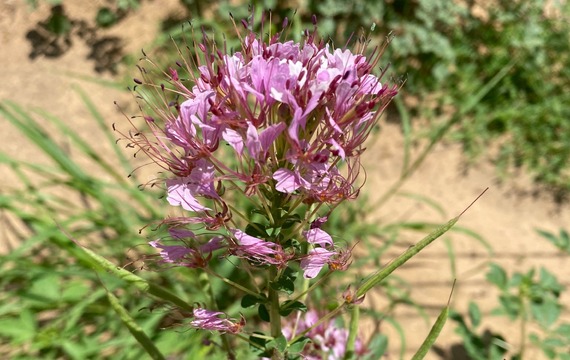 April showers bring May flowers is the age-old adage that comes around every year. Forbs, better recognized as flowers, often don’t wait until May to make their showy appearance. The first rainfall and signs of warmer temperatures allow forbs to bloom across the South Texas landscape. During spring, forbs are an invaluable resource on the landscape for our native wildlife, including White-tailed Deer and the Northern Bobwhite. Below are some forbs that you may notice being utilized by these species and can play a vital role in your habitat management program!
White-tailed Deer:
Forbs provide a vital protein source for white-tailed deer. The nutrition requirements of deer change seasonally. During the winter, their diet is dominated by woody plant species, while in the spring and summer, it is dominated largely by forbs, where available. The young, tender early growth of forbs is highly desirable during spring because it is high in protein, which is beneficial for gestating or lactating does and bucks growing antler.
Preferred Forbs for White-tailed Deer and their Values:
- Ragweed: High nutritional source. 17-20% crude protein similar to some first choice browse species. Drought-tolerant with lasting blooms.
- Erect Dayflower: High nutritional value with excellent protein content. 20% crude protein in spring, with 12-16% lasting into the fall. High in calcium and phosphorus, which aid in antler development.
- Bush Sunflower: High forage quality and highly palatable. Provides structural cover forming clumps.
- Orange Zexmenia: Preferred plant species for white-tailed deer. Provides structural cover forming clumps. Drought-tolerant with lasting blooms.
- Prostrate Bundleflower: Excellent food source, high in protein. Drought-tolerant with a long bloom period, making it available spring-fall.
Northern Bobwhite:
The Northern Bobwhite is heavily reliant on forbs throughout the year, but especially during the spring and summer. It is well known that quail use large clumps of bunchgrasses approximately the size of a basketball to nest in. Post-nesting, forbs offer quail very important brooding and loafing cover for chicks. Healthy, diverse forb stands create a haven for grasshoppers and other small insects that quail of all sizes rely on to survive the harsh summers South Texas tends to have. Without rainfall, we tend to see less impressive forb growth across the region, which could limit food and cover sources for Northern Bobwhites.
Preferred Forbs for Northern Bobwhites and their Values:
- Ragweed: Essential food source for quail, by producing hard, round seeds and attracting insects. Also acts as brooding cover.
- American Basketflower: Highly beneficial food source, grows May-June. Provides some cover and attracts insects.
- Annual Broomweed: Excellent cover plant for brooding and loafing. It has a high protein, high fat seed that makes this a great over winter plant for quail.
- Woolly Croton: Important food source for quail and creates good brooding cover. Thrives in areas of heavy disturbance and often is the first thing to come back after discing.
- Partridge Pea: Excellent food source for quail. When growth is exceptionally good, it can act as cover.
Without adequate rainfall, we do not get the forb growth that we need to support our native wildlife in the brush country. This is where proper management of your property comes into play. If you have any questions or concerns, please reach out to your local TPWD wildlife biologist for help.
Photo: Javier O. Huerta, TPWD. Rio Grande Clammyweed in bloom, seeds of this forb are consumed by Northern Bobwhites. Seed is commercially available for use in game bird food plots and pollinator plantings.
Graphic prepared by Javier O. Huerta, TPWD; Photo: Ben Binnion.
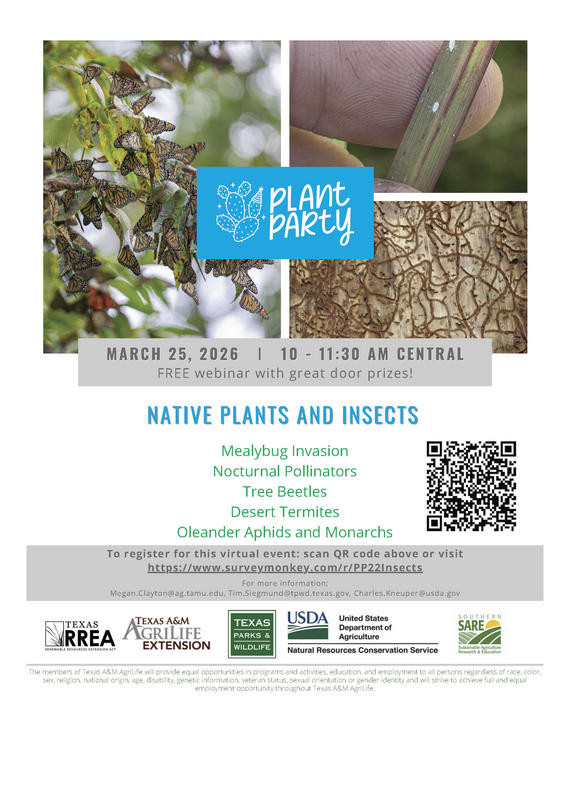
Like Plants? You're invited to the Plant Party!
Join Texas Parks and Wildlife Department, Texas A&M AgriLife Extension, and USDA Natural Resources Conservation Service for a Plant Party! These free quarterly webinars provide advanced training on topics including: plant identification tips and resources, usefulness of native plants, restoration of plant communities, and more!
Each Plant Party includes 5, 15-minute presentations from professionals and door prize giveaways! The next free webinar will be March 25th. Sign up below!
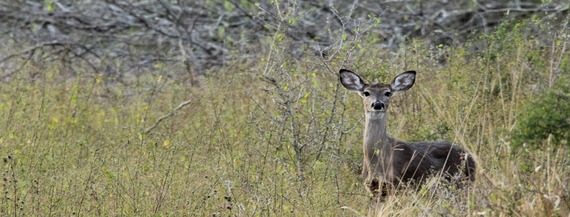 This is a friendly reminder that Managed Lands Deer Program (MLDP) cooperators have reporting requirements for the 2025-2026 season. The reporting deadline is 11:59 PM on April 1st, 2026. Reporting is conducted through your Land Management Assistance (LMA) account, which can be accessed by the link below.
Harvest Option Reporting:
For landowners enrolled in the Harvest Option, report the total number of antlerless deer, bucks, and unbranched-antler (spike) bucks harvested on each enrolled management unit during the 2025-2026 season.
Harvest option cooperators must submit a new enrollment request to participate next season. Enrollment for this option is available May 1st-September 1st, 2026.
Conservation Option Reporting:
For landowners enrolled in the Conservation Option, report the total number of antlerless deer, bucks, and unbranched-antler (spike) bucks harvested on each enrolled management unit during the 2025-2026 season.
Report habitat management practices completed on each enrolled management unit during the 2025-2026 season (March 1st, 2025-February 28th, 2026). For questions regarding qualifying habitat management practices, please refer to your local TPWD wildlife biologist for guidance.
Submit all deer population data collected this season by the approved submission method approved by your local TPWD wildlife biologist, if you have not already done so.
For Wildlife Management Association/Cooperative Members, the above reporting requirements apply to your aggregate site depending on your enrollment option; however, all harvest data should be reported at the Aggregate Site level (not per member Management Unit). Habitat management practices (if applicable) should still be reported for each distinct Management Unit where the practices were conducted.
If these requirements are completed by the deadline the management unit/units enrolled will be re-enrolled for the following 2026-2027 season.
Stay tuned for our next edition in June, when we'll return with more updates, insights, and resources to support your habitat management and stewardship!
|
|
|
|
|