Special Edition: Flood Recovery for Riparian Health
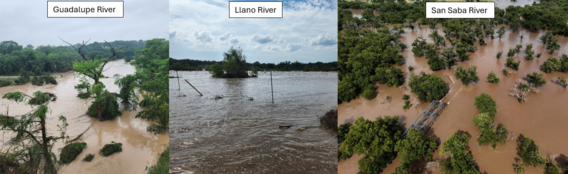
A Note from the Editors: In July 2025, the Texas Hill Country experienced devasting flooding along multiple river and creek systems throughout the region. Our hearts go out to all who were affected by these devasting events. This special edition concentrates on the ecological effects of major flooding events and management strategies that landowners can use to aid in the natural recovery of these critical areas.
Understanding Riparian Systems in Relation to Flooding
By: Erin Wehland - Wildlife Biologist, Burnet & Western Lampasas Counties
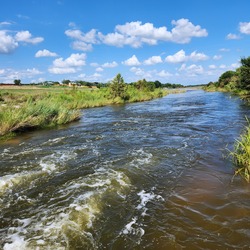
Riparian areas are transitional zones located between the edges of waterbodies such as streams, rivers, ponds, and lakes and the drier uplands. Riparian areas provide important ecological functions such as nutrient cycling, dissipating stream energy, streambank stabilization, floodwater storage, recharging aquifers, and providing habitat for wildlife. The trees and vegetation shade the water, reducing fluctuations in water temperature. These areas also provide economic and recreational benefits for humans. Understanding your riparian system is important to managing these important areas.
The soil and vegetative community in riparian zones are influenced by the presence of water. The soils are formed from sediments of different sizes and textures deposited during flood events and are rich with nutrients and organic matter. The organic matter enables these soils to hold moisture and support a wide diversity and growth of plants.
Healthy riparian vegetation includes spikerush, sedges, grasses, forbs, shrubs, and trees that are tolerant of periodic flooding. In turn, this diverse vegetative community supports a wide range of wildlife species by providing food, water, and shelter and functions as a travel corridor between habitats.
Fluvial floods (river floods) occur when water levels in the lake, stream, or river rise and floods the adjoining land. The probability of river floods is impacted by rainfall and duration, current water level, soil moisture, and topography. Pluvial floods or flash floods are defined as rapid floods occurring in low lying areas within 6 hours of heavy rainfall from intense storms. The hill country is prone to flash floods due to the thin soils, topography, and propensity for violent weather as the warm moist air from the Gulf meets cooler air from the North. While flooding can cause damage, it does provide benefits such as the deposit of nutrient rich soils on floodplains and aquifer recharges. Like wildfires were historically nature’s way of setting back succession in upland areas, these “100-year” flash floods are nature’s way of resetting succession along riparian areas.
Activities that introduce prolonged disturbance (e.g. continuous grazing, mowing, driving) impede the normal function of riparian areas, limiting their ability to recover. Removal or limiting of these activities is often the first and most important step to allowing these areas to recover. While these areas can recover on their own, even after historic floods, the process can be sped up by reseeding, sprout planting, removal of small debris, and deferring grazing. Your local TPWD biologist can assist you with developing a plan to speed recovery.
|
Up-Coming Events & Workshops
-
Public Meetings for Post Oak Ridge State Park:
- January 14th, 6:00pm - 8:00pm - LCRA Redbud Center, Austin
- January 15th, 6:00pm - 8:00pm - Lampasas County Annex
The Value of Deadwood
By: John McEachern - Senior Wildlife Biologist
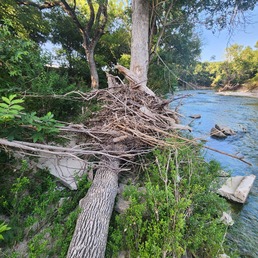
Our first instinct after dealing with large areas of destruction is to try to clean everything up to make it look like the event never happened. With natural disasters, specifically flooding, sometimes this can increase the amount of time needed for recovery. When looking at an area after a flood, it is critical to identify which material is useful and aids in restoration, and what material will impede it. One of the most common practices used when cleaning up these areas is the removal of woody debris. It is encouraged to use certain criteria when evaluating whether a certain piece should be removed to aid in the restoration of each area. Below are a list of common questions and answers on how you may approach the cleanup.
Q: Should living debris (downed trees) be removed?
A: No, the roots of these trees help to maintain soil stability and aids in regrowth.
Q: What if the debris is naturally anchored or near an eroded bank?
A: If the tree is in either of these conditions, then leave them. They are also helping with soil stability and protecting at risk areas from more erosion.
Q: Is the piece 20 inches or greater in diameter and over 10 feet long?
A: If yes, then it is still providing structural habitat and acts as a catchment for silt and organic matter, which will often be the first areas to have herbaceous growth.
Q: What if the debris is mixed with trash, or invasive plants?
A: Removal may be necessary to improve long term riparian health and reduce the impacts that invasive species can have on an ecosystem.
Q: Could the pile be easily washed away or is it blocking infrastructure like culverts or roads?
A: Removal of the pile should be a priority to address multiple safety risks and future damage to structure.
|
Livestock Grazing Deferment After Flooding
By: Chris Mostyn - Wildlife Biologist, Llano & Gillespie Counties
No matter where a raindrop falls, it drains along a long complex journey to the oceans; winding freely through land and life coalescing where hydrologic influences shape the land, soil, and vegetation creating a dynamic ecosystem called riparian zones. The condition of the land governs the balance and stability of this relationship. A healthy, properly functioning riparian zone is nature’s sponge and filter collecting, controlling, and cleaning water as it leaves the land. The only natural limitation to land health affecting water reaching riparian areas is drought; everything else that disrupts the water pathway reflects land use. We do not want to stand in the way of this vital process while land faces the common monumental challenge of drought. In the Hill Country this means grazing management.
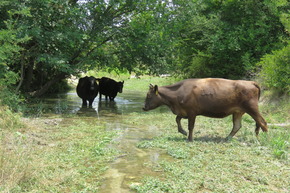
Land not only needs rain but also needs to be in a state ready to use it. Grazing management has one of the most powerful ecological impacts on the land, running a close second to fire, and if implemented correctly, ensures your land’s ability to benefit from rain. Grazing should echo the natural grazing patterns our herbaceous systems evolved with to achieve ecological benefits for land health. How you graze cattle along riparian areas determines whether those areas hold water and soil or not.
How much livestock your land can support is calculated by evaluating usable forage available and livestock numbers. The art of grazing management is balancing numbers and time enabling livestock as a tool to achieve ecological benefits and knowing the land and recognizing what it tells you. Healthy land captures and delivers rain to riparian sites slowly and broadly as sheets diffusing across the soil surface through native vegetation and as ground water channeled through soil. Lands lacking these qualities cannot guide the rain causing water to dump into riparian areas fast and concentrated, circumventing function and degrading integrity.
Grazing within riparian systems can be an effective management tool when applied with appropriate timing, intensity, and recovery, and can help maintain vegetative structure and water cycle function. Grazing is most appropriate when soil is dry or firm and streambanks are stable, allowing vegetation to be utilized without soil compaction, bank sloughing, or channel disturbance; grazing should be avoided during saturated conditions, active runoff, or when riparian vegetation is establishing or recovering from flooding events. Successful management depends on moving livestock through riparian areas quickly, distributing use with water and fencing, and allowing enough rest for plants and roots to fully recover. If it is working look for dense, rooted bank vegetation, minimal bare ground, limited trailing, and water that slows and infiltrates rather than concentrating into erosive flow. Early warning signs include expanding bare ground, soil disturbance from hoof action, repeated defoliation of preferred plants, loss of bank stability, or increasingly rapid water and sediment movement. Responding quickly through changes in timing, duration, or recovery preserves riparian integrity and long-term ecological function.
In the end, the way grazing is managed impacts the fate of our riparian zones. When grazing focuses on land health, both land and cattle benefit and protect the Hill Country's most valued ecosystems.
|

Flooding Effects on Birds & Insects
By: Tessa Boucher - Wildlife Biologist, Mills & Hamilton Counties
Restoration management is critical in speeding up the recovery process of disturbed riparian zones. This land-water interface is an important energy link between land and aquatic life, and the quality of its habitat affects wildlife communities. Having a diverse native riparian plant community is vitally important to support aquatic insect and avian communities. These highly productive microhabitats provide the essential shelter, food, and connectivity required for successful survival and reproduction. The insect and avian communities depend on the unique riparian vegetation that provides both nesting substrate and protection from predation. Aquatic insects fill many ecological niches due to their different functional feeding groups. This directly contributes to the overall health of the stream and water quality. This cycle also aids in connectivity to the terrestrial system in their adult life stage once they leave the stream and provides food for insectivorous fish, amphibians, and birds. Therefore, a robust community of insects will support a robust community of birds. Birds will be attracted to a highly productive riparian zone for many of the same reasons the insects can persist there.
Successful restoration of riparian zones often requires multiple strategies and methodologies. There is no one size fits all solution. Recreating hydrology and stream flow is a good place to start after disruption events have occurred. Reestablishing native vegetation and allowing stream debris to collect can aid in this process. Focusing on a mixture of different native species that are of multiple heights and densities will also help create complex microhabitats. This will provide the different types of food and shelter that insects and birds require in these areas. Being able to identify native plants is critical to understanding the health of these systems. Early detection and removal of invasive species is also another way to combat degradation of riparian zones. Left unmanaged, invasive species can outcompete beneficial native plants and disrupt the ecosystem. But above all, patience is the number one ingredient to recovery of these sensitive ecosystems. Applying multiple methods of restoration and consistent monitoring will ultimately aid in successful restoration.
Native riparian habitats are directly responsible for supporting diversity of both aquatic and terrestrial life that can be sustained in these stream systems. Without managing healthy riparian zones, many wildlife species will be absent and water quality will degrade. The complex food web supported by riparian zones contributes to the overall health of the ecosystem. Therefore, management of this habitat is vitally important to maintain high diversity in and around streams. If the habitat is restored the insects and birds will quickly return and the system will continue to function properly.
|
Importance of Woody Plant Establishment After Flooding
By: Deanna Pfeffer - Wildlife Biologist, Kerr WMA
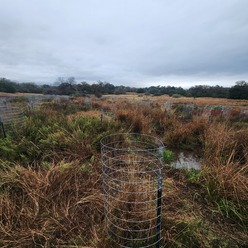
The establishment of native woody plants after flooding in the Texas Hill Country provides essential ecological and hydrological benefits that enhance riparian resilience. Floods in this region often scour banks, deposit sediments, and disrupt vegetation. Riparian woody vegetation supports biodiversity and habitat recovery. Root wads, fallen limbs, and overhanging branches provide habitat for fish, amphibians, birds, and invertebrates, while canopy shade moderates water temperature, improving conditions for aquatic species. Re-establishing native trees and shrubs helps stabilize soils, filter runoff, and restore ecological functions critical to the river system’s long-term health.
Establishing woody plants in riparian areas after flooding requires aligning species with site conditions, stabilizing soils, and ensuring moisture for early growth. Woody vegetation such as bald cypress, black willow, and American sycamore plays a primary role in bank stabilization by anchoring soil with deep roots and dissipating the energy of high flows. These species also trap sediments, rebuild eroded banks, and reduce future erosion. In areas along and adjacent to the stream bed, trees like pecan, cedar elm, and hackberry improve water quality by filtering sediments and nutrients from runoff and promoting infiltration that recharges local groundwater and sustains baseflows. Native shrubs such as buttonbush, indigo bush, and roughleaf dogwood add structural diversity, stabilize secondary banks, and attract pollinators and wildlife.
Restoration methods include natural regeneration, which relies on existing seed banks and is cost-effective when native species and intact soils remain. Direct planting of nursery stock may be ideal after severe floods where banks and streambeds are degraded and bare. Live staking, or pole planting, works well for moist streambanks with live cuttings that root easily such as willow or buttonbush. Additional methods include direct seeding of native trees with site preparation and aftercare, which may take longer to become established. It’s important to monitor riparian areas affected by flooding for invasive vegetation like Chinaberry, Chinese tallow, and arundo donax (and removal) as well as monitoring survival of native species for many months post-flood. Sourcing native plant cuttings or seeds locally, when possible, should provide high quality specimens and success rates.
In watersheds where flash floods and droughts are common, the integration of native riparian woody vegetation is vital for protecting water quality, sustaining baseflows, and maintaining the ecological integrity of downstream reaches. Restoration efforts should emphasize diverse, locally adapted native species to ensure long-term stability, habitat quality, and resilience of these dynamic Hill Country river systems.
|
Plant Spotlight: American Sycamore
By: Johnny Arredondo - Wildlife Biologist, Kerr & Bandera Counties
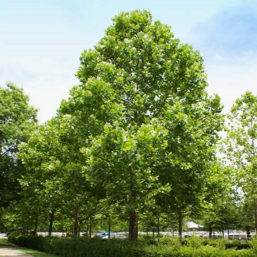
‘The Good, The Bad, & The Ugly’. Depending on who you ask, you may be given a different answer when it comes to the American Sycamore tree. Also known as American planetree, western plane, or buttonwood, the Sycamore is commonly found in bottomlands or flood plains, but most abundant in wet environments such as rivers and streams. It is native to the Texas Hill Country, as well as other parts of eastern and central United States. It is characterized by its large lobed leaves, smooth light-colored bark that peels away in patches, and produces a 1-inch seed ball. The height of the tree can range from 50 to 100 feet tall and up to 4 feet in diameter. Where cypress trees are absent, the sycamore tree could be considered the largest riparian tree. It is a moderately fast-growing tree, generally seen as a cluster of medium-sized trees and the first plant to colonize freshly disturbed gravel bars after a flood event. Therefore, some may consider this tree invasive. On the contrary, the sycamore tree can provide a variety of benefits to the environment and ecosystem that surrounds it.
The sycamore tree is considered an early-mid successional hardwood, which is why it is first observed after a disturbance. Though not as strong as cypress tree roots, a large colony of sycamore helps provide soil stability. When sycamore trees are periodically uprooted and washed out, these trees can create small dams to trap gravel and sediment. In addition, medium sized trees can help catch floating logs and trees during flooding events. The action of catching and anchoring large wood in the flood plain is an important part of a riparian function. Other benefits are to the wildlife that exists around these trees. Bark from the sycamore tree provides a food source to beavers. The heartwood of the sycamore tree decays quickly, which produces a hollow cavity in the center of the tree that provides shelter for bats and nesting sites for a variety of cavity-nesting bird species. American sycamore is also the host plant of the sycamore tussock moth, as well as the Spring-dwelling Caddis fly which its larvae make their homes from circles that are cut from the leaves. So, if you ask me, I will say that the American Sycamore is “The Good”.
|
Follow Hill Country Wildlife on:
|