|
Welcome Back to the Second Edition of The Brushland Bulletin!
As winter begins to settle in over South Texas, our region comes alive in its own quiet way. Migrating waterfowl are flying along the coast and bucks will soon be traveling quickly through the mixed brush. In this issue, we are excited to share recent events, seasonal insights, and stories that showcase South Texas! Thank you for joining us again as we work together to steward the brushland and its resources.
- Javier Huerta, Dustin Windsor, and Mary Beth Foerster; Editors of The Brushland Bulletin
Article by: Len Polasek, Texas Parks and Wildlife Department: Region V Wildlife Director
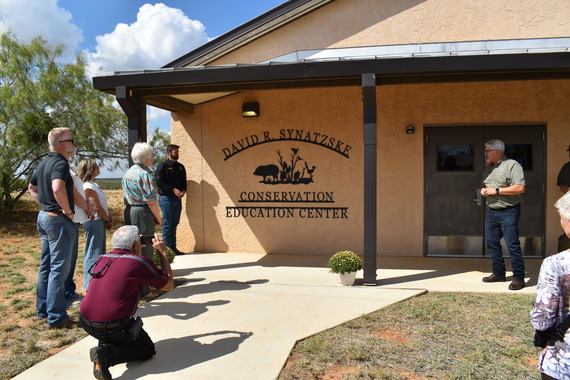
On October 10, 2025, Texas Parks and Wildlife Department (TPWD) held a dedication ceremony to rename the visitor center on the Chaparral Wildlife Management Area (WMA) in memory of long-time area manager David Synatzske. The building was officially dedicated as the David R. Synatzske Conservation Education Center. A crowd of 75 people, including family members, friends, volunteers, and current and retired TPWD employees were in attendance.
David R. Synatzske
December 2, 1949 - October 16, 2024
Wildlife Division Director, Alan Cain, highlighted David’s career, sharing that he earned his Bachelor of Science Degree in Wildlife and Fisheries Sciences from Texas A&M University in 1972. In 1973, he started his 39-year career with TPWD as a Fish and Wildlife Technician in the Edwards Plateau Regulatory District. In 1976, David accepted a Wildlife Biologist position on the Gus Engeling WMA. Eventually, he was promoted as the Area Manager for the Chaparral WMA in 1983, ultimately serving as the Project Leader for the South Texas Ecosystem Project until his retirement in 2012.
Chip Ruthven, Panhandle Ecosystem Project Leader and former Chaparral WMA biologist, stated that David applied a “holistic” approach to resource management, which fostered a variety of habitats and subsequently increased wildlife diversity on the Chaparral WMA. He coordinated and/or participated in a variety of wildlife research on the Chaparral WMA. David was passionate about wildlife and habitat management on both public and private lands and loved to share his knowledge with land managers, hunters, educators, university students, and youth through field days and public hunts.
Youth Shooting Sports volunteer and close friend, Al Boos, enumerated that David’s interest in youth education led to the development of the Youth Shooting Sports Event on the Chaparral WMA which introduces around 150 - 300 youth to the sport each year. Development of exceptional outreach programs and implementation of conservation principles earned him both the Outstanding Achievement and Lifetime Membership Awards from the Texas Chapter of the Wildlife Society.
Justin Dreibelbis, Texas Wildlife Association (TWA) Chief Executive Officer, concluded the ceremony reporting that David was an active TWA member. He provided the initial concept of the Texas Big Game Awards (TBGA) program to recognize hunters, quality animals, habitat/population management efforts by land managers and involvement by new hunters and youth. David served as TPWD’s co-chair for TBGA (1991-2012). He served as a TWA Director, a member of the Executive Board, and was the recipient of the 2017 Sam Beasom Conservation Leader Award.
David was instrumental in the design and construction of the visitor center before its completion in 2011. It was dedicated in his memory for his many accomplishments on the Chaparral WMA, his dedication to TPWD and the people of the State of Texas, as well as the many lives he touched throughout his career.
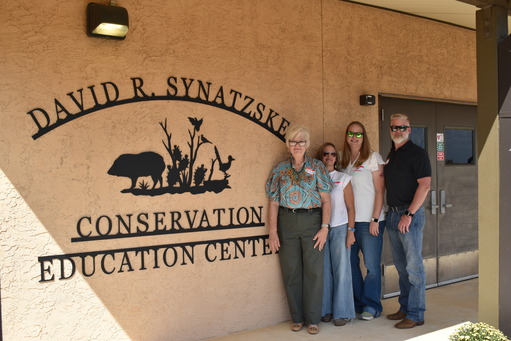
David's Family with Education Center sign: L-R Cheryl Synatzske and children: Stacey, Kimberly, and Brian.
|
|
|
Article by: Matt Reidy, Texas Parks and Wildlife Department Biologist; Atascosa and Medina Counties
When does the rut normally happen in South Texas and what factors drive the timing of it? The timing of the rut can be variable depending on where you are in Texas. In the early 1990’s the Texas Parks and Wildlife Department (TPWD) set out to determine the average timing of the rut in different parts of the state. The project consisted of harvesting does in late winter/early spring and collecting data to answer several questions, such as:
- Date of Conception i.e. – peak of rutting activity
- Pregnancy Rate
- Number of fetuses
During the three years of the study, TPWD biologists and technicians harvested 2,436 does throughout the different regions of Texas. In South Texas, 95% of the does were bred every year of the study. Furthermore, does averaged 1.5 fetus per pregnancy. Finally, when did the majority of does get pregnant? In Eastern South Texas (East of highway 16) the peak of rut was December 16. In Western South Texas (west of highway 16) the peak of rut was December 24. Breeding dates for all the deer harvested in the study ranged from November 9 to February 1.
So, when is the best time to be on the ranch in order to hunt the peak of the rut in South Texas? Well, depending on what side of highway 16 you are on, you should be ready to hunt around the second to the fourth week of December. Good luck and happy hunting!
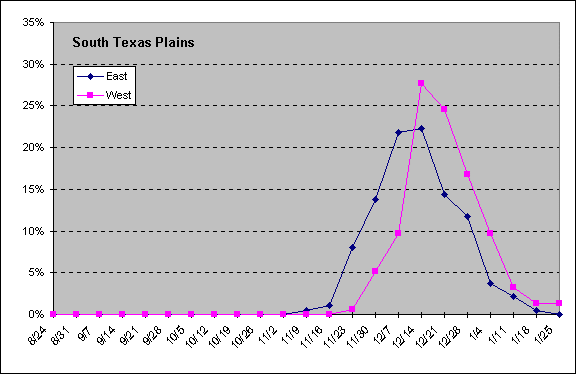 Graph of Conception Rates for Does in South Texas
If you want to see information on other ecological regions please see The Rut in White-tailed Deer on our website by clicking the button below!
Article by: Shannon Grubbs Barron, Texas Parks and Wildlife Department Biologist; Victoria and Calhoun Counties
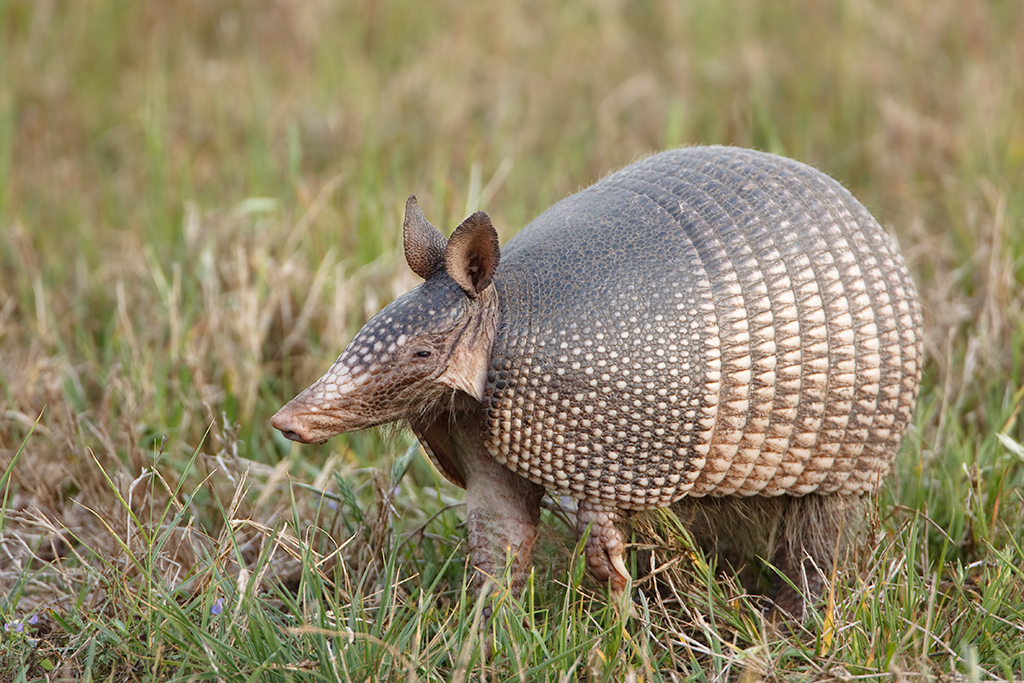 Photo credit: Trey Barron, Texas Parks and Wildlife Department; Region IV and V Nongame Biologist
I had always thought armadillos were interesting and relatively harmless. That is until I took a job as a State wildlife biologist and learned how some people despise our armored state mammal. I don’t remember them being much of a problem while growing up, either in the yard or in the horse pastures. But these days my dad tries to keep a St. Augustine yard, and armadillos create funnel shaped holes looking for grubs and other insects while torturing the "Grubbs" that lives in the house. I received a text from my dad that said, “I shot an armadillo in my pajamas.” As I read the words and pondered how to respond, another text popped up. “Not sure what he was doing wearing my pajamas.” Ahh, classic dad humor. It always makes me laugh. I know my dad didn’t necessarily want to shoot that armadillo but wanting to preserve the lawn was more important at the time. On my parents’ latest visit, Dad told me how he was trying to fence the armadillos out, but one kept getting in. He told me he had raised this one since it was young and I rolled my eyes and giggled. Now he has a trap. Maybe if I tell my dad that the armadillos eat fire ants, as well as the other garden pests, he won’t find them to be such a nuisance. But unfortunately, even though they readily consume fire ants, they are not the answer to sustained control since they are likely not getting to the queen of each mound. Well, I’m sure soon I’ll hear how that trap is working out.
Our beloved or unloved state mammal has recently undergone a devastating name change. I say devastating because when you are a wildlife student and spend hours with flash cards learning the scientific name of plants and animals, it is indeed devastating when names are changed. What was formerly known as the nine-banded armadillo (Dasypus novemcinctus) is now the Mexican long-nosed armadillo (Dasypus mexicanus). It is still a prehistoric-looking mammal with bony plates that overlap on the skin. This overlapping arrangement allows for free movement and forms bands. Despite the name, well, former name, there can be more or less than 9 bands. Several features point to their insect eating lifestyle and aid in foraging for insects: long claws, an elongated snout, and peg-like teeth. Like all mammals, they have hair, but it is very sparse. For this reason, armadillos are easily affected by climatic conditions, and their activity depends on the time of year. They are mostly nocturnal when temperatures are warm and diurnal when it is cooler outside. They do not hibernate but may spend increased time in their burrows when it is cold.
While the armadillo is an iconic symbol of Texas, they worked their way northward from South America. They are prevalent throughout the southeastern United States and north into Kansas and Missouri. Their range has been expanding with warming temperatures and human infrastructure. Soil type is a predictor of armadillo abundance within an area since their livelihood is dependent on rooting for insects. An almost insatiable insectivore, armadillos rely on looser soils for ease of probing the soil for insects. Looser soils can generally support a greater number of armadillos. With tighter soils, armadillos concentrate closer to water where it is easier to forage.
Besides their unique appearance, armadillos have other interesting attributes. To cross a body of water they can either walk across the bottom of a narrow area while holding their breath or for longer treks, they can ingest air which gives them increased buoyancy for an easier swim. Another interesting fact pertains to reproduction; armadillos give birth to identical quadruplets each spring. I was always told so many get hit on the road because they roll into a ball and jump. But like so many things we hear, it is not so. While they can jump, the nine-banded, or, Mexican long-nosed armadillo cannot roll into a ball. Leave that to the South American three banded guys. But perhaps the strangest oddity, is their propensity to show up roadside holding a beer can!
|
|
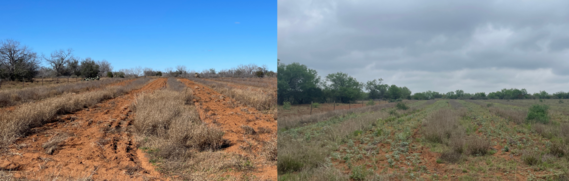
Article by: Dustin Windsor, Texas Parks and Wildlife Department Biologist; Aransas, Jim Wells, Nueces, and San Patricio Counties
In South Texas, wildlife managers seek to ensure a healthy supply of food for their animals throughout the year. Many are faced with the prospects of a dry winter and a lack of winter forbs for their animals. As summer rolls around next year, those concerns are likely to be similar. The droughty nature of South Texas makes it tough to grow good food plots for deer (clovers and legumes), but summer food plots for dove and quail can have some success with the right approach.
If you are considering summer food plots, then plan ahead and ensure good site preparation (plots free of noxious weeds and invasive grasses) and pair that with the proper plant choices. Focus on drought-tolerant species that survive the typically hot and dry summer. If you are new to summer food plots, a call to your local TPWD Biologist can be helpful.
Warm-season (summer production) food plots are generally planted in March and April when the spring rains fall. You will want your plot sites to be freshly disced, properly fertilized, and ready to plant when the Spring rains do fall. If you are unable to irrigate the food plot, you may consider planting at a reduced seeding rate or implementing skip-row planting if you have a seed drill. Reduced seeding rates means that the plants that do germinate and grow are not competing for limited resources (like water).
Selecting the proper plant species is as important as any part of the process. If you can integrate native species such as different croton species, clammyweeds (Rio Grande variety), and sunflower species with your commercial species like drought-tolerant milos and grains (like sesame), then you may have a bit of success. Unfortunately, if you cannot irrigate, you are still betting the bulk of your production on the rainfall Mother Nature decides to give us.
Measuring the success of your food plot is vital for understanding if your efforts were worthwhile and to aid in future decision-making. Establish exclusion fencing to monitor plant growth and production. Many animals will nip the plants as they germinate, but within those exclusion fences, you can see how much vegetation you have produced. Some of your better seed-producing plants may be desirable to other wildlife when young, but once they are established, their preference by browsers may drop. Remember, food plots for birds offer the most benefit when the plants can successfully produce an abundance of seeds.
Let each planting be a lesson for you. Watch which species perform well, and which struggle to survive. You can use this knowledge in the future to determine which plants are the best return on your investment of time, money, and sweat. Food plots in South Texas are not for the casual farmer, but rather for the landowner or manager that is dedicated to the practice and understands the route to success.
If you are interested in more details, reach out to your local Texas Parks and Wildlife Department Biologist for a little more insight into site preparation, information regarding soil testing and fertilizer needs, and which species have a more proven track record for success. Remember, though, that irrigation and rainfall have more to do with your success than any other part of the process.
Article by: Celeste Boyd; 2025 Texas Brigade South Texas Buckskin Brigade and South Texas Bobwhite Brigade Camper
We’d just gotten to the ranch when one of the guides stopped the truck and came down the line of trucks assigning each of us a blind. I had stepped out of the truck in my pink Columbia shirt and jeans. I grabbed a hair tie and put my hair in a braid before getting my case which held ammo and my rifle. No warmup, no “settling in” just the raw excitement of the Early Bird Hunt, an experience gifted to me by Texas Brigades. I didn’t know it yet, but the weekend ahead would be full of fun, competition, and unforgettable moments in the Texas outdoors.
Once the evening's hunt wrapped up, we all headed back to camp. I hadn’t really talked to the boys that were on the hunt with me at camp; this was due to the fact that we’d been in two different herds. We brought all of our gear up to our rooms and then went downstairs and ate dinner. At first, I wasn’t completely sure how to socialize with them, but they were quick to include me. I was grateful for that. We talked about nothing and everything and wandered for a little bit before the adults called us back inside. We all came inside and talked about our achievements that we’d made since camp ended. Then we chose our blinds for the next morning.
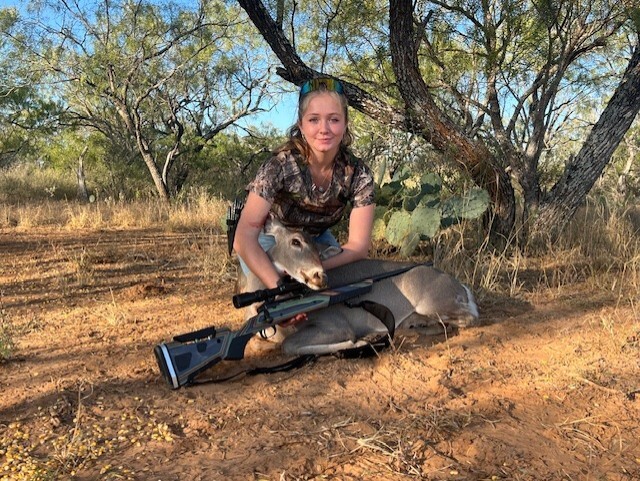 |
The next morning felt like the real start of the weekend. As we headed out to our blinds, the same nervous excitement from the night before turned into a deeper appreciation for why we were all there. Texas Brigades has a way of taking ordinary moments and turning them into lessons about responsibility, wildlife, and leadership. Even though not every conversation was about wildlife or conservation, it was still about building connections and relationships with those around us, both my peers and the volunteers. It is understood that this hunt wasn’t just about harvesting animals, though we did pretty good on that side with seven does and one javelina, it was about continuing the building of connections and continuing the education that began in June.
That’s what makes Texas Brigades such a unique program. It doesn’t end when camp ends. It stays with you—through the friendships you build, the confidence you gain, and the experiences like the Early Bird Hunt that push you to grow. Being selected for this hunt gave me the chance to reconnect with friends, challenge myself, and build unforgettable memories. I left the ranch with a sense of pride, but more importantly, with a renewed commitment to being a responsible hunter and a stronger conservation-minded Texan. Texas Brigades gave me that—and I’m grateful for it each time I step into the field.
Get Connected!
South Texas Buckskin Brigade and South Texas Bobwhite Brigade are programs within Texas Brigades, Texas Brigades is a nonprofit organization with a mission to educate and empower adolescents with leadership skills and knowledge in wildlife, fisheries, and land stewardship to become conservation ambassadors for a sustained natural resource legacy.
Both camps are hands-on, 5-day, immersive learning experiences designed to educate participants about the ecology of white-tailed deer or northern bobwhite quail, their habitat and diets, population dynamics, and natural resource management.
The 2026 South Texas Buckskin Brigade will be June 7-11, located in La Pryor, Texas.
The 2026 South Texas Bobwhite Brigade will be June 17-21, located in McCoy, Texas.
For more information on Texas Brigades and all 9 Texas Brigades Camps, please click the link below.
 Warm holiday wishes from the Texas Parks and Wildlife Department Wildlife Region V Team! Thank you for your support and dedication throughout the year. May this season be filled with peace, gratitude, and time spent in the South Texas brush.
Life's Better Outside.
|
|
|
|
|