|
View as a Webpage
|
|
Stewardship for Birds in Aquatic & Riparian Habitats
Date: Wednesday, July 17, 2024
Time: 6:30 p.m. - 7:30 p.m. CT
Rufus Stephens
Wildlife Biologist
Rufus Wildlife Consulting, LLC; TPWD-Retired
Riparian corridors have the greatest diversity of bird species and the greatest abundance of individual birds compared to most other habitat types. Also, riparian birds are an excellent indicator of riparian and aquatic ecosystem health, and stewardship for birds along riparian corridors increases the quality of the entire ecosystem.
This webinar will discuss breeding and migratory bird species that live in different levels of the riparian and aquatic habitats and have different survival needs. It will include the serious environmental problems these birds face as well as their causes and the solutions land stewards can provide.
About the speaker
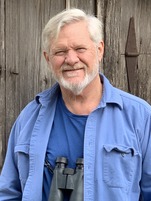
Rufus Stephens is a Certified Wildlife Biologist, educator, and coauthor with Jan Wrede of Land Stewardship for Birds: A Guide for Central Texas by TAMU Press. He has worked as a wildlife biologist for 35 years, 23 years with TPWD with his last position as the district leader for the 25 county Edwards Plateau Wildlife District. He is one of the founders of the Texas Master Naturalist program and in recognition for this accomplishment was a corecipient of the Wildlife Management Institute’s award for Innovation.
|
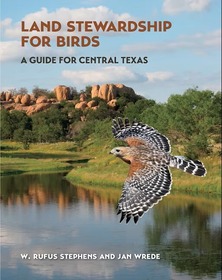
Nearly 50 years of research shows that over time, the number of North American birds has declined by 2.9 billion. Breeding birds have declined by nearly 30 percent in virtually all habitats, and Central Texas is no exception. Just as human impact on the environment has contributed to habitat loss, so can our actions restore the habitats that once sustained thriving bird populations.
Central Texas resident, migrant, and wintering birds have specific habitat needs for cover, food, and water. Breeding birds also need specific habitat for raising their young. Thus, Land Stewardship for Birds: A Guide for Central Texas is organized by the types of habitats present: woodlands and savannahs; grasslands; rivers and streams; canyons, springs, and seeps; constructed tanks, ponds, and lakes; plus residential backyards. Three chapters on management of predators, deer, and cedar and other brush offer in-depth recommendations for addressing these important factors that impact bird habitat.
|
Questions?
Email ConservationEdu@tpwd.texas.gov.
|
|
|
|
|



