Estimating population sizes of four rare plants in Big Bend National Park
Date: Wednesday, February 15, 2023
Time: 12:00 p.m. - 1:00 p.m.
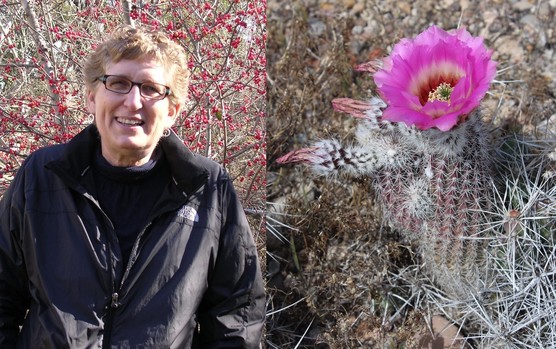
Dr. Norma Fowler
Professor, Department of Integrative Biology
University of Texas at Austin
 Webinar Description:
Accurate, unbiased estimates of the numbers of individuals of a rare species are essential for its conservation. For example, they are critical to the determination of its federal listing as Endangered or Threatened. The usual haphazard or 'expert walk' methods of surveying rare plants cannot provide accurate, unbiased estimates.
We have therefore developed and tested methods of estimating the population sizes of rare plants. Computer models were used to verify that these methods produce accurate, unbiased estimates of the number of plants of the target species within a pre-specified area of suitable habitat. Field surveys at Big Bend National Park (BBNP) verified that these methods, based on statistically random pre-placement of transects or plots, are logistically feasible and efficient ways of collecting the necessary data for estimates of populations sizes, but also identified some further challenges in using them.
Using these methods, we obtained quantitative estimates of the population sizes of four rare plant species in BBNP, three cactus species (Chisos Mountain hedgehog cactus, bunched cory-cactus, Lloyd’s mariposa cactus) and one grass species (Guadalupe fescue) in BBNP. These estimates are being using by BBNP and USFWS to guide conservation of these species.
Bio:
Since obtaining her Ph.D. in Botany from Duke University and a one-year postdoc in Wales, Norma Fowler has spent her career as a faculty member of the University of Texas at Austin. She is a plant population and community ecologist, with a focus on the conservation applications of these fields. She and her students have studied endangered species, invasive species, fire ecology, herbivory, woody plant encroachment, and related topics. Most but not all of their projects have been in central Texas. Besides mentoring graduate and undergraduate student research, she has taught courses ranging from environmental issues for non-science-majors to graduate courses in population modeling and statistics.
To view upcoming or archived Wildlife Diversity Webinar topics, visit the TPWD Wildlife Diversity Program page.
Sign up to receive future Wildlife Diversity Webinar Announcements
|