|
View as a Webpage
|
|
2022 Pollinator BioBlitz – Bees, Bats and Wasps!
Welcome to the final weekend of the 7th Annual Texas Pollinator BioBlitz!
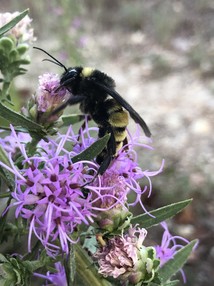
Bees are some of the most important pollinators in the world! Learn some buzzworthy facts about these amazing creatures!
Of all of the bees, the American Bumble Bee (Bombus pensylvanicus) is a fairly common sight in Texas. It is also the most iconic and recognizable bumble bee in the state.
In the last few decades the species has declined by 25% throughout its range. Texas is part of the core of this species' population and is vital to its continued persistence in North America. Documented observations of bumble bees in Texas are needed to assess where species occur. If you are interested in submitting observations of bumble bees, and other bee species, add your observations to iNaturalist to be included in the Bees and Wasps of Texas project.
|
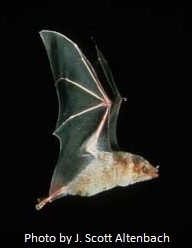
How much do you know about bats? While you may realize they eat lots of insects each night, did you know that they also help pollinate some very useful plants? Learn more about the Power of the Nighttime Pollinator!
The Mexican long-nosed Bat (Leptonycteris nivalis) is a nectar feeder, emerging at night to feed on the showy flowers of plants such as agave or century plants. They are very strong, highly maneuverable fliers, and like hummingbirds, are able to hover in flight while they feed. A mutual relationship exists, with the bats depending on the plants for food, and the plants benefiting from the bats as pollinators. The feeding ecology of the Mexican long-nosed Bat is of great importance in understanding its life history and recent decline.
|
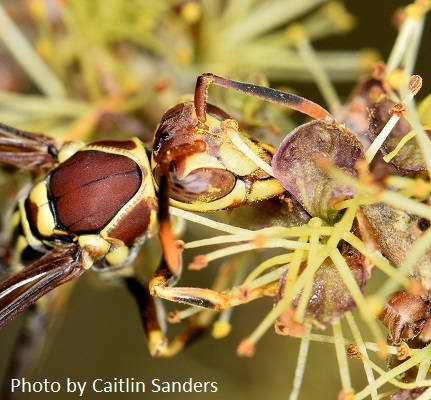
Wasps are amazing pollinators. While sometimes feared for their ability to sting repeatedly (only females can sting), their powers of pollination are actually quite useful! It may be time to reconsider our views on wasps.
They may look similar to bees, but are typically not covered in fuzzy hair. Because of this, they are much less efficient in pollinating flowers, as the pollen cannot stick to their legs like bees. Though the majority of wasps are predators, they also need to supplement their diets with sugar. Many wasps visit flowers and collect nectar to feed on, thus passively transferring pollen in the process.
|
Pollinator Information Center
Take a Daily Challenge
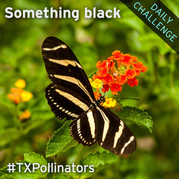
While you can take photos and videos of any and all pollinators you see every day of the Pollinator BioBlitz (and we hope you do!), there is also a list of daily challenges to provide you with photographic inspiration along the way, should you need it.
We list two challenges per day, but don't let the term "daily" limit you. If you find one of these challenges on a different day, post it when you see it! Post as many photos as you wish!
|
Pollinator BioBlitz – How to Participate
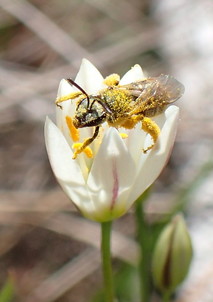
Observe: Be on the lookout for pollinators. Learn more about pollinators online and photograph pollinators you see.
Spread the Word: Share the importance of pollinators by posting your images to Instagram and/or Facebook (#TXPollinators).
Contribute to Science: Post your images of pollinators and flowering plants to iNaturalist from Oct. 2-18 to be automatically included in the 2022 Texas Pollinator BioBlitz project.
Join the iNaturalist project to follow along with what is being seen around the state. Attempt to identify your pollinator to any level you feel comfortable (general name, species name, etc.). Biologists will often help verify or identify your submissions. You can also use the "view suggestions" option under "What did you see?" and iNaturalist will offer possible options for your image.
|

|
|
|
|
|



