In This Issue:
Did someone forward this email to you? Subscribe now -- it's free!
An Unexpected Return to Basics
Undoubtedly, we have all been impacted by our current public health crisis. Obviously, some more than others. Personally, I am greatly reminded of the sad news from a good friend about the passing of his grandmother this last week from coronavirus – he and his family will be robbed from saying a timely goodbye together. I can still picture her smoking a big cigar at his wedding, even after the event staff told her that smoking was not allowed at the facility, and dancing away to the midnight hour with her grandson.
So, where do we go from here? What lies beyond the horizon? Economists keep referring to this time as “The Great Pause.” But most certainly – our natural world continuing unabated – there are no pauses in life, the clock continues. Signs of spring are everywhere from Lady Bird’s roadside flower displays to migrating songbirds, the latter’s songs providing a welcome melody around our homes. The thunderous gobbles of spring turkeys fill the morning air and the circle of life continues with the hatching of countless nests.
During this time many Texans have found solace in the outdoors. Perhaps this is affirmation that the many titans of conservation who came before us were onto something. Those men and women understood early on that conserving wild things and wild places was never meant to be a standalone or ancillary pursuit, but an essential part of life and the human experience.
We are shaped in no small part by our interaction with the outdoors and it is a reminder that our natural resources and their management are pillars of our existence. It is in times of crisis that we pare away the superficial and unearth what we value most, that we dig deep to find those things which strengthen our reality. It is during our struggles that we look to the world around us, to the wildlife, to the grasslands, to our city parks, and beyond. It is in these moments that we find what truly matters and those things worth fighting for.
Your Friends in Conservation, Shaun Oldenburger and the Small Game Team
COVID-19 Affecting Migratory Game Bird Monitoring
 Waterfowl survey flight in the Eastern Dakotas. Photo courtesy of "pilotbiologist", U.S. Fish and Wildlife Service Survey Pilot (for more photos of surveys, check out his page at - https://www.flickr.com/photos/pilotbiologist).
It seems that even our wildlife aren’t immune to the effects of the COVID-19 pandemic. As the nation adheres to social distancing and stay-at-home orders, state and federal wildlife agencies are being forced to make tough decisions regarding how, or even if, to carry out important annual monitoring efforts. Most current migratory game bird harvest strategies rely on annual monitoring to make accurate regulatory and management decisions. Consequently, the U.S. Fish and Wildlife Service (USFWS), along with state partners, are facing the unprecedented task of having to devise alternative approaches for the 2021-2022 season without this critical information. No one is sure how long social distancing measures will persist in the U.S., but already surveys have been cancelled or modified.
As of this month, operations impacted, or scheduled, include:
- The Coordinated Spring Survey of the mid-continent population (MCP) of sandhill cranes, scheduled for the 3rd week of March, was cancelled this year. This survey is the sole source of population information for the MCP, which consists of around 1 million cranes that primarily winter in Texas. The management strategy for MCP cranes relies on a 3-year running average of estimated abundance to inform regulatory decisions so, the USFWS and Flyways (administrative bodies established to facilitate management of migratory birds and their habitats) will have to come up with and agree to an alternative approach this year.
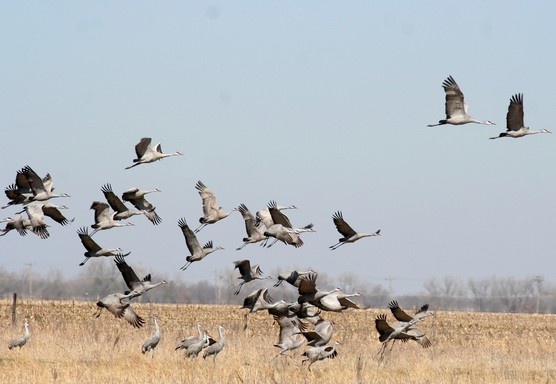 Sandhill crane surveys, scheduled for March, were cancelled this year due to the ongoing COVID-19 pandemic.
Impacts and scheduled activities continued:
- The national Mourning Dove Harvest Strategy primarily relies on data collected in late summer and during the hunting season. No impacts are expected, though it is possible that the national banding program, which begins in July, could be affected if social distancing orders persist into the summer. At the state level, TPWD has conducted annual, statewide dove surveys to estimate breeding populations for well over a decade. These surveys have been cancelled but are not critical to the national harvest strategy and will not affect the regulatory cycle.
- Singing Ground Surveys (SGS), the breeding season surveys for American Woodcock, are typically conducted in late April and early May in several core breeding-range states in the northern U.S. and southern Canada. As of now it is unclear if, or to what extent, these surveys are being impacted in the U.S., but all Canadian SGS have been cancelled. The now-incomplete coverage of SGS across the core breeding range will likely force the Flyways to take an alternative approach to making regulatory decisions this year.
- A variety of annual surveys are conducted on breeding, staging, and wintering areas for geese. Spring survey data is analyzed using multi-year running averages for many species (e.g., cranes) to inform regulations. Therefore, one year of missing data should not have major implications for harvest strategies. However, the Canadian Wildlife Service has cancelled all field work in the Arctic and sub-Arctic for the summer, including goose research and banding. Some of the Arctic field sites have been operational for over 30 years.
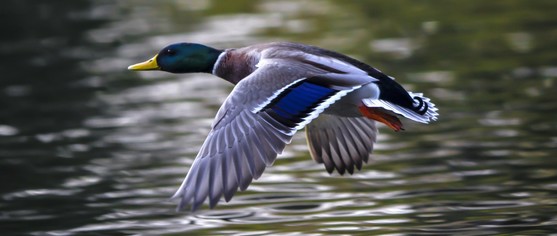 Work stoppages and slowdowns risk cancelling the Waterfowl Breeding Population and Habitat Survey, which would be the first time that has happened since 1955.
Impacts and scheduled activities continued:
The most significant implications of reduced monitoring efforts will likely be for ducks, specifically:
- The Waterfowl Breeding Population and Habitat Survey (May Survey), conducted across the prairie-pothole region, boreal forest, and much of Alaska, is currently in jeopardy of not being flown for the first time since 1955. Canada and Alaska have already canceled their portion of that survey. It is looking likely that regulatory decisions for the 2021-2022 waterfowl seasons will rely on modeling exercises to help make the best decisions.
- The annual West Gulf Coast Mottled Duck breeding survey, conducted by TPWD and the Louisiana Department of Wildlife and Fisheries, has been cancelled. Currently, it is the only survey designed specifically to estimate mottled duck abundance and trends in Texas and Louisiana which began in 2009.
- In addition, summer duck banding on their breeding grounds is under evaluation, with some of the most northern banding stations already cancelled in Canada for the year.
We are facing unprecedented challenges, not just in migratory game bird management, but in our daily lives as well. The situation is ever evolving, but if social distancing orders persist into the summer more monitoring and management efforts will likely be impacted. The TPWD Small Game Program remains committed to working with agency staff and partners to find alternative solutions to these challenges.
By: Owen Fitzsimmons and Kevin Kraai, Small Game Program
North American Wildlife and Natural Resources Conference
 The North American Wildlife and Natural Resources Conference brings together biologists from across the country to discuss the challenges and pressing needs for America's wildlife.
In early March, TPWD staff attended the North American Wildlife and Natural Resource Conference hosted by the Wildlife Management Institute in Omaha, Nebraska. This conference has two primary goals for those in attendance:
- A better understanding of the origins, complexities, and likely solutions to current conservation issues, and
- A better sense of the need for, and the methods to achieve, coordinated and cooperative management of the continent's wildlife.
Many of the meetings that occur at the conference are under the Association of Fish and Wildlife Agencies' umbrella, with various committee and working group sessions focused on specific natural resource management issues or species’ guilds (groups of species utilizing similar resources). For instance, TPWDs Small Game Program staff are heavily involved in the Bird Conservation Committee, Bird and Fish Related Conflict Working Group, Resident Game Bird Working Group, Migratory and Shore Upland Game Bird Working Group, Grassland Working Group, Harvest Information Program Working Group, Farm Bill Working Group, and Waterfowl Working Group.
These meetings bring together wildlife professionals to discuss current natural resource management issues among colleagues at other state and federal wildlife agencies, as well as those with non-governmental organizations (e.g., Ducks Unlimited, Pheasants Forever & Quail Forever, National Wild Turkey Federation). Recently, as an example of that collaboration, both the National Bobwhite Conservation Initiative and Resident Game Bird Working Group have been heavily involved in drafting guidelines that will help guide the structured, interstate movement of resident game birds between states, where warranted.
Furthermore, the Farm Bill Working Group and Grassland Working Group have been discussing large-scale conservation efforts on grasslands, one of the most imperiled ecosystems in North America. The importance of state wildlife agencies having cohesive input on federally administrated Farm Bill Programs (such as Conservation Reserve Program) to assist both producers and wildlife cannot be understated. This legislation remains the most important source of federal funding available for on-the-ground wildlife conservation in the United States.
Finally, much of the weekly dialogue examines agency coordination and cooperation, specifically how to improve wildlife management across state, provincial, and national borders. Naturally, working across sociopolitical boundaries for the betterment and conservation of wildlife has been a mainstay for state wildlife agencies since their inception. Wildlife management remains a challenge to all those involved, and our combined efforts would not be possible without the relationships and robust discussions fostered at these meetings.
By: Shaun Oldenburger, Small Game Program Director
Northern Pintail Wintering Ecology & Migration in North America
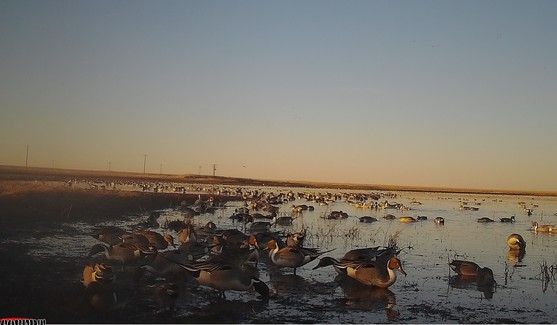 Northern pintails feeding at bait site in the Texas Panhandle, February 2020 (TPWD).
Comparing winter ecology and spring migration strategies of northern pintails originating from different wintering regions across North America - the continental population of the northern pintail (hereafter, pintails) remains below established population objectives, despite relatively good breeding habitat conditions over the last three decades. Pintails occupy a large distribution of wintering areas in North America and a considerable proportion of their annual life cycle is spent in non-breeding habitats. Specifically, this species appears to show a high affinity for coastal wintering areas, particularly those associated with large bodies of water (e.g., Texas and Louisiana coasts, central California). As a result, different wintering populations are subject to different stressors during winter, appear to survive at varied rates across winter, and migrate through markedly different landscapes during spring migration.
The majority of Central Flyway pintails winter on the Texas coast and females depart wintering areas in relatively lean body condition, in contrast to what we observe in other regions. This variation may be due to a low-quality diet on wintering areas or possibly because of different spring migration strategies employed among regions. Currently, there remains uncertainty as to how winter ecology and spring migration strategies impact reproduction on breeding grounds, which is important, as this information affects and informs management decisions on the ground.
In light of these concerns, TPWD has partnered with the Caesar Kleberg Wildlife Research Institute (Texas A&M University–Kingsville), U.S. Fish and Wildlife Service, Ducks Unlimited, New Mexico Department of Game and Fish, U.S. Geological Survey, and Louisiana Department of Wildlife and Fisheries to investigate both winter ecology and spring migration strategies of pintails wintering in different regions across North America. The goals of this research are to:
- Investigate habitat use and behavioral activities of pintails wintering in Texas;
- Compare spring migration strategies of pintails within and among wintering areas in North America;
- Investigate the linkages between migration strategies and reproductive success;
- Assess the contribution of endogenous nutrients (coming from within the body, such as lipid and protein stores) to reproduction for different regions and different migration strategies; and,
- Identify critical stopover areas for pintails migrating from different wintering areas.
 Georgina (center; a native of the United Kingdom) and crew work up northern pintails for release.
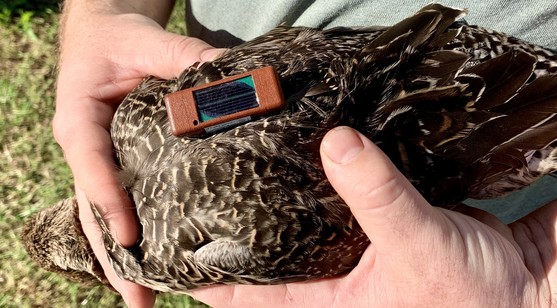 GPS tracking device attached to the back on a female northern pintail.
Pintails were captured in several wintering locations during the fall and winter of 2019-2020, including the Texas coast, Texas Panhandle, New Mexico, Arizona, central California and Louisiana coast. To date, 148 females have been outfitted with hybrid GPS-ACC (accelerometer) tracking devices, 65 of which have been deployed in Texas (Texas Coast = 52, Texas Panhandle = 13). These tracking devices provide location information every 60 minutes and also provide almost continuous behavioral data (e.g., feeding, walking, resting, flying); these data will help us better assess habitat use during winter as well as aid in understanding their migration strategies during spring. Two more field seasons are scheduled in 2021 and 2022.
This project endeavors to answer research questions on both regional and population levels. Regionally, this study will assist TPWD in their efforts to better understand habitat use and behavioral activities of pintails in Texas. Nationally, the project aims to identify the most important stopover sites used during spring migration among different wintering regions. These findings will provide an understanding of wintering and migration ecology of pintails that will help address questions important to resource managers and inform future management decisions.
By: Georgina Eccles, Doctoral Candidate, TAMU-Kingsville, Contributing Author
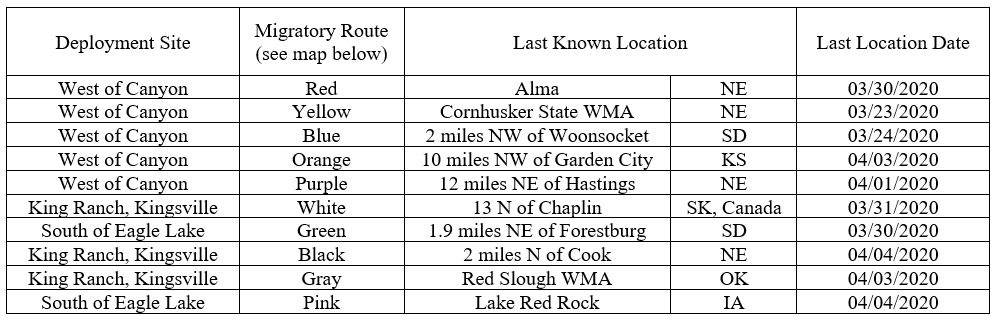 Deployment information and the most current location information provided by five devices deployed in the Texas Panhandle (West of Canyon) and five devices deployed along the Texas Coast (Kingsville, Eagle Lake).
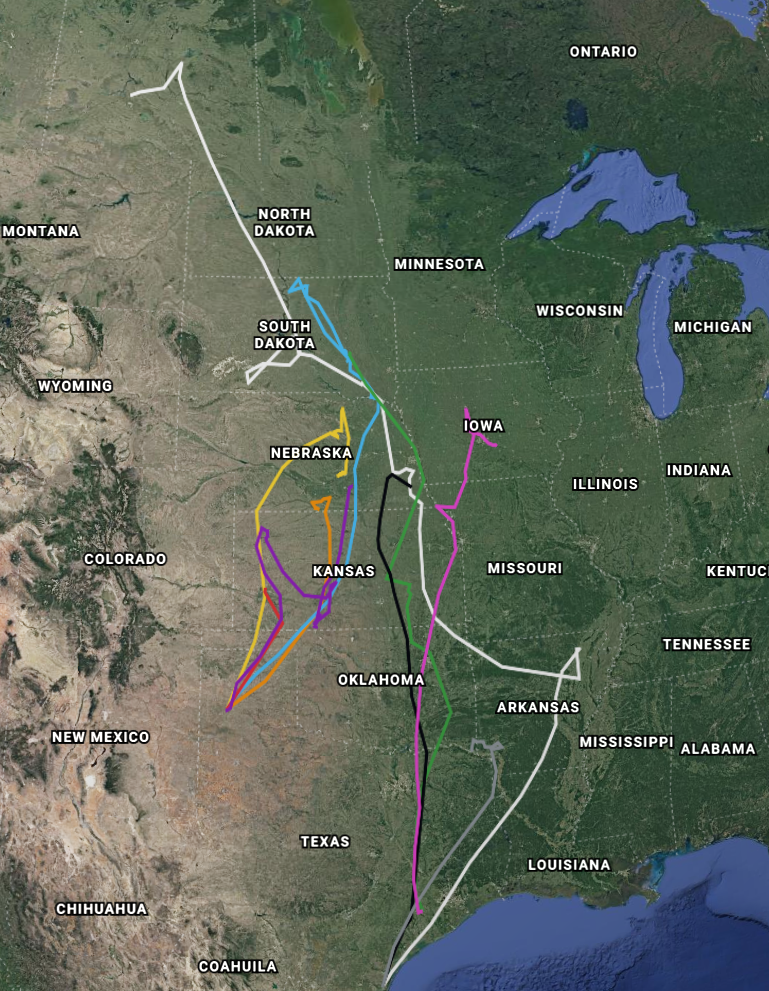 Migratory pathways of ten female pintails outfitted with tracking devices, five from the Texas Panhandle and five from the Texas Coast. See table above for deployment and current location information.
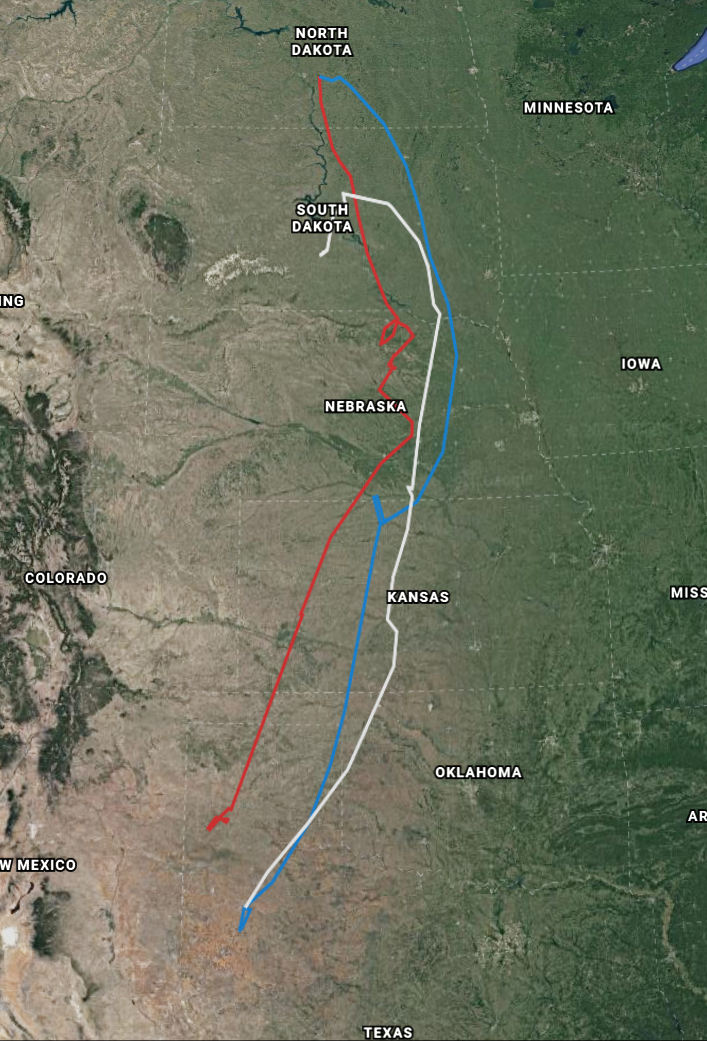 Migratory pathway of one hen (ID #: TXC-20-03) showing a full migration cycle in 2019 (captured southwest of Amarillo, TX in February of 2019) and spring migration in 2020. The red line is spring migration 2019, the blue line is fall migration 2019, and the white line is spring migration 2020. This hen is currently located 5.7 miles South West of Vivian, SD.
Reports from the Field: Post Oak Savannah Restoration
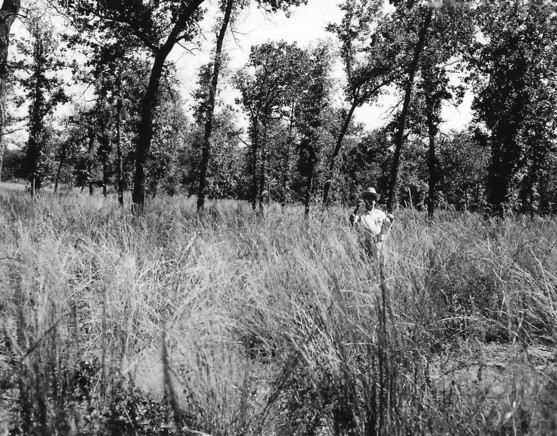 Gus Engeling Wildlife Management Area, Anderson County, circa 1960s.
Historically, uplands of the Post Oak Savannah ecoregion were dominated by herbaceous, grassland species with scattered, large trees and oak-hickory mottes. The elimination of natural disturbances, such as fire and mob grazing, and conversion to non-native grasses, has led to the deterioration and destruction of habitat. The lack of suitable, quality habitat led to the decline of many native wildlife species including Texas horned lizards, northern bobwhites, wild turkey, and many ground nesting songbirds. Upland habitats in the ecoregion are now characterized by densely forested areas with complete canopy closure, a thick mid-story layer, little to no native grasses or open pasture, and dominated by “improved” non-native grasses.
The Gus Engeling Wildlife Management Area (GEWMA), owned by TPWD, is located in the Post Oak Savannah near Tennessee Colony, TX, and encompasses 11,079 acres. GEWMA serves as a research and demonstration site for the Post Oak Savannah ecoregion with emphasis placed on restoring native habitats and wildlife species which historically thrived on the landscape. In 2006, TPWD staff began planning a savannah restoration project aimed at setting back succession and restoring 2,500 acres of closed canopy oak-hickory forest to its natural condition. From 2010 to 2017, approximately 60% of the timber was removed from the treatment area. This work resulted in sunlight once again hitting the forest floor and allowed species such as little bluestem, big bluestem, eastern gamagrass, and many beneficial forbs (flowering plants) to flourish...
 Gus Engeling Wildlife Management Area pre-restoration. Note the dense canopy cover and mid-story vegetation.
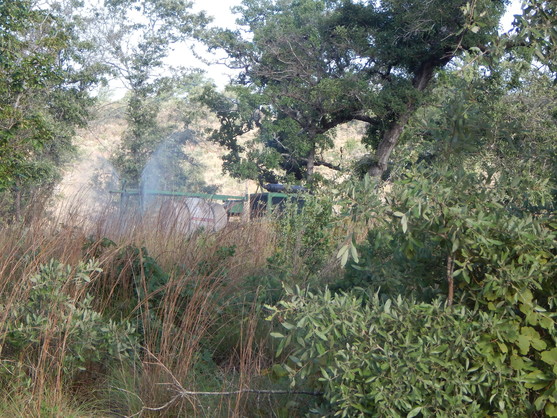 A skidder applies herbicide as part of savannah restoration project on the "Gus".
 Gus Engeling Wildlife Management Area post-treatment. Note the open canopy and reduction in mid-story vegetation.
...Funds generated by the sale of timber were managed by the National Wild Turkey Federation (NWTF) in a stewardship contract. Throughout the process, these dollars were put back to use on GEWMA by NWTF and TPWD in the form of herbicide application and the construction of approximately 3.5 miles of 75-foot wide mowable/diskable fire lines. After timber was harvested, TPWD staff began implementation of prescribed fire and herbicide application to limit woody encroachment. Future plans on the treated area include implementing a progressive grazing program to increase bare ground and vegetation diversity. These plans hinge on the funds and relationships found through partners such as NWTF, Quail Forever, and USDA’s Natural Resource Conservation Service.
Past and present efforts on GEWMA have greatly improved the habitat, which has led to wildlife restoration efforts on GEWMA. From 2014 to 2018, over 160 eastern and Rio Grande wild turkeys were released in hopes to restore turkey populations to the Post Oak Savannah. In 2019, TPWD and Texas A&M University began a multi-year project to study the effectiveness of translocation as tool to restore northern bobwhite populations. Seventy wild-caught northern bobwhites were translocated to GEWMA in year one of the project. Our hopes are to restore these and other wildlife species back to the Post Oak Savannah ecoregion for the enjoyment of both present and future Texans.
By: Kyle Hand, GEWMA Wildlife Biologist, Contributing Author
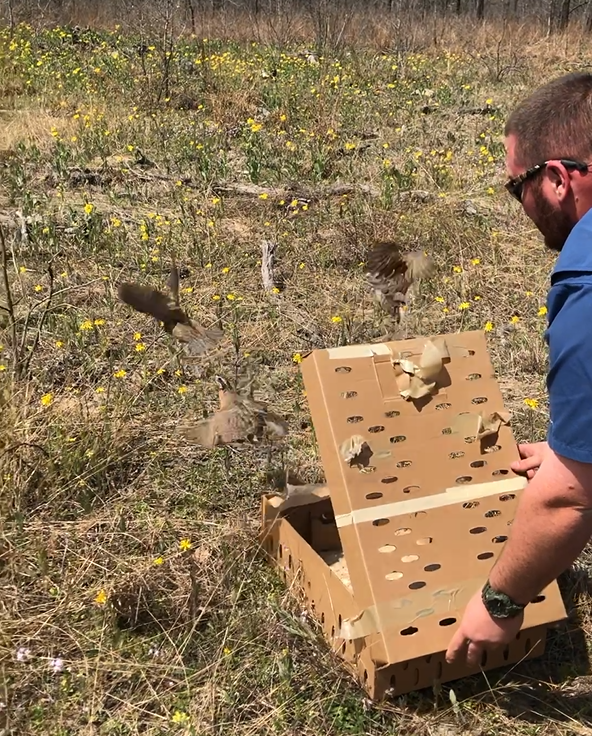 Kyle and partners release quail on the "Gus" as part of a research effort to evaluate quail translocations.
Connecting the Pieces of Habitat Conservation
As many of us have found ourselves limited to our homes, there’s been a resurgence in playing games and solving puzzles. For those who have tackled that long-forgotten, unopened puzzle in the back of the closet, you know it’s easier and faster to find the solution when we keep the big picture in mind and engage more people in the process. The same can be said of habitat conservation.
Across the U.S., Migratory Bird Joint Ventures (JVs) tackle the conservation puzzle by connecting the partners and resources needed to restore and protect important landscapes for the benefit of birds, other wildlife, and people. They provide partners with seed money as well as critical scientific, social, technical, and policy guidance and support to plan and carry out the most effective on-the-ground bird and habitat conservation efforts.
Since the North American Waterfowl Management Plan called for their establishment in 1986, Joint Ventures have grown to cover nearly all of the U.S. and Canada, and much of Mexico, each addressing the bird habitat conservation issues found within their geographic area. Since Texas has such diverse landscapes and habitat types — from coastal wetlands and the Chihuahuan desert to the southern high plains of the Panhandle — the state is covered by five Joint Ventures: Gulf Coast JV, Playa Lakes JV (PLJV), Oaks and Prairies JV, Rio Grande JV, and Lower Mississippi Valley JV. All these JVs are working to better understand the causes of bird species declines within their regions and help partners know where to target conservation actions to reverse these declines...
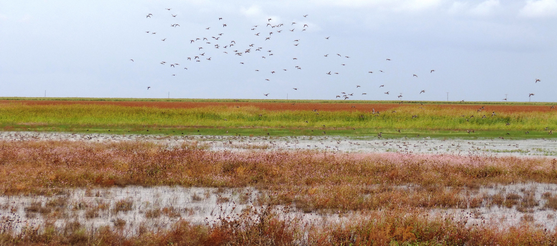 Ducks landing on a playa lake in West Texas.
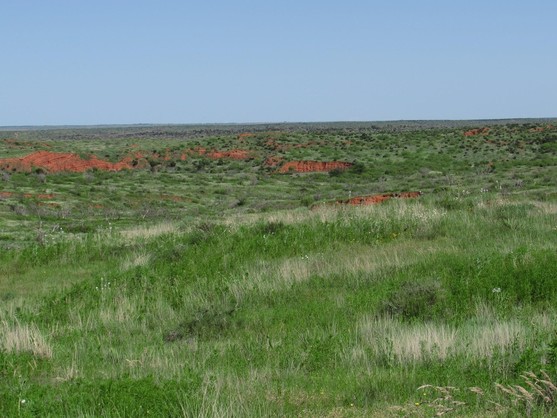 Native grasslands, a significant focus for PLJV, at the Matador Wildlife Management Area, Paducah, TX.
...PLJV brings together many partners, including TPWD, that do bird conservation in the western Great Plains. To better understand how birds are faring in this landscape and how conservation actions affect them, the partnership funds the Integrated Monitoring in Bird Conservation Regions (IMBCR) program which provides much-needed, scientifically defensible estimates of bird distribution and abundance across the region. The IMBCR sampling design not only gathers monitoring data but can be used to evaluate management questions as well.
Shrub encroachment into grasslands is a significant concern among the partnership, so PLJV is using IMBCR data to evaluate the effects of shrub encroachment on grassland bird communities at a regional scale and also on smaller management units.
In 2019, the PLJV worked with TPWD to evaluate the effectiveness of shrub removal on grassland birds at Matador Wildlife Management Area (WMA). Results indicate that northern bobwhite and other grassland birds have higher densities on Matador than off and treatments (e.g., herbicide, prescribed fire, mechanical brush removal) should be reapplied every 5-10 years to maintain the species.
“There are a lot of variables that come into play as far as bird populations and how they’re going to use the habitat,” said Matt Poole, Assistant Project Leader for the Panhandle WMA Complex. “Hopefully, what we find with studies like this is that what we’re doing is really working, and then we have the data to back up what we’re trying to sell.”
By: Miruh Hamend, Communications Director, PLJV, Contributing Author
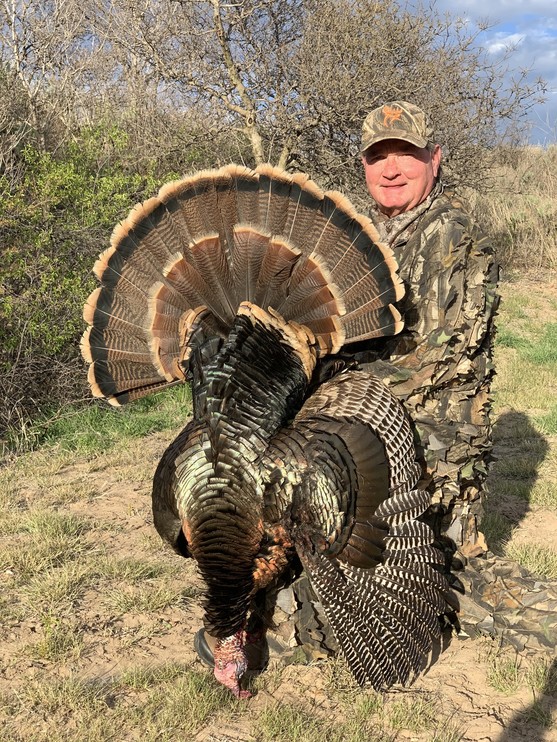 A big congrats to George Moore of Oklahoma who shot this TPWD banded bird up in Hemphill County last week! The bird was banded as a jake about 4 miles away by TPWD biologist Jamie Baker on the Gene Howe Wildlife Management Area back in March of 2017, making this tom a healthy 4 years old! He was sporting 1-1/2” spurs, a 9” beard, and weighed in at 20.5 lbs - congrats, George!
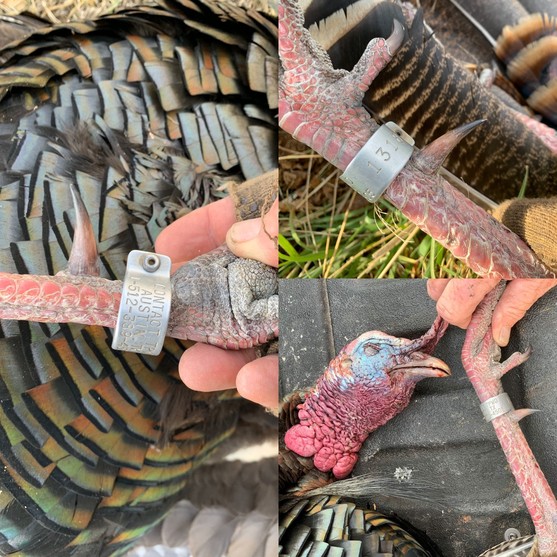 George Moore's harvested bird in Hemphill County, TX.
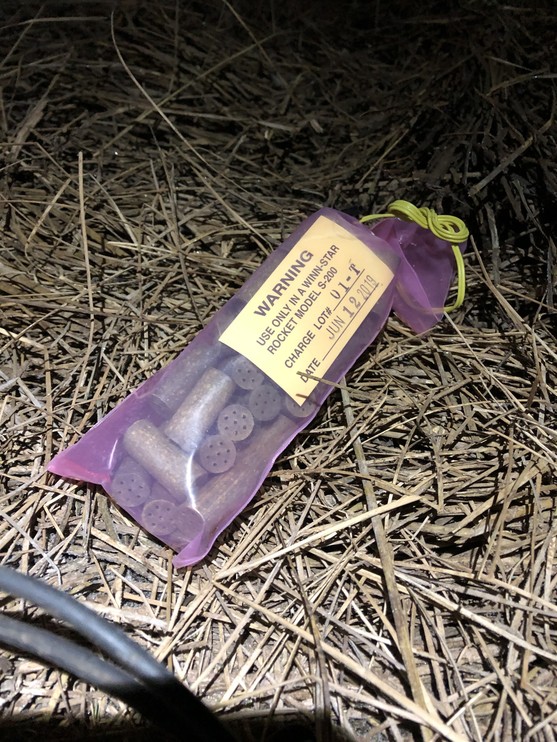 Northern pintail research in the field - rocket net explosive charges await their fate.
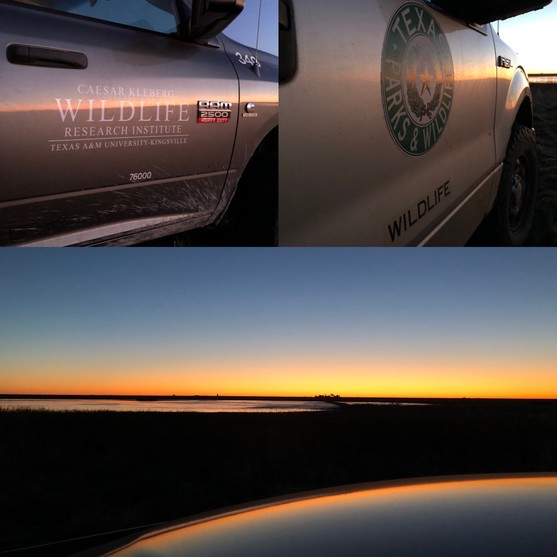 The sun rises on another day of northern pintail trapping in the Texas Panhandle.
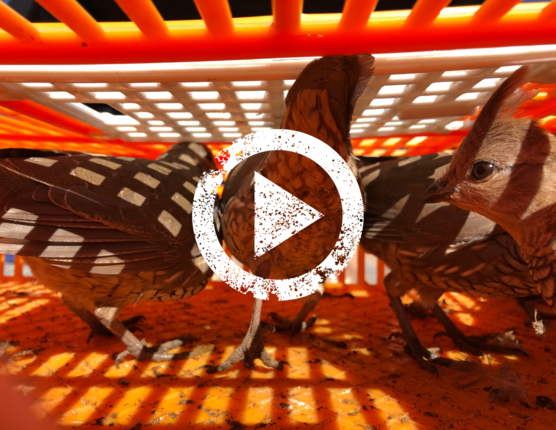 Check out these videos of northern bobwhite and scaled quail trapping this spring!
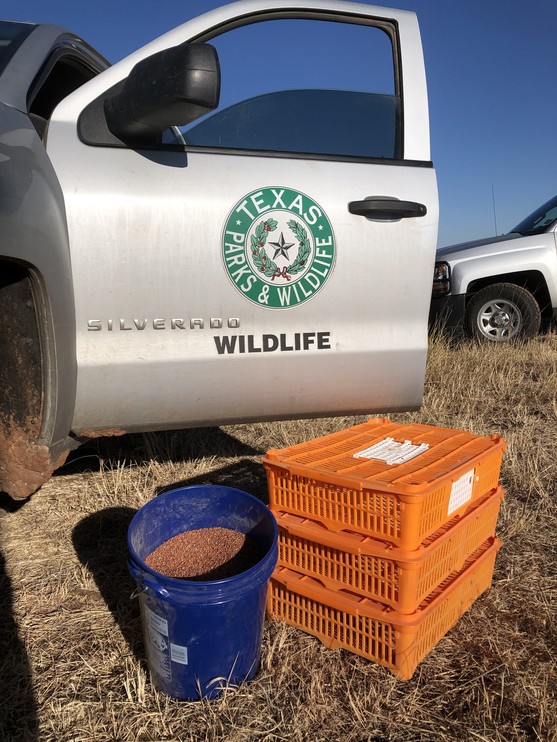 Just another day in the field.
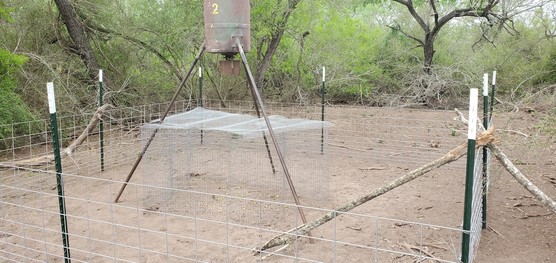 TPWD biologist Tony Henehan (South Texas) is partnering up with the Small Game Program to capture the somewhat elusive chachalaca. We'll see if this trap setup leads to success - more to come!
|