
A workplace injury log can do more than track what happened. It can reveal hazards that still need attention. These tips explain OSHA’s recordkeeping requirements, what a DART rate is, and how to use injury patterns to prevent future injuries.
Esta información también está disponible en español.
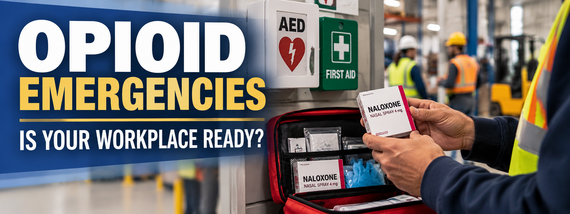
An opioid overdose can happen anywhere — including at work. Would your workers know what to do? New OSHA guidance urges employers to prepare before an emergency happens.
- Keep an FDA-approved opioid reversal medication, such as naloxone or nalmefene, in an easy-to-reach location alongside other emergency supplies.
- Train workers to recognize warning signs, including slow or stopped breathing, blue lips or skin, pinpoint pupils, and unresponsiveness.
- Make sure workers know how to give the medication and call 911 immediately.
Learn more in OSHA’s new Opioid Overdose Rescue with Reversal Medications fact sheet.
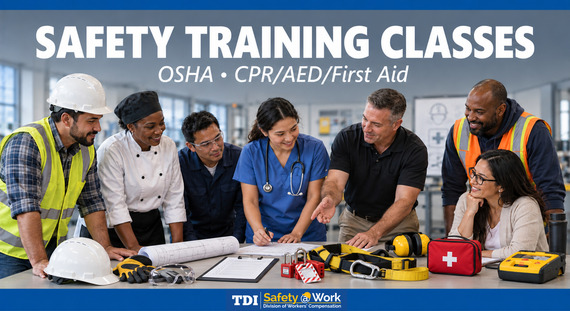
Now's the time to finish the year with new safety skills and certifications. DWC offers free and low-cost OSHA-authorized safety training and CPR, AED, and First Aid certification classes to help Texas employers and employees recognize hazards, respond to emergencies, and prevent injuries. Classes are available in English and Spanish. Participants must be fluent in the language of the course they select.
Advance registration is required for all classes. A photo ID is required for OSHA courses. Select a class date below to register and complete your safety training before year’s end.
🦺 OSHA-authorized training
Build your knowledge of workplace hazards and safe work practices with OSHA-authorized training designed for workers, supervisors, and others responsible for workplace safety.
Which course is right for you?
- Choose Construction if you build, remodel, or do related work.
- Choose General Industry if you work in manufacturing, warehousing, healthcare, offices, oil fields, utilities, or delivery.
- Choose 10-Hour for basic hazard recognition.
- Choose 30-Hour if you supervise others or hold safety duties and need deeper training.
Experienced OSHA-authorized instructors teach each class. Participants who successfully complete a course receive an official OSHA card by mail within six to eight weeks.
OSHA 10-Hour Construction — free
OSHA 30-Hour Construction — $30
OSHA 10-Hour General Industry — $30
❤️ CPR, AED, and First Aid classes — $35
When seconds matter, the right training can save a life. These hands-on, American Heart Association-certified classes teach participants how to perform CPR, use an automated external defibrillator (AED), and provide first aid until emergency responders arrive.
 View the 2026-2027 training calendar.
Build your skills. Help every worker go home safe.
Visit www.txsafetyatwork.com to learn more or call 512-804-4610.
Whether you're new to workplace safety or ready to take your safety programs further, DWC offers two free Zoom webinar series with practical guidance you can put to work. Choose the series that best fits your needs, then select a date below to register.
📋 Essentials for New Safety Professionals
Free | 1-hour presentation plus 30 minutes of live Q&A | Zoom | Limited to
20 participants
New to workplace safety? This interactive webinar series covers the
fundamentals and offers practical guidance from experienced safety
professionals. Ask questions, share ideas, and get advice you can apply to
your job. One free webinar will be offered each quarter. You may register
for individual classes, but attending all is recommended to get the most from
the series.
Upcoming webinars:
-
First quarter: OSHA Recordkeeping | December 10, 2026 |
10-11:30 a.m. or 1:30-3 p.m.
Learn OSHA's recordkeeping requirements and how to complete required
injury and illness records.
-
Second quarter: Incident Investigations | January 25, 2027 |
10-11:30 a.m. or 1:30-3 p.m.
Learn how to investigate workplace incidents, identify root causes, and prevent similar events.
-
Third quarter: Preparing for Internal Audits and OSHA Inspections | March 16, 2027 | 10-11:30 a.m. or 1:30-3 p.m.
Learn how to prepare your workplace for internal safety audits and OSHA inspections with confidence.
-
Fourth quarter: Safety and Health Program Development Overview | July 13, 2027 | 10-11:30 a.m. or 1:30-3 p.m.
Learn how to build the foundation of an effective workplace safety and health program.
⚠️ Safety Program Builder webinar series
Free | 1-hour Zoom webinars
Go beyond the basics with in-depth webinars focused on building practical
workplace safety programs. Learn how to identify hazards, meet OSHA
requirements, strengthen safety practices, and better protect your workforce.
Upcoming webinars:
-
Hazard Identification and Assessment | November 18 | 10-11 a.m.
or 2-3 p.m.
Learn how to identify workplace hazards, use tools like Job Safety Analyses (JSAs) to break tasks down step-by-step, and apply controls that keep workers safe.
-
Bloodborne Pathogens Program Development | November 23 |
8-9 a.m. or 1:30-2:30 p.m.
Learn how to develop a bloodborne pathogens program that protects workers and meets OSHA requirements.
-
Safety Program Development, Evaluation, and Improvement | November 25 | 8-9 a.m. or 1:30-2:30 p.m.
Learn how to build and evaluate safety programs and use incident trends and employee feedback to continually improve results.
-
Lockout/Tagout Program Development | December 8 | 10-11 a.m. (English) or 1:30 p.m. (Spanish).
Learn how to develop a lockout/tagout program that controls hazardous energy and helps prevent injuries during equipment servicing and maintenance.
-
Confined Space Program Development | December 15 | 10-11 a.m. or 2-3 p.m.
Learn how to identify confined spaces, assess hazards, and establish safe entry procedures.
For a complete list of upcoming webinars, visit www.txsafetyatwork.com or call 512-804-4610.
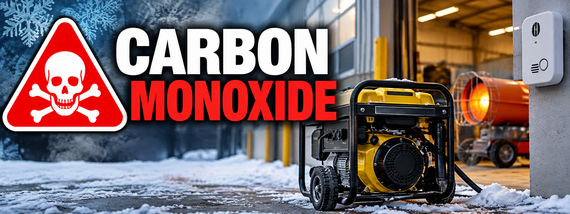
Colder weather brings more than falling temperatures. Workplaces may turn on fuel-burning heaters in shops, warehouses, garages, and offices. Winter storms and power outages can also lead to portable generator use. Both can release carbon monoxide (CO), a colorless, odorless gas that can quickly reach dangerous levels in enclosed or poorly ventilated areas.
Before cold weather settles in:
- Inspect fuel-burning heaters, vents, and exhaust systems for damage or blockage.
- Test CO detectors and replace weak batteries.
- Run generators outdoors only and away from doors, windows, and vents.
- Make sure work areas have proper ventilation.
- Train workers to recognize headache, dizziness, weakness, nausea, and confusion as possible signs of CO exposure.
If workers suspect CO exposure, move everyone to fresh air, call 911, and keep workers out of the area until emergency responders say it is safe.
Learn more from OSHA’s Using Portable Generators Safely and Carbon Monoxide Poisoning fact sheets or view these resources:
- DWC's Carbon Monoxide Hazards from Small Gasoline Powered Engines Fact Sheet (English/Spanish).
- TDI's How to Use Generators Safely video podcast (English).
- TDI's Carbon Monoxide Poisoning video (English/Spanish).
|



