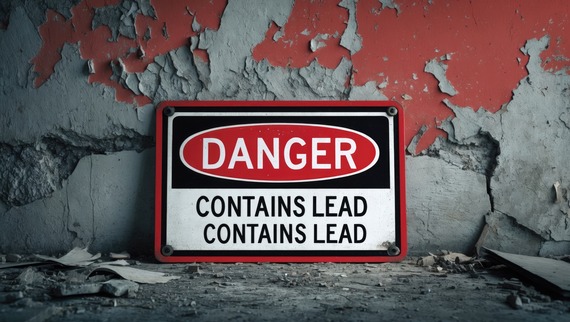
Lead dust, fumes, and mist are easy to miss — but once lead enters the body, it can stay for years and cause serious health problems for workers and their families. From demolition and renovation to recycling and firing ranges, anyone working around old paint, metal, or contaminated soil may face a risk. Learn how to spot the hazard and use these tips to help keep lead out of your body, workplace, and home.
Esta información también está disponible en español.
Poisons aren’t always obvious. Like lead dust, many harmful substances at work and at home can’t be seen or smelled — but they can still cause serious illness in seconds.
National Poison Prevention Week each year in mid-March is a reminder to spot hazards early and protect workers and families from toxic exposures. Store chemicals safely, label containers clearly, follow safe handling procedures, and wash up before eating or going home. Never bring contaminated clothing, tools, or dust into your car or home.
Post the Poison Help number where workers can find it: 800-222-1222. Experts are available 24/7 for free, confidential advice.
Learn more and download free prevention resources at PoisonHelp.org.

Workplace injuries can happen fast — but OSHA training helps workers recognize hazards before they become accidents. DWC’s OSHA-authorized 10-Hour Construction, 10-Hour General Industry, and 30-Hour Construction courses prepare Texas workers to identify the most common job-site dangers, understand OSHA rules, and build safer work habits.
Key details
- OSHA-10 Construction: Free.
- OSHA-10 General Industry and OSHA-30 Construction: $30 per person.
- Classes offered in English and Spanish.
- In-person and Zoom (online) options available.
- Photo ID and advanced registration required.
- Official OSHA class completion card provided within six to eight weeks after successful course completion.
Which OSHA course is right for you?
-
Step 1: Pick your industry. If most of your day is spent building or remodeling, choose an OSHA Construction course. If you mostly work in or for a facility that is already built — such as plants, warehouses, healthcare facilities, offices, delivery routes, oil fields, or utilities — choose an OSHA General Industry course.
-
Step 2: Pick a 10-Hour or 30-Hour class. If you are an entry-level or frontline worker who needs basic hazard recognition, worker rights, and job safety training, choose a 10-Hour course. If you are a supervisor, foreman, lead worker, or anyone with safety responsibilities who needs deeper training in hazard prevention, leadership, and OSHA compliance, choose a 30-Hour course.
Seats fill quickly — register early by clicking on a date below to secure your spot.
April 2026 classes
OSHA-10 Construction — Free
English:
Spanish:
OSHA-30 Construction — $30
English:
OSHA-10 General Industry — $30
English:
 Make safety a habit. Get the right training now to advance your career!
See the full 2026 training calendar here.

Your eyes work hard every day — and one small mistake can cause permanent damage. According to the National Institutes of Health, about 2,000 U.S. workers sustain job-related eye injuries daily that require medical treatment.
March is Workplace Eye Wellness Month, led by Prevent Blindness and supported by the American Academy of Ophthalmology. The campaign reminds employers and workers to prevent injuries and reduce eye strain both on screens and on job sites.
Protect your vision:
- Wear required safety glasses, goggles, or face shields in hazard areas.
- Choose American National Standards Institute-rated eye protection that fits properly.
- Follow the 20-20-20 rule to reduce digital eye strain — every 20 minutes, look 20 feet away for 20 seconds.
- Reduce screen glare and sit about an arm’s length (18–25 inches) from monitors.
- Report eye hazards and replace damaged eyewear right away.
For more workplace eye safety guidance, view these free DWC publications:
You can also stream eye health and safety videos on DWC’s Workplace Safety Videos webpage.
OSHA has extended part of its updated Hazard Communication Standard (HazCom) compliance timeline.
Manufacturers, importers, and distributors now have until May 19, 2026 — instead of January 19, 2026 — to evaluate certain hazardous chemicals and meet new classification and labeling requirements.
OSHA added time so it can publish guidance materials to help employers understand and comply with the revised rule.
If your workplace manufactures, imports, or distributes chemicals, use this extension to review your hazard classifications, safety data sheets, and labels to make sure they meet the updated requirements.
For details, see the Federal Register notice.
|



