Vol. 31 | October 2026

It’s that time again. At noon on January 12, 2027, the Texas Legislature will convene and the 90th Regular Legislative Session will begin. On that day, the Texas House of Representatives and the Texas Senate will both be “open for business.” The regular session will continue until May 31, 2027.
Although the session does not officially begin until January, legislators may begin pre-filing bills on November 9, 2026.
During the 89th Regular Legislative Session, 8,719 House Bills and Senate Bills were filed, and 1,213 of those passed. This was an increase in bill filings from the previous session’s 8,046 bills but was a slight decrease in bills passed from the previous 1,246.
Throughout the session, TDLR will track bills filed that, if enacted, would impact TDLR’s programs, and will highlight those bills in future editions of the TDLR Health Monitor. Also, be sure to check TDLR’s website in the coming months for our dedicated page on the 90th Legislative Session.
|

Podiatry
The Texas Commission of Licensing and Regulation adopted the repeal of existing rules at 16 Texas Administrative Code (TAC), Chapter 130, Subchapter B, §130.28; and Subchapter D, §130.43; and amendments to the existing rules at Subchapter C, §§130.30, 130.31, 130.32, and 130.33; and Subchapter F, §130.60, regarding the Podiatric Medicine Program.
The adopted rules implement Senate Bill (SB) 968, 89th Legislature, Regular Session (2025), which repealed unique training requirements for members of the Podiatric Medical Examiners Advisory Board; replaced references to “temporary residency licenses” with “residency licenses”; and repealed provisional licenses.
The Texas Commission of Licensing and Regulation adopted amendments to existing rules at 16 Texas Administrative Code (TAC), Chapter 60, Subchapter C, §60.32; Subchapter F, §60.82; and Subchapter I, §60.301 and §60.302, regarding the Procedural Rules of the Commission and the Department.
The adopted amendments implement Senate Bill 2443, 89th Legislature, Regular Session (2025), and modernize the delivery of contested case pleadings, notices, and orders by allowing applicants and license holders to be served electronically under certain conditions. The adopted rules additionally provide for electronic notice of dishonored payments.
The adoption justification was published in the August 28, 2026, issue of the Texas Register (51 TexReg 5791). The updated rule chapter will be available in the Texas Administrative Code upon its effective date of September 1, 2026.
Hearing Instrument Fitters and Dispensers
The Texas Commission of Licensing and Regulation adopted amendments to existing rules at 16 Texas Administrative Code (TAC), Chapter 112, Subchapter B, §112.12 and §112.13; Subchapter D, §112.32; and Subchapter H, §112.70, regarding the Hearing Instrument Fitters and Dispensers program.
The adopted rules implement SB 904 and SB 2075, 89th Legislature, Regular Session (2025), and update and clarify existing rules. The adopted rules remove the requirement that three advisory board members’ six-year terms all expire on February 1 of odd numbered years; extend the advisory board presiding officer’s term from one year to two years; require first-time renewal applicants for a hearing instrument fitter and dispenser license to complete 20 hours of continuing education; remove the exception that allowed license renewal for licensees who did not meet the continuing education requirements during their first 24 months of licensure; update and clarify the rules regarding the sale of hearing instruments; and add a provision that allows hearing instruments to be sold to a minor with a written statement from any licensed physician, not just a physician specializing in diseases of the ear.
The adoption justification was published in the August 28, 2026, issue of the Texas Register (51 TexReg 5787). The updated rule chapter will be available in the Texas Administrative Code upon its effective date of September 1, 2026.
Speech-Language Pathologists and Audiologists
The Texas Commission of Licensing and Regulation adopted amendments to existing rules at 16 Texas Administrative Code (TAC), Chapter 111, Subchapter A, §111.2; Subchapter B, §111.12 and §111.13; Subchapter F, §111.50 and §111.55; Subchapter H, §111.70; and Subchapter W, §111.220, regarding the Speech-Language Pathologists and Audiologists program.
The adopted rules implement SB 904, SB 905, and SB 2075, 89th Legislature, Regular Session (2025), and update and clarify existing rules. The adopted rules remove the obsolete definition of “Provisional Licensee”; remove the requirement that three advisory board members’ six-year terms all expire on February 1 of odd-numbered years; extend the advisory board presiding officer’s term from one year to two years; update and clarify existing rules relating to the requirements for licensure as a speech-language pathology assistant and as an audiologist; and update and clarify the rules regarding the sale of hearing instruments.
The adoption justification was published in the August 28, 2026, issue of the Texas Register (51 TexReg 5781). The updated rule chapter will be available in the Texas Administrative Code upon its effective date of September 1, 2026.
|

Podiatrists Can Keep Their Licenses While Pausing Practice
Babies, sabbaticals, breaks, oh my! If you need time away from practice, there’s no need to worry. Podiatrists have the option to place their license on Inactive Status.
Whether you’re welcoming a new family member, taking a sabbatical, or simply stepping away for a period of time, you can request inactive status by submitting the appropriate form to TDLR. There is no cost to go inactive. When your renewal period comes around, you may choose to remain inactive at no charge. Just complete the form again and submit your renewal. No payment nor Continuing Education (CE) are required to stay inactive.
However remember: you may NOT practice while on inactive status. Doing so would be considered practicing without a license.
When you’re ready to return to active status, simply pay a normal renewal fee, complete your renewal application, and make sure you’ve met all your CE requirements before renewing. Then Abracadabra! Your license is active again and you may resume practicing Podiatry to your heart’s content once again.
Please remember, all licenses must still be renewed while on inactive status before they expire AND your 50 hours of CME must be completed before reactivating your license.
Happy hiatus!
|

There is often confusion between ASHA certification and Texas licensure for Speech-Language Pathology Assistants (SLP Assistants).
ASHA offers a voluntary national certification; however, ASHA certification does not authorize someone to practice as an SLP Assistant in Texas. To work in Texas, an individual must hold a TDLR issued SLP Assistant license and follow the supervision and scope of practice requirements in Texas Administrative Code Chapter §111.
ASHA and TDLR also have different education requirements, clinical experience expectations, and application pathways. This means meeting ASHA’s certification standards does not necessarily mean a person qualifies for Texas licensure.
For supervising SLPs, employers, and SLP Assistants, it’s important to remember that ASHA certification and TDLR licensure are completely separate credentials. Always verify that an SLP Assistant meets current TDLR licensing requirements before services are provided in Texas.
Always check TAC Chapter §111 for the current licensing, supervision, and scope of practice requirements.
|

TDLR is developing a new licensing system called CORE. As you know, TDLR licenses several professions, and many of the current computer systems are outdated and in need of a complete overhaul. We are currently building a new licensing system for our 30+ professions. While the timing may be a spooky season, there’s nothing frightening about this upgrade, just a modern, more efficient system.
Wave 1 is complete, bringing the Behavior Analysts into CORE. Wave 2 will include Continuing Education providers as well as additional occupations. In early 2027, Wave 3 will go live with the Dyslexia Therapists program transitioning into CORE. More health professions will be added over the next 24 months.
To preview the new system looks like, visit the Behavior Analysts webpage and watch the one-minute overview. Stay tuned for more updates!
|

Consumers, members of the public, and TDLR employees can file online complaints against licensees or report unlicensed activity for most TDLR programs. Enforcement of our laws and rules is an important part of protecting public health and maintaining trust in licensed professionals.
How to File:
- Navigate & Access:
Visit TDLR’s Complaints and Enforcement page and select File a Complaint. (Note: The online form times out after 15 minutes)
- Choose the Correct Category:
You will be asked whether you are filing a complaint against a licensed or unlicensed person or business. If you are unsure select “unlicensed.”
- Complete Required Fields:
Fill in all required sections marked with a red asterisk. Provide as much detail as possible about the respondent (name, license number if known, address, and contact details).
- Choose Whether to Remain Anonymous:
You may provide your contact information to receive status updates, or you may file anonymously.
Note: If you submit your complaint anonymously, we will be unable to contact you if additional information is required.
Complaints must allege a potential violation of applicable laws or rules and must include enough information for TDLR to consider the allegations. Complaints that do not meet these criteria will not result in an investigation.
|

Audiologists and Speech-Language Pathologists: Exam Vendor Change in 2027
Beginning January 1, 2027, the national exams for Audiologists and Speech‑Language Pathologists (formerly known as the Praxis® exams and administered by ETS) will transition to PSI. Registration for 2027 exam dates is expected to open on November 3, 2026.
ASHA has shared that this vendor change will not affect exam content, format, passing scores, or eligibility requirements. Candidates will be able to test either in person at secure PSI test centers or through PSI’s online remote‑proctoring system. TDLR will continue accepting previous Praxis® exam results from applicants.
TDLR is updating forms and website information to reflect this change and will share updates with graduating students during spring presentations. For more information about PSI’s testing network, visit their website. For official exam updates, please refer to asha.org.
|

Some Texans have reported receiving alarming calls claiming things like:
YOU have a JUDGEMENT against YOU from TDLR. PAY NOW to clear it. ACT NOW to avoid criminal prosecution and extra FINES.
If you receive a message like this, ignore it. Hang up and block the number. These calls are scams designed to steal your personal information and money.
Like all government agencies, TDLR will never call you demanding immediate payment. Nor will the IRS or any legitimate government agency.
If you receive a suspicious call:
- Stay calm.
- Do not engage with the caller.,
- Do not provide any information.
You can report scam calls to the Federal Trade Commission (FTC) at1‑877‑FTC‑HELP (1‑877‑382‑4357) or online at: ReportFraud.ftc.gov .
|
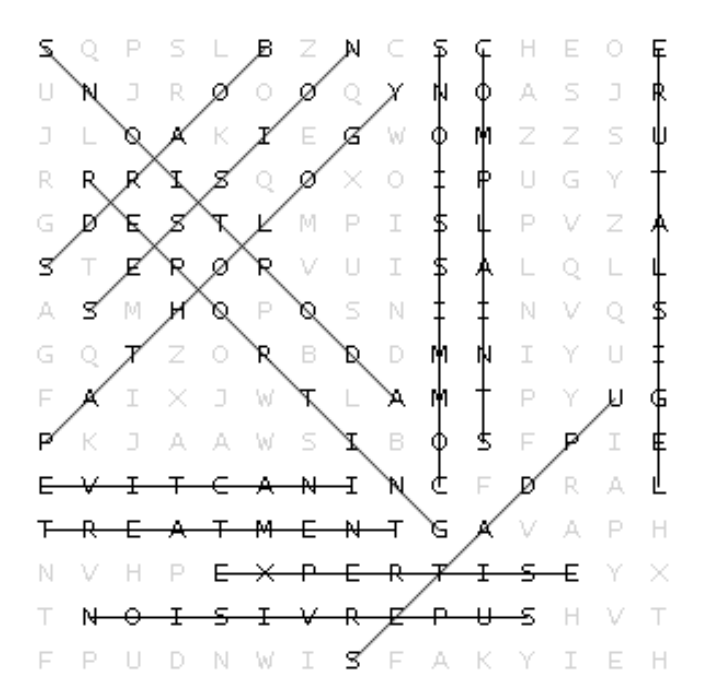
Can you find the 13 words repeated throughout the newsletter in the puzzle below?
 Adoptions Pathology
Complaints Supervision
Legislature Commissions
Session Inactive
Updates Reporting
Boards Treatment
Expertise

Executive Order for Dyslexia Therapists and Practitioners
TDLR has adopted an alternative qualification for determining a person’s eligibility for a licensed dyslexia therapist or a licensed dyslexia practitioner license.
Effective September 1, 2026, TDLR will recognize a multisensory structured language education training program approved by the Academic Language Therapy Association (ALTA) as satisfying the statutory accreditation qualification under Texas Occupations Code §403.106(a)(1). The program must still meet all other applicable requirements under Texas Occupations Code §403.106.
TDLR made this change after learning that some ALTA-approved programs may not hold the separate accreditation from a nationally recognized accrediting organization previously used to verify this qualification. After reviewing ALTA’s standards and approval process, TDLR determined that ALTA evaluates the substantive qualifications and program characteristics addressed through accreditation, including educational, clinical, instructional, and program-quality standards.
This change applies only to how TDLR verifies the accreditation qualification under Occupations Code §403.106(a)(1). It does not reduce or eliminate any education, training, examination, or other licensing requirements.
Current licensees do not need to take any action. This alternative qualification will remain in effect until rules addressing the recognition of ALTA-approved program training programs take effect.
|

The enforcement division at TDLR needs your help filling Subject Matter Expert (SME) roles. We are seeking SMEs in the following areas:
- Podiatric Medicine
- Dyslexia Therapists
- Athletic Trainers
- Hearing Instrument Fitters and Dispensers
- Orthotists and Prosthetists
- Speech-Language Pathologists and Audiologists
- Behavior Analysts
- Dieticians
- Midwives
Subject Matter Experts (SMEs) review complaint cases, generally involving standard of care issues, to assist our enforcement division during the investigation process.
If you are interested in becoming a Subject Matter Expert, please complete the Expert Witness Application. Once the application is submitted, enforcement division staff will follow up with a detailed questionnaire.
All SMEs receive training on their role in reviewing complaint cases. Tasks may include:
- Reviewing documents and statements collected by investigators;
- Writing a report stating an opinion as to whether the respondent violated a law or rule in the provision of care to a client;
- Answering specific questions from the prosecutor about the case; and/or
- Testifying as a witness for TDLR at hearings.
Our mission is to protect the citizens of Texas and the hard-working members of your profession. We cannot do that without your specialized knowledge of the complexities of your occupation. Please consider becoming a SME today.
Texas Department of Licensing and Regulation - Forms -Expert Witness Application
|

Good supervision is one of the best ways to avoid the “scary situations” that can arise when assistants or interns don’t have clear guidance. In Texas, speech-language pathology assistants, audiology assistants, speech-language pathology interns, and audiology interns must follow the supervision and scope of practice requirements in Texas Administrative Code Chapter §111.
Supervisors should:
- Verify the intern’s or assistant’s current license and ensure supervision has been approved by TDLR before services begin.
- Ensure the intern’s or assistant’s duties are appropriate, within their scope of practice, and that they are qualified to perform the assigned procedures.
- Provide the appropriate amount and type of supervision required for the specific license.
- Be responsible for all client services performed by the intern or assistant.
- Maintain the required supervision and other documentation.
Good supervision is more than checking a box. Consistent communication, appropriate delegation, and good documentation help protect everyone involved: the supervisor, the intern or assistant, and most importantly, the client.
When supervision is consistent and follows all requirements, it prevents spooky situations from popping up. For full requirements, review TAC Chapter §111 and TDLR’s Supervision of Interns and Assistants resources.
|
|