Vol. 14 | June 2026
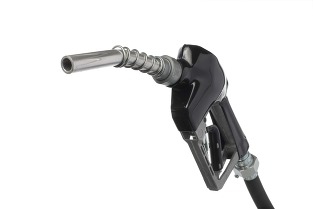
During the 89th Texas Legislative Regular Session HB 4690 was passed. This legislation requires TDLR to align motor fuel minimum quality standards and procedures with those established by ASTM International. The bill also allows for several narrow exceptions to these standards for gasoline and gasoline blended with ethanol.
STM International is a 128-year-old non-profit organization that develops and publishes industry standards to support voluntary consensus, improve quality, and enhance safety. As a result, TDLR rules have adopted certain ASTM International publications for minimum quality standards and procedures. For more details see the rules here, TAC 16 Ch 97.3 Adopted by Reference.
A significant exception to standards for gasoline (without ethanol) and gasoline blended with ethanol applies during periods when ASTM D4814 volatility classes differ across Texas along the 99o 00’ west longitude line. This line runs north to south, through roughly the center portion of the state. During these periods, the fuel is considered compliant if it meets the volatility class requirements of either side of the 99o 00’ west longitude line. This exception increases the available fuel supply that fuel stations can sell while still maintaining compliance with essential fuel quality standards.
Another exception in Texas of fuel standards applies to gasoline (without ethanol) meeting ASTM D4814 specifications. If gasoline (without ethanol) complies with the vapor pressure and distillation for Class AAA, AA, or A it is considered to also meet the ASTM D4814 Driveability Index (DI) requirements. This will allow these three gasoline classes (AAA, AA, and A) to bypass DI specification requirements while still remaining complaint with overall fuel quality standards.
For more information about exceptions to motor fuel quality standards see Occupations Code Ch. 2310.2031.
TDLR will continue to enforce applicable motor fuel quality standards, as well as statutorily required exceptions to those standards. Consumer protection and industry fairness remain top priorities to support and maintain a fair marketplace.
|

The Mold Program continues to see steady activity across the industry, with assessment and remediation professionals maintaining strong engagement and overall compliance. As we move into the second half of the year, it remains important to emphasize the timely delivery of assessment protocols, clear communication with clients, and adherence to pre‑remediation requirements. These elements not only support consumer protection but also strengthen the industry's credibility. Inspectors will continue focusing on documentation accuracy and risk‑based priorities to ensure consistent statewide enforcement.
|
Refrigerant Phase-Out Is Underway
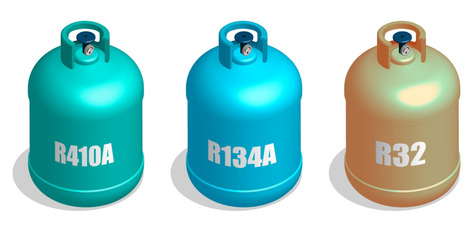
R-410A manufacturing stopped in January 2025. All new installations must use R-454B or R-32 by January 2026. A2L certification and compatible tools are now non-negotiable.
Heat Pumps Have Taken the Lead
Heat pumps outsold gas furnaces by 32% in 2024. IRA tax credits up to $2,000 and state electrification mandates are accelerating adoption further.
The Technician Shortage Is Acute
110,000+ unfilled positions with a 5:2 retirement-to-replacement ratio. The average HVAC tech is 55 years old.
AI Is Delivering Real ROI
Early adopters using AI scheduling and predictive maintenance are reporting 50% less downtime and 25–40% lower maintenance costs. This is no longer future-state technology.
Data Center Cooling Is a $54B Opportunity
Most HVAC contractors aren’t paying attention. Commercial contractors with 24/7 response capability and the right certifications can capture high-margin contracts in this booming vertical (market).

The elevator industry is rapidly evolving, with manufacturers installing equipment built to new ASME A17.1 standards. We have begun the process of adopting a more current version. Codes under consideration include ASME A17.1-2019 and newer. These updates may affect future budgeting for owners, but they will also improve safety for the riding public. Because Commission approval is required, the adoption process will take some time.
In addition, several program and form updates are now posted on the Elevator/Escalator Safety Program webpage:
- The department is now consistently enforcing §74.50, which requires owners to submit an inspection report for each unit along with written documentation showing all cited violations are corrected, under contract, or covered by an approved waiver or delay. All fees and documents must be submitted before a Certificate of Compliance can be issued. A documentation checklist is available online.
- The inspection form has been updated to better identify reportable conditions and repeated violations. Inspector must use the revised form. Owners are reminded of their responsibility under §74.69 to report accidents and reportable conditions, remove affected equipment from service, and have it re-inspected and re-certified before returning it to operation.
|
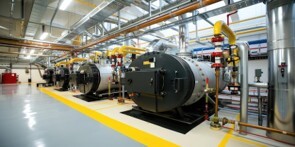
The boiler room shall be maintained free from the accumulation of rubbish and materials that could obstruct access to the boiler, its setting, or firing equipment. The roof over boilers designed for indoor installation shall be free from leaks and maintained in good condition. Adequate drainage shall be provided, and all exit doors shall open outward. Each boiler room containing one or more boilers capable of producing carbon monoxide (CO) shall be equipped with a carbon monoxide detector with a manual reset. These requirements apply to boiler rooms where new installations or reinstallations of one or more boilers are completed on or after September 1, 2020.
When the carbon monoxide detector is installed, it shall be interlocked to automatically disable the burners when the measured CO level exceeds 50 ppm. The detector shall also disable the burners upon loss of power to the detector. The carbon monoxide detector shall be calibrated in accordance with the manufacturer’s recommendations, or at least every eighteen (18) months after installation, whichever occurs first. The owner shall keep a record of calibration posted at or near the boiler or otherwise be readily accessible.
The owner can utilize a remote monitoring system. When a CO detector is remotely monitored, an alarm shall be activated both at the boiler location and at the remote monitoring location when CO levels reach 50 ppm. The alarm at the boiler location shall not be capable of being silenced until the CO level falls below 50 ppm. The detector shall be interlocked to disable the burners when the CO level in the boiler room reaches 200 ppm.
|
We are pleased to announce that Vanessa Vasquez has stepped into the role of Compliance Manager, which includes oversight of the Mold Program. She has already hit the ground running—supporting inspectors, coordinating upcoming meetings, and helping finalize materials for the Advisory Board agenda. Her proactive approach and strong regulatory background are already making an impact, and the program looks forward to her leadership as we continue strengthening consistency, communication, and compliance across the state.
Greivin Ramirez has joined as the seventh FMQ Specialist, providing technical inspection support and expertise in motor fuel devices. He has over three years of experience working for the state. Greivin’s steady and reliable work ethic will be a great addition to the team.

TDLR employs people in a wide variety of professional, administrative and technical positions and provides a total compensation package that enables us to attract, motivate, and retain highly skilled and talented employees.
Our employees also enjoy agency and state benefits and the opportunity to contribute toward TDLR's vision of being the leader in public service by creating innovative, low cost and regulatory best practices, and cultivating employees who provide exceptional customer service.
TDLR is a proud member of the We Hire Vets employer recognition program, which identifies Texas employers whose workforce consists of at least 10% military veterans.
Check out the positions we have available. Didn't see anything that's right for you? You can sign up to receive emailed notifications when we add job openings.
|
 |
1. An electronic terminal includes a point-of-sale terminal, virtual currency terminal, automated teller machine, and cash dispensing machine, but does not include a motor fuel unattended payment terminal. With the recent passage of SB 2371, who must be notified by merchants when a skimmer is found on an electronic terminal?
A. a law enforcement agency (i.e. city police, Sheriff's Office, Constable, etc.)
B. the merchant corporate office
C. the Texas Financial Crimes Intelligence Center
D. a law enforcement agency and the Texas Financial Crimes Intelligence Center
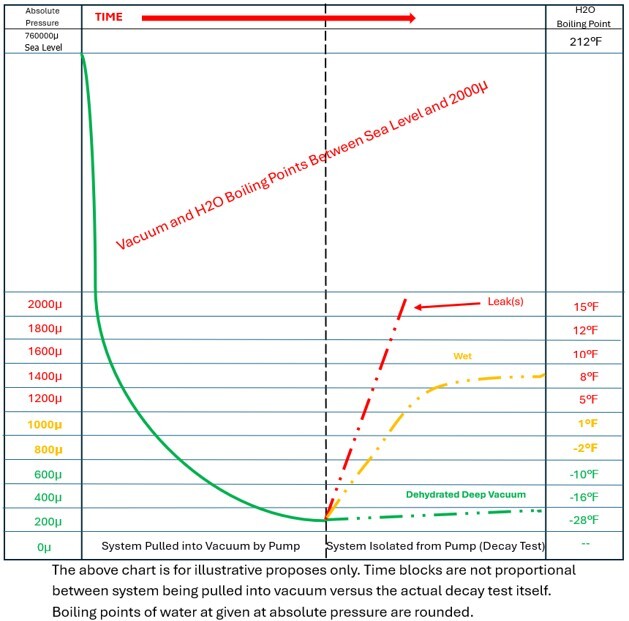
2. What is a vacuum decay test?
3. When must a Mold Assessment Consultant or Technician deliver the mold assessment protocol to the client and remediation contractor?
4. Is it possible to be trapped on an escalator?
5. When did TDLR require carbon monoxide detectors to be installed in boiler rooms?
Answers at the end of the newsletter

Stopping and preventing abuse of a child is something we all have an obligation to do. In the field, our licensees are often the eyes and ears of the community, spotting concerns that others might overlook. Senate Bill 571 passed this last legislative session, updating the duty of licensed professionals to report suspected abuse within 24 hours to Law Enforcement or Child Protective Services (CPS).
To comply with the law, report suspected abuse of any kind to local law enforcement or CPS ASAP. You can report to CPS at 1-800-252-5400, or online. If someone is in immediate danger, please call 911. Keep a record of your report.
|

Please file a complaint with TDLR alleging unlicensed practice if you have evidence that a person or business with a revoked license is continuing to advertise or perform services that require a license in Texas.
HOW TO FILE A COMPLAINT
You can file a complaint online for most TDLR programs.
Although TDLR accepts anonymous complaints, you must provide your name and contact information when you submit the complaint if you want to receive information about the status or progress of your complaint.
Please note that if your complaint does not allege a violation of the law or rules or does not include enough information for TDLR to investigate the allegations, TDLR will not open a complaint.
Read more about TDLR's complaint investigation and resolution process.
|
 |
|
|
1. An electronic terminal includes a point-of-sale terminal, virtual currency terminal, automated teller machine, and cash dispensing machine, but does not include a motor fuel unattended payment terminal. With the recent passage of SB 2371, who must be notified by merchants when a skimmer is found on an electronic terminal?
D. a law enforcement agency and the Texas Financial Crimes Intelligence Center
2. What is a vacuum decay test?
A vacuum decay test isolates the vacuum pump from the system being evacuated. The system being isolated is allowed to sit in deep vacuum for a period to observe the amount of rise in pressure of the vacuum to determine if there is an undiscovered leak or still moisture contained in the system. See the manufacture installation instructions for specifics or refer to ANSI/ASHRAE Standard 15-2022 for general information concerning decay testing and other system safety standards. The link to the ANSI/ASHRAE is shown below.
ANSI/ASHRAE Addendum q to ANSI/ASHRAE Standard 15-2022
|