|
In this issue:
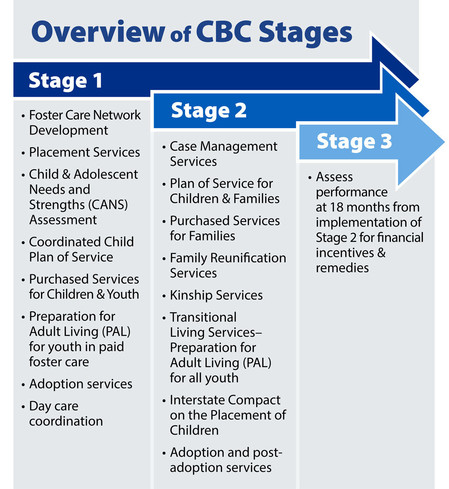
DFPS takes another step to expand Community Based Care (CBC) by entering stage two in Regions 2 and 3B this fiscal year.
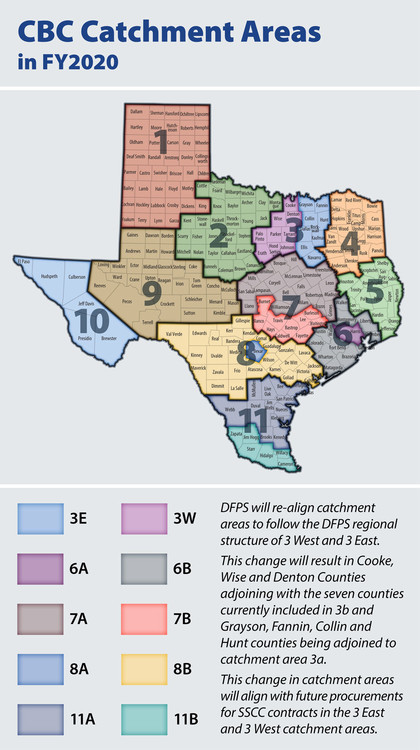
Region 2 includes 30 counties between Abilene and Wichita Falls. 2INgage has been the contractor providing foster care services in the region since December 2018. In stage two, the contractor will begin providing case-management services as well.
A Local Approach
Stage one of CBC has been about building capacity. “It’s more of a local approach,” said CPS Program Specialist Claire Hall, “focused on growing the provider’s network to meet local needs.” Within a geographic area, a single source continuum contractor (SSCC) is responsible for finding foster homes and other living arrangements for children in the state’s care, and providing them with a full array of services.
In Region 3 – where Our Community Our Kids (OCOK) has been the network provider since 2014 – this local approach has reduced the amount of time youth spend in restrictive care settings and increased the availability of professional home-based foster care.
“Building basic capacity was one of the quick wins for OCOK in stage one,” said CPS Regional Director George Cannata. “And now they are building treatment capacity to move kids to less restrictive settings in their local communities.” With the opening of a residential treatment center in Fort Worth, youth in the region who need a residential treatment setting will no longer have to travel as far as Houston to receive care.
Case Management Resources
OCOK anticipates assuming case management functions in March. “It’s a big way of saying they are ready, that they have the resources they need to do this,” Cannata said. SSCCs must have best practices and reporting procedures in place to handle casework effectively before entering into stage two. CPS staff who wish to work for the SSCC will do so once the framework is in place. “We will support staff during this transition,” said Cannata, “and we will maintain stability for children and families. It’s all about improving outcomes [for children and families], period.”
2INgage anticipates assuming case-management functions in Region 2 in June. They met with affected CPS staff in December to go over available positions and benefits.
Providing Oversight and Assistance
As CBC takes shape statewide, CPS will continue to provide oversight and assistance. “Our plan is to embed oversight and technical assistance teams in the counties,” explained Cannata, “so we can ensure continuous quality improvement.”
State contracts with SSCCs are performance-based, holding providers to specific outcome measures while allowing them to implement innovative practices. 2INgage will aim to make contact within 24 hours. Their case management model is evidence-based, enabling caseworkers to identify triggers and safety issues.
By using targeted case management, they hope to improve behavioral health services for children and families.
2INgage is also focusing on keeping kids in their home region and increasing the number of kinship placements.
Local Community Needs
Another benefit of the local approach is that contractors can see the resources available to them in their counties and create programs based on the local community’s needs. “You can shift resources more quickly with seven counties, than with 254,” said Cannata.
Of the way CPS staff are approaching Community Based Care, Cannata said, “I couldn’t be prouder of our staff. They have their own needs, but if you ask them, they are concerned for the families they work with. It speaks to their character.”
Back to top
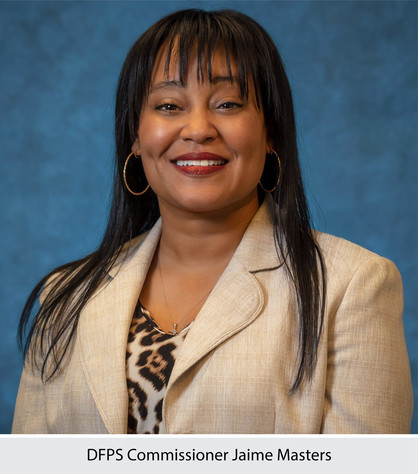
DFPS enters 2020 with a new commissioner at the helm. Since taking on the role in December, Commissioner Jaime Masters has seen that agency staff are passionate about protecting children and vulnerable adults.
“They work hard and give so much of themselves in the face of constant criticism,” she said.
Employee Feedback
Recently, Commissioner Masters sent out a survey to all staff as she determines what her primary areas of focus will be.
Thousands of staff members submitted their feedback on what the agency is doing well and where it can improve. “How I approach those areas of focus will be influenced by what I see and hear from staff at all levels,” she said.
Employee Recruitment and Retention
Masters can see some challenges ahead for DFPS. Employee recruitment and retention will continue to be agency priorities. She plans on personally visiting every region to meet with workers to better understand what they need to excel in their work.
“They have a tough job and I want them to know they are appreciated,” she said.
A Career in Health and Human Services
After earning a master’s degree in marriage and family therapy, Commissioner Masters began her career in health and human services helping victims of violent crime alongside detectives with the Kansas City Police Department. She then moved to the Wyandotte County Sheriff’s Office to serve as a mental health program manager. She also served as the procurement director for Wyandotte County.
In 2013, she began working in child welfare as a director for the Kansas Department of Children and Families, where she was later promoted to deputy secretary. Most recently, she served as chief of health services for Jackson County, Missouri.
A Servant Leader
“I would describe myself as a servant leader,” said Masters, “and I’m driven to have a job with meaning. At DFPS, we get to earn our living both serving and protecting others.”
Back to top
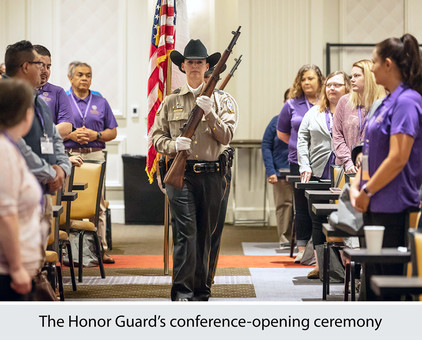
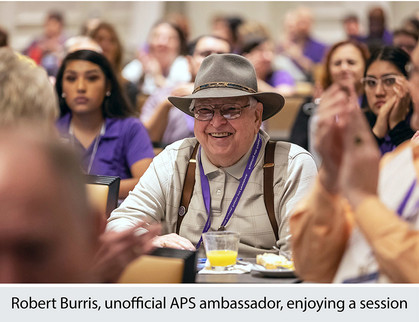
After more than nine months of planning, Adult Protective Services (APS) hosted their 36th annual conference in November.
This year’s theme was, “Protecting Vulnerable Adults is Everyone’s Business.”
According to APS Operations Manager Rebecca Long, who led the organizational team, the conference drew more than 500 attendees to Austin, including groups from out-of-state. “That’s a number we are always trying to increase, to provide outside perspective.”
Topics for Caseworkers
For many months prior to the event, organizers reached out to caseworkers across the state to help guide content for the conference. Topics this year included: forensic interviewing, investigation strategies, hospice care, mobile casework, personal safety, resilience and teamwork, and financial exploitation.
Gerontologist Dr. Tam Cummings presented on compassion fatigue. “APS employees are a dedicated group of professionals doing what no one else can do,” she said. The session helped staff understand secondary traumatic stress disorder. “The workers are not the ones suffering,” Cummings said, “but they are constantly surrounded by people who are.”
A Healthy Balance for Caseworkers
Cummings stressed the importance for APS workers to recognize signs of stress and strive for a healthy work/life balance. She commended APS management for doing a great job recognizing symptoms of compassion fatigue and giving staff tools to cope with it. “It’s not just doctors and nurses who get overwhelmed with the stress of what they do. It’s APS workers, managers, and even administrative personnel.”
Cummings also presented on dementia, educating staff about the features of the disease, and knowing how far along it has progressed in someone they are trying to help.
Laura van Dernoot Lipsky, the closing keynote speaker, spoke about how working for APS affects the lives of staff well beyond their casework.
“Mastery comes in any job with time, but if APS can’t retain their people then they won’t achieve that mastery,” Cummings said. “It’s my favorite conference. I’m surrounded by people doing good!”
Back to top
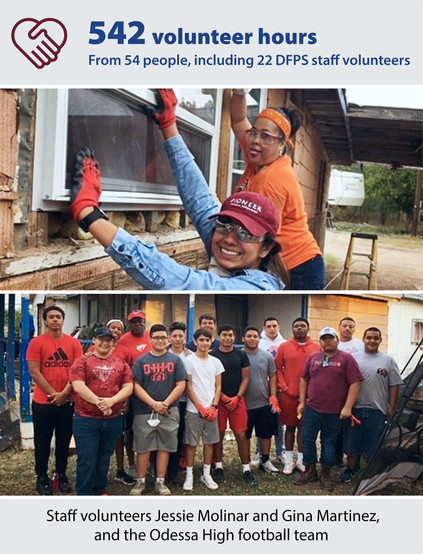
In a unique, all-hands-on-deck collaboration that enabled an Odessa grandmother to adopt her three grandchildren, CPS once again showed how far it is willing to go to keep children safe and families together.
Margarita Soto was already the kinship caregiver for her grandchildren – a 2-year-old girl and her older brothers, 5 and 7 – but before their adoption could be approved, Soto’s Odessa home needed extensive repairs. “Poverty should not be a hindrance to the best permanent home for these kids,” CPS Supervisor Yesenia Villanueva explained. “They deserve to be with family.”
After CPS assessed the situation, and identified the specific repairs, Villanueva contacted Home Depot and other businesses for the undertaking. “It kind of snowballed from there,” said CPS Regional Director Gina Martinez. “When a family comes into the system, it’s important for the community to rally around them.”
The materials for the project were generously donated by businesses in the community and the labor was completed by a group of enthusiastic volunteers, DFPS staff, and Soto’s own sons. “To have Ms. Soto come out that day and see her reaction, I can’t begin to describe that,” said Martinez.
The repairs were scheduled to take place over two days, but more than 50 volunteers completed the work in just 12 hours. “It was amazing how quickly that many hands transformed the house,” said DFPS Community Initiatives Specialist Marci Leffler.
Staff Volunteers
Staff in the region went above and beyond. El Paso staff left their office at 2:00 a.m. and traveled almost 300 miles to Odessa to meet up with more than 20 local staff also volunteering their time for the all-day Saturday project. Upgrades to the home included a new electrical system, plumbing, siding, and windows.
Prior to caring for her grandchildren, Soto raised seven children as a single parent. “It’s something special for this grandmother to get her license and move forward with the adoption,” said Martinez.
Recently, DFPS Caseworker Alejandra Murillo visited the home and noticed Soto’s Christmas tree didn’t have any ornaments. Murillo got some new ornaments from a coworker and brought them to Soto’s house two days before Christmas. “When we were done putting the ornaments on their tree,” Murillo said, “the oldest child told me, ‘I want to be like you when I grow up, I want to help people.’ ”
“I think the transformation of Ms. Soto’s house demonstrates the power of one group of concerned people,” Leffler said. Martinez agreed. “A lot of times too, it’s smaller, consistent efforts from faith-based and community organizations that help sustain our clients. It’s amazing!”
Back to top
In November, the Prevention and Early Intervention (PEI) program recognized seven award recipients from across the state at the Partners in Prevention Conference in Austin.
Their uniquely compelling stories remind us how much individuals can contribute to their communities, and how Texas is better because of it.
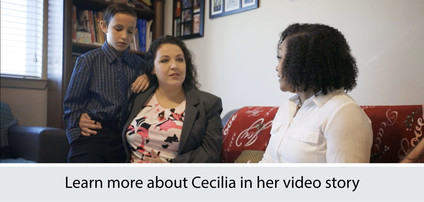
Cecilia Ramirez
Cecilia Ramirez received the Outstanding Parent and Caregiver Award. A mother of four children, there was a time when Cecilia regularly received eviction notices on her door.
She now has a stable place to live at New Hope Housing in Houston and is changing her family’s lives through the Nurturing Parenting Program offered under PEI’s Healthy Outcomes through Prevention and Early Support (HOPES) grant.
Cecilia is amazed at what she’s achieved with the help of a family coach and case manager, since she started the program last year. “I’ve set goals each month,” she said. “I started with no vehicle, and now I have transportation and a career.” Cecilia chose healthcare as her career industry through the program’s Jobs for Life course, and is working toward her goal of becoming a registered nurse by 2024.
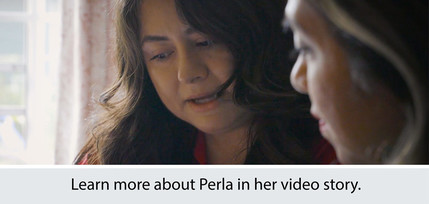
Perla Moore
Perla Moore also received an Outstanding Parent and Caregiver Award for her work as a parent tutor in the Home Instruction for Parents of Preschool Youngsters (HIPPY) program. After seeing how well her own two children did in the HIPPY program, Perla became convinced the program works and felt inspired to help other families through tutoring.
Carmen Hernandez
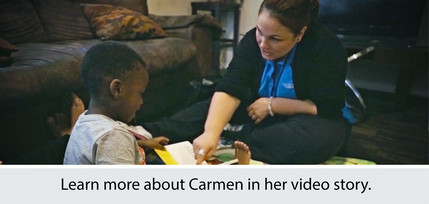
Carmen Hernandez was recognized with the Champion for Children and Families Award. As an educator for Parents as Teachers in Houston, Carmen is passionate about advocating for the families she serves and helping them know their own self-worth.
Jodi Newton
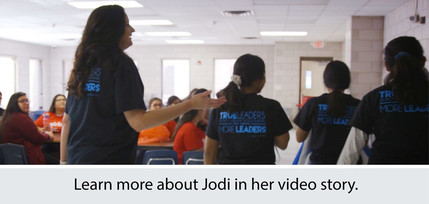
For Jodi Newton, Community Youth Development (CYD) project manager in Fort Worth, the Outstanding Leader Award couldn’t be more fitting. Her many years of service with CYD have made her known throughout her community and among CYD providers as a strong leader and role model.
The Child Coalition of Webb County
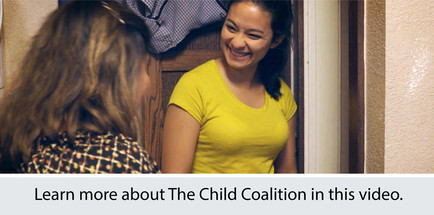
The Community Collaboration Award was earned by the Child Coalition of Webb County. By forging solid relationships and referral pathways between coalition members, the group is more prepared than ever to serve families regardless of where they fall on the spectrum of needs. Working together, the coalition has reached a wider audience and helped many families get prevention, intervention, and treatment services.
Zachary Andrews and Jennifer Ramirez
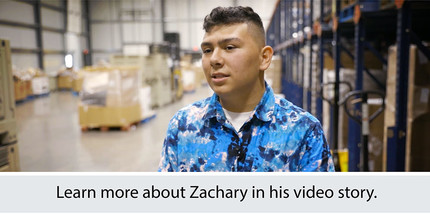
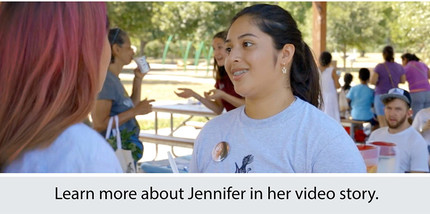
Zachary Andrews of Lubbock and Jennifer Ramirez of Austin were recognized as Outstanding Youth Award recipients. Zachary is described as a servant leader who enjoys volunteering in Lubbock with Communities in Schools. Jennifer was inspired to volunteer because it makes her feel more fulfilled. She is a part of the CYD program where she’s described as an outstanding leader.
Back to top
The Family First Prevention Services Act (FFPSA), passed by Congress in February 2018, restructured the federal funding Texas uses to pay for services for children in foster care.
The goal of the law is to keep children out of foster care when possible, limit the use of congregate care, and increase access to substance abuse and mental health services.
Last year, DFPS notified the Administration for Children and Families that Texas will delay the implementation of FFPSA until October 2021. DFPS will gather community input at a public hearing on January 30th to help build a strategic plan on prevention services and residential placement, and will submit the plan to the Texas Legislature in the fall.
Qualified Residential Treatment Programs
One issue the plan will address is the use of federal funds to pay for placements that are not with foster families. Under FFPSA, residential treatment centers, which serve youth with the most intensive needs, must become accredited Qualified Residential Treatment Programs (QRTPs) to receive federal funds.
Improving Prevention Services
The plan will also address prevention services to improve efforts to keep children from entering foster care. The federal government has established a clearinghouse with evidence-based mental health and substance abuse services, and parenting skills training. The federal government continues to review programs and the clearinghouse is expected to grow over time. The federal government and the state would split the costs of the services.
Texas has many efforts underway that support the goals of FFPSA. DFPS participates in a learning collaboration group hosted by Casey Family Programs, and is partnering with providers, researchers, and other organizations to determine how Texas could best leverage FFPSA federal funds. We are also working with other states to share and develop strategies to put the law into practice.
Colorado’s Prevention Framework
CPS and PEI staff, a Travis County judge, community providers, philanthropic organizations, and Texas Department of State Health Services leadership met with peers in Colorado to learn about their newly-created prevention framework. DFPS hopes to improve outcomes by focusing on the well-being of families before they are in crisis. “We spent two days learning how to better partner with courts and health care providers to help children and families have a strong start,” explained PEI Policy Specialist Brooke King.
“We want to take a hard look at how we support our children and families, and change the mindset of the community,” said CPS Program Specialist Stephanie Ridgway, who also attended the meeting, “and that’s a win as we move forward.”
Back to top
All around Texas, hundreds of state agency employees, community organizations, faith-based groups, and warm-hearted individuals volunteered their time and efforts to make this holiday season an unforgettable one for the children, families, and adults that DFPS serves.
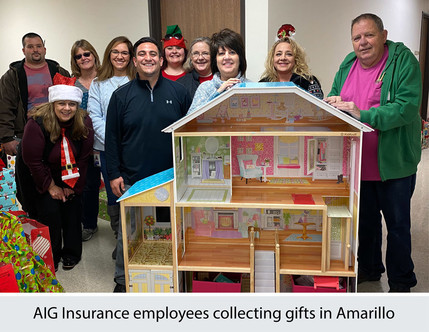
- In Amarillo, the Spirit of Christmas Project fulfills gift requests for children in foster care. AIG Insurance Company, among many other generous organizations, donated new toys to ensure no child was forgotten over the holidays.
 |
- Volunteers from the Texas Commission on Environmental Quality’s regional office in Fort Worth made the holiday season brighter for several children who had just entered foster care by granting some of their holiday wishes.
- Firefighters and local CPS staff collected donations for the East Texas Angel Network at the Longview Mall and filled a trailer with gifts for children in foster care.
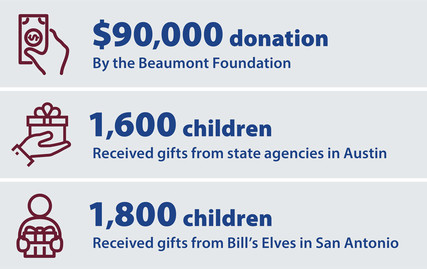
- The Beaumont Foundation made a $90,000 donation to the Jefferson County Child Welfare Board to ensure children in foster care in Jefferson, Orange, and Hardin counties received gifts. Caseworkers either shopped for the gifts themselves, or mailed a gift card to children who were placed out of the region. More than 1,000 children received gifts.
- The Jefferson and Orange County Foster Children’s Christmas party was attended by more than 400 children in foster care. Thirty trees were also brightly decorated and given to foster parents in the region.
 |
- In Corpus Christi, Court Appointed Special Advocate (CASA) volunteers, in collaboration with Sames Crow Ford, collected toys and bikes to give as holiday and birthday gifts for children in foster care.
- In San Angelo, Concho Valley Community Partners helped sponsor their second annual Hope for the Holidays giving trees at Sunset Mall and Southwest Plaza Mall. The trees held wishes for children living at home or who have just entered foster care.
- In Austin, 22 state agencies collaborated with Partnerships for Children to donate toys to more than 1,600 children in foster care. Partnerships for Children was also supported this year by a $7,800 donation from Austin’s Seattle Seahawks booster club.
- Meanwhile in the Permian Basin, Music City Mall in Odessa, Midland Park Mall, West Texas State Bank in Monahans, Pecos State Bank in Fort Stockton, and Sawyer & Associates all sponsored giving trees. The effort was led by the Ector County Child Services Board and the Midland Child Welfare Board. Together, they provided gifts for almost 700 children.
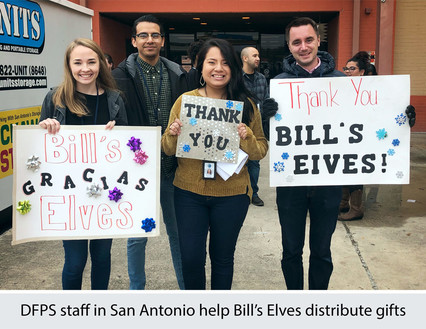
- Bill’s Elves in San Antonio, an annual toy drive organized by KENS-TV’s Bill Taylor, worked with CPS to collect gifts for more than 1,800 children in foster care.
 |
- In El Paso, Adult Protective Services (APS) partnered with Home Instead Senior Care and local restaurants for the “Be a Santa for a Senior” campaign. Their Christmas giving trees held 80 ornaments listing the names of APS clients and their Christmas wish lists.
- In Lubbock, Home Instead collected gifts and stocked the Llano Estacado Silver Star resource room with heaters, electric skillets, and electric blankets.
- In Austin, DFPS staff held a holiday party at the Oakcrest Manor Nursing Home. Cake, holiday cards, clothing, and hygiene items were given to 69 residents.
- APS partnered with Texoma Community Credit Union in Wichita Falls, the Concho Valley APS Partners Board in San Angelo, and with Frost Bank and Western Bank in Midland and Odessa, to collect and deliver gifts for older Texans this holiday season.
Thank you to everyone who volunteered their time and donated gifts to make this holiday season special for so many children, families, and adults.
Back to top
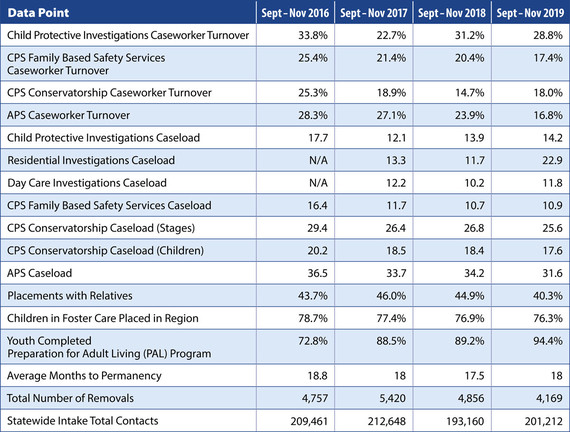 For more information regarding your region or county, please visit the DFPS Data Book.
Back to top
Family First Prevention Services Act Hearing
Thursday, January 30, 2020 in Austin
Texas Family and Protective Services Council Meeting
Friday, February 14, 2020 in Austin
Back to top
Please take a moment to share your thoughts about the DFPS Vision Newsletter.
Click here to take our quick reader survey.
|