|
In this issue:
As someone who entered the foster care system at eight years old, Cortney Jones wasn’t always big on holidays.
“I moved around a lot in foster care and experienced so many different traditions — Thanksgiving wasn’t a great time for me.” When Jones became an adult, she realized many other young adults who have transitioned out of foster care have nowhere to go for the holidays. She felt compelled to offer them something special. In 2014 on Thanksgiving Day, Jones opened her home to more than a dozen foster care alumni, their children, and their friends. Over the last six years, her annual Thanksgiving dinner has grown and this year’s dinner on November 23rd will be her biggest yet.
“People usually focus on Christmas for youth in foster care and forget about Thanksgiving,” Jones said. Her annual dinner is all about alumni supporting alumni, and giving hope to youth in foster care. Last year, Jones inadvertently reunited two sisters who had been separated in foster care. “They hadn’t seen each other in two years. To see them reunited melted my heart,” Jones said.
This November, Jones hopes to have a personalized holiday box for everyone who attends the event. “We want every young person to be celebrated this Thanksgiving,” she said.
“Services for older youth in foster care are so important,” Jones said. “We have a large demographic of older youth who need that love, too.” Youth are in foster care through no fault of their own, and surrounding them with support helps improve their lives as adults. “We need them to grow in this system so they can be the best they can be with the cards they are dealt,” said Jones.
Making a Successful Transition to Adulthood
The hope is that every youth in foster care can make a successful transition to adulthood and self-sufficiency. DFPS programs like Preparation for Adult Living (PAL) help older foster youth meet this goal by providing life skills training, case management, and support services. “We are trying to improve outcomes for foster youth, like finishing high school and going on to complete post-secondary education,” explained Gaye Vopat, DFPS Transitional Living Services Program team lead. “It’s good for them to have a variety of meaningful relationships with adults — formal mentoring, but also those informal relationships, too.”
In 2014, while working as a youth specialist for DFPS, Jones helped create aging-out seminars conducted by the PAL program. The seminars are an opportunity to better serve youth by building upon their knowledge. Topics include relationships, human trafficking, financial literacy, nutrition, and self-advocacy.
Coming Full Circle
Then in 2016, Jones founded Change1, a non-profit organization that hosts her annual Thanksgiving event, and also works for successful outcomes and permanency for young adults. Change1 focuses on four core pillars: development and engagement, advocacy, restorative practices, and foster care awareness. As someone formerly in foster care, Jones feels she has come full circle. She’s spent her entire career working on behalf of youth in foster care and became an adoptive parent four years ago after taking in her cousin’s two young children. “I really want to be that change,” Jones said.
“It’s important for youth in foster care to have meaningful adult relationships in their lives,” said Vopat. “And Cortney’s event provides that type of community-based support for them. It does take a village.”
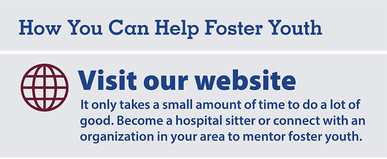
Interested in helping? Cortney is seeking volunteers who will assemble holiday boxes for foster youth.
Back to top
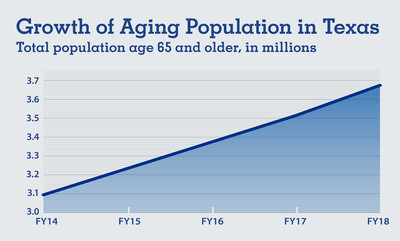
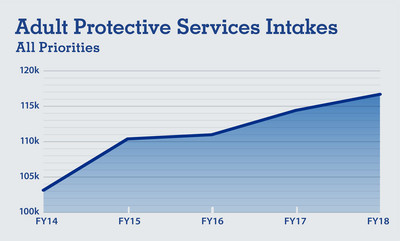
As Texas’ elder population grows, so does the number of people who are targets of financial exploitation.
Adult Protective Services (APS) is currently working to increase community collaboration to combat exploitation and educate the public on how to recognize and report the abuse.
“Exploitation is a hot topic in Texas and we now have new opportunities to work together with other agencies to stop it and prosecute it,” said Camille Payne, APS director of field. In Fort Worth, APS has partnered with the Tarrant County District Attorney’s Office to create a financial exploitation task force, and San Antonio is working to do the same. The new task force involves the county sheriff, district attorney, and local APS offices working closely to quickly investigate and prosecute financial abuse.
“If our success with the new task force is half of that of Tarrant County’s, we’ll be excited,” said Ann E. Cortez, APS district director for San Antonio. “What they are doing in Tarrant County is innovative and victim-focused.” APS is busy in Tarrant County as intakes nearly doubled from last year.
“We are setting the trend,” said Ramona Black, APS district director for the DFW area. “We have the right people in our corner.” With $1.64 million in restitution recovered this year in Tarrant County, the first step is recognizing the crime. “We’ve got to act fast,” said Black. “We refer the case and the district attorney’s office is on top of it.”
Having a tangible, positive outcome like recovering a victim’s money also boosts APS morale. “When our staff see justice being served in these cases,” said Payne, “it inspires us to do our part and keep our eyes open to the problem.”
APS is also exploring innovative ways to improve outcomes for victims of financial abuse. Mark Birkelbach, a financial exploitation specialist with APS, has seen an increase in the number of reports, with cases becoming more complex each year. “A lot of it has to do with technology,” he said. “You don’t need to walk into a bank to get someone’s money – you can do it online.”
In DFW, APS has partnered with Guardianship Services, Inc. and Texas Wesleyan University. Student interns from Texas Wesleyan’s forensic accounting program examine complex cases of financial exploitation. It’s an exciting development that allows students with specialized training to help APS follow the money and quickly build a case for prosecution.
A Growing Problem
“Financial exploitation is a growing problem, and it often goes underreported” said Grace Ortiz, APS community engagement specialist. Lubbock APS Supervisor Billy Wiley agrees. “Many times seniors rely on a caregiver for their independence. They don’t want to speak out because they’re afraid of losing that independence. APS staff can help victims understand that they have options and it’s our job to show them the exploitation doesn’t have to happen.”
Education and Outreach
APS is also educating professionals who work directly with elderly and disabled adults on a daily basis, such as doctors, law enforcement officers, and home health providers. “Because they see the first signs that something isn’t right, they’re often our first line of defense in preventing elder financial abuse,” said Ortiz, who works with El Paso’s non-profit APS Silver Star Board on annual community outreach events such as the Go Purple Health Fair and Chili Cook Off.
APS also just participated in the 12th annual Crimes Against the Elderly Conference in El Paso which annually draws more than 500 attendees. The all-day educational event is free to attend by donating a blanket, fan, or hygiene item for the APS Silver Star resource room.
In addition to dynamic speakers such as elder fraud expert Paul Greenwood, this year’s conference featured free breakfast and lunch, door prizes, and afternoon yoga. “Education is power and we make learning fun!” said Ortiz.
Back to top
Since becoming its own program in 2017, Child Protective Investigations (CPI) has changed how investigators work to improve outcomes and keep children safe across the state.
By partnering with other child welfare agencies and breaking down communication barriers, CPI has improved response times in newly-opened abuse and neglect investigations.
Priority Reports
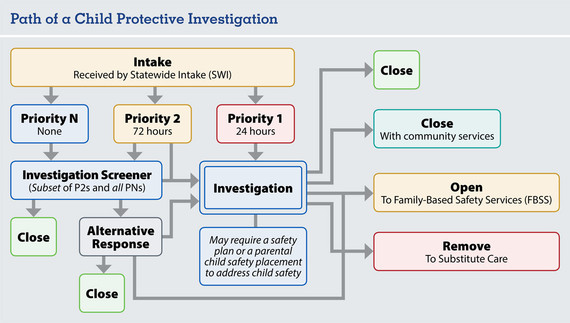
When the Texas Abuse Hotline receives a report of abuse, neglect, or exploitation, Priority 1 reports – the most urgent cases – go directly to CPI where an investigation is opened immediately.
Less urgent Priority 2 reports are sent for further screening, where the case is either closed, sent to the field for investigation, or sent to Alternative Response, where services or needed safety interventions are identified. “Ultimately, the safety dynamics and vulnerability of the child direct CPI on which path we take with the family,” said Natalie Taylor, a CPI master investigator.
Timely Face-to-Face Contacts
In Priority 1 investigations, the first step is to see the child in person and alone on the same day the report is taken. For many reasons, including worker safety, investigative caseworkers confirm the family’s CPS and criminal history before visiting the home. Timeliness of face-to-face contacts has increased in the last few years and continues to be a focus for improvement.
Investigators gather information from as many relevant sources as possible, including parents, teachers and counselors, daycare providers, doctors, therapists, or even the family’s church group. Investigators try to determine if abuse or neglect occurred and what services the family may need to keep their child safe in the home.
If they don’t find any cause for concern, investigators may close the case. If they have concerns, but feel the child can remain safe in the home, they may transfer the case to Family-Based Safety Services (FBSS).
 Least Restrictive Path to Child Safety
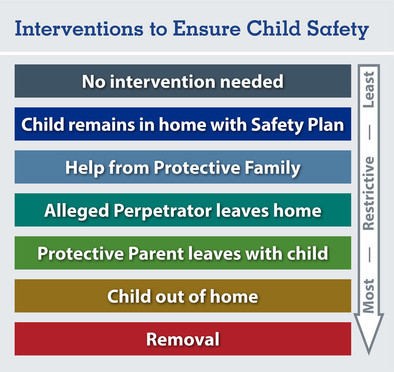
“We look for relatives or friends, people who can surround (support) that family and help them keep their child safe,” said Kathy Weishuhn, CPI program administrator. CPI staff seek the least restrictive intervention that ensures the child’s safety. That may mean that the alleged perpetrator must leave the home, or a protective parent and the child temporarily moves out of the home to live with a relative. “Every case takes you down a different path because each family is unique,” said Sherry Gomez, CPI director of field operations. “I don’t think people understand the level of work our staff put into each case because of that and a multitude of other variables,” she said.
If all other options have been exhausted and there is still concern for the child’s safety, the child may be removed from the home. CPI staff always look for a relative placement first, to reduce the chance that a child has to change homes again and experience further trauma. “We think about the permanency of a child placement even as we begin an investigation,” said Marta Talbert, CPI program director. Every removal is approved by a judge, who reviews a CPI-prepared affidavit to ensure the agency has done everything it can to help the family, without compromising child safety.
Children’s Advocacy Centers (CACs)
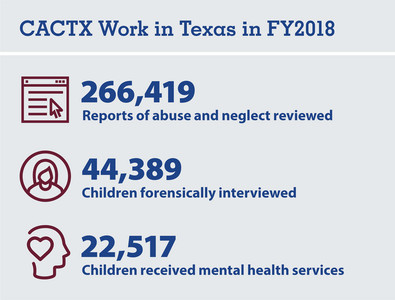
Since investigative casework is so complex and the stakes for the families are so high, it helps to have all of the major stakeholders in child welfare working together as a team for families. Children’s Advocacy Centers of Texas (CACTX) is a non-profit that has 71 offices across the state. They bring together
CPI staff, law enforcement officers, medical professionals, and prosecutors on a multidisciplinary team, committed to a coordinated approach to quickly and effectively handle cases of child abuse and neglect. In many parts of the state, CACs are also physically bringing these professionals together by co-locating them to further promote collaboration.
Working Toward the Same Goal
“We pull everyone together with the same goal in mind from the beginning,” said Joy Rauls, CEO of CACTX, “and that is safety, justice, and healing.” Being on the same multidisciplinary team helps break down barriers between the people working every day to keep children safe. CACTX also sponsors training for some CPI staff, where teams identify specialized training topics and bring in experts to help them.
“The complexity of cases continues to grow,” said Wayne Durham, CPI special investigations program director, “and our relationship with CACTX helps improve our investigators’ casework.”
Back to top
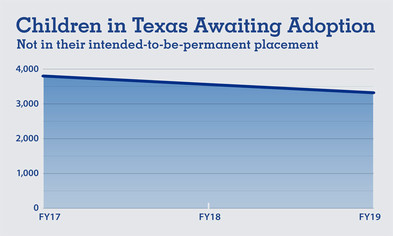
Adoption lasts a lifetime. But older foster children and teens are waiting to be adopted more than any other age group.
Just like any young person, foster youth need the loving support of a family to help them navigate the transition into adulthood.
“Youth need positive, permanent relationships they can count on as they mature and develop,” said Jillian Bonacquisti, division administrator of DFPS’ Foster/Adoption Development Program.
Loving Homes
Stable, loving homes are critical to foster youths’ success in life. DFPS offers adoptive families educational services, training and support, and referrals to community services.
These resources support families so they can continue to be successful after they are no longer involved with DFPS. Post-adoption services are also available to families and children after adoptions are finalized.
National Adoption Month
November is National Adoption Month and the Foster/Adoption Program has revamped the “Why Not You?” adoption campaign to raise community awareness.
“We are excited to move forward with a renewed campaign to promote adoption of foster youth in Texas,” said Bonacquisti. “We want to educate prospective foster and adoptive parents and provide awareness to the needs of foster youth.”
Back to top
Prevention and Early Intervention (PEI) is spreading the word about infant safe sleep practices to new parents by partnering with community organizations and health care providers.
This month, Children’s Health, a pediatric care provider in Dallas, will begin playing PEI’s informational videos in their waiting rooms across the DFW area.
Parents want to protect their children, but kids don’t come with a manual. In 2014, PEI identified target areas around the state with high incidences of unsafe sleep practices and tragic fatalities, and began producing videos to get parents’ attention while educating them at the same time.
Relevant Content for Parents
“We wanted to reach out to parents in a way that was relevant,” said Kathryn Houlton, a PEI manager. Showing the videos in provider waiting rooms will give the video’s message to parents when they’re hopefully already thinking about child safety. “We’re trying to get the most bang for our buck by making the biggest impact on health outcomes for families that we can,” she said.
Darrell Azar, DFPS communications director, directed the production of the videos. “We needed the target audience to be engaged by the content,” he said. “If our approach was successful, people also learned a lesson by watching a video.”
New Partnerships, New Opportunities
Along with the new partnership with Children’s Health, PEI is leveraging a new, five-year contract that allows for a more strategic approach to public education. This is a unique opportunity for PEI and the DFPS advertising agency, Sherry Matthews Advocacy Marketing, to get child safety information to the people who need it with the long-term strategy of preventing tragedies like drownings and sleep-related infant deaths. “We will place ads throughout the year, and compare metrics over time to see how well we are moving the needle against baseline numbers we measured earlier,” Houlton said.
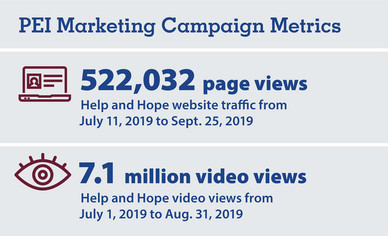
PEI is spreading their media buys to maintain a steady presence with target audiences. The paid videos, as well as TV and other online ads, started running over the summer and, as a result, the visits to the DFPS website have gone way up. “Plus, we have had well over a million completed views of our videos over the last few months,” Azar said.
The campaign also engages parents through social media platforms like Facebook and Instagram. “We want to get people talking about child safety issues,” Azar said. PEI hopes to influence what parents know, and also seeks to change key behaviors, to make kids safer across the state.
As DFPS produces new videos through the Sherry Matthews Group, PEI will be active in the creative process every step of the way to ensure the accuracy of the messaging, while the Office of Communications focuses on the quality and effectiveness of each video. “The safety messages in this campaign are so important to parents,” said Azar. “I wish I had this information when I was raising my child.”
Outreach Toolkit
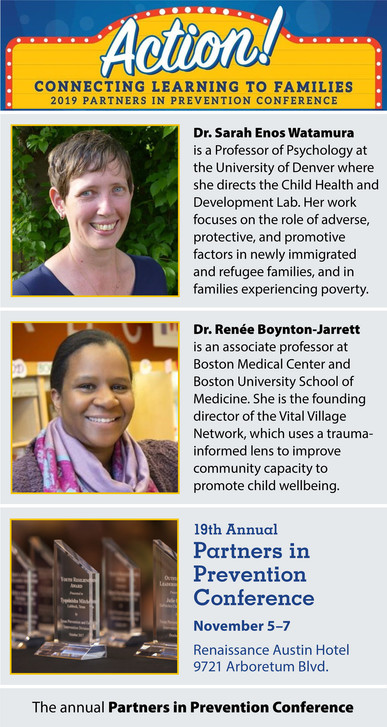
Another way that PEI is improving communication with target audiences and improving health outcomes for children is with a new toolkit for their contractors to better market their programs and provide community outreach. They launched the toolkit through a webinar earlier this month, and will also feature it during the annual Partners in Prevention Conference in November.
Visit HelpandHope.org for more information.
Back to top
Wondering how to soothe an uncontrollable, crying baby? Looking for safe caregivers in an emergency? Questioning how to handle a baby who refuses to eat, or struggling to form a loving bond with a newborn?
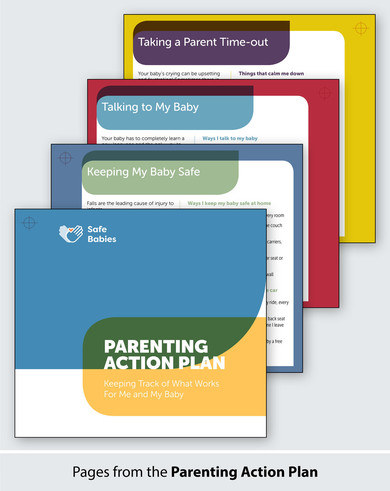
Helping new parents manage stress while meeting the many challenges of caring for babies is the focus of a prevention effort called the “Parenting Action Plan.” After a baby is born at the hospital and during early pediatrician visits, new parents are educated about infant behavior to reduce risk and prevent child abuse. A pilot version of the Parenting Action Plan is currently being tested in Houston.
A Promising Pilot
"The Houston pilot has shown positive results – we’re seeing increases in maternal knowledge and awareness,” said Dr. Andrea Mayo Jacks, division administrator for Research and Evaluation in the Prevention and Early Intervention (PEI) program of DFPS. Dr. Jacks is working closely with the University of Texas on this project. “Based on these results, we look forward to expanding into more cities this year, with the goal of a statewide release after that,” says Jacks.
Partners in Prevention
PEI and The University of Texas Health Science Center at Tyler developed the program under the Texas Safe Babies Initiative funded by the 84th Texas Legislature to evaluate education and prevention efforts.
According to the 2017 Texas Safe Babies Report, infants under 12 months of age are hospitalized due to abuse or neglect at a higher rate than any other age group. Physical abuse is documented in more than 80 percent of these hospitalizations.
“The Texas Safe Babies Initiative works to help parents recognize and ‘normalize’ infant behavior, like periods of intense crying, so they can manage stress positively and work through the early weeks of being a parent,” said Kathryn Sibley, director of research and safety for PEI.
Helping Parents with Positive Coping Strategies
In practice, health care workers engage new parents during infant well-checks at two weeks, two months, and five months, to help them develop realistic expectations about caring for an infant. They encourage parents to develop positive coping strategies to deal with the harder parts of parenting an infant.
“Ultimately, we’d like to offer this program to every parent in Texas,” said Dr. Dorothy Mandell, assistant professor for Population Health at the University of Texas Health Science Center in Tyler. “Our next step is to look at the pilot clinics that were most successful and carry those lessons forward to gauge sustainability as we broaden our reach into more clinics.”
Dr. Mandell is scheduled to be a presenter at the Partners in Prevention Conference in November, where she will discuss using online tools for needs assessments and planning that can translate into community-level action. “It’s vital to look at the unique risk factors in our focus areas to ensure population programs like the Parenting Action Plan are effective and sustainable,” she said.
To learn more about the Safe Babies Initiative and the Parenting Action Plan, visit TXSafeBabies.org.
Back to top
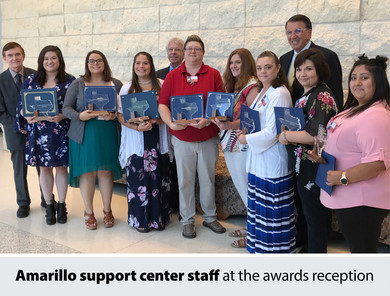
On August 15th, staff from the DFPS Caseworker Support Center in Amarillo were honored by Texas Caring for Texans.
The center is unique because it operates as
one cohesive unit where staff process all of the paperwork for caseworkers across three programs: Child Protective Investigations, Family-Based Safety Services, and Conservatorship.
Versatile Staff
Support center staff are versatile, able to pull off the detailed, crossover documentation required to progress child abuse and neglect cases through all stages of service. “My staff are willing to go above and beyond,” said Janet Hall, a support center supervisor.
“They communicate very well with each other. Since everyone at the support center knows the requirements for each of the programs it makes things easier if someone leaves for vacation or illness. We are all one team,” Hall said.
Back to top
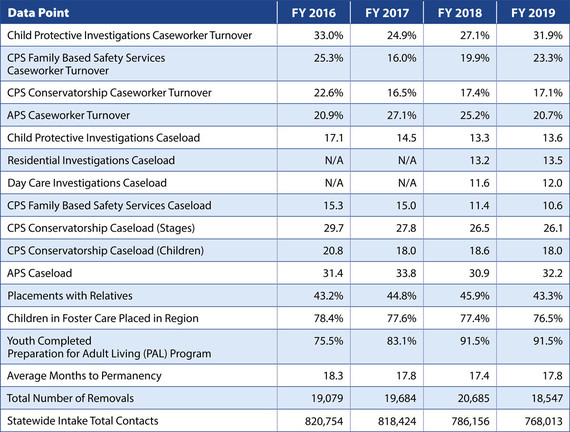 For more information regarding your region or county, please visit the DFPS Data Book.
Back to top
Texas Family and Protective Services Council Meeting
Friday, November 8, 2019 in Austin
Committee on Advancing Residential Practices Meeting
Thursday, January 9, 2020 in Austin
Public Private Partnership Committee Meeting
Friday, January 10, 2020 in Austin
Back to top
Please take a moment to share your thoughts about the DFPS Vision Newsletter.
Click here to take our quick reader survey.
|