|
Childhood Poverty
There is increasing evidence that children who grow up in
poverty are likely to experience a range of detrimental effects, which can last
a lifetime. Without interventions to
prevent or mitigate the impact of adverse experiences (including but not
limited to poverty), these children are likely to experience lower IQ scores,
less education, more unemployment and lower lifetime income.
Living in poverty diminishes a child’s mental health,
physical health, safety and other qualities of life. If a child moves to a lower-poverty
neighborhood by age 8, it is projected that the child’s total lifetime earnings
would increase by more than $300,000.
Adverse Childhood Experiences (ACEs), including poverty,
cause damage that will remain long-term unless there are interventions to address the effects by increasiong resiliency. Learn
more in a new MSS issue paper, Children,
Poverty and Lasting Effects.
Both the State of Tennessee and the Metropolitan Government
of Nashville have initiatives to address the detrimental
effects of Adverse Childhood Experiences (ACEs).
The Metropolitan Department of Public Health and Healthy
Nashville are leading the Davidson County initiative, with a Healthy Nashville
Summit dedicated to ACEs on April 22, 2016.
Fair Housing – Disparate Impact
The Fair Housing Act was passed in 1968 to ensure fair
practices in the rental, sale and financing of housing-related
transactions. Additional legislation
(including Title VI of the Civil Rights Act of 1964 and Section 504 of the
Rehabilitation Act of 1973) also prohibit discrimation in housing.
In June 2015, the U.S. Supreme Court reaffirmed
consideration of disparate impact. This
occurs when a policy that is adopted for a non-racial reason results in
burdening minority houisng opportunities.
The U.S. Supreme Court ruled that policies that segregate minorities in
poor neighborhoods violate the Fair Housing Act, event if the policies did so
unintentionally.
Learn more in a new MSS issue paper – Promoting Fair Housing.
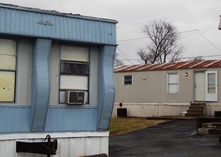
Where is the Affordable Housing?
With more than 129,000 Davidson County residents in poverty
and with most renters being cost burdened (paying more than 30% of income for
housing costs), there is a serious shortage of housing that lower and middle
income people can afford. There are many
tools that are used across the U.S. to promote affordable housing, ranging from
inclusionary zoning to land trusts.
Inclusionary
Housing-Creating and Maintaining Equitable Communities (2015) from the National Community Land Trust
Network, Cornerstone Partnership and the Lincoln Institute of Land Policy,
explain how a variety of tools and policies can increase affordable
housing. It explains that inclusion is
not just a goal but that it can be achieved with effective
initiatives.
As lower-income residents are displaced from up-and-coming
areas, they have to find new homes and often face an undesirable array of
options: lengthy commutes, substandard
housing or rents/mortgages so high that they cannot meet their other
basic needs. It notes that as families
are displaced, the community suffers as economic diversity diminishes, unequal
housing access drives sprawing development patterns, traffic worsens and
racial/cultural diversity decreases.
Inclusionary Housing points
out that there are both voluntary and mandatory efforts to promote inclusionary
housing, but that “Mandatory programs are more common.” It explains that efforts may be jurisdiction
wide, with specific targets in some areas.
Beginning on page 55 are recommendations on how local, state and the
U.S. Government can develop effective strategies to create more affordable
housing.
MSS to Release 7th Annual Community Needs Evaluation
On March 1, MSS Planning, Coordination & Social Data Analysis will present the 7th Annual Community Needs Evaluation.
The 2015 Community Needs Evaluation and the 2015 Executive Summary will be available online with the previous needs evaluations.
The Poverty of Place
America's zip code inequality from Brookings (December 2015) explained that wage growth has been weak for middle and low earners. It indicated that inequality is not only a social and economic issue but is also a geographical issue, with a huge variation between different places in the U.S.
It discussed research from the Equality of Opportunity Project at Harvard that showed the difference in intergenerational income mobility in various locations.
|