|
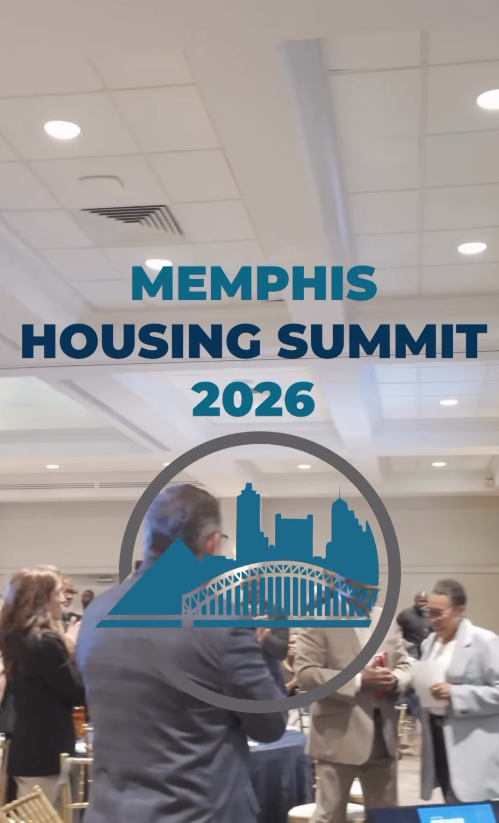
Yesterday, I looked around the Memphis Botanic Garden at a room filled with developers, housing advocates, neighborhood leaders, lenders, and people committed to investing in our city. And I was reminded of something I believe deeply: The people who can change the future of Memphis are already here.
Our 2026 Memphis Housing Summit brought national leaders together with Memphians who know our neighborhoods, understand our challenges, and are ready to get things done.
And we have important work ahead.
Memphis has faced challenges that took decades to develop. Between 2010 and 2024, we lost nearly 36,000 residents. That means fewer neighbors, fewer customers for local businesses, fewer students in our schools, and a smaller tax base to support the services our city needs.
I want Memphis to be a city where the people who are here want to stay, the people who left want to come home, and new families want to put down roots.
Housing is central to making that happen.
At the summit, Innovate Memphis presented findings from the 2026 State of Memphis Housing report. Since 2019, household incomes have increased 20%, while rents rose 37% and home values climbed 81%. We have a shortage of approximately 28,000 affordable homes for our lowest-income residents, and 79% of our single-family homes are at least 50 years old.
And while our population declined, the number of households increased by 6,600. More people are living alone, families are changing, and we need homes that reflect those realities.
That's why we've set a goal of helping our community create 10,000 affordable and market-rate housing units by 2030, through new construction and rehabilitation.
I didn't set that goal because I thought it would be easy. I set it because I believe Memphis is capable of doing hard things.
We've already completed 3,339 units since January 2024, with another 863 in the pipeline. But to reach our goal, we need to accelerate production by approximately 145 units a year.
And we have to be intentional. I want our investments to reach neighborhoods that have waited far too long.
Our strategy focuses on three things: removing barriers through better policies and processes, bringing together funding and financing to make projects possible, and building the capacity of local developers and contractors.
We cannot ask developers to move with urgency if government isn't willing to do the same.
And we're putting that strategy to work.
In its first year, our Essential Housing Program partnered with 25 emerging developers, awarded 65 vacant lots for redevelopment, and committed more than $1.4 million toward new housing.
At the summit, we announced an expansion into Soulsville, bringing together the City, Community Redevelopment Agency, Health, Educational and Housing Facility Board, and neighborhood partners to pursue 150 to 500 new homes by 2030, with a proposed $7 million investment.
I don't want to see one beautiful new house surrounded by ten abandoned properties. I want to see entire blocks come back to life.
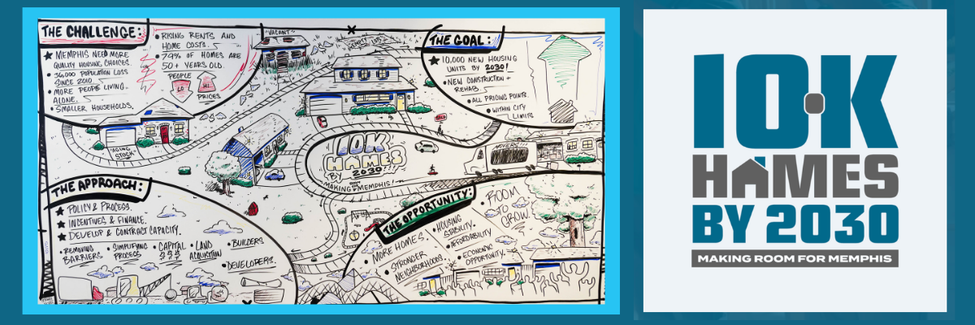 Learn more about our goal and our progress toward the goal here. Read more about the State of Housing report here. Watch the intro videos here and here.
That's the vision for Soulsville and for neighborhoods across Memphis.
We also heard from national leaders, including former HUD Secretary Marcia Fudge, Philadelphia Mayor Cherelle Parker, Ralph Perrey Executive Director of Tennessee Housing Development Agency, Bill Bynum CEO of HOPE Enterprise Corp, Dawn Luke Arnold the CEO at Invest Atlanta, and Shana Render and Krystal Tyler-Peterson, housing experts from Atlanta, about building more homes, strengthening neighborhoods, and expanding opportunity. Our breakout sessions explored practical solutions, and we highlighted housing initiatives already underway across Memphis.
The message was clear: We have to work together, remove barriers, invest in our neighborhoods, and turn good ideas into homes.
We're reconvening our Housing Task Force, exploring creative financing, and launching 10K Talks to bring residents, developers, and community partners into the work ahead.
But through all the numbers and strategies, I keep coming back to the people we're doing this for.
I want the people who stayed in our neighborhoods during the difficult years to be there to enjoy the better years.
I want the grandmother in Orange Mound to repair her home and stay in the neighborhood she helped build. I want a young teacher or firefighter to afford a home in the city they serve. And I want families in North Memphis to see investment returning to their blocks.
That's why housing is connected to everything we're doing to make Memphis safer, reduce blight, create opportunities for young people, and strengthen our neighborhoods. That's how we move from individual projects to lasting neighborhood change.
To everyone who participated in the summit, thank you. I left encouraged by the ideas, but even more encouraged by the energy of the people in the room.
Now I'm asking you to stay engaged. Bring us your projects, your resources, and your willingness to solve problems together.
Because 10,000 is a number we can measure. I want us to measure success by the vacant lots that become homes, the families who become homeowners, and the seniors who can stay in the neighborhoods they love.
Behind every housing number is a Memphian deciding where to stay.
Let's give them every reason to choose Memphis.
...................
UPDATE:
90-Day Data Centers Smart Guardrails Executive Order
Last week, I signed an executive order launching a 90-day process to develop stronger guardrails for data center development. We're also addressing neighborhood concerns near Colossus 2 through designated construction truck routes that avoid Holmes Road and North Tulane Road.
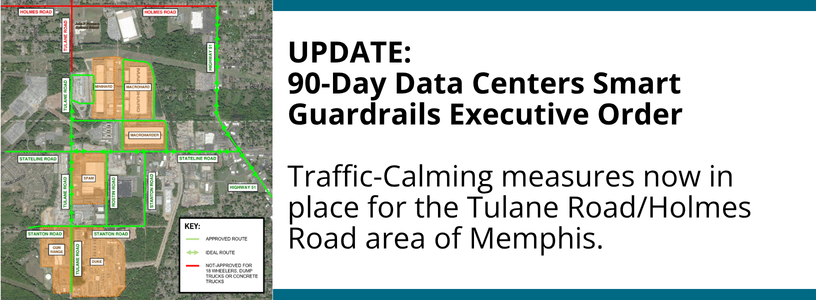 Economic growth must strengthen our city while protecting our neighborhoods.
|