|
A year ago, we created the Division of Community Enhancement because we knew Memphis needed a new approach to blight.
Blight isn't just about overgrown lots or abandoned buildings. It affects public safety, property values, investment, and, just as importantly, how people feel about the neighborhoods they call home.
We wanted to move beyond simply reacting to complaints and build a coordinated strategy that brought together cleanup, code enforcement, legal action, and neighborhood partnerships with one goal: restoring neighborhood pride. One year later, we're seeing the results.
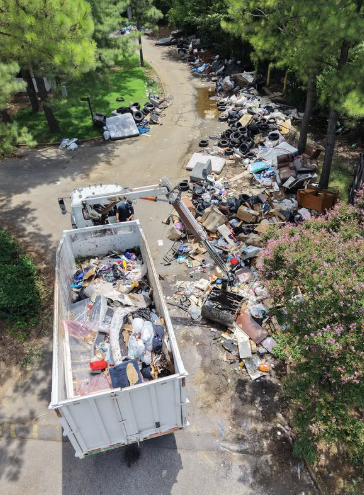
Over the past year, we've expanded our in-house mitigation crews, added equipment, increased demolitions, boarded dangerous structures, cleaned illegal dump sites, and coordinated work so neighborhoods see improvements block by block instead of one property at a time.
From removing thousands of illegally dumped tires on Knight Arnold to transforming a long-neglected property in Highland Hills, our teams are making a visible difference across Memphis.
"We're bringing all of our services into the same neighborhoods at the same time so residents can actually see the difference. That's how you change communities."– Melanie Neal, Director of Community Enhancement
Those visible improvements are only part of the story. For too many property owners, code violations became the cost of doing business. Raising the standard meant strengthening what happened behind the scenes, too.
Community Enhancement, Code Enforcement, and the Law Division are now working together more strategically than ever before. Environmental Court remains an important tool for achieving compliance, but in our most serious cases, we've also begun using Chancery Court because it gives the City broader legal tools to protect residents and hold negligent property owners accountable.
One example is 1553 North Hollywood.
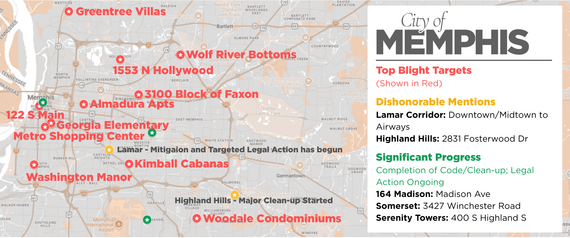 When Code Enforcement identified families living in dangerous conditions, City employees worked alongside community partners to relocate tenants while our legal team pursued a first-of-its-kind strategy in Chancery Court. Rather than pursuing only the property owner, the City sued the individual owners, arguing that they had collected rent while failing to provide safe, habitable housing. The City successfully defeated the owners' attempt to dismiss the case, and while the litigation continues, it has already demonstrated that Memphis is prepared to use stronger legal tools when property owners repeatedly fail to meet their responsibilities.
"The status quo is over. Property owners have to make the changes that protect health, safety and quality of life."– Lani Lester, Anti-Blight Litigation Manager and Lead Prosecutor, City of Memphis
That case reflects a broader commitment to accountability. We'll continue working with responsible property owners who want to do the right thing, while making it clear that chronic neglect has consequences.
Government cannot build neighborhood pride alone.
That's why we're also investing in residents who want to make a difference. Through Memphis City Beautiful, neighbors can borrow tools for cleanup projects, and we're working to relaunch our mobile tool bank so equipment can be brought directly into communities.
I'm especially grateful to the City employees who do this work every day. They cut lots, remove litter, secure dangerous buildings, clear illegal dump sites, and help restore neighborhoods across Memphis. Their work often begins before most of us start our day, but its impact can be seen throughout our city.
As you explore our Top 10 Community Enhancement wins and watch the Highland Hills transformation below, I hope you'll see more than a strategy for cleaner lots or safer buildings.
I hope you'll see a city that's raising its expectations.
Our goal has never been simply to clean up more properties. Our goal is to build neighborhoods where families are proud to live, businesses want to invest, and every Memphian believes their community is worth investing in.
That's how we build a stronger Memphis.
|