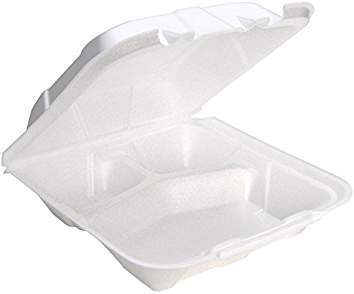
Tired of getting food to-go in non-recyclable, non-compostable containers? At my request, the Department of Safety and Inspections recently convened a work group to recommend amendments to the City's existing food packaging ordinance. Minneapolis and St. Louis Park have implemented similar ordinances that require to-go packaging be recyclable, compostable, or reusable. I am in full support of strengthening this ordinance to continue our steady progress in Saint Paul toward stronger solid waste and recycling (and eventually organics!) programs. If adopted, the revised ordinance would go into effect in the fall of 2018, with business outreach, vendor fairs, and support being conducted by DSI in the interim. More information on the proposed changes and lots of background information here. The City Council public hearing is likely to be October 4, and you can submit written comments to me if you can't attend. If you don't live in Ward 4, I encourage you to contact your own Councilmember about this issue.
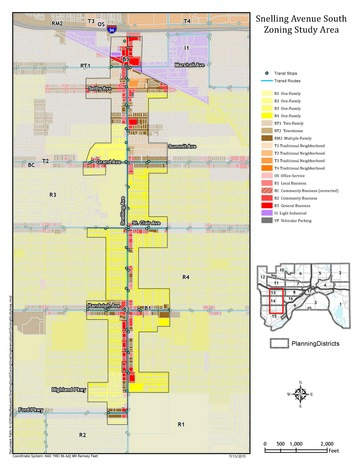
On September 6, at 5:30pm, the City Council will hear the Planning Commission's recommended zoning changes for Snelling Avenue parcels (along with some blocks adjacent to Snelling) between I-94 and Ford Parkway.
In July 2015, the Saint Paul Planning Commission began the Snelling Avenue South Zoning Study. The study was initiated in anticipation of the opening of the A-Line Bus Rapid Transit (BRT) on Snelling Avenue (service began in June 2016) and in response to strategies included in the adopted Macalester-Groveland, Highland, and Union Park district councils' neighborhood plans.
You can learn more about the specific recommendations on the project website, and if you cannot attend the public hearing but want to comment, view the public hearing notice for more details on how to do so.
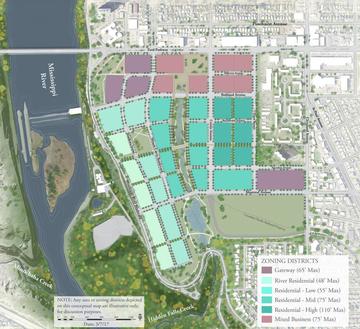
The St. Paul Planning Commission voted unanimously on July
28 to forward the draft Ford Site concept plan and zoning recommendations on to
the City Council for consideration. The
site encompasses over 120 acres and environmental remediation is currently
ongoing. The Concept Plan and zoning
recommendations, which can be found here (then click the "review draft plan" button), is the result of a 10-years
long community Task Force process and a series of open houses and meetings that
have been held by the City. The draft
plan includes a mix of multi-family housing styles and building heights, some
office/commercial space and retail/mixed use spaces on Ford Parkway, and an
attractive central green space and water feature. The plan calls for as many as 4,000 new
housing units on the site, and would presumably be built out over a period of
20 years, and include a variety of units types and price points.
While I look forward to hearing your perspectives, it might
be helpful to hear some of my values for the Ford site, which are based on what
is best for the City of St. Paul overall. I think it is important that redevelopment of the Ford Site: help us grow the City’s property tax base to
spread the burden of rising costs of public services over more taxpayers;
create an attractive new development where residents and businesses will want
to locate for the next 100+ years; minimize any negative and maximize positive
impacts on the surrounding neighborhoods; and create a new standard in
Minnesota for sustainable development with creative approaches to energy and
storm water systems; include a healthy number of subsidized affordable units, to
ensure that households of all incomes can take advantage of the new amenities.
I am hearing from some constituents in support of the plan
and others with concerns about traffic impacts, particularly along Cretin
Avenue in Ward 4. While there are many
Highland and Macalester Groveland residents expressing concerns about the
proposed residential densities and the impact that could have on traffic,
others are excited about the new amenities and express that the proposed
density and new streets and parks will create a pedestrian friendly new
addition to the neighborhood. I look
forward to hearing your thoughts about the draft plan as the City Council
begins its deliberations. You can submit comment to Council here, as well as view comments received throughout the process to date.
The City Council will consider ordinance changes that will prohibit the sale of menthol flavored tobacco prodcuts in grocery and convenience stores, gas stations and all other locations EXCEPT tobacco shops. This proposal will add menthol to the other flavored tobacco prodcuts that an only be sold at adult-only tobacco product shops. This will not prohibit adults from purchasing and using menthol tobacco products in Saint Paul. Visit Beautiful Lies Ugly Truth for more information about menthol tobacco and community partners who are already supportive of this ordinance change.
Along with moving towards coordinated trash collection in Saint Paul, the City is proceeding on multiple other fronts to reduce our carbon footprint and greenhouse gas production. You can view the multi-disciplinary and interdepartmental Sustainable Saint Paul efforts here. This fall, several items will come before City Council related to this work:
 MinnPost photo by Corey Anderson
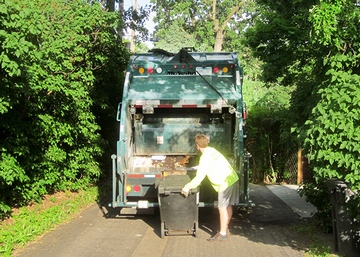
Over the past couple years, as the City has been pursuing a move towards a coordinated system of trash collection. On July 26, the City Council voted to authorize staff to enter final negotiations with the haulers to develop a final contract. State law lays out
the process by which cities can consider organized collection systems and St.
Paul has been following that state-mandated process. I have heard from many constituents and
residents from Ward 4 and beyond on this issue, and the concerns and feedback
have a few consistent themes. I wanted to share my thoughts on those themes, as
well as provide some broader context. It's a complex issue and I am considering
what is best for the City overall.
First, I
want to make sure you understand the proposal before us -- it is for the
existing 15 licensed private trash haulers in St. Paul to create a consortium
that would provide trash collection for all residents in 1-4 unit dwellings across
the City at a unified price and with uniform standards of service. The
haulers would divvy up the City into routes. The number of households served by
each hauler would be based on their current market share. As such, the
proposal should not eliminate jobs or negatively impact the haulers. Some
residents feel strongly about being able to choose their own provider, but to
me some services are such basic necessities that they are better approached as
a system rather than ad hoc. We may be the largest remaining City in the
country without an organized trash collection system.
If the City
is not able to agree to the haulers proposal, the City has the option of
putting trash collection services out for a Request for Proposals (RFP) from
licensed haulers. While an RFP for trash services would have some
advantages over negotiating with all 15 haulers, the inevitable result would be
that 1 or in any case fewer than the existing 15 licensed haulers would win the
contract to serve the City. The cost would likely be less than the current proposal,
but this approach goes against what we heard residents wanted, (link to PDF) which was to keep all of the small, local haulers serving Saint Paul.
Currently, based on state law, the negotiated deal with the 15 haulers and the
RFP are the only 2 ways we could go about organizing collection.
Cost of Service
I have heard
from residents whose costs will go up under the current proposal from haulers. Some of these residents are currently hauling their own trash, sharing
service with neighbors, are environmentally conscious and have reduced their
waste stream significantly by recycling and composting, or have organized their
blocks to negotiate a better rate with one hauler.
Today, some people pay as little
as $11/month and some pay as much as $70/month for the same exact service. According
to the data we collected from residents across the City who sent us their
bills, the proposed rates (including up to 3 bulky items) represent a slight
decrease from what the average St. Paul household is paying today. Haulers
today have very different prices for the same service, and can agree to a low
price for one customer or group of customers believing they can make up for it
by charging others more and increasing prices every year for customers that
just keep paying the bills without shopping around or negotiating. When all 15
haulers must come together to make a proposal they can all live with that has
one set price, those customers currently paying on the low end will inevitably
have to pay more and those paying on the high end will pay less.
While the City Council last week authorized City staff to go forward with
negotiations toward a final contract, we also made clear that we would like to see lower prices in the
final contract for those who produce very little trash (the price for the
smallest can and for every other week service). I also believe that after the
term of a first contract (5 or 7 years), the City will be in a much stronger
position to make additional changes to the program and pricing structure to
incentivize waste reduction, recycling, and composting through the cost of
service. An organized system where all haulers bring the trash to the
Ramsey and Washington County Resource Recovery Facility also lays the
groundwork for the City to offer household organics (compost) collection in the
near future.
Cost of Administration
The proposal
does include 3 new City staff who would coordinate the new program, enforce the
terms of the contract, and follow-up on any complaints about haulers and
service delivery. The administration fee is not determined via the
negotiations with haulers, but in the City’s budget process, which is about to
get underway in August. There is a high
likelihood that the administration cost will go down over the life of the program,
particularly after the first contract period (5 or 7 years), but perhaps
sooner.
Sharing/ “Opting Out”
Requiring
everyone to have the service is about the only way the City can ensure that the
new system will significantly cut back on illegal dumping. Similarly,
having everyone pay for the disposal of up to 3 bulky items is the only way we
could come up with to create a strong disincentive for those who dump large
items to avoid paying the extra costs of disposal.
Were the
system to allow residents to “opt-out” it would fail to meet two primary goals
-- to have everyone have consistent trash service and to prevent illegal
dumping. The Council has also directed
the staff negotiating the final contract with haulers to try to figure out if
having two homeowners share service in one small can is practical and
enforceable.
Equity
While it may
be possible for those with resources and know-how to organize with our
neighbors and negotiate with a hauler for a better price, this is not true in
many of St. Paul’s neighborhoods where many homes are rental properties and
many homeowners do not speak English as their first language. It’s
important that prices be the same for the same service for all residents and
neighborhoods across the City, and that is not the case today. Illegal
dumping also occurs disproportionately in neighborhoods in St. Paul with lower
property values, and the presence of dumped trash in the alley further
diminishes property values in these neighborhoods.
The Big
Picture
The proposed
system leaves some things to be desired and does not look like a system that
you would build if you were starting from scratch. However, the proposed
system has a lot of advantages, and those advantages are consistent with what
we heard residents wanted. Everyone will benefit in a big way from less truck
traffic, noise and air pollution, a measurable reduction in the City’s carbon
footprint, less wear and tear on city streets and alleys, and less illegal
dumping in alleys, parks, and streets around St. Paul.
Staff will now begin negotiating
a contract with the 15 haulers based on the preliminary agreement. It is our hope that a contract will be
finalized this fall, with the new organized trash collection system beginning
in the fall of 2018.
|