Service Line Material Map and Letters: What do they mean for you?
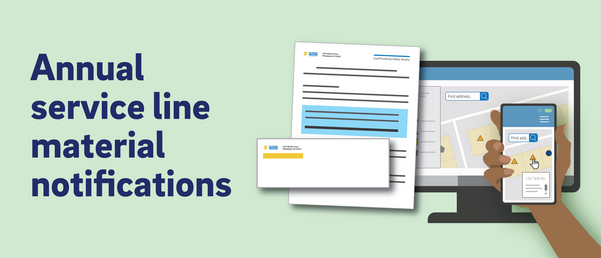
sending you an important letter about your property's water service line materials. These annual letters are required by federal regulations and include our current records for the material of your property's water service line.
With the 2025 letters headed to mailboxes, we're highlighting some important information in this email.
First thing to know: We're protecting your water
We're here to assure you: we're keeping your water safe to drink. We test water at taps, and the evidence shows our treatment is working to protect your water. You can review lead sampling data in the latest Drinking Water Quality Report.
In Philadelphia, lead doesn't come from City water sources, treatment, or mains beneath the streets. Lead exposure is often associated with lead paint and dust. If lead is found in water, it comes from a property's plumbing. Even though lead in water is not a major concern in Philadelphia, we want to encourage conversation about this topic.
What's a water service line?
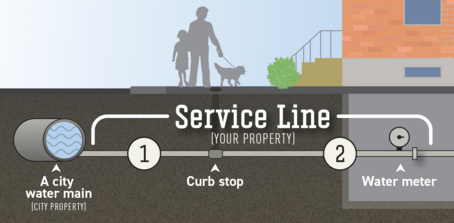
A water service line is the pipe that connects a property to the city's public water main. Philadelphia property owners are responsible for their entire service line. Service lines are not owned by the City.
Materials for properties are categorized as:
- Non-Lead (copper or plastic)
- Lead
- Galvanized metal
- Incomplete Record
To categorize a service line, we identify materials at two points:
- Material in the buried section between the main and the curb stop
-
Material in the section between the curb stop and the meter
What do you need to do?
Your next steps depend on your property. To find out what records we have for your property, you can search our interactive map.
- No action needed: If your property has a non-lead (copper or plastic) service line, you won't receive a letter, and there are no specific actions to take.
- Follow the instructions in the "What should I do" section for residents and property owners who receive a letter based on property records.
- Understand incomplete records: Some properties will receive a letter that says they have "incomplete records." Since part of your service line is buried underground, PWD doesn't have records for this piece of property.
What to do short term
Flush your pipes. Residents should regularly flush their pipes by running cold water from the tap for 3 to 5 minutes. You should do this whenever water hasn't been used in 6 hours.
Update your service line records
-
Check for existing records of materials between the curb stop and meter. For a small percentage of properties, we are still missing records.
-
Report missing records: If we are missing this record, check the service line and report it back to us.
- You can hire a private plumber to check the material if the service line has an incomplete record. PWD does not ask or recommend properties to check buried portions.
- Monitor updates: PWD is working to resolve incomplete records in a cost-effective and minimally disruptive way. Residents and property owners should periodically check the map to see if there are updates for their property.
What to do long term
For properties with lead or galvanized metal service lines:
-
You can replace your service line by hiring a private plumber. See a list of licensed contractors.
-
Apply for PWD's zero-interest loan for customers interested in replacing a lead or galvanized service line. Learn more about the Homeowner's Emergency Loan Program (HELP).
- Take advantage of replacing lead and galvanized service lines during PWD's planned water main construction work. PWD notifies residents by letter several months before work is scheduled to begin. Customers must sign the permission form.
- Stay tuned: We're currently planning other ways for customers to replace service lines made of lead or galvanized metal. If PWD offers to replace your line, take advantage and sign the permission form!
Have questions?
We understand each property has different needs and concerns. Here are four ways you can learn more:
- Look up your property on our online map. We include a link for actions to take based on each property's records.
- Check our FAQs. We have information for different types of properties.
- Email us: ServiceLineMap@phila.gov or call us at
(215) 685-6300.
- Sign up for Lead Plumbing informational emails.
|