Read the latest regulatory lead results in our new Water Quality Report
Also, learn how to check the material of your service line, and find out how to replace a lead service line.
Philadelphia successfully performed regulatory testing at customers’ taps.
Between June and September 2022, we sampled water from 104 Philadelphia homes with lead service lines, as required by the Environmental Protection Agency’s Lead And Copper Rule.
This rule requires us to sample water from taps in at least 50 homes with lead service lines every three years. To meet regulations, 90 percent of the sampled homes must have lead levels under the action level of 15 parts per billion (ppb) – and we demonstrated that water lead levels are well below this action level.
Tests done at customer-owned taps consistently show that Philadelphia’s corrosion control treatment is working. Before water leaves our treatment plants, we add zinc orthophosphate. When the water reaches homes with lead plumbing, the zinc orthophosphate coats pipes, making it less likely
that the lead will get into the water.
Looking for lead service lines
When lead is found in drinking water in Philadelphia, it comes from home plumbing materials, not from the rivers or from City water mains.
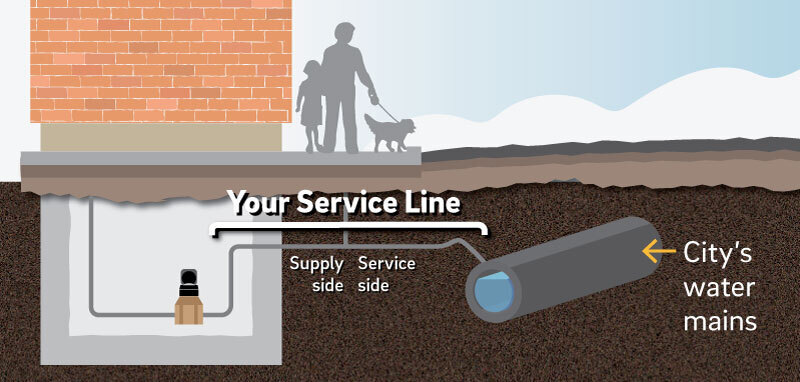
The service line is the pipe that carries clean water from the city’s water mains into your home through your water meter. If you own your property, the service line is your responsibility. While most homes in Philly have copper water service lines, if yours was built before 1950, you may own a service line made from lead.
Checking what your pipe is made from can help you keep your water safe and decide if a replacement is needed. Learn some how-to tips in this video.
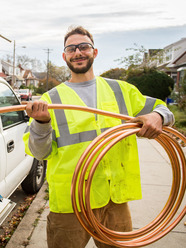
You can replace your lead service line (and we’ll help!)
The Homeowner’s Emergency Loan Program (HELP) is a zero-interest loan that can cover the cost of replacing your lead service line.
Learn more and apply!
|
|