We're ensuring the safety of your tap water through preparation and response upstream.
Learn the different ways we're protecting our water source in the latest Water Quality Report.
Meet the tool keeping our source waters safe
Events upstream can have a major effect on Philadelphia.
We rely on systems like the Delaware Valley Early Warning System for possible water quality issues impacting our creeks and rivers. Advanced warning of spills and accidents upstream helps our emergency response downstream.
Just this year, the Delaware Valley Early Warning System was crucial during a chemical spill in the Delaware River. We immediately learned of the spill through the web-based system just after midnight last spring.
While the results from our sampling after the spill are not part of this annual report (visit water.phila.gov/spill for that data), the same science and expertise that protects our water and assures safety on a daily basis kept us safe following the March 2023 incident. That's all thanks to the Delaware Valley Early Warning System!
"This system was crucial in our response to the March 2023 spill," says Kelly Anderson, Director of the Philadelphia Water Department's Office of Watersheds. "With this advance warning, we were able to modify our typical operations and work in partnership with neighboring water suppliers and first responders to keep the city's water supply safe in an emergency."
A peek into future plans
While focusing on emergency preparedness today, we're also planning for safe water quality tomorrow.
Philadelphia is facing a challenge similar to other large cities across the country: the need to update its aging infrastructure. The Water Revitalization Plan is PWD’s 25-year plan to upgrade and strengthen essential drinking water infrastructure.
Every neighborhood in Philly will benefit from this once-in-a-generation work. This comprehensive plan covers approximately 400 projects, including upgrading drinking water treatment facilities and replacing water mains.
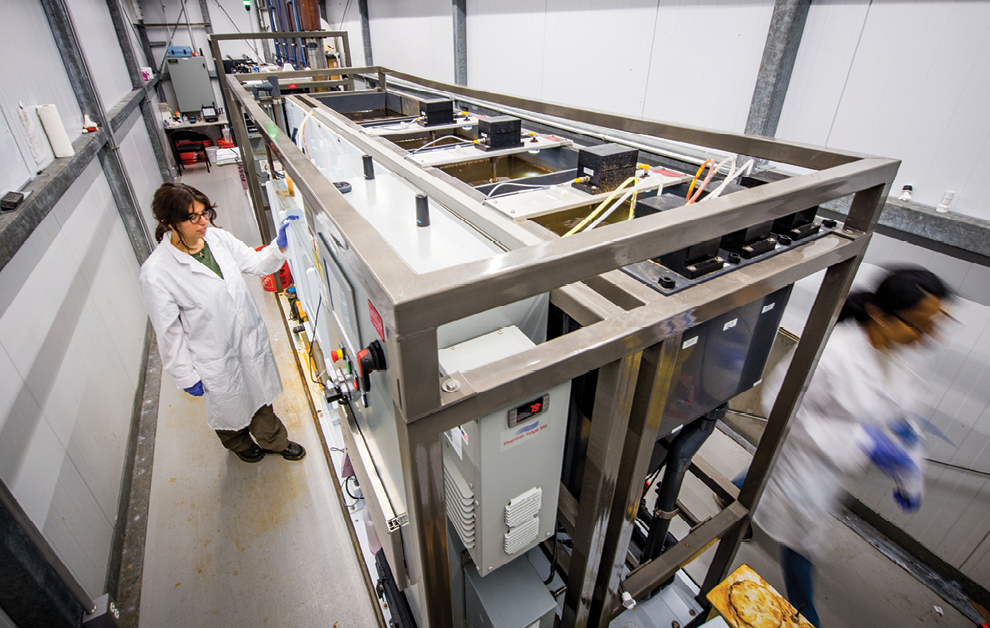
Inside a container about the size of a trailer, PWD scientists test the methods planned for upgraded treatment plants. Mini laboratories like this allow us to test treatment methods before we use them on a much larger scale.
|