|
What’s in a name? Plenty.
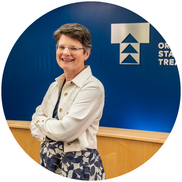
In 2003, Congress officially declared September as National College Savings Month. Then and now, Treasury has been committed to helping Oregon families save for education. But in Oregon, we also know college is just one of many possible pathways to a brighter future.
That’s why we officially changed the name of Oregon’s 529 education saving program to Embark.
The new name reflects the reality that there are many paths on an educational journey that prepare young people for success: Embark can help you save for any accredited post-high school program, from apprenticeships to trade schools to community colleges and universities. We hope families feel confident their savings will fit their child’s dreams. Plus, contributions grow tax-free and help you earn a refundable tax credit worth up to $380 every year. That’s money back that Oregon families can use for any purpose!
Yes, we still celebrate saving for education in September and highlight the importance of planning in reaching your career goals, whatever they may be. Now one year since Embark’s rollout, the name feels like a perfect fit —and I hope you agree.
- Elizabeth Steiner, MD, Oregon State Treasurer
|
|
|
 This fall at Portland State University, financial learning is moving beyond textbooks: Students in a new, 10-week personal finance class will receive money to seed actual investment accounts.
"Financial literacy is not just about learning how to budget or avoid debt; it’s about empowerment and closing the wealth gap," said Qing Hu, Dean of the PSU School of Business, which houses the university’s Financial Wellness & Literacy Initiative.
Successful students will receive between $100 and $500 to open Roth IRAs, via a partnership with OnPoint Community Credit Union Foundation.
|
|
Save without fear: For people with disabilities, ABLE plans protect from “spend down”
Government disability benefits can be a lifeline—yet in many cases you lose them if you have more than $2,000. That forces many people with disabilities to “spend down” their assets to almost zero. With the Oregon ABLE Savings Plan, people with disabilities can save up to $100,000 without jeopardizing eligibility.
United Way: 41 percent of Oregon working households are on the edge
Working, but still struggling. According to a United Way metric called ALICE (Asset-Limited, Income-Constrained, Employed), an estimated 41% of Oregon working households faced hardship in 2024.
Guard your money: Check credit reports often and for free
Information listed on your credit reports can impact whether you get a loan, how much you’ll pay for insurance or even sway a job offer. It’s a good idea to verify that data is accurate—and you can check as often as weekly.
 In almost every Oregon county, the number of bankruptcy filings climbed in 2025—continuing a trend for the past several years. Statewide, there were 7,996 filings in 2025; 6,364 in 2024; and 5,521 in 2023.
|
|
Oregon Financial Empowerment Roundup
-
Expecting a baby? Get a head start on saving for education with Embark, the state’s official 529 program, and qualify at birth for a $100 bonus.
-
Treasurer Steiner: Federal action removing anti-discrimination reporting by companies will hurt competitiveness and investors.
-
Good news for students: Oregon’s personal finance class requirement returns this year, thanks to a 2023 bill and work by teachers and the Department of Education.
-
Are Oregonians protected? Nonprofit Oregon Consumer Justice convened a workshop on insurance coverage and wildfires.
-
Oregon’s tax collection agency is seeking customer service tips. Complete a quick anonymous survey, also available in Spanish.
-
Calling for help? An Oregon Department of Justice toolkit aids consumers before, during, and after choosing telecommunications services.
-
Teachers: Organize free, high school student-led “Teen Teach-In” events in October and April, from the Jump$tart Coalition.
-
Oregon Student Loan 2026 Annual Report: Of the state’s 503,000 federal student loan borrowers, 100,000 are now considered defaulted.
-
The Oregon Department of Veterans’ Affairs has expanded its Educational Bridge Grant Program, lowering barriers to school and vocational goals.
-
The Division of Financial Regulation recovered almost $4 million to help consumers in the first half of 2026.
-
VIDEO GAME: Cat Insanity from NextGen Personal Finance can help teach younger kids about borrowing, interest rates, and minimum payments.
-
Residents in Linn, Benton and Lincoln counties can access free financial coaching and guidance through $tand By Me.
-
SCAM: What is “brushing?” If you receive a package you didn’t order, it could be a sign of identity theft, the U.S. Federal Trade Commission says.
-
High school students can learn about investing via the Stock Market Game, offered free through the Oregon Council on Economic Education, and the “Take Stock in your Future” game, from Junior Achievement of Oregon and Southwest Washington.
|
|
Helpful Resources and Tools
Featured Partners
|
|
|
|
|