As Treasurer, it’s my priority to hear directly from Oregonians about their financial dreams and the challenges that thwart their aspirations. Each month, I’m dedicating time to meet with people across the state where they live, learn, and work. Recently, I met with students, faculty, and administrators at Portland State University (PSU) and Mt. Hood Community College (MHCC). I was inspired to hear how students are taking charge of their financial lives and to see how school leaders are supporting them.
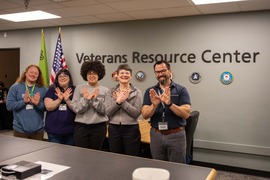
At PSU I toured the school’s veterans resource center, its Center for Students with Children, and its Financial Wellness Center. Students told me about the steps they were taking to turn their financial hopes into reality. One student said she was focused on “learning how to budget properly.” Similarly, another student said she was “trying to save on the little things,” like making coffee and meals at home, despite the temptations of Portland’s unrivalled food scene. A veteran said he was focused on saving for “home ownership.”
For many students today, achieving financial freedom feels overwhelming due to the high costs of food, housing, and childcare, as well as the challenges of a tight job market. One student said she didn’t want to be “stuck with a part-time, minimum wage job.” Another said her biggest challenge was finding “affordable childcare and family housing.”
Both PSU and MHCC recognize the difficulties their students face, especially since many students have non-traditional academic backgrounds, come from immigrant families, or are the first people in their families to attend college. The schools have designed programs to address their students’ unique needs.
For example, Counselors at PSU’s Financial Wellness Center (the Center) help students navigate college costs, financial aid, and loans. The Center also hosts workshops on budgeting and home-buying. The university’s Basic Needs Hub (which I helped establish during the 2018 legislative session) provides food assistance, housing services, and emergency support to help students get through hardships that would derail their education. The Basic Needs Hub’s food pantry provides more than 1,500 meals a month to hungry students and their children.
The schools are doing more than addressing essential needs. MHCC also helps students succeed in a rapidly changing economy. Of the more than 13,000 students who attend MHCC, approximately 4,000 students are enrolled in apprenticeships, where they learn trades in fields to earn competitive wages. At PSU, I met Dr. Qing Hu, the Dean of the School of Business and Professor of Business Technology and Analytics. As a first-generation student and immigrant, Dr. Hu can relate to many of his students. He told me that education transformed his life. Under his leadership, the School of Business offers an Investing 101 class that provides $250 scholarships that give students the means to start their own investment nest eggs.
Later this month, I’ll be in Eugene, meeting with community partners who are promoting financial empowerment in Lane County. Stay tuned for an update next month!
Financial Empowerment Awards
Today, I’m excited to announce this year’s Financial Empowerment Award winners.
Financial Empowerment Educator of the Year – Marcia Latta: Marcia Latta is a career technical education and business teacher at Salem’s McKay High School. She created the school’s new “Invest in Girls” student club and serves as the club’s advisor. Her nomination said: “What makes Marcia exceptional is the combination of her classroom teaching, her commitment to reaching underserved students, particularly young women through the Invest in Girls club, and her continuous investment in her own expertise.
Financial Empowerment Community Champion – Urban League of Portland: The Urban League of Portland’s Rachell Hall help create a regional Financial Empowerment Collaborative with several Oregon credit unions, through which she teaches classes. Her nomination says, “She shows up for people who are often overlooked, builds trust where systems have failed, and helps individuals move from financial uncertainly towards stability and hope.”
You can learn more about the awards and this year’s winners in our news release.
- Elizabeth Steiner, MD, Oregon State Treasurer
|