|
 Which Portlanders lose if the Fair Share Tax passes?
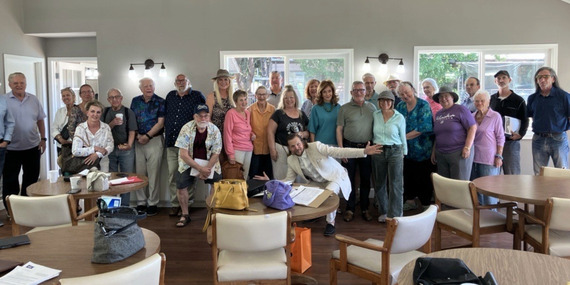 Councilor Ryan with members of the Hayden Island Neighborhood Network (HiNooN) in June 2026.
In my last newsletter, I shared some initial thoughts about the “Fair Share Tax” proposal. Upon first read, I was concerned about how this ordinance would further devastate Portland’s already under-performing local economy and contribute to the narrative that Portland is not open for business. In the few weeks since it was posted online, my concerns have evolved to include the disproportional harm I believe it would have on working-class Portlanders, especially those in District 2’s North Shore, as it relates to affordability.
On Hayden Island, for example, people are suffering from a lack of access to everyday items they need. Tax pressure and property crimes have already contributed to the closures of several large retailers that previously served the Delta Park, East Columbia, and Bridgeton neighborhoods. If a company decides that it’s no longer profitable to be here, they will leave. My constituents know that firsthand. The few remaining large retailers in that area are now vital—they’re all that’s preventing that part of town from becoming a food desert. Portlanders deserve better.
This ordinance would have short-term gains. It’d be a quick win that puts a bit of extra money into the pockets of the owners of Portland’s microbusinesses—a good thing! But what happens two years out, when large corporations have had enough time to fully consider and assess whether it makes sense for them to continue operating here? The CEOs who run these businesses live in faraway cities, and only look at their bottom line—not the community impact here. Who will feel the brunt of that? Again, I believe it’s the working-class Portlanders who will see prices increase at the checkout line and who will not have geographic access to the things they need.
I’d be open to splitting this ordinance up into two parts to provide tax relief to the microbusinesses. I’ll note that when I talk to D2 small business owners though, I don’t hear that $900 in annual tax relief is the biggest make-or-break issue related to their long-term viability. More often they say they want their staff and patrons to feel safer, for public rights-of-way to be consistently clean/accessible, and for business districts to be more activated in ways the promote increased foot traffic. These are the types of support that are being provided via the City’s existing Storefront Support Program, which just got up and running earlier this year.
We will continue discussing this ordinance at an upcoming Committee of the Whole meeting, and Councilors will eventually vote on whether to send it to a full Council meeting.
|
|
How the City of Portland can help inform PPS closure decisions
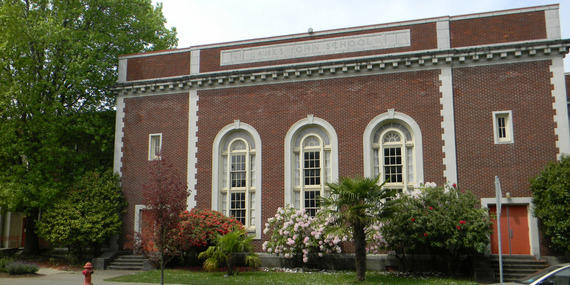 Exterior of James John Elementary in District 2’s St. Johns neighborhood, which could be impacted by PPS’ efforts to rightsize. Photo courtesy of “Cahpcc - Own work” via Wikipedia.
When the PPS school closure proposals were made public last week, I first thought about the impact on Portland’s kids and their families. It’s devastating. Then I thought about the PPS Board, because I’ve been there—I served as a member of that body from 2005-2008. Making decisions like these are extremely difficult, even when the reality of declining enrollment is clear.
During this extremely challenging time for PPS, Portland students, and their loved ones, I’m going to try my best to avoid pitting specific schools against each other. All of the schools being considered for closure are meaningful and essential to our neighbors. I fear that having all 12 City Councilors vying to save specific school(s) located within their districts could make things harder, not easier.
I do want to be helpful though, in my capacity as a City Councilor and former PPS Board Member. In the last week, I’ve urged the City of Portland to be a helpful partner to PPS by providing an index of which schools and surrounding rights-of-way have already been heavily invested in by the City (Transportation, Water & Sewer, Parks, and other bureaus) vs. which have a long list of unmet maintenance needs that will require significant future public investment. For example, my gut tells me that an index like this would provide enough evidence for keeping James John in St. Johns open—the City, and you as taxpayers, have already invested heavily in that school and the surrounding area.
To get this moving forward, I asked the Mayor and City Administrator to spearhead the collection and analysis of this data. They both agreed to taking this action. I spoke with CA Lee again early this week, and he let me know that he tapped Interim Deputy City Administrator of Public Work Millicent Williams and Deputy City Administrator of Community & Economic Development Donnie Oliveira to support this important work. Following that, connected with Interim DCA Williams one-on-one, who confirmed that this index will be shared with PPS in early November.
When there’s an update about this knowledge-sharing, I’ll let you know.
|
|
D2 neighbors’ concerns about the North Going Street footbridge
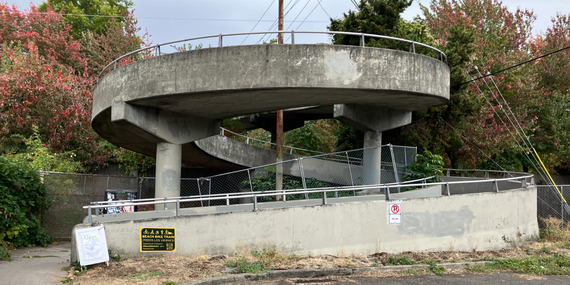 North Going Street footbridge in Portland’s Overlook neighborhood, as seen during a tour of the site in September 2026.
At a recent City Council meeting, I heard two items—a piece of public testimony from a North Portlander regarding the dismal state of the North Going Street footbridge in Overlook and discussion about amending the City budget to include a late-breaking ODOT-issued grant to help Portland Police crackdown on illegal street racing.
These two issues weren’t discussed on the dais as being related, but I see a connection. Public right-of-way issues are impacting the lives and livelihoods of Portlanders, whether it’s an inaccessible vital footpath that families can’t safely traverse or its folks who are injured, or worse, by a street takeover while simply trying to get to work.
As a City Councilor, it’s my job to make sure that Portlanders can get from point A to point B safely using the public right-of-way they help fund and maintain through their taxes. In addition to passing the ordinance to approve an ODOT grant to combat street takeovers, my team immediately began coordinating with Portland’s Office of Emergency Management (PEMO), the Portland Police Bureau (PPB), the Bureau of Transportation (PBOT), and Overlook neighbors to go out to the North Going Street footbridge.
What we heard during our visit is that these Portlanders are concerned with kids being able to safely walk and bike to Beach Elementary via the footbridge while it is an active location for drug use, sales, and camping. Relatedly, neighbors are concerned about similar activities unfolding at the Plaid Pantry nearby, where quick cash is accessible via that shop’s Bottle Drop. They are frustrated, angry, and they want answers.
I want to thank Grant Massey, who flagged this issue in Council Chambers, Chris Cabot, the Chair of the Overlook Neighborhood Association, and Overlook residents for showing up on behalf of their neighborhood. City partners took their feedback to heart. Drug abuse is the overarching concern at play here and around the city, and as we all know, there is no easy answer. But PEMO, PPB, and PBOT are working to find ways to help tangibly. It’s clear that permanent, regular security checks are an immediate need. I’ll stay on this.
|
|
Moda watch: An update on the Joint Authority
At this week’s City Council meeting, Councilors heard from City staff about an ordinance to authorize an intergovernmental agreement (IGA) between the City, State, and County to establish a Joint Authority and considered the appointment of three members from the City of Portland to that Joint Authority. You can watch or listen to that conversation in full via YouTube. As this was the first reading, both will be voted on together at a second reading scheduled for October 21. I hope we can appoint qualified City administrators to carry the water on this, which would parallel the composite of the members selected from the State and the County.
November 3 General Election: Ballots mailed out this week! 🗳️
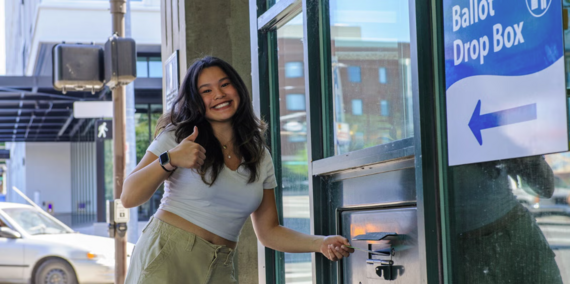 This year's General Election is almost here! Ballots went out this week—be on the lookout for yours. Multnomah County suggests that you return your ballots by mail by October 24, and if you plan to return your ballots via a drop box, do so by November 3 at 8 p.m. A reminder: The official ballot drop boxes around town are a safe, secure, and accessible way for all Portlanders to cast their votes. A full list of official ballot drop sites is available via Multnomah County, including these N/NE locations:
North Portland
- Rose Quarter: Official ballot drop box located on the south side of the Rose Quarter by the fountain & Rip City sign. Walk up only.
- North Portland Library (Library Book Drop) – 512 N Killingsworth St.
- St. Johns Library – Closed for construction. Use James John Elementary School ballot drop box at 8315 N Lombard St.
- James John Elementary School – 8315 N Lombard St. – Located on the sidewalk at the NW corner of N Lombard St. and Charleston Ave. Walk up only.
- Kenton Library (Library Book Drop) – 8226 N Denver Ave.
- North Lombard McDonald's – 3011 N Lombard St. – Official ballot drop box located on the sidewalk. Walk up only.
- McCoy Park – Official ballot drop box located on the SE corner of McCoy Park (near the intersection of N Trenton St. and Newman Ave.) Walk up only.
Northeast Portland
- Albina Library – 205 NE Russell St. – Official ballot drop box is next to the book returns slot on the south side of the building near the bicycle parking.
- Hollywood Library (Library Book Drop) – 4040 NE Tillamook St.
- McDonald's Restaurant – 2010 NE César Chávez Blvd. – Official ballot drop box located on the west side of NE 40th Ave. between NE Tillamook St. and
- Hancock St. and near Hollywood Library.
- Gregory Heights Library (Library Book Drop) – 7921 NE Sandy Blvd.
- Parkrose Neighborhood – 4390 NE 102nd Ave. – Official ballot drop box located in the east parking lot across the street from MHCC Maywood Park Center on NE 102nd Ave. and Prescott St.
I-5 southbound closure is complete—EARLY!🚧
A two-mile stretch of I-5 southbound through the Rose Quarter that had been closed for construction since mid-September reopened on October 7—a week ahead of schedule. As part of the work, Oregon Department of Transportation (ODOT) repaired and reinforced weak areas, replaced bridge joints, resurfaced the concrete deck, and repainted lane lines. Although the closure did impact traffic, the region did not experience the worst-case congestion scenario.
|
|
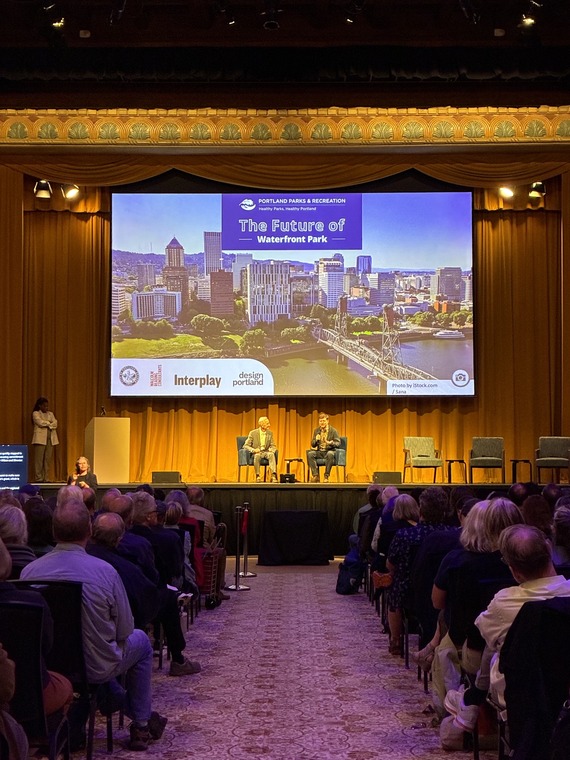 On September 23, Portland Parks & Recreation (PP&R) and Portland-based Interplay hosted a public meeting to introduce hundreds of Portlanders to the three design teams being considered for the redesign of Tom McCall Waterfront Park. It was an opportunity for each team to share their design philosophy and examples of their previous project work.
My crew was energized by the firms being considered and their focus on creating a space that can be utilized year-round, by all people, and reconnect us to our riverfront. There was also mention of reimagining space for fun, togetherness, and reflection, opportunities for public/private partnerships, and more.
Stay tuned, as all three design teams will present their concept designs for Portland’s waterfront in early 2027, and the winning team will be announced next spring. In the meantime, you can learn more about the three design teams being considered—each of which features a multidisciplinary group of firms that include Portland-based expertise. You can also watch a recording of the 9/23 public event in full on YouTube.
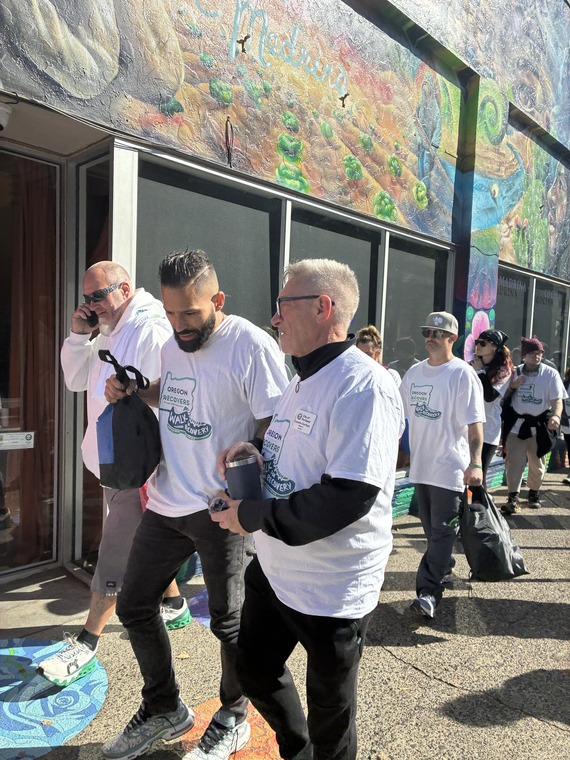 This year's Walk for Recovery, held on September 25, was a powerful gathering of the recovery community in the heart of downtown Portland. I’m a member of that community myself, and it was wonderful to celebrate sobriety alongside so many Portlanders while also spreading hope to those who are still suffering. A through-line that resonated deeply with many attendees was the call for more sober housing options—where folks working to get and stay sober are around other people doing the same.
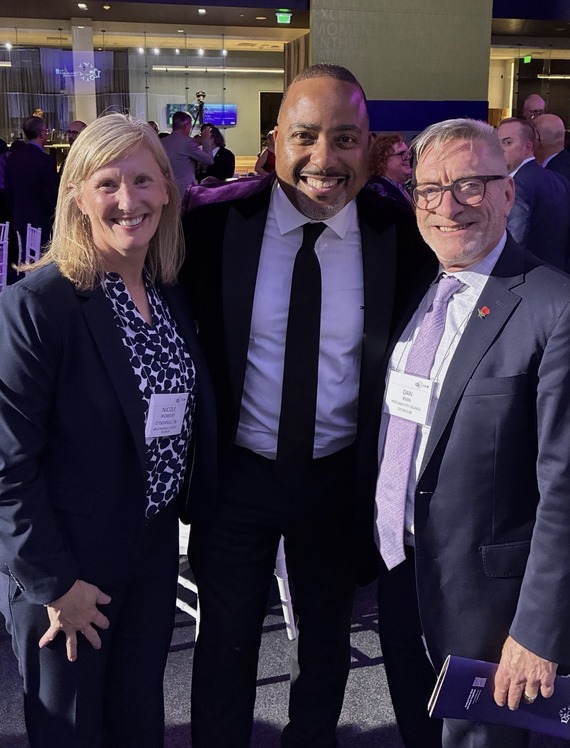 I had a lovely time at the 125th anniversary dinner at the University of Portland recently! I was especially moved to hear UP alumni talk about how their college experience impacted what they went on to do in their careers. I got to say hello to UP President Robert D. Kelly and other UP friends, the choir sounded beautiful, and the theme of the evening was “hope” for the next chapter—something we can all relate to.
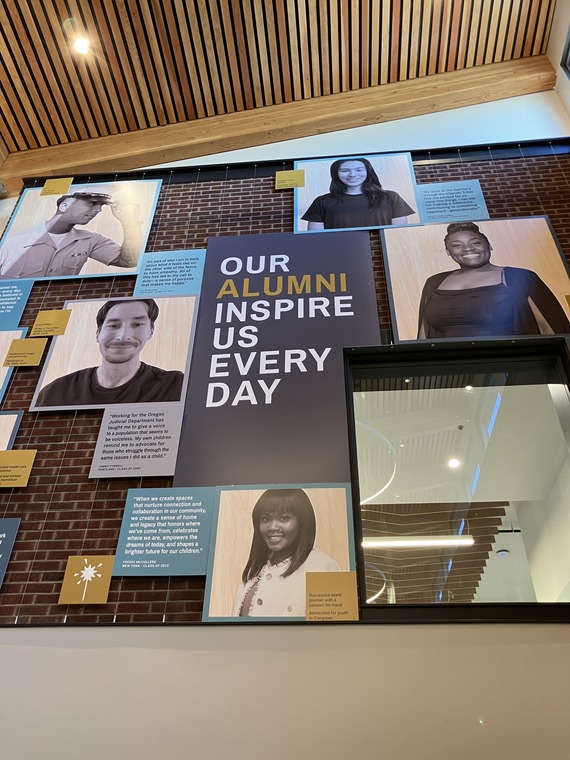 Over the last 33 years, Duncan and Cindy Campbell’s vision to provide professional mentors for at-risk children has become an international enterprise. Friends of the Children has made a material impact on many young Portlanders’ lives, as well as the lives of kids and teens across 48 US states and Singapore, through its 12+ year commitment to each mentee.
As someone who sought out mentorship early and often in my life to help me move beyond some of the challenges I was facing at home, I admire and share in the Campbell’s vision. I’m proud that Friends of the Children’s newly renovated headquarters is right here in Portland, Oregon—District 2, no less! I’m also proud to have supported a PCEF-funded capital investment of $4.7 million in this project.
Congrats again to Friends of the Children on the recent grand opening of their stunning new Duncan & Cindy Campbell National Center of Excellence and Portland Albina Campus.
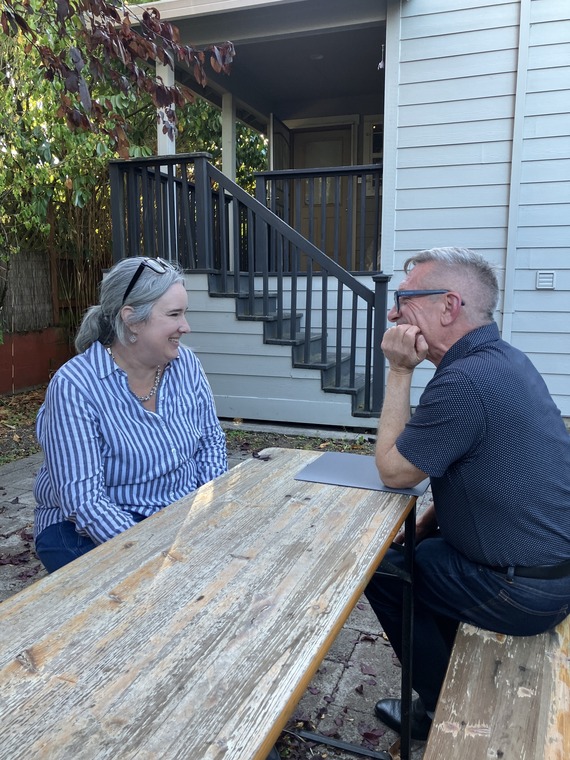 At the Oregon Recovery Walk for Recovery a few weeks back, I heard from multiple Portlanders that we need more transitional housing that provides a sober living environment. With that experience top of mind, it was so refreshing to tour a recovery home in North Portland recently that provides just that. Project Patchwork operates several recovery homes, each providing safe, stable, substance-free housing, peer support, and case management to parents in early recovery and their children.
I was so impressed with Director Laura Hall for forging ahead, despite the government’s headwinds, to build a growing network of safe housing that helps people in recovery restore their lives, rebuild their agency, and have a successful life going forward. The solutions are out there. We just need to fund and support them—because they’re getting results.
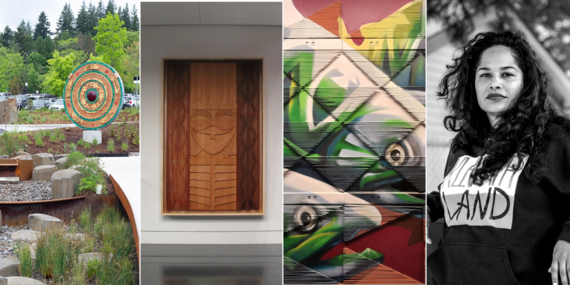 Monday was Indigenous Peoples’ Day, and in honor of that, I shared a few of the City of Portland's public artworks on my social media pages. The City's 1,700+ piece public art collection, part of the Office of Arts & Culture's purview, includes many works by Indigenous artists, from youth to elders, with deep ties to Portland and the surrounding areas. Those artworks include:
- Flow by Greg A. Robinson
- Carver by Bobby Mercier
- Tla heniiya wens gahl hitchin’kin a’mah henwiis k’ihlan eik’ tah lah and Fish Sticks by Toma Villa and Shirod Younker
- Indigenous Excellence (Natalie Ball) by Kunu Dittmer-Bearchum and Tim Keenan-Burgess
Photos courtesy of the Regional Arts & Culture Council (RACC)
|
|
Friends of IFCC's Artist Grant & Residency Program
-
Funder: Friends of IFCC via Portland's Office of Arts & Culture
-
Deadline: October 16, 2026 (TODAY!)
-
Funding amount: $5,000 per grant for a total of $100,000
-
Eligibility: Portland-based artists working at any level and in wide-ranging disciplines—including but not limited to visual arts, writing, multimedia, music (including bands), dance, theater, spoken word, and multidisciplinary performance.
Part of the Office of Arts & Culture's Small Grants Program, the Friends of IFCC Artist Grant & Residency Program supports projects and programming for artists working at any level and in various disciplines. This program is part of a larger effort to revitalize the IFCC, re-activating the current building to build excitement and attention for future expansion.
Regional Arts & Culture Council's Portland Arts Project Grants
-
Funder: Regional Arts & Culture Council (RACC) via Portland's Office of Arts & Culture
-
Deadline: October 28, 2026
-
Funding amount: Up to $5,000 for individuals and up to $10,000 for organizations and schools for a total of $1.2 million
-
Eligibility: Individual artists, arts groups, arts-focused businesses, nonprofits, and organizations in Portland
Also part of the Office of Arts & Culture's Small Grants Program, RACC's Arts Project Grants provide funding to Portland-based individual artists, arts businesses, schools, arts organizations, and other nonprofits for a wide range of artistic endeavors, emphasizing diversity and community impact.
Affordable Commercial Tenanting Grant
-
Funder: Prosper Portland
-
Deadline: Ongoing
-
Funding amount: Up to $300,000
-
Eligibility: Property owners and business owners in the Interstate Corridor TIF District and the Gateway Regional Center TIF District
Prosper Portland provides funding to property owners and small business owners who are in the process of negotiating a lease. Grant funds may be used for tenant improvements, space-related soft costs, and permitting support to ready space to open for business.
Lloyd-Holladay Relocation Grant
-
Funder: Prosper Portland
-
Deadline: No deadline; applications will be considered as long as funding is available.
-
Funding amount: Up to $25,000
-
Eligibility: Businesses and nonprofits looking to locate or relocate in the Lloyd-Holladay TIF District.
The Lloyd-Holladay Relocation Grant is a limited-time grant program developed to support Lloyd Center Mall tenants, activate vacant store fronts, and drive foot traffic in the Lloyd-Holladay TIF District by providing funding for moving expenses and tenant improvements.
Local Small Business Expanded Repair/Restore Grant Program
-
Funder: Prosper Portland
-
Deadline: Ongoing
-
Funding amount: Up to $25,000
-
Eligibility: Small businesses and nonprofit organizations occupying a ground-floor storefront
Prosper Portland provides funding to small businesses located in the City of Portland that have sustained physical and economic damage due to break-ins and vandalism. Grants assist eligible businesses to remain open and operational and contribute to maintaining a healthy street environment.
Prosperity Investment Program
-
Funder: Prosper Portland
-
Deadline: Ongoing
-
Funding amount: Up to $75,000
-
Eligibility: Businesses and property owners in the following TIF Districts: Central Eastside Corridor, Cully, Gateway Regional Center, Interstate Corridor, Lents Town Center, Old Town, and North Macadam
Prosper Portland offers matching, reimbursable grants that help businesses and property owners make tenant improvements and small and large-scale improvements to new and existing buildings.
|
|
|
Traducción e Interpretación | Biên Dịch và Thông Dịch | अनुवादन तथा व्याख्या 口笔译服务 | Устный и письменный перевод | Turjumaad iyo Fasiraad Письмовий і усний переклад | Traducere și interpretariat | Chiaku me Awewen Kapas
Translation and Interpretation: 311
The City of Portland ensures meaningful access and reasonably provides: translation, interpretation, modifications, accommodations, alternative formats, auxiliary aids and services. To request these services, call 311 for Relay Service or TTY: 711.
|
|
|
|
|
|