|
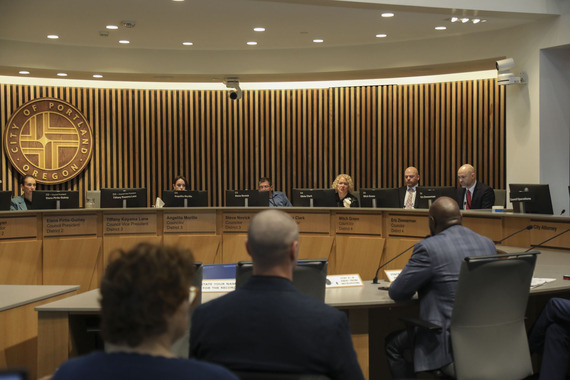 Dear Neighbors, Friends, and District 4 Residents:
Happy 2026!
It’s been one year since I was sworn in to represent District 4 in Portland City Hall. I’d like to reflect on why I ran for this office and what my office has been able to deliver so far.
I came out of retirement to serve because I truly want our new form of government to work. I believe this moment requires a back-to-basics approach that focuses on the core functions of City government: making people feel safe, taking care of our roads, reducing barriers to homebuilding, and more.
As the Chair of City Council’s Transportation and Infrastructure Committee, I can say with certainty that we are moving in the right direction. I am also proud of what I have accomplished as a member of the Arts and Economy Committee and the Governance Committee.
This is just the beginning, and much work remains. But today let’s celebrate what we’ve accomplished together.
Please stay engaged through 2026 — and make sure you’re registered to vote in this year’s election!
-
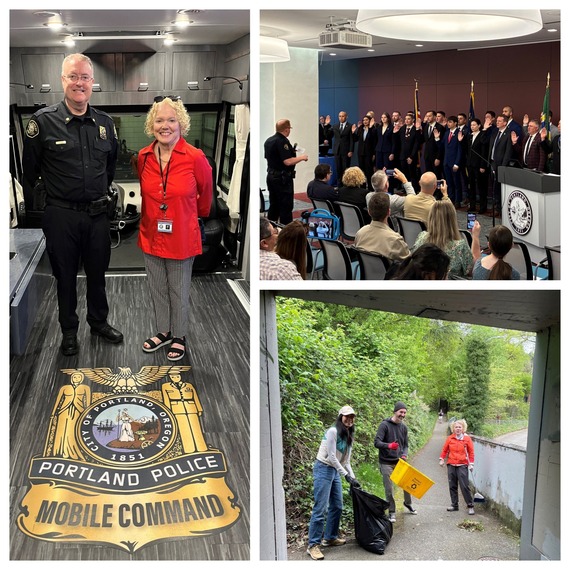
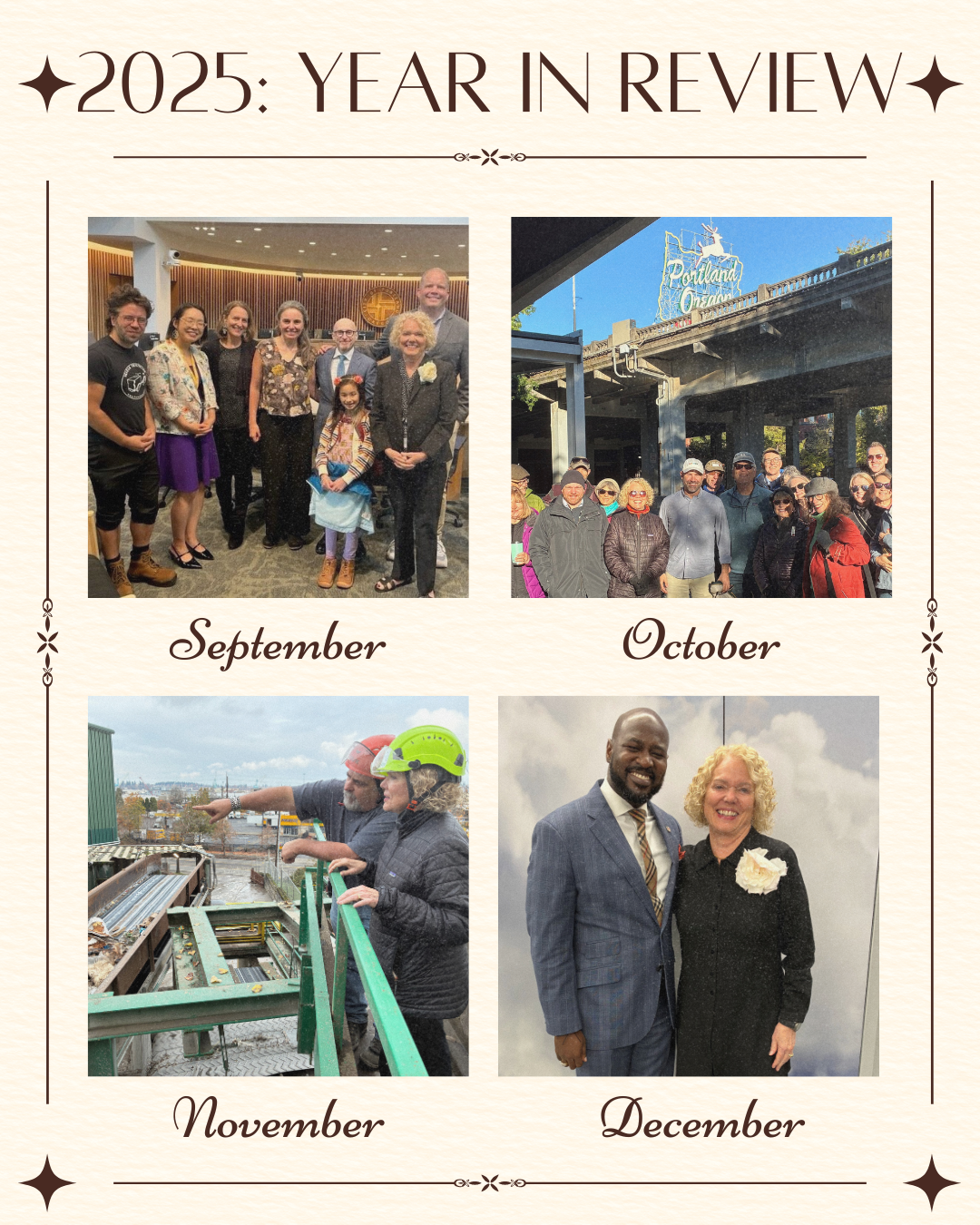
Public safety: I have been doing everything possible to fund our public safety system; to ensure your 9-1-1 call gets an immediate and appropriate response; and to support Chief Day’s goal of hiring the largest number of sworn Portland Police Bureau officers in 30 years. Portland has the same number of officers we had in the 1990s, despite our population growth since then. This fall I attended a ceremony for the largest hiring class since the late 1990s! Although we have a long way to go, this marks a significant step forward to strengthening public safety on our streets.
-
Affordable housing: I started my career as an affordable housing advocate, so I know how urgently the City needs to seek federal resources and address local barriers by expediting permits. Last year I supported an effort to exempt new residential projects from System Development Charges for three years, and I was proud to vote for the Unified Housing Strategy to help move Portland from crisis response toward long-term solutions.
-
Homelessness: I supported Mayor Wilson’s plan to end homelessness, while urging him to be responsive to neighborhood concerns around the impact of new emergency shelters. That’s why I fought hard against a reckless budget amendment that would have slashed millions of dollars from the Impact Reduction Program, which provides garbage and graffiti removal, hygiene access, resource referral, and job opportunities and removes campsites that pose the highest risk to health and safety.
-
Neighborhood cleanup: I donated $100,000 of my surplus office budget to the Public Environment Management Office to help address community challenges. Central City Concern’s Clean Start program — which trains and employs workers who are formerly homeless or have other barriers to employment — is providing daily sidewalk cleaning and trash removal along the entire Interstate 405 corridor, from the St. Stephen’s Shelter in Southwest Portland to the Northrup Shelter in the Pearl District. The City is working closely with Clean Start to regularly assess the neighborhoods and focus these additional resources in the highest-visibility, highest-need areas.
-
Critical Energy Infrastructure (CEI) Hub: In June I passed a budget note to strengthen inter-agency coordination at the CEI Hub, a fuel tank farm in the Linnton neighborhood on unstable soil, threatening Portland and the state. The City will convene a work group with representatives from federal, state, regional, and local jurisdictions regulating the CEI Hub to strengthen coordination, risk mitigation, and response efforts. This group will clarify roles and responsibilities for regulating activities at the fuel terminals, mitigating risk, and responding to emergencies.
-
Protect Portland Initiative: In October I co-sponsored this resolution to clarify Portland values in the face of the Trump administration’s aggressive federal overreach in response to protest activity outside the U.S. Immigration and Customs Enforcement (ICE) building in South Portland (a 10-minute walk from my home). The federal government is wasting tax dollars, violating the Constitution, and disrupting the lives of nearby residents. The initiative will research how the federal government enforces its policies, including surveilling Portlanders.
-
Property taxes: In October I initiated a work session to discuss the decrease in assessed value of downtown properties. The City of Portland relies on property taxes for revenue to pay for the programs that people want; it’s essential that everyone on Council has a shared understanding of this reality so we can dispel any misconceptions and prepare for the future impact on our budget.
-
League of Oregon Cities: As Portland’s representative on the League of Oregon Cities board, I helped the league host its 100th conference in the City of Roses. With more than 450 attendees, a total of 140 cities were represented, from towns as small as 174 (Detroit) to metropolitan areas as large as 2.5 million (Portland). The league develops policies and shares best practices that empower Oregon’s cities. We have much in common, whether we are urban, rural, coastal, or mountain regions!
-
Taking care of City assets: In August Council unanimously passed my resolution to develop a plan to address a critical backlog of urgent needs. The City owns $80 billion in assets, which have been underinvested for decades and are at risk of failing, possibly threatening our safety, health, and economic future (for example, 100-year-old water pipes, deteriorating fire stations, etc.). The City needs a unified planning and financial strategy to maintain these assets. We must get back to basics to take care of what we own, so we do not leave our children to deal with these failures.
-
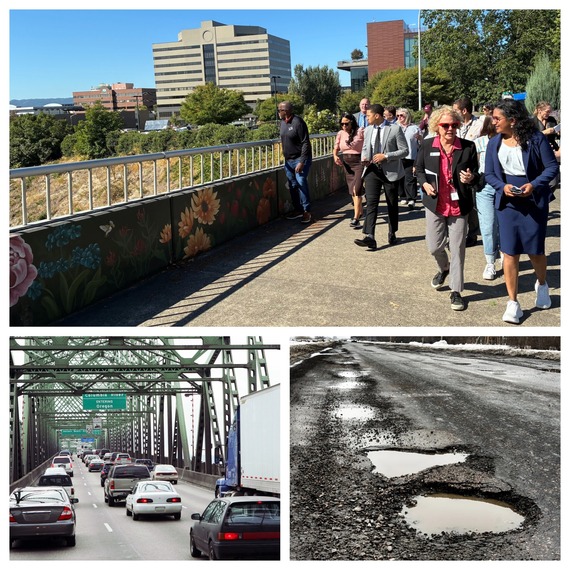
Transportation funding to fix the potholes! We have to find a way to fix the potholes! In July I sponsored a resolution directing the City to research alternative funding strategies for our transportation system. The state and federal governments have failed to adequately fund our transportation infrastructure, so Council must find our own way to provide needed maintenance and safety improvements on our roads.
-
Sidewalk Improvement and Paving Program: In May Council voted to bring more walkable pathways to the parts of Portland that need them the most: District 1 and District 4. The residents of Southwest Portland, one part of District 4, have been waiting 30+ years for sidewalks and safer streets. This resolution I co-sponsored moves us one step forward!
-
Interstate Bridge Replacement: I serve on the Executive Steering Group for this critical bi-state connection vital to our economy. The aging bridge is the only stop sign along Interstate 5 between the Mexican and Canadian borders — and it’s built on wood piles in sandy soil, making them vulnerable in the event of an earthquake. The new bridge has the potential to create jobs, enhance safety, and improve access for bicyclists, pedestrians, and transit users.
-
Keller Auditorium: I passed a budget note that directs the City to develop a financial plan by next April to preserve one of our most important cultural assets. This venue is long overdue for a major renovation to meet seismic, ADA, energy efficiency and fire/life safety standards. In 2024 the former City Council approved a resolution outlining a strategic plan for developing two Broadway-capable venues: renovating the existing Keller and developing a new performing arts facility at Portland State University. Market feasibility and transportation studies are in the works, and a financial plan is the next necessary step.
-
Sellwood Community House: In December Council passed my ordinance to allow the City to sell Sellwood Community House (SCH) to the nonprofit organization that has been running it since 2019. After the facility was closed because Portland Parks & Recreation lacked resources to maintain it, Friends of SCH stepped in — and has since raised more than $2 million to fully renovate it. Every day, SCH is bustling with children in preschool, seniors taking exercise classes, and so many other opportunities to connect. This is an example of what a successful public-private partnership looks like.
-
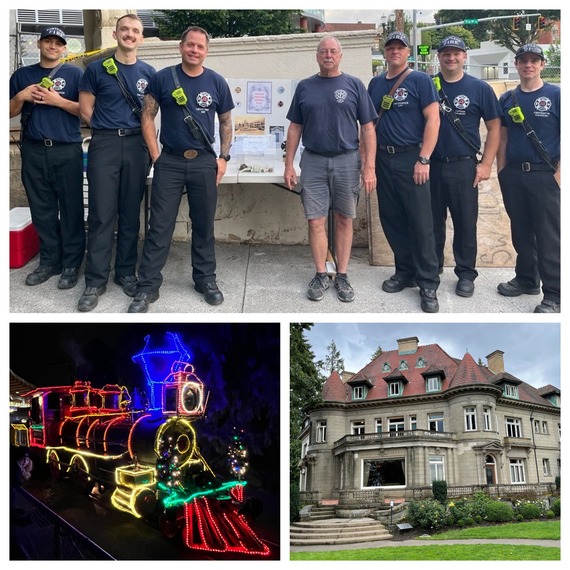
David Campbell Portland Firefighter Memorial: I donated $25,000 of my surplus office budget to this landmark in the Goose Hollow/Stadiumhood neighborhood. It was built in 1929 to honor fallen Fire Chief David Campbell and to remember all 77 firefighters who have given their lives in service to Portland since 1853. The memorial hosted weekly concerts last summer organized by Stadiumhood neighbor Michelle Milla.
-
International School of Portland: I have been working with leaders who want to create safer routes to the largest elementary school and preschool in downtown and the most racially diverse independent school in Oregon. A coalition including the Downtown and South Portland Neighborhood Associations, Better Block PDX, PSU’s Transportation Research and Education Center, and OHSU has proposed solutions for an unsafe stretch of South Sheridan Street.
-
Portland parks: Last year I advocated for the Parks Levy renewal and against budget cuts that could have closed Multnomah Arts Center. I also met regularly with the Portland Parks Alliance, which came together out of a shared concern for the chronic underfunding and neglect of parks capital maintenance issues. We have had many productive conversations about sustainable, balanced, and accountable funding that will keep our green spaces safe, welcoming, and thriving.
-
Friends of Washington Park and Zoo Railway: As co-chair of the Metro zoo train committee, I met regularly with community leaders who are working to restore the 3-mile loop connecting Oregon Zoo to Washington Park Rose Garden, Portland Japanese Garden, and other attractions after 12 long years. It is only through supporting the work of a dedicated community that we will bring it back!
-
Pittock Mansion: I helped facilitate conversations with leaders at Portland Parks & Recreation. A new agreement now allows the mansion to use the surrounding lawn and provides more flexibility for parking management. Pittock’s persistent and visionary leadership, along with a new approach at Parks, made this work. More partnerships to come!
-
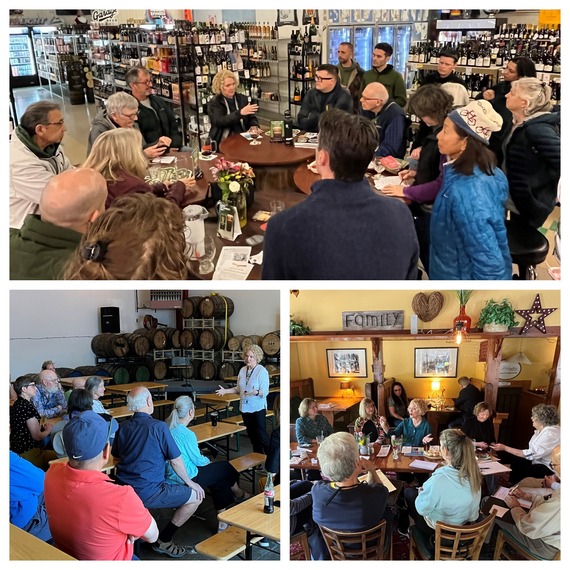
I’m in the community: Last year my office engaged a total of 521 constituents at 27 events! We have now officially held (or scheduled) constituent office hours, happy hours, or coffees in all 32 neighborhoods across District 4 — an engagement record that surpasses that of any other City Councilor!
-
I support our neighborhood associations: I believe many of our problems can be solved at the local neighborhood level, so I have been a big advocate for our neighborhoods. Using surplus funds from my office, I donated $2,000 to each of the 32 neighborhood associations in District 4. I also donated surplus office funds to the District 4 Coalition’s monthly newsletter, “Voices.”
-
I’m boosting parks volunteerism: I introduced two budget notes asking Portland Parks & Recreation to encourage and accurately track volunteerism to ensure we are reaching levels that exceed those in 2019. Historically, the City had a deep pool of volunteers to aid with activities and maintenance within the park system. But since COVID, we’ve seen a significant reduction in volunteer hours, so we need to re-engage with the community and get them involved again.
    |
|
|
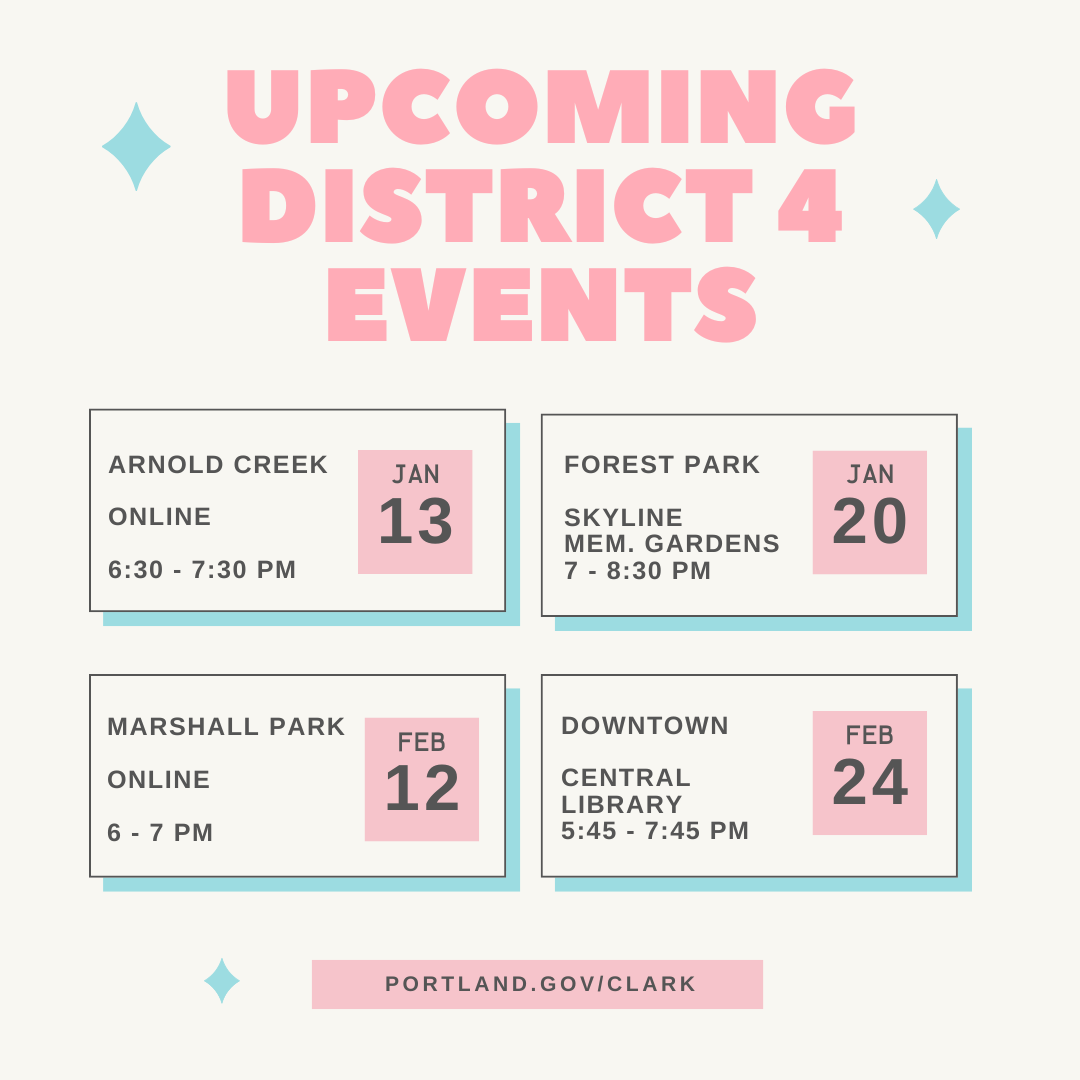 I’m dedicating time to meet with District 4 constituents both virtually and in their own neighborhoods — to hear what’s on your mind and to provide information on a variety of issues. Please save these dates:
-
Arnold Creek Neighborhood Association: 6:30-7:30 pm Tuesday, January 13th on Zoom.
-
Forest Park Neighborhood Association: 7-8:30 pm Tuesday, January 20th at Skyline Memorial Gardens, 4101 NW Skyline Boulevard.
-
Marshall Park Neighborhood Association: 6-7 pm Thursday, February 12th on Zoom.
-
Downtown Neighborhood Association: 5:45-7:45pm Tuesday, February 24th at Central Library, 801 SW 10th Avenue.
 Willamette Week reports on an Arts and Economy Committee meeting in which I urged my fellow District 4 Councilor Mitch Green to postpone a proposed ban on the sale of foie gras in light of more urgent matters: “Why would we spend time on foie gras when we should be getting the economic analysis, the overview of the budget? I just don’t think that’s a high priority for the City.”
The holiday shopping season brought a welcome gift for our District 4 small businesses: a significant increase in foot traffic! According to Prosper Portland and Placer AI, the Central City West area, which includes downtown and the South Waterfront, saw 130,700 visitors on Small Business Saturday, an increase of nearly 20% from 2024 and a 92% increase from 2019. This puts us well on the way to reaching Mayor Wilson’s goal of restoring pre-pandemic levels by 2030. Sean Scott of Sammy’s Flowers tells KPTV: “We’ve been really busy here…. It’s just nice to experience that energy and then being here at the flower shop seeing people walk in. It’s a great morale boost for us.”
KOIN reports that Henry Sakamoto, the Japanese American community leader responsible for bringing the beloved cherry trees to Portland’s waterfront, has died. As the first president of the Oregon Nikkei Endowment, he established what would become the Japanese American Museum of Oregon in Old Town. Sakamoto shared his family’s story about being forcibly incarcerated alongside more than 120,000 Japanese Americans during World War II — a legacy that won’t be forgotten thanks to his pivotal role in the creation of the Japanese American Historical Plaza, which welcomes thousands of visitors every spring.
|
|
|
Traducción e Interpretación | Biên Dịch và Thông Dịch | अनुवादन तथा व्याख्या 口笔译服务 | Устный и письменный перевод | Turjumaad iyo Fasiraad Письмовий і усний переклад | Traducere și interpretariat | Chiaku me Awewen Kapas
Translation and Interpretation: 311
The City of Portland ensures meaningful access and reasonably provides: translation, interpretation, modifications, accommodations, alternative formats, auxiliary aids and services. To request these services, call 311 for Relay Service or TTY: 711.
|
|
|
|
|
|