|
|
Having trouble viewing this email? View it as a Web page.
 (He/Him) councilor.dunphy@portlandoregon.gov
Bluesky @councilordunphy
Instagram @councilorjamiedunphy |
|
 |
|
|
|
I’ve been thinking a lot about community safety over the course of the summer. About how we create it together, and how we stop perpetuating injustice. In District 1 we face some of the most severe disparities in life and safety outcomes across the city. From traffic fatalities to gun violence to mental health crises, our communities are too often under-resourced, under-served and overlooked. The consequences of that neglect are devastating and this past month has made that painfully clear.
On July 31, the City Council voted unanimously to approve a $3.75 million settlement for the wrongful death of Immanuel “Manny” Clark, who was killed by Portland Police after fleeing a traffic stop. Mr. Clark, who is Black, was wrongfully stopped by police who were in pursuit of a white subject. When police approached, he ran, and within 13 seconds, a police officer shot him in the back with an AR 15 rifle. Police then denied Mr. Clark any medical care for 23 minutes. I was disgusted to learn that no officer was disciplined, that his actions were found to be “within policy”. Instead, the police officer was patted on the back, given an ‘atta boy’, and sent back out to do his duty. I’m angered that in 2025, we are still having this conversation.
This settlement comes on the heels of the in-custody death of Damon Lamarr Johnson: a 52-year-old Black veteran in the midst of a mental health crisis. He needed help. Instead, he was forcibly restrained, left face-down, and died under the supervision of those who claimed to be there to assist. He posed no threat. He had no weapon. His death was not a tragic accident, it was the result of systemic failure: in policy, in training, and in humanity.
We cannot keep pretending this system works. It does not! If we believe in real public safety, we must reimagine how we respond to crisis and strengthen the connection among our responders best fit to the needs of our community. That means expanding Portland Street Response 24/7 citywide, ensuring they have robust training, and supporting their needs, like having multiple hubs across the city! That means ensuring mental health professionals, not just armed officers, are first on the scene when they’re needed, and demanding real accountability when things go wrong. We owe that to Mr. Johnson, to Mr. Clark, and to every Portlander who deserves better.
|
|
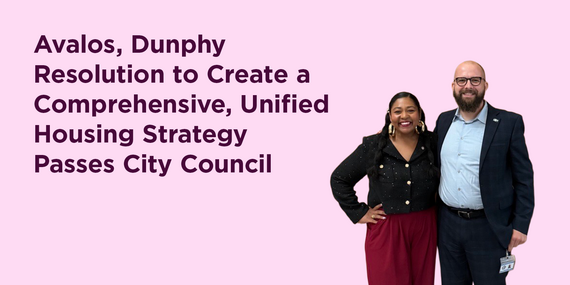 Unified Housing Strategy Resolution Passes City Council!
On August 7, the Portland City Council voted 11–1 to adopt the Unified Housing Strategy (UHS)—a major step forward in aligning the city’s fragmented housing efforts into one coordinated plan. Co-led by my colleague District 1 Councilor Candace Avalos and myself, the resolution directs the City Administrator to work across bureaus to create a single, actionable strategy to move Portland’s housing work from crisis response to lasting solutions.
This resolution is about getting our house in order. Portlanders deserve a city that works together, sets clear goals, and delivers on the promise of stable, affordable housing for everyone.
The UHS will consolidate citywide goals, plans, and existing work, and ensure that efforts from homelessness response to permitting reform are all informing one single plan. People ask “What's Portland's plan for housing?” This is the plan for housing.
The first draft of this plan will be delivered to the Homelessness and Housing Committee in Early December of this year.
 State of the Music Economy Presentation – A Call to Action
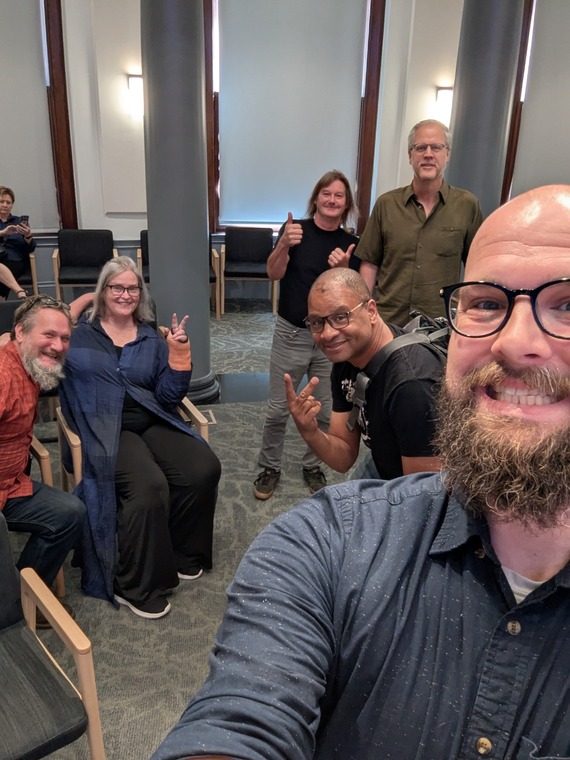
On August 12, I had the privilege of presenting the State of Portland’s Music Economy to the Arts and Economy Committee. It was a deep dive into how our independent music scene powers not just our culture, but our economy and civic identity.
Watch the Presentation
Access the Presentation Materials
We heard from industry leaders who shined a light on the reality: the music industrygenerates at least $3 billion in economic activity in Portland, and likely much more. Yet too often, our policies and tourism efforts haven’t recognized or supported this vital sector. With the music industry now officially designated as an “emerging economic sector” by the State, we have the opportunity, and responsibility, to act.
My Policy Team also introduced some ideas and objectives I will be developing in the coming months:
A Venue Protection Plan, modeled on San Francisco’s, that integrates existing venue considerations into permitting—not after development—and avoids unnecessary litigation and loss of these vital assets as we develop more density in our urban environment.
Support for home-based musicians, including an acoustic certification (“check-plus”) path that makes it easier to rehearse without disturbing neighbors, and clear noise guidelines that give explicit ability to musicians to practice within timeframe, decibel and duration boundaries.
Revitalizing the Affordable Arts Space Plan, promoting creative reuse of underused commercial spaces and tenant-purchase models to ensure artists have affordable, stable places to work.
A small-venue “problem-solvers” table, meeting bi-monthly to connect venue operators with City regulatory staff from fire, parking, permitting, and more: so issues get solved, not escalated.
Better musician loading and parking support, including flexible temporary permits for loading zones and overnight parking for touring acts.
Seasonal noise code variances for small businesses hosting regular live music: simplifying approvals and making summer programming more feasible.
Improved documentation standards for venue inspections, ensuring smooth transitions when fire or safety inspectors change and preserving institutional memory.
Launching an Independent Music City Office—a public-private nonprofit dedicated to advocating for Portland’s commercial music ecosystem.
|
|
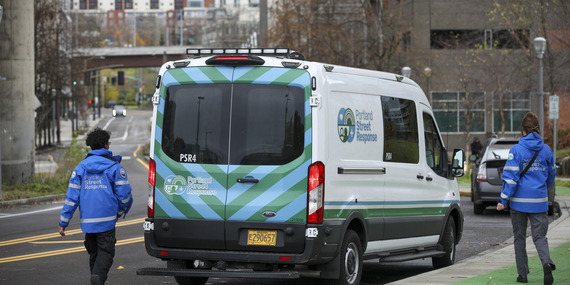 PSR Headquarters Tour
This month, my outreach team did a tour of Portland Street Response (PSR) headquarters to better understand the role they play in addressing behavioral health crises without relying on armed police. Our conversation focused on strengthening their training protocols, clarifying when PSR should respond versus police, and improving communication with agencies like BOEC and Project Respond.
Our discussion emphasized the need for clearer call classifications, more accountability in training content, and better interagency collaboration. We also discussed practical improvements like establishing a PSR hub in East Portland—so responders don’t have to return to the west side to recharge and replenish.
Our goal is to build a more responsive, compassionate, and coordinated crisis response system. PSR is a key piece of that vision, and I’m committed to supporting its growth with clarity, accountability, and community focus.
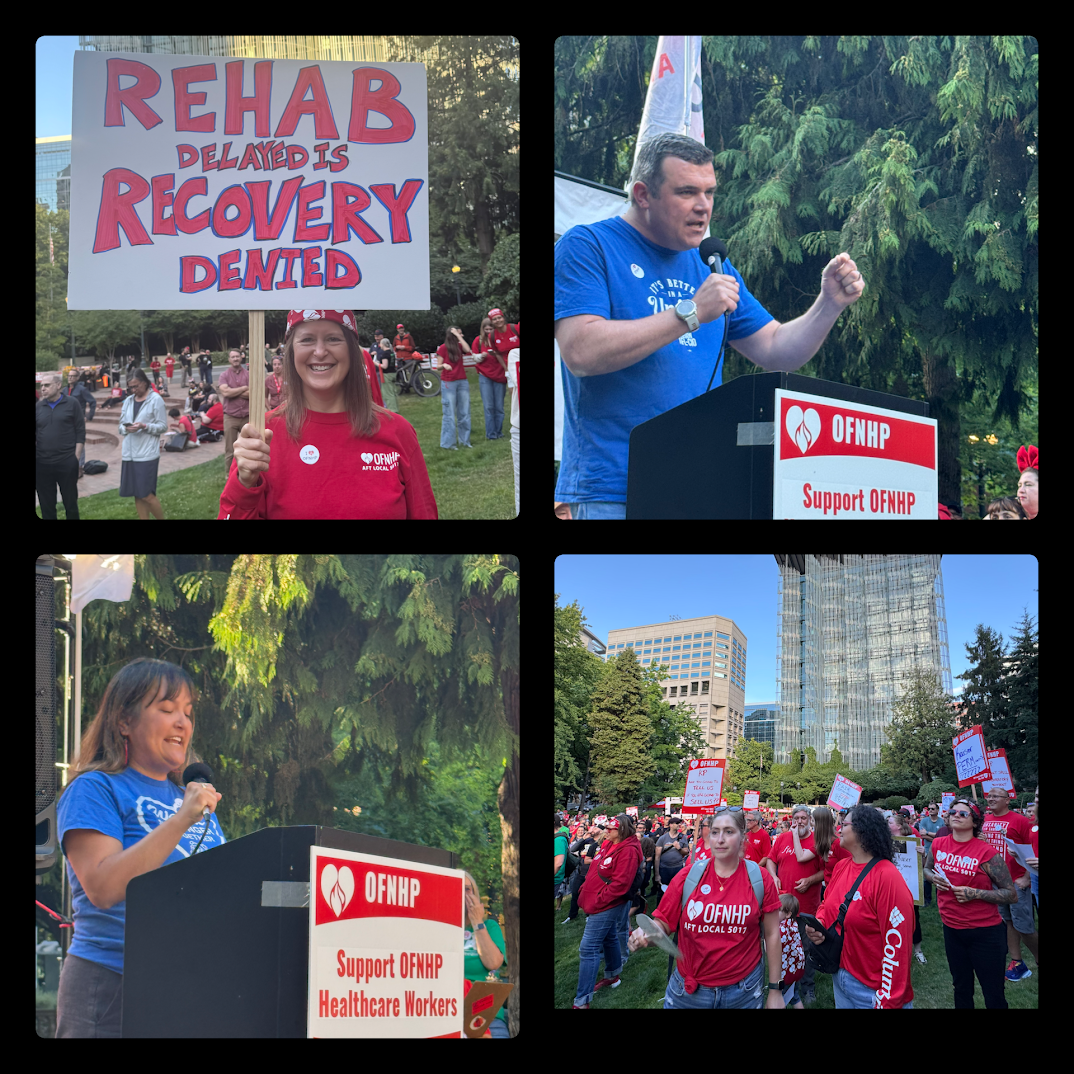 OFNHP Rally!
On August 7th, I had the pleasure of attending a rally hosted by the Oregon Federation of Nurses & Health Professionals (OFNHP). OFNHP is a coalition of more than 6,000 healthcare professionals across Oregon and Southwest Washington. OFNHP fights for improved working conditions for a variety of healthcare workers across different disciplines.
This rally aimed to help Kaiser workers in their recent labor negotiations to demand safer staffing, fair wages, and job stability. Kaiser recently pulled from an agreement that would protect workers and patients iKaiser were to be sold. Current agreements haven’t kept up with staffing demands, and nurses are working longer and longer shifts with more and more patients. Nurses are not robots: they shouldn’t be expected to work like they are. Our local Kaiser workers deserve transparency, protection, fair wages, and rest.
During this rally, we heard from amazing community advocates and healthcare workers who urge for a fair contract. My colleagues Councilor Mitch Green, Councilor Sameer Kanal, and Councilor Angelita Morrillo came to support, and we got to watch Councilor Tiffany Koyama-Lane share her experience as a union member, teacher, and patient. We also heard from State Representative Rob Nosse, State Representative Travis Nelson, Oregon AFL-CIO President Graham Trainor, and OFNHP President Sarina Roher. Portland is definitely a union town!
To help support Kaiser workers fight for a fair contract, you can sign the petition here. From here, OFNHP will resume bargaining at the beginning of next month. Any updates to the bargaining process will be posted on OFNHP’s website. Until then, I’ll keep standing in solidarity with our healthcare workers.
|
|
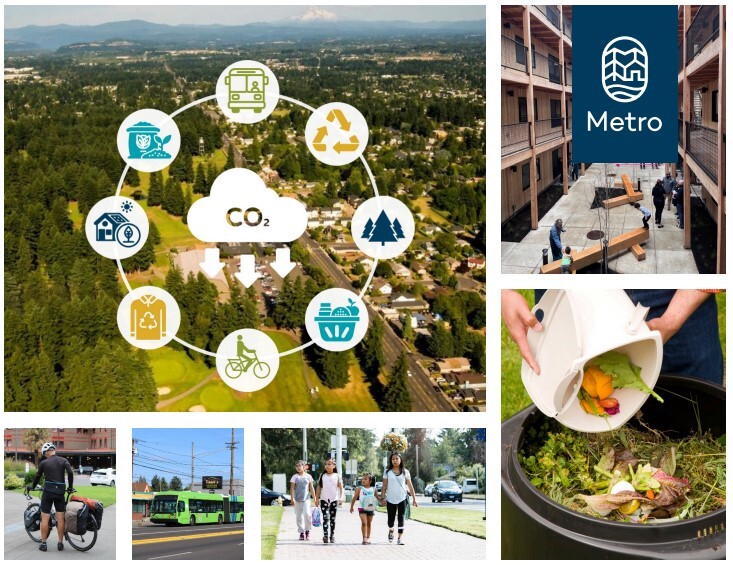 Community Feedback Wanted for Metro’s Comprehensive Climate Action Plan
Metro is seeking input that will help finalize the Comprehensive Climate Action Plan and urge regional partners to take actions that combat climate change in ways that benefit you and your community. The public comment period is open now through Thursday, Sep. 4.
While climate change is a global issue, there are urgent actions that we can take locally and regionally to safeguard the natural world and our quality of life.
Examples of climate actions include making it easier to get around without driving, reducing the amount of energy used by our homes and buildings and making it easier to repair and reuse products. These actions not only fight climate change but also create new jobs, save people money, clean the air and improve quality of life for everyone.
Help chart a wise course for the future for the Portland-Vancouver metropolitan area! Thank you in advance for sharing your thoughts.
How to participate: Explore the StoryMap and survey
When: Now through Thursday, Sep. 4
You can also visit Metro’s project website for more information, including the technical appendices for the plan. If you have questions or would like to submit comments with attachments, please email them to climate@oregonmetro.gov.
 Changes to Cleanup on ODOT Properties
Our office is hopeful that the upcoming special session will re-establish the budget for the intergovernmental agreement. This agreement allowed ODOT and City of Portland teams to collaborate to address bad behavior on ODOT property. Now that it’s lapsed, there is a new reporting process for cleanup on ODOT property. Here are some of the key changes:
HOW TO REPORT CAMPSITES ON ODOT PROPERTY:
The City of Portland can no longer accept reports about removals on ODOT property. Instead, you must report camps directly to ODOT by calling 1-888-Ask ODOT or by using the Ask ODOT online reporting tool and selecting “highway maintenance”.
The City of Portland’s online Impact Reduction Data Dashboard will no longer reflect any campsites located on ODOT property.
REMOVAL PROCESS ON ODOT PROPERTY:
Removals: Rapid Response BioClean workers post notice signs and complete removals. Posted Warning: Except in emergencies, removal crews return 10–15 days after warning signs are posted. When camps are in areas marked No Trespassing, removal crews will return 1–7 days after posting. Property: will be held for 30 days. Pick up at the warehouse in Clackamas by calling 503-730-4732 M–F, 8:00am–3:00pm.
|
|
|
Traducción e Interpretación | Biên Dịch và Thông Dịch | अनुवादन तथा व्याख्या 口笔译服务 | Устный и письменный перевод | Turjumaad iyo Fasiraad Письмовий і усний переклад | Traducere și interpretariat | Chiaku me Awewen Kapas
Translation and Interpretation: 311
The City of Portland ensures meaningful access and reasonably provides: translation, interpretation, modifications, accommodations, alternative formats, auxiliary aids and services. To request these services, call 311 for Relay Service or TTY: 711.
|

|
|
|
|
|