Highlights from June meeting in LaGrande
The June quarterly meeting of the State Board of Agriculture was held on the campus of Eastern Oregon University (EOU) in LaGrande, Oregon. During the meeting, board members heard from County Commissioners and local leaders on challenges, agricultural and social, facing the region as well as a presentation about First Foods from the Confederated Tribes of the Umatilla and important research, conservation, education, and market developments in the region and beyond. The board also heard from students in the EOU/OSU Ag Entrepreneur program who shared their experiences and goals to be part of the next generation to steward the natural resources and working lands in Oregon.
top of page
First Foods and Forage on our Natural and Working Lands
Protecting and enhancing Oregon’s Natural & Working Lands has always been a top priority for ODA’s Noxious Weed Control and Native Plant Conservation Programs. Recent legislative investments through the Natural & Working Lands Fund have provided opportunities for ODA and other state agencies to stand up multiple efforts that include long range strategic planning, tribal granting programs, interagency collaboration and the hiring of a Rangeland Health Specialist dedicated to the protection and enhancement of rangelands impacted and threatened by invasive annual grasses and the fires that they facilitate.
The Board heard a joint presentation by ODA and ODFW staff that highlighted the importance of this work and the synergy that’s been created between the two sister agencies through implementation of the NWL Fund. While the two agencies have distinct missions, the work that is being done provides co-benefits that help each agency achieve their long-term goals. Board member Barbara Boyer pointed out “the value and importance of this work is demonstrated by the wide-ranging implications of these projects”.
The Board then embarked on a field tour hosted by Arrowleaf Farm just outside of La Grande. Here, ODA staff and OSU faculty have partnered to evaluate the effects of invasive annual grass treatments on desirable perennials, with a focus on First Foods and culturally significant plant species. The site is adjacent to ODFW Habitat and Access projects and serves as a wildlife corridor and year-round elk habitat. Boyer recognized that “the lessons learned here can be applied at scale to benefit First Nations and Oregonians” as both agencies look to address invasive annual grasses across Eastern Oregon.
The field tour gave everyone a firsthand look at the nature and scale of the challenges that Oregon rangelands are facing in addition to providing context to the complexity of balancing ecological and agricultural priorities with the needs of various partners with diverse values. In closing, Boyer emphasized the value and importance of this work by recognizing that “a single project is providing opportunities for tribal partners, government agencies and academia to collaborate and learn more about how to protect and enhance First Foods while also benefitting wildlife habitat and increasing forage productivity on the rangeland”.
top of page
Spotlight on CTUIR's First Foods Policy Program
The Board of Agriculture extends its sincere thanks to Eric Quaempts, Natural Resources Director for the Confederated Tribes of the Umatilla Indian Reservation (CTUIR), for his thoughtful and engaging presentation on CTUIR’s First Foods Policy Program. This culturally grounded program serves as a cornerstone of the Tribe’s natural resource stewardship, built around the protection and sustained availability of the First Foods traditionally served in the tribal Longhouse: water, salmon, deer, cous, and huckleberries.
By integrating traditional ecological knowledge with contemporary science and policy, the First Foods Policy Program provides a powerful framework for land, water, and wildlife management. It informs local and regional planning efforts, supports interdepartmental collaboration within CTUIR’s Department of Natural Resources, and ensures that tribal values and priorities remain central in decision-making. The program also emphasizes community engagement through outreach events, restoration projects, and education.
During his presentation, Eric reminded the Board that, “Reciprocity is necessary for sustainability.” This concept is woven throughout the program’s work—honoring the relationship between people and the land and reinforcing the importance of giving back to the systems that sustain us.
CTUIR’s First Foods Policy exemplifies a holistic approach to resource management—one that prioritizes cultural continuity, ecological resilience, and a deep respect for the interconnectedness of all life.
top of page
Agricultural Entrepreneurship Program
Holding the BOA meeting at Eastern Oregon University (EOU) provided a first-hand glance at the opportunities available to EOU students. On the final day of the meeting, the Board heard from representatives of the Agricultural Entrepreneurship Program (AEP) – an innovative program with the mission of enhancing college level agricultural education to address the current and future challenges of agriculture in Oregon.
The Director of OSU’s Agriculture and Natural Resources Program, Penny Diebel, provided an overview of the partnership program between Oregon State University and Eastern Oregon University that began in 1985. The dual enrollment program allows students to benefit from the academic expertise available through both institutions. Agricultural Sciences and Rangeland Sciences are the two majors offered, along with several minors.
A highlight was the panel of five female students who shared their stories of what makes this program so special. All but one grew up in the agricultural world, whether farming or livestock rearing. The panelists emphasized that the community and hands on learning is what attracted them to the program. All the students shared their love of rural Oregon, science and desire to build careers within this field.
Dr. Chad Mueller, Chair of the program, addressed the Board virtually with a presentation that emphasized the breadth of changes that the agricultural industry is facing. From labor shortages to aging methods and technologies – the next generation of agricultural managers and supervisors need to be prepared to address these issues head on. AEP aims to help students fit these needs, by creating a practical hands-on curriculum that combines science and business.
If you are interested to learn more, please refer to the program informational flyer: Agricultural Entrepreneurship or visit https://www.eou.edu/agrient/
top of page
Eastern Oregon Agricultural Research Center and Eastern Oregon Livestock Show
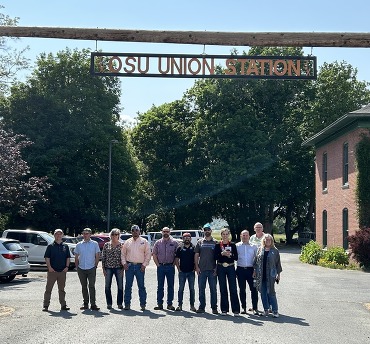 The Board visited the Eastern Oregon Agricultural Research Center in Union, Oregon—the oldest Oregon State University (OSU) research station in the state. Bryan Endress, Assistant Director, presented an overview of research initiatives focused on developing agricultural and natural resource strategies to sustain and enhance intermountain forest and shrub-steppe ecosystems for the benefit of current and future generations.
The Board concluded their site visits at the 118th Annual Eastern Oregon Livestock Show, where they were welcomed by President Cassie Miller-Peterson. Local FFA officers guided the Board through the grounds and shared insights on the event’s significance to local youth.
top of page
Lower Umatilla Basin Groundwater Management Area Rulemaking Update
by Eric Orem, board member
At the June Board of Agriculture meeting, we heard an update from ODA Deputy Director Jonathan Sandau on the rulemaking process underway to address nitrate pollution in groundwater across the Lower Umatilla Basin Groundwater Management Area (LUBGWMA). As a member of the Rules Advisory Committee (RAC), I’d like to share where things stand and what this effort means for agriculture in the region.
Since March, ODA has brought together a range of voices—including farmers, environmental organizations, university extension, community members and agency staff—to help shape a set of rules that aim to protect groundwater while remaining practical for those working on the land. This focused approach helps ensure resources and requirements are directed where they’ll make the biggest difference.
So far, we’ve held three RAC meetings, where we’ve worked through draft rule language and discussed key elements like how fertilizer and irrigation are managed. The goal is to keep the rules clear, consistent, and as easy to implement as possible. To achieve this, I have recommended that along with the rules; ODA should develop tools like worksheets and templates to help producers meet the new requirements without unnecessary confusion or burden.
There are three more RAC meetings scheduled—on June 26, July 24, and August 18—all of which are virtual and open to the public. Throughout this process, ODA has made a strong effort to keep things transparent, with meeting materials and public comments available online.
This rulemaking is about more than compliance—it’s about creating a workable solution that protects our shared water resources while recognizing the realities of farming in this region. Agriculture is a key part of the solution, and many growers have already taken steps to improve practices and reduce impacts. I’m committed to helping shape a fair and balanced path forward—one that supports both clean water and a strong agricultural future for the Basin.
top of page
ODA Domestic Trade Activities
In response to tariffs and market disruptions, Oregon seafood leaders—including ODA Director Charpilloz Hanson, Governor Kotek, and Oregon's congressional delegation—urged the USDA to intervene. On May 16, the USDA approved a $16 million purchase of Oregon Pacific pink shrimp under the authority of Section 32. Section 32 is a federal program that buys agricultural commodities for distribution to various USDA food programs. Learn more about Oregon’s pink shrimp fishery.
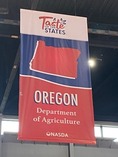
ODA hosted an Oregon state pavilion in the “A Taste of the States” (ATOTS) section at the National Restaurant Association Trade Show, sponsored by NASDA (National Association of State Departments of Agriculture) May 17-20 in Chicago. Director Charpilloz Hanson had the opportunity to connect with the six incredible Oregon food and beverage companies - Barhyte Specialty Foods (Pendleton), Better Bean (Wilsonville), Laurel Foods (Hillsboro), Mama Lil’s (Portland), Secret Aardvark (Portland), Tan Tan Foods (Beaverton) – as they showcased their products to U.S. food service sector buyers. As part of ODA’s broader economic development strategy, this event is just the beginning of continued efforts to boost Oregon brands in local and domestic markets.
|
top of page
Highlights of upcoming agency activities
top of page
|