|
Colleagues,
As we wrap up another school year, I find myself reflecting on the dedication, compassion, and perseverance of the educators and staff across our region. Every day in classrooms, counseling offices, school buses, cafeterias, via home visits, and countless other spaces, our region’s educators help young people learn, overcome obstacles, and discover what is possible for their futures. This work is not always easy - and it is often unseen - but its impact is profound.
Over the past few days, as I've attended graduations, field days, and year-end celebrations, I've heard story after story of educators who refused to give up on students facing truly extraordinary challenges. Some were navigating significant mental health struggles. Others were carrying the fear, uncertainty, and disruption that immigration enforcement actions have brought to their families and communities. Again and again, educators responded with compassion, persistence, and an unwavering belief in their students.
Recently, superintendents from across our region shared praise for the school improvement teams, special educators, and many others across Northwest Regional ESD. It was heartening to hear how deeply connected our work is to their districts’ successes and how much can be accomplished when communities come together in support of strong public schools.
I hope you'll join me in celebrating the accomplishments highlighted in our final newsletter of the school year. Behind every data point, program, and initiative are dedicated educators helping students achieve goals, overcome barriers, and realize their potential.
We are deeply grateful for your partnership and proud of the difference we make together for students, families, and communities across our region. |
|
|
In partnership —
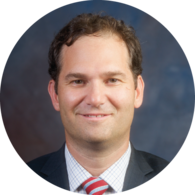
 Dan Goldman
Superintendent
|
|
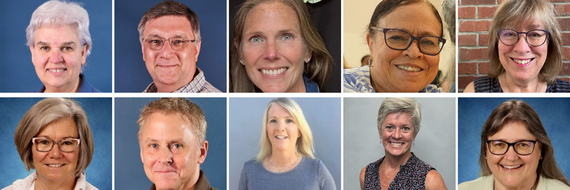 Clockwise from top left: Ana Morehouse, Don Winkelman, Laurie Harrison, Patricia Jolly, Leigh Leslie, Karen Crowley, Leslie Franklin, Eileen Healy-Forster, Steve Ryan and Patricia Burros.
As this year’s retiring educators say farewell to work and hello to the next phase of life, we thank them for their service and wish them a long and enjoyable retirement.
“Every name on this list represents a career well-lived,” says Catherine Dalbey, chief human resources officer at NWRESD. “Choosing to work with children -- or for an agency dedicated to helping them -- speaks volumes about a person’s character. Staying for decades says even more. I want to thank this remarkable group for choosing to spend their professional lives with us.”
This year's retirees include:
-
Mary Bambusch (2007) - Instructional Assistant
-
Patricia Burros (2006) - Site-Based Administrative Assistant
-
Karen Crowley (1992) - Special Education Teacher
-
Leslie Franklin (2019) - School Psychologist
-
Eileen Healy-Forster (1992) - Speech-Language Pathologist
-
Laurie Harrison (2004) - Special Education Coordinator
-
Patricia Jolly (2006) - Early Childhood Education Specialist
-
Leigh Leslie (2006) - Teacher of the Deaf/Hard of Hearing
-
Ana Morehouse (2003) - Autism Spectrum Disorder Specialist
-
Steve Ryan (2006) - Assistant Principal
Read about the remarkable legacies they leave behind — and the lessons learned across 286 combined years of service to students, families, and schools.
|
|
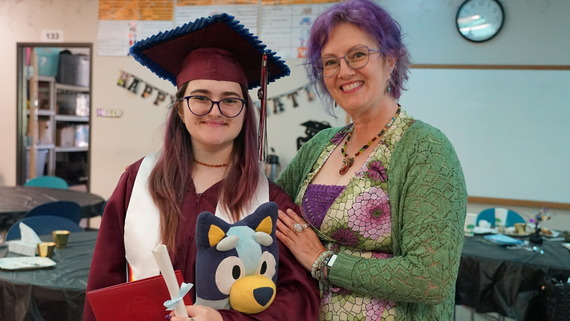 Gray, a student at Pacific Academy, celebrates their graduation on June 4 with their mom. Pacific Academy is a specialized social emotional learning school located in Beaverton that supports students who are experiencing mental health and behavior challenges. Educators at the school are working to ensure students receive rigorous academic instruction alongside therapeutic support that’s tailored to their needs. Photo by Tracey Goldner.
When we launched our 2020–25 Strategic Plan (later refreshed and extended through 2026), we could not have anticipated the scale of change the education system would face.
Since 2020, schools and communities have navigated a pandemic, staffing shortages, funding instability, and rapidly evolving student needs. Through all of that, this strategic plan helped anchor our work and sharpen our understanding of the role we want to play in the region.
As we prepare to launch our next strategic plan, we’ve been reflecting not only on what we accomplished, but on how our organization itself has evolved.
Two major shifts stand out.
|
|
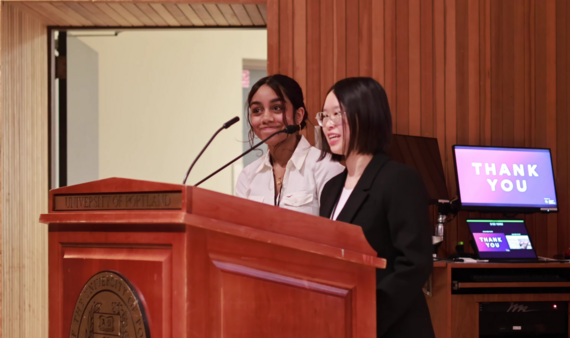 Julianne, right, and Richa, students at Valley Catholic High School, present at the Artificial Intelligence conference on May 12 at the University of Portland. The two co-founded a campaign to protect students from being victimized by AI-generated images and online exploitation. Photo courtesy of Julianne.
These days, everyone knows photos can live online forever.
But what if those photos aren’t even real?
And even worse, what if those images depict a student naked?
Known as explicit deepfakes, these types of images are surfacing with increasing prevalence in the age of artificial intelligence.
In a matter of minutes and using only a few photos, people can create these images, says Julianne, a senior at Valley Catholic High School.
“We are told that things stay on the internet forever, but this seems really unfair since it’s not even real,” she says. “It’s also a violation of that person’s body, values and consent.”
This type of bullying and sexual harassment disproportionately affects young women, and she believes her school and schools around the region, state and country are simply not ready.
“This is not hypothetical,” she says.
Read more about what Julianne, Richa and other students and educators have to say about AI in education.
|
|
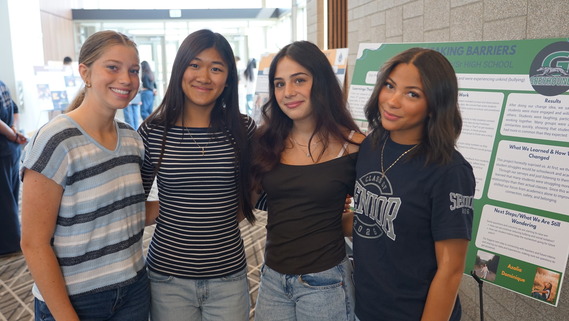 Student interns from Banks and Gaston school districts with their posters during the 9th Grade Success Year-End Convening at the Wingspan Conference Center in Hillsboro. Photo by Annie Tronco.
175 students and educators from across our region came together in early May to showcase their learning and demonstrate how their work is moving us closer to our 9th Grade Success Network goal: ensuring that 93% of all freshmen and 90% of freshmen in focal groups are on track to graduate in four years.
Teams collectively participated in 58 improvement reviews — 30 of which were student-led improvement projects — celebrating the work happening in schools across the network this year. Shout out to Ron Berger and the National Coalition for Improvement in Education (NCIE) community for the inspiration.
Check out the photos from the event on LinkedIn.
|
|
Outdoor School Reduced to Three Days Following State Funding Cuts |
|
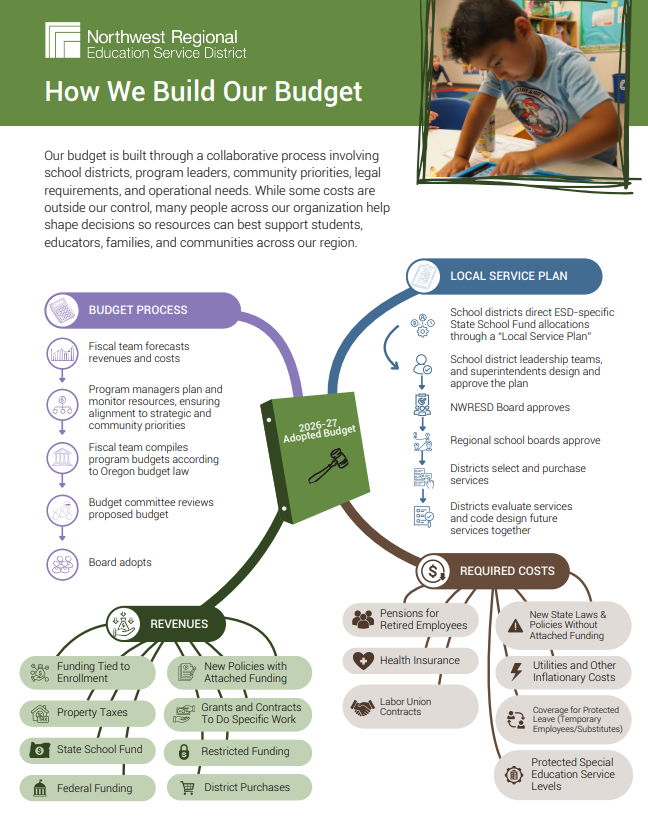
Later today (June 10), our board of directors will consider whether to formally adopt our proposed 2026-27 budget. This year’s budget seeks to advance new investments in math instruction, school improvement, and career-technical education while also responding to significant reductions in statewide Outdoor School funding.
Beginning next school year, most students attending Outdoor School through NWRESD will participate in a three-day program instead of four days following a 20% statewide funding reduction. The changes will reduce operations from five program sites to four, eliminate approximately 20 positions, and discontinue programming at Camp Arrah Wanna in Welches.
At the same time, the proposed budget includes new investments in regional school improvement efforts, including the addition of three math specialists to support districts working to strengthen mathematics instruction and student outcomes.
“Education service districts play a unique and often unseen role in Oregon’s public education system,” says Superintendent Dan Goldman.
Learn more about our proposed 2026-27 budget and how the budgeting process works at NWRESD.
|
|
|
The Monthly Messenger is a monthly update for Northwest Regional Education Service District partners. Would you like to see your team's work featured? Email communications.
|
|
|
|
|