Dear Families,
On February 26th, I had the honor of joining over 70 families at the Capitol in Salem for the Legislative Summit—a powerful day of advocacy focused on securing adequate funding for Oregon’s Early Intervention/Early Childhood Special Education (EI/ECSE) programs.
It was an incredible day filled with energy, connection, and a shared commitment to ensuring all children have access to the services they need to thrive. I want to express my sincere gratitude to everyone who joined us in Salem, and a special thanks to those who shared their stories during the March 26th Ways and Means Committee hearing or on one of the local legislative tours.
Your voices are making a real difference and helping lawmakers understand how critical EI/ECSE services are for children and families across the state. We are so grateful for your continued advocacy and collaboration. Together, we are building a stronger, more supportive future for all children.
With appreciation,
Stacy Rager
Executive Director of Early Learning
Northwest Regional ESD

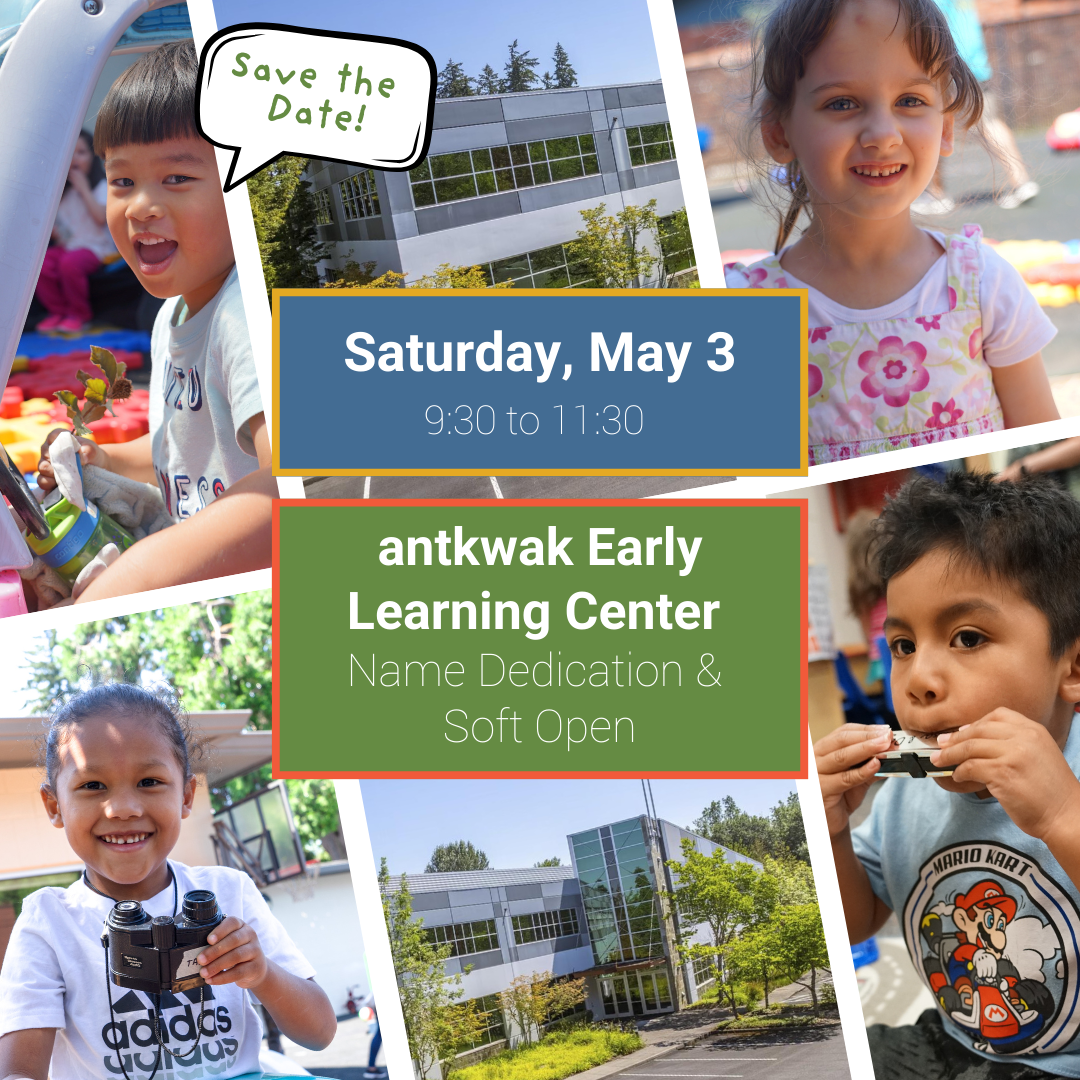 Join us Saturday, May 3 for the antkwak Early Learning Center Name Dedication and Soft Open
9:30-11:30 a.m. - 3030 NE Aloclek Drive, Hillsboro, OR 97124
antkwak Early Learning Center’s eleven classrooms will host preschool, child care and early learning offerings. The facility will support the diverse functional, sensory and physical requirements of infants and young children with disabilities and delays.
An estimated 2,000 babies, toddlers and preschoolers will be evaluated annually in this early learning center to determine if they qualify for early intervention and other special education services.
Come join us for fun, games and light refreshments and a preview of our new facility. No RSVP necessary. You can learn more on our website.
Connecting through Co-Regulation
Regulation skills can help autistic children manage emotions, cope with challenges and engage in positive social interactions, ultimately improving their overall well-being and quality of life.
What is Co-Regulation?
“Self-regulation — the ability to manage, or regulate, our own emotions and behaviors — is a skill that most adults have mastered over time.
Co-regulation, on the other hand, happens when two people help each other regulate their emotions. For adults, it can also mean teaching kids how to manage their emotions on their own.” *Source: The Child Mind Institute
“One way to think about it is, “co-regulation is really creating that interpersonal space between two people that is ‘felt safety.’ It is a reliable space, it’s an emotionally available space, it’s a consistent space, and it’s held as a space where we can feel, sense and speak our hearts and minds in safety and trust.” - Dr. Lori Desautels
“... children must feel safe, and the first line of communicating our safety and support of a child’s engagement and learning is our affect and gestures” (Gerard Costa, 2022). Costa developed a simple acronym to help you pay attention to yourself and how you "are" with your child: A.G.I.L.E.
-
A - Affect: how your tone and expressions convey your emotions. In times of stress, is your affect loving, supportive, and soothing?
-
G - Gesture: Facial expressions, hand gestures, body moment, posturing and pacing all reflect your emotions and are felt by a child during your interactions.
-
I - Intonation: Modulating the tone of your voice helps convey affect and social/emotional meaning. This is “felt” and “understood” long before words. And even after language develops, affect, gestures and intonation convey the genuine meaning of the interpersonal exchange. This communication is stronger than words.
-
L - Latency (Wait): Wait and give the child time to take in your gestures and intonations. Co-regulation requires patience.
-
E - Engagement: Before you continue, be sure you have engaged the child. Your [child's] facial expressions, sounds and body language will tell you if they are engaged.
Here are some wonderful ideas to get you started in connecting with your child through co-regulation:
Remember, it is not so much about “doing,” but about “being with” your child and providing that emotionally available, attuned, and safe space for you and your child to simply “be.”
Happy Connecting ♥️

OrPATS 2024-25 Training: Caregiver Trainings
This virtual parent-caregiver training series provides information and tools for supporting autistic children, children with autism and other developmental disabilities in the home setting. Each session will cover evidence-based and effective strategies to use during routines at home and will cover supports for students in both Pre-K, Primary & Secondary grades. All classes in the series use live instruction, demonstration, video, and discussion to present the information. The sessions are designed as a 4 topic series split into 2-2 hour parts, but it is not necessary to attend all sessions to benefit. Participants are encouraged to attend Part 1 and Part 2 of each training. Classroom teachers and/or school support staff are also welcome to attend for collaboration. English and Spanish sessions are available.
The FLIP Museum
FLIP Museum, is offering a special 50% discount to families and educators connected to the NWRESD.
This discount is available during weekday hours. If families would like to bring children to explore the museum, they can use the discount code NWRESD_25 at checkout.
This offer is valid until the end of April.
The Harbor in Clatsop County is excited to offer Active Parenting !
The course starts Wednesday April 23rd and will run for 6 weeks.
Sign up here
The Harbor also offers monthly Spanish Workshops. Check out their facebook for other upcoming events.
Check out the Digital Packs from The Children's Reading Foundation. They are filled with engaging math and number activities. Perfect for curious minds, these printable resources make learning numbers and simple math equations educational and entertaining. Whether you're counting, solving problems, or exploring shapes, we have something for everyone!
For more opportunities visit our Facebook page and calendar !
|