|
For our educators and students, this has arguably been the most challenging school year in modern times. We’ve weathered frequent disruptions and illness due to COVID-19, a growing mental health crisis, the rapid politicization of public education often evidenced in district board rooms, and an unconscionable resurgence of school shootings.
And yet, for all the darkness, our students and staff have risen above these challenges to revitalize our school communities. We’ve fallen down together, reflected together, and gotten back up…together. While often daunting and exhausting, the NWRESD community has prevailed, and in many ways gotten even stronger. I will always cherish the significant accomplishments in our schools and many memories from 2021-22 as we’ve overcome so much together and delivered for kids!
There are so many examples of persistence and success across our region. Below are only a small number of moments and initiatives that I am proud to look back on.
We Welcomed Students Back for a Full Year of In-Person Instruction
Students in our social emotional learning schools and our Early Intervention and Early Childhood Special Education programs often struggle more than others when schedules or rules shift unexpectedly. The past year has been riddled with the unexpected.
I’ve been amazed by the creativity, camaraderie and responsiveness of our special educators. With no prior year like this one to serve as a template, our NWRESD family showered our students with exactly the right kinds of love, empathy and support.
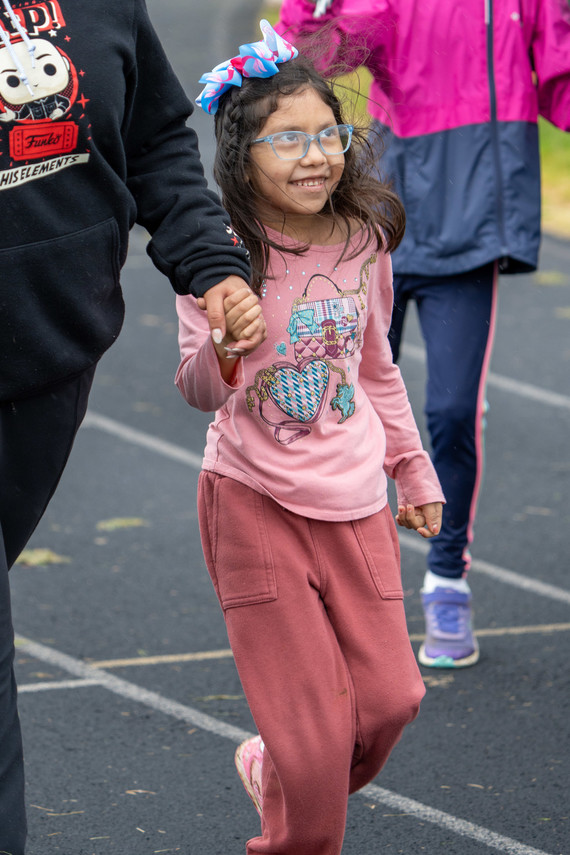
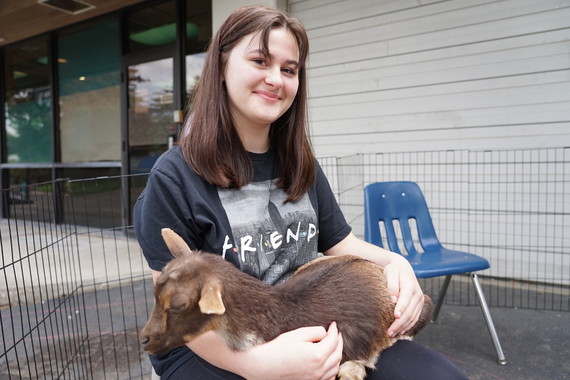 A student at one of our social emotional learning schools holds a baby goat during an end-of-year celebration on May 25.
During licensed appreciation week, we wrote about some of the ways our educators have stepped up this year.
The Equity and Family Partnerships Team Launched 12 Equity Learning Teams
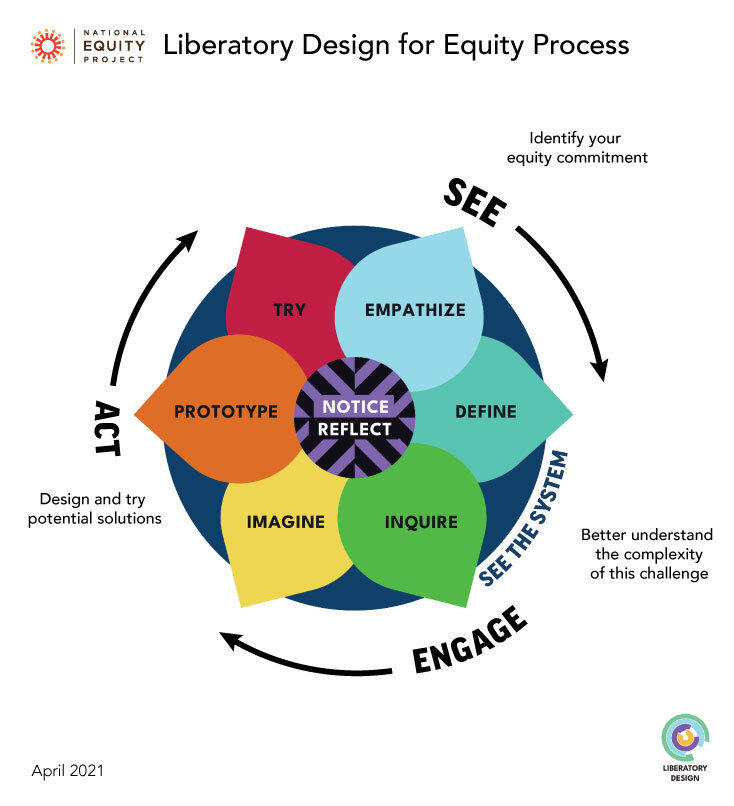 Caption and image description: Liberatory design is a creative problem-solving approach to equity work that encourages collective liberation. The practices, also called modes, are see the system, empathize, define, inquire, imagine, prototype, try, and notice and reflect. These are the actions people should take as they make program or design changes. The habits, see-engage-act, encourage people to view the project at the macro- and micro-levels. These practices and habits are laid out in the shape of a multicolored flower. Graphic courtesy of the National Equity Project.
Our office of equity and family partnerships and the National Equity Project co-designed and launched an action-oriented and distributed equity leadership model for our organization. More than 80 NWRESD staff on 12 site-based equity learning teams participated in nine professional development sessions. The purpose of this year’s work was to create a wider circle of diverse equity leadership across our organization, build capacity to take action within each of our departments, and build a network of teams that can generate cross-agency learning, design, and action toward eliminating opportunity gaps in our education systems.
Learn more about what it was like to participate in this work in an interview with Ana De Lara, a Spanish-language interpreter and translator on our early learning team. You can also see a report on equity learning teams in our May board packet.
The Instructional Services Department Expanded Professional Learning Offerings
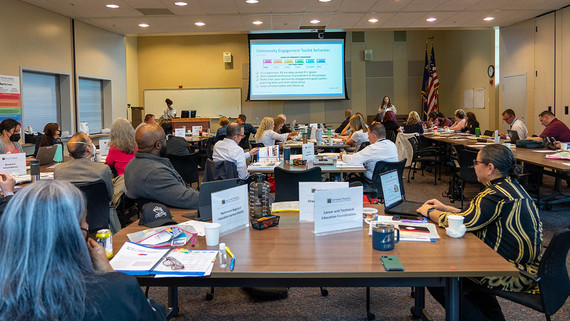 Northwest Regional Education Service District hosted educators and partners on May 25 at the Washington Service in Hillsboro. Participants received updates on the state’s alignment of several instructional initiatives, dubbed integrated guidance.
Our Instructional Services team saw significant growth and planning as it responded to increasing demands to help schools implement important statewide instructional initiatives.
The Oregon Department of Education recently announced the alignment of six programs:
- High School Success
- Student Investment Account/Student Success Act
- Continuous Improvement Planning
- Career and Technical Education - Perkins V
- Every Day Matters
- Early Indicator Intervention Systems
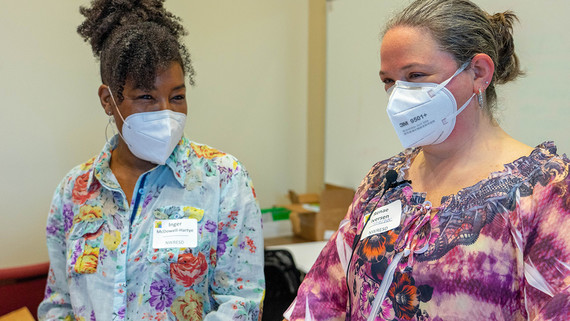 From left: Inger McDowell-Hartye, an equity professional learning specialist, and Renae Iversen, a professional learning specialist, led sessions at the integrated guidance professional learning event held May 25 at NWRESD’s Washington Service Center in Hillsboro.
Our instructional services team rapidly created programming that would support this alignment, dubbed “integrated guidance” by ODE.
Get an overview of the planned services for the 2022-23 school year in this one-pager. Our planned services include community engagement support, professional learning aligned to school district strategies, and instructional rounds for school district leaders.
You can also learn more about what it’s like to participate in our professional learning by reading a recent interview with Gaston Instructional Coach Brian De Wolf.
For more information about signing your school team up for a professional learning network, email communications@nwresd.k12.or.us.
Designing for Inclusive Special Education in Early Learning Programs
In an incredible lift, our Early Intervention and Early Childhood Special Education team took advantage of the disruption caused by the COVID-19 pandemic to rebuild a more inclusive and holistic early learning system. As we increased our in-person special education services for the birth to age five population, we made sure more of those services were offered in inclusive preschool settings where students experiencing developmental delays learn side-by-side with their typically developing peers. This transition hasn’t come without its challenges, and I’m incredibly grateful to the educators who are helping our families navigate this shift.
Research shows that when children with disabilities are able to learn alongside typically developing peers, they have better math and reading skills, they attend school more often, they are less likely to have behavioral challenges, and they are more likely to graduate from high school. And it’s not just the students experiencing disabilities who benefit; children without disabilities are more likely to learn compassion and empathy and be more accepting of differences.
You can also learn more about our EI/ECSE program design in Executive Director of Early Learning Johnna N. Timmes’ May 10 report to our board of directors.
It was hard to narrow it down to just four accomplishments, but thankfully I don’t truly have to. You can read a year’s worth of news from NWRESD on our website. I hope you also enjoy the rest of the enclosed news in our final newsletter of the school year.
|