|
Monthly highlights about the work our ESD is doing in the community |
|
|
Colleagues -
Spring is here! And with it comes the many school traditions that celebrate the achievements of our young learners. Culminating academic activities, dances, school-wide celebrations and graduation ceremonies remind me how fun it is to be in the kid business!
Another important springtime tradition is recognizing our nation’s educators 🍎 during licensed appreciation week.
I feel privileged to recognize the diverse expertise in our organization. Our licensed employees work in more than a dozen specialty areas such as autism, behavior and mental health, school psychology, and teachers of the blind and visually impaired and of the deaf and hard of hearing.
We often work with students who have complex and challenging medical, cognitive, behavioral and mental health needs. During the pandemic years, our committed educators found so many creative and novel ways to meet the ballooning demand for care and connection in our schools and in our communities.
And while celebrating our educational professionals is important every year, this year—marked by the challenges of the pandemic and a nation grappling with its very identity—I am filled with immense pride and gratitude for my licensed colleagues.
NWRESD educators submitted stories about some of the phenomenal work we see every day in support of students, families and other educators. I hope you enjoy getting to know a few of my esteemed teammates in the paragraphs below.
|
|
|
My best-
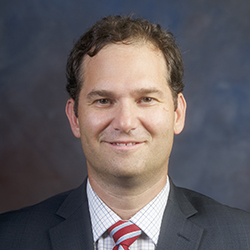
Dan
 Dan Goldman
Superintendent
|
|
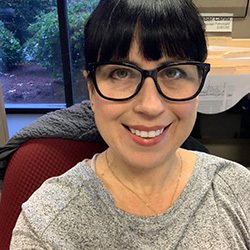
Amber Carini and several other members of the Early Intervention team at the Tualatin Early Childhood Center are currently supporting an immigrant family from Mexico. Amber spends hours collaborating with partner agencies to ensure the single mother, who is deaf, is kept well-informed and actively involved in decision-making about the services she and her family receive from Northwest Regional Education Service District.
This mother’s educational opportunities were limited in Mexico, so she primarily uses pictures and gestures to communicate. Amber and these community partners, which include Lifeworks Northwest - Healthy Families, Linguava and Passport to Languages, have taken the time to devise a picture system so they can communicate with one another. Along with these pictures, they’ve also learned her gestures and taught her some of theirs while she learns American Sign Language.
Through the barriers, Amber has found a way to provide this mother with the skills she needs to coach her child. Thanks to Amber's dedication and persistence, this family is able to receive the services they need as the mom learns ASL.
“Amber has shown the family great care and concern,” says Peggy Freund, who coordinates Early Intervention staff at NWRESD. “Each visit takes hours of careful planning, great creativity and extra perseverance. Her commitment to this family is inspiring.”
|
|
|
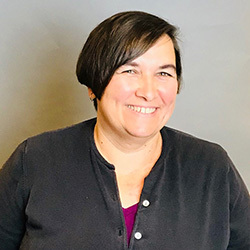
Monica Clark is a physical therapist who works primarily with school-age children who have mobility challenges such as paralysis, unsteady gait, poor muscle control or the loss of a limb. Many of the children Monica works with need adaptive equipment such as a wheelchair, stander, walker or gait trainer, which is similar to a walker but provides additional support, to participate in school.
When the COVID-19 pandemic began, Monica collaborated with a team of educators from across Oregon to develop guidance and a decision-making framework that physical therapists and others in the field could use when providing services to students with orthopedic impairments while also protecting them and their service providers from the threat of COVID-19.
“This work was especially crucial at the beginning of the pandemic because physical therapists require close physical proximity to students, many of whom are medically fragile and cannot wear masks themselves,” says Jessica Duffett, who coordinates occupational and physical therapists and nurses at NWRESD. “This work contributed to open, safe schools for children in our region and across the state.”
The papers Monica helped write are titled: “Ensuring Safety and Equity for Students who Experience Complex Medical Needs” and “Determining PPE for Employees Assisting Students Who Require Close Proximity.” They are posted on the Regional and Statewide Services for Students with Orthopedic Impairments website.
Monica and her team of collaborators also presented this information at a webinar sponsored by Regional and Statewide Services for Students with Orthopedic Impairment on Sept. 29, 2021.
|
|
|
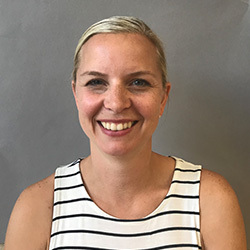 Keri Esser
|
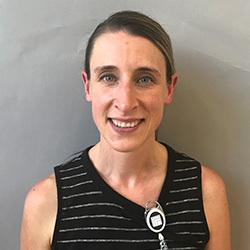 Shannon Hamerman
|
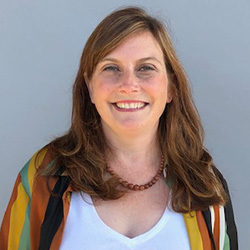 Lindsey Wineland
|
|
Keri Esser, a physical therapist, Shannon Hamerman, an occupational therapist, and Lindsey Wineland, a speech-language pathologist, have collaborated to help a preschooler stay at her community preschool this year. The child experiences Down Syndrome and needs extra support. The team feared the preschool staff were going to ask for her to be removed from the classroom, but through this team’s problem-solving and support, the preschool staff now feel confident they can support her.
Keri provided a specialized chair for the child to use during circle time. When she sits in it, she feels comfortable and supported. Shannon brought in a peanut ball the child can use when she needs to take a break. The other students have learned that this toy is only for her, and they have learned how to interact with her while she uses it.
This child continues to benefit from going to preschool with friends who do not experience a disability, and the friends have also learned a lot from having this student in their class, says Scott Ryan, principal at the Beaverton Early Childhood Center.
“It has been a real team effort with all three staff committed to supporting this child and helping to give her a supportive preschool experience with her peers,” he says. |
|
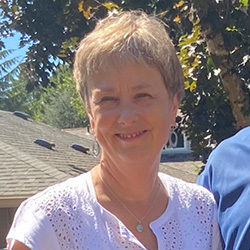
Gayle Hernandez is a physical therapist who works with children who are receiving Early Intervention or Early Childhood Special Education services. This year, Gayle created a resource called Movin’ and Groovin’ for Fun. This resource provides fun movement ideas for teachers and families to do with young children. Each letter of the alphabet has related activities such as yoga poses or breaths, movement ideas and ways to form the letter with your body.
For example, the letter D teaches kids how to:
- Do the dinosaur stomp: Bend forward, grab your knees and walk forward with your hands on your knees. Stomp, stomp, stomp.
- Do the duck walk: Put your hands on your hips, squat down and walk forward.
- Freestyle dance: Put on your favorite music, wave your arms, move your feet and dance.
The activities offer a great way for kinesthetic learners—those who learn by doing—to make new pathways in their brains for early literacy and reading skills.
The information is available in English and Spanish and includes modifications.
|
|
|
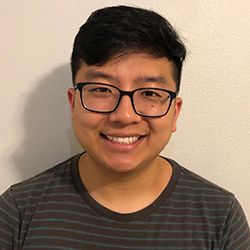
Brandon Zuel, a speech-language pathologist who works with the Early Intervention and Early Childhood Special Education team, recently graduated and joined NWRESD this school year. He works with a diverse group of students who have speech needs because of medical conditions such as cerebral palsy, autism or genetic conditions.
Part of his work involves establishing relationships with medical providers so the services children receive from their health care providers and educators are more coordinated.
When one of Brandon’s students needs a device to communicate, Brandon will reach out to the medical staff at hospitals or clinics such as Shriners Children’s Hospital in Portland and then collaborate with NWRESD therapists to formulate a plan for helping the child use the device.
The process involves understanding how each device operates and how it can be integrated into the child’s daily routines. For example, for a child who uses a walker, Brandon and the team will help the family formulate a plan for attaching the device to the walker so that it can move with the child throughout the day.
“Brandon is innovative and thinks creatively about how to support children and their families,” says Heather Botcheos, principal at the Tualatin Early Childhood Center. “He also takes the time to celebrate successes with our preschool teams in order to build a strong relationship with the people in the community working with our students.”
|
|
|
Tigard-Tualatin School District Laid Foundation for Ambitious, Data-Informed School Improvement Efforts
Tigard-Tualatin School District (TTSD) has garnered national and statewide acclaim for its approach to implementing effective literacy and positive behavior systems. In 2012, TTSD was recognized as one of 10 school districts in the nation to radically improve results for special education students.
At home in Oregon, TTSD has received local accolades for decades. Reading and behavioral outcomes in the district, especially for students of color and students with disabilities, caught the eye of statewide officials.
While working intensely with the University of Oregon for a number of years, TTSD’s integrated Response to Intervention (RTI) and Positive Behavioral Interventions and Supports (PBIS) program became a statewide model for implementing effective literacy and positive behavior systems. Since 2006, TTSD has provided technical assistance to school districts across the state through a state contract now called Oregon Response to Instruction & Intervention (ORTI).
Starting in the 2022-23 school year, NWRESD will take over the statewide contract.
“TTSD and the ORTI contract built a truly exceptional team of educators who have replicated TTSD’s success many times over in well over 100 school districts across the state,” says Dan Goldman, superintendent. “We are grateful for the opportunity to sustain and grow this legacy.”
|
|
|
In 2022, the Oregon State Legislature committed an additional $50 million for summer learning programs provided to community-based organizations across the state through grants administered by the Oregon Association of Education Service Districts (OAESD).
The focus of these grants is to prioritize students experiencing disabilities and other student communities who have been historically underserved.
|
|
|
After a rapid expansion of state contracts, grant funding and new investments in education, our instructional services team has grown to roughly 70 permanent team members. Many of these educators deliver professional learning to their peers in 20 school districts across northwest Oregon. Others provide direct support to families and students through migrant family services, outdoor education and other innovative educational programming.
Meet the team who will head up the programs in this department under the direction of Megan McCarter, executive director of instructional services.
“These leaders rose to the top of an unbelievably large and qualified field,” says Dan Goldman, superintendent. “We look forward to reaching more teachers, families and students through the growth of this team’s already expansive offerings.”
Jerome Townsend, Director of Instruction
Programs: Regional Educator Network, Diverse Educator Pathways, 9th Grade Success, Career & College Readiness, STEM Hub, Instructional Coaching Network
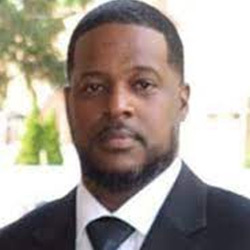
Jerome joins NWRESD from Portland Public Schools’ Bridlemile Elementary School where he was instrumental in leading the staff, students and community in the Racial Equity and Social Justice commitment and policies adopted by PPS. Jerome was also successful in ensuring that all students had an equitable opportunity for quality instruction by developing differentiated instructional strategies that met the needs of all students including those historically underserved.
Before Bridlemile, Jerome held a variety of roles in Michigan. He served as assistant principal and academic interventionist at Inkster Preparatory Academy, a public K-5 charter school in the Detroit area. He led the school’s data-driven instruction in setting rigorous expectations and goals, helping shift an underachieving school to one that was recognized as a “model school” by the International Center for Leadership in Education. He also served as principal at Blanche Kelso Bruce Academy, a high-intensive work environment at a strict discipline academy with students outside the educational mainstream, and at the Academy of Lathrup Village/Leaders Preparatory Academy, a K-8 charter school.
Jerome started his career as a substitute teacher. He also taught special education for four years and was the band director at a Detroit high school. Throughout his career, he has served his community outside the classroom, teaching leadership classes at a local church, participating in outreach programs, and helping feed and clothe the homeless through local organizations.
Jerome earned a Bachelor of Arts in Early Child Growth and Development Education from Tennessee State University and a Master of Arts in Educational Leadership from Wayne State University.
|
Ryan Blasquez, Director of Instruction
Programs: Early Literacy Network, Oregon Response to Intervention & Instruction, Attendance Services, School Safety and Prevention, Social Emotional and Mental Health Services
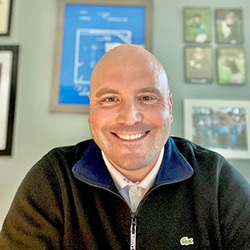
Ryan started his education career as a special educator and behavior support teacher on special assignment in the Tigard-Tualatin School District. He later took on leadership roles, including associate director of student services, director of student services and district equity coordinator.
Ryan oversaw K-12 special education programs, implementation of multi-tiered systems of support (MTSS), the Oregon Response to Instruction and Intervention grant and several other programs.
For the past seven years, Ryan has been the principal of Charles F. Tigard Elementary School.
“My time in service to the children and families of Charles F. Tigard, especially as we’ve worked together to navigate these unique times, has been an honor and career highlight,” says Ryan.
Before Tigard-Tualatin, Ryan spent five years at Oregon Department of Human Services as a case manager and treatment facility administrator. He earned a bachelor’s degree in psychology from the University of Oregon, a master’s degree in education and an initial administrator's license from Portland State University. He completed his professional administrator's license at Lewis and Clark College.
|
Rosa Gilbert, Director of Student and Family Support Services
Programs: Migrant Education, English Language Learner Services, Climate and Culture Network, Student Success Act & Integrated Guidance
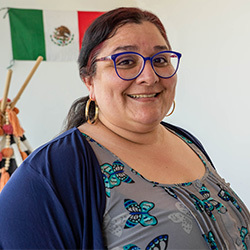
Rosa Gilbert is currently the Bilingual Migrant Education Program & Title III Consortium Manager at NWRESD. In her time overseeing the program, she has grown the budget from $800,000 to $1.1 million by seeking and collaborating on grant opportunities. She grew the size of the team from three to seven full-time staff and expanded services, clubs, trips, workshops and other offerings to reach more students and families. She also oversees eight temporary staff annually who support summer programming.
During the first summer of the pandemic, the migrant team called more than 200 families multiple times to offer a personal connection and practical assistance. They delivered grocery basics, face masks and hand sanitizer.
They worked with school districts and internet providers to make sure students had devices and internet access for distance learning. The team also coordinated a Facebook Live Dia del Niño (Day of the Child) celebration that was attended by hundreds of families.
And when there were COVID-19 outbreaks in seafood processing plants that employ parents, the team created video messages about positive strategies for coping during a new, scary reality. You can meet one of the families in the program and learn more about their services in a recent video that Rosa and the team helped to produce.
Rosa’s background is in social and behavioral sciences and child development. Since 2003, she has worked with private and public agencies in the education, medical and mental health fields to provide services and advocacy on behalf of the Latinx community. Before starting at NWRESD, she worked at Warrenton-Hammond School District as the family liaison and federal programs coordinator.
|
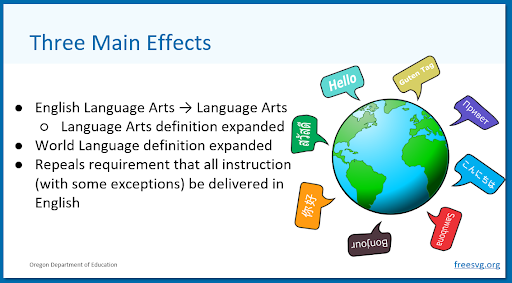 A graphic of the world with speech bubbles saying hello in various languages. House Bill 2056 expands the definitions of language arts and world languages. The legislation also repeals the requirement that all instruction, with some exceptions, be delivered in English.
House Bill 2056 aims to create more inclusive learning environments for Oregon’s emerging bilingual and multilingual students. District and school staff responsible for overseeing language arts and world language programs should learn about this legislation in order to ensure programs are meeting the goals of this new law. Download a PowerPoint presentation about the changes and what they mean for students and districts.
The Oregon Department of Education is hosting informational webinars that will teach school and district staff about the changes in House Bill 2056. Note: All sessions cover the same information, so there’s no need to register for multiple sessions.
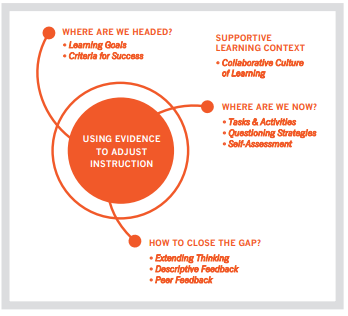 A three-pronged graphic of using evidence to adjust instruction while promoting a collaborative culture of learning asks where are we headed (includes learning goals and criteria for success), how do we close the gap (includes extending thinking and descriptive and peer feedback) and where are we now (includes tasks and activities, questioning strategies and self-assessment).
Formative assessment practices go beyond exit tickets, short tests and goals. Formative assessment can be embedded into instructional practice as a way for teachers to authentically check for understanding while continuing the flow of the lesson and improving student engagement.
The Oregon Department of Education is seeking school-based teams of middle school English language arts teachers to participate in ongoing collaborative learning and coaching on the formative assessment rubrics, reflection, and observation tools to support professional reflection on practice (FARROP). For a short overview, see the FARROP At-A-Glance.
The ideal team would be three or more middle school English language arts teachers who have support from their administrator. Teams will participate in asynchronous professional learning over the summer and then engage in five coaching cycles throughout the 2022-23 school year. During each coaching cycle, teachers will record their own practice, do their own self-reflection, and then receive and provide feedback on their videos. Each coaching cycle will take 2-3 hours.
Schools that complete this professional learning opportunity will be able to keep the iPad and SWIVL robotic iPad mount used in the program. Every teacher who completes the project will receive a $900 stipend.
Teams interested in learning more should email Cristen McLean, assessment and policy analyst at the Oregon Department of Education, by May 6.
Every month, our teams submit one-page reports to our board of directors. These reports include highlights, challenges and plans for the future and are available from our early learning, special education, instructional, equity, technology, human resources and fiscal teams.
We are hiring for a number of positions. Please share these opportunities with community members who might be interested. View all of our open positions.
Highlighted positions:
|
|
|
|
|