February 5th, 2025

Unfortunately, we live in a world where criminals have taken a new approach to stealing from you. They now contact you directly, through text messages, emails and phone calls, all with an effort to convince you to give them money. Scammers hide behind a convincing ruse that pulls at your heartstrings, targeting “get-rich-quick" ideologies, or a monetary payment to keep you out of trouble by paying them to resolve the problem. These examples and countless others are carefully planned to appear legitimate but ultimately are designed to steal your hard earned and saved money.
The Medford Police Department and police agencies around the country frequently get reports that an innocent victim has just provided a scammer thousands of dollars. The reasons vary, but the root of the scam is usually very noticeable.
Scammers send emails, text messages, they make direct phone calls, and even more recently they are sending packages with QR codes you are requested to scan. We are all targets and none of us are immune to the scammer’s attempt to defraud us.
Some key points that I cannot overstate: If it sounds ‘too good to be true’ it usually is. If you are not initiating the investment opportunity, or attempting to purchase something, or are not generally searching for products to spend your money on, the person reaching out to you is likely a scammer. Text messages and emails should simply be deleted. Do not answer questions from phone scammers, and do not scan QR Codes on packages that end up on your doorstep that you do not expect.
You should never provide anyone your personal or banking account information or any passwords. Never give anyone remote access to your computer devices. Never take your money and put it in a Bitcoin machine at someone’s request. And never withdrawal money and give it to a ‘courier’ that is always sent by a scammer.
If you receive that email, text message or phone call and it just seems odd, my advice is to ‘delete or disconnect and block.’ Be skeptical anytime anyone is soliciting you for your money! The ruse is convincing, but always a scam. Do your research, stay familiar with current scam trends, and never click on links or attachments in emails from people you do not know.
What do you do if you have been scammed? Contact your bank and report the scam to your local police department. I will warn you, the likelihood of recovering your loss is…very unlikely. Most scams originate from outside of the U.S and our ability to investigate is very difficult, making it rare for investigators to identify the suspect or recover your loss.
My last request I have of all of you. Even if you think you are sure, but may have a few questions, please call the police or someone you trust and ask the question: Is this, or could this be a scam? Protect yourself, your family, and your money!
 To follow up on what Lieutenant Curtis shared, unfortunately, we hear about scams a lot, and they are constantly evolving. Criminals who utilize scams to steal from you are always trying to find new and creative ways to swindle your money. Hopefully by these and the tips Lt. Curtis provided it will help you not fall victim to these crimes.
-
Avoid Unknown Callers: Don’t answer calls from numbers you don’t recognize. Let unknown callers leave a voicemail.
-
Protect Personal Information: Never share sensitive information such as your bank account details, Social Security number, passwords, mother’s maiden name, or other identifiers.
-
Verify Requests: If someone claiming to be from an organization or company asks for information or money, hang up and contact the organization directly using the phone number on your account statement or their official website.
-
Watch for Pressure Tactics: Be cautious if you’re being pressured to act quickly or share information. If anything feels suspicious, trust your instincts and disengage.
-
Know Payment Scams: No legitimate organization or government agency will ask for payment via Bitcoin, gift cards, money orders, or cash. If you suspect fraud, hang up and contact the company or agency directly. Government agencies will never contact you by phone to demand payment, threaten arrest, or insist on immediate action.
-
Guard Your Location Information: Avoid sharing personal details like your home address, your schedule, or when you won’t be home.
-
Plan for Emergencies: Have a pre-planned route of escape for every room in your home in case of emergencies.
-
Don’t Admit Strangers: Never allow strangers into your home, no matter the reason they provide. Unless you have requested a service provider (i.e., plumber, electrician, heating and air repair technicians).
-
Direct Deposits: Arrange for paychecks, government checks, or any other income to be deposited directly into your bank account. Never withdraw money for someone else.
-
Keep Personal Information Private: If you are elderly or disabled, do not disclose this information to callers.
By staying alert and following these precautions, you can significantly reduce your risk of being scammed. Remember, it’s always better to pause, verify, and protect yourself before taking any action. Our hope is not to scare you but educate you on best practice to keep you safe.


 The Code Enforcement Division is dedicated to preserving and maintaining properties across the city. Its mission is to uphold compliance with local laws that address health and safety concerns, including garbage accumulation, abandoned vehicles, substandard housing, and graffiti.
The division consists of a team of five members: three full-time Code Enforcement Officers, one full-time Code Enforcement Program Manager, and one part-time Administrative Support Technician. Together, they manage thousands of cases annually, promoting compliance through effective communication and education about the city's rules and ordinances.
Graffiti: The presence of non-artistic graffiti often contributes to a sense of disorder and neglect in a community. It can create an uninviting atmosphere, leading to decreased feelings of safety and lower property values. Unlike street art, which can enhance an area’s character, non-artistic graffiti—such as random tags or vandalism—tends to signal a lack of care, potentially attracting further crime or unwanted behavior. Addressing it promptly helps maintain a clean and welcoming environment.
As mentioned above, Code Enforcement focuses on Graffiti abatement throughout the City. It is valuable to understand Medford Municipal Code regarding graffiti, the hope is to create an understanding of what is enforced and what you can do to help Medford PD in our efforts to combat graffiti nuisance.
According to Medford Code Section 5.520 through 5.535 "Graffiti" is defined as; Any unauthorized markings of paint, ink, chalk, dye, or other similar substances, and/or the unauthorized etching or scratching of property and the structures appurtenant thereto, including but not limited to, buildings, structures, fences, walls, and poles, where the markings are visible from premises open to the public such as the public right of way, sidewalks, or other publicly owned property."
The Municipal Code states regarding abatement; "No owner or person in charge of property may permit graffiti, as defined below, to remain on said property for a period in excess of ten (10) days."
If you notice graffiti throughout the city you can report it online by clicking the link below. Additionally, you can find the link on our website. If you prefer to speak to someone, you can call Code Enforcement: 541-774-2016.
Dear Neighborhood Watch Members,
I had the pleasure of adding another Neighborhood Watch group to our list this month. When I host a Neighborhood Watch meeting it makes me realize the impact you all have on the City and how you assist Medford PD in our efforts to prevent and respond to crime. While our officers cannot be everywhere at once, you assist in seeing things we would not otherwise see. We want to continue to support the NW groups and citizens of Medford with tools and resources. If you are noticing suspicious activity in your neighborhood or have questions about City Codes and Ordinances please reach out. I am happy to help with any questions, concerns, or adding additional support in your neighborhood
My contact info: engagempd@cityofmedford.org or 541-774-2268.
Sincerely,
Cara Sparks

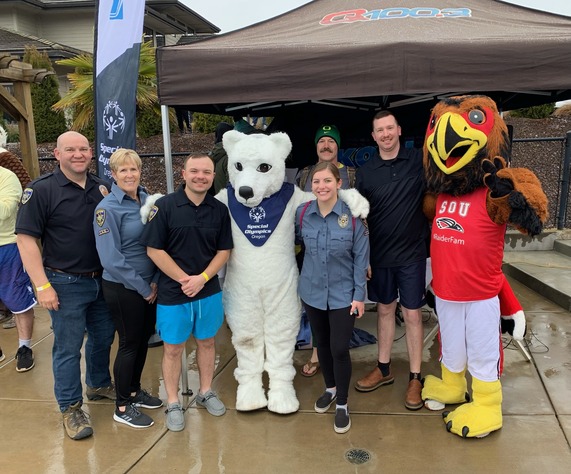
 The Polar Plunge is an annual fundraising event where participants brave freezing temperatures to plunge into icy waters, all to support Special Olympics Oregon. This organization provides year-round sports training and athletic competitions for children, youth, and adults with intellectual disabilities. Through these programs, athletes have opportunities to develop physical fitness, demonstrate courage, experience joy, and share their skills and friendship with their families, other athletes, and the community.
The Medford Police Department is looking forward to participating in the 2025 Polar Plunge as a team.
Adress: 219 S. Ivy St., Medford, OR, 97501
Phone: 541-774-2250
Website: medfordoregon.gov
|