|
MCHHS Facebook | MCHHS Instagram | Prevention YouTube
 Welcome to the Health Promotion & Prevention Newsletter, released every two months by Marion County's Health Promotion & Prevention Team! In this newsletter, our team shares information, tips, news, and updates on community work being done to promote health and prevent disease in Marion County.
Help us spread awareness by sharing this newsletter with your friends and colleagues!
November is Lung Cancer Awareness Month
November is Lung Cancer Awareness Month. Lung cancer is the leading cause of cancer deaths in the United States - claiming more lives than prostate, colorectal, and breast cancers combined (American Association for Cancer Research).
Although smoking rates have declined over the years, tobacco use remains the primary cause, responsible for 80-90% of lung cancer deaths in the U.S. You can reduce your risk of lung cancer by quitting smoking today!
Join many other Americans on November 20th for the Great American Smokeout to start your quit journey. Quitting nicotine can be hard, but there are resources available to help you reach your goals:
|
December is National Impaired Driving Prevention Month

The holiday season is a good time to remember that many substances can impair driving. This includes marijuana, opioids, methamphetamines, and even prescribed or over-the-counter medications.
Whether you’re driving, riding or hosting, keep these tips in mind to help everyone get home safely during this busy travel season:
- Plan for a sober ride home.
- If you choose to drink, don’t drive impaired. Call a sober friend, rideshare or taxi, or take public transportation to get home safely.
- If you’re hosting and see someone who is about to drive impaired, take their keys and help them get home safely—it will be the greatest gift you ever give them.
- Communicate with your children, friends, family members, and colleagues about expectations of behavior and safe choices when attending holiday events.
If you or someone you know needs help for substance use, reach out to findtreatment.gov, or call or text 988 to be connected immediately to free, confidential support, 24/7.
Sources: SAMHSA.gov and NHTSA.gov
|
Upcoming Events
Holiday Giving: Meals, Gifts, and Volunteering
Looking for a way to give back this holiday season? Many organizations throughout Marion County are accepting donations of toys, food, clothes, and more. For more information, click the links below.
Holiday Resource Guide
Marion & Polk Early Learning Hub will release a Holiday Resource Guide mid-November. It is a comprehensive resource guide with more opportunities to give back and access needed services. Find more information on the following pages:

Donation Opportunities
Marion Polk Food Share at 1660 Salem Industrial Dr. NE in Salem. Food and materials donated are distributed to area food banks. How you can participate: donate food, volunteer, or receive food.
AWARE Food Bank at 152 Arthur St. in Woodburn. How you can participate: donate food, volunteer, or receive food.
Hope Station Community Services at 1337 Madison Street, Ste 115 Salem, OR 97301. How you can participate: donate food and toiletries, volunteer, or receive food.
Salem Police Toy Drive: The Salem Police Department is collecting new, unwrapped gifts for kids up to age 14.
Donations can be dropped off until December 13 at the Salem Police Station at 333 Division ST NE between the hours of 7:00 am and 7:00 pm. More locations may become available.
Center for Hope & Safety at 605 Center Ave NE Salem, OR 97301. Check their website for a wish list of needed items.
Union Gospel Mission Donation Center at 1100 Front St. NE in Salem. Donate on Mondays, Wednesday, and Thursdays from 8am to 3pm. Check their website for a list of needed items.
Helping Hands at 1755 13th St SE Salem, OR 97302. Check their website to see how you can help.
|
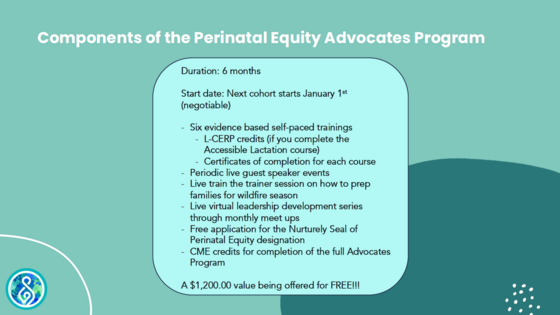
Perinatal Equity Advocates Certification Program
This training is FREE ($1,200 value) for service providers in Marion County working with pregnant women and new moms. It begins in January, is self-paced, and offers Continuing Education Units (CEU's). Take advantage of this great learning opportunity to promote post-birth recovery and resilience!
Check out these additional health promotion trainings and educational opportunities.
Know of another organization that provides great trainings? Share them with us at MCHDPrevention@co.marion.or.us.
 |

Emily Bock is joining Marion County Health and Human Services as a Health Promotion and Prevention intern. As part of the Prevention team, she will assist Health Educator Heidi Johnson with promoting the 2026 Healthy Choices Youth Video Contest and support Communications Coordinator Melissa Gable with social media content and other projects.
Emily is in her final term at Western Oregon University, where she is majoring in Public Health and preparing to graduate this December. Alongside her studies, she works at a daycare and as a special education instructional assistant - experiences that have inspired her passion for promoting health and wellness among children. After graduation, Emily hopes to pursue a career in public health, possibly as a health educator.
Outside of work and school, Emily enjoys spending time with friends and family, volunteering, traveling, and listening to podcasts. Her internship with Marion County Health and Human Services will continue through December 5.
|
|
By Heidi Johnson, Problem Gambling Prevention Coordinator
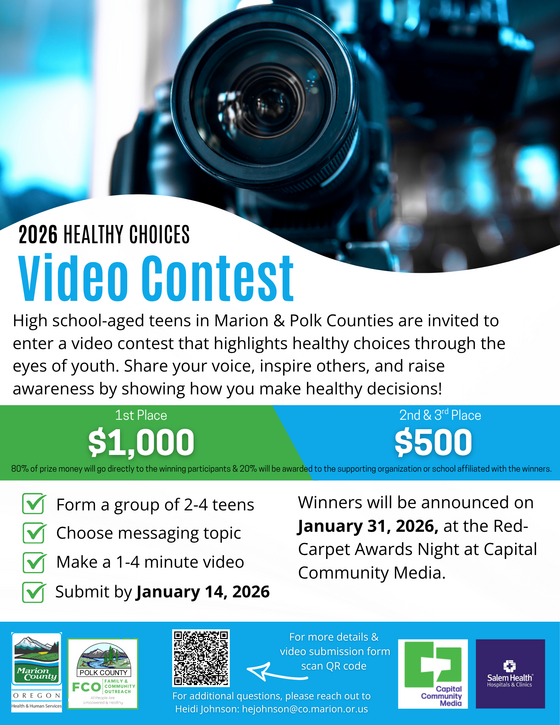
In 2026, Marion County, together with Polk County, Capital Community Media, and Salem Health, is excited to expand the popular Healthy Choices Video Contest to include middle school students for the first time!
In addition to the returning high school competition, a new middle school division will offer a $100 prize for the best video. High school teams can compete for larger awards, with the top entry earning up to $1,000 for their team and sponsoring organization.
Both contests invite local students to create an original, inspiring video that promotes healthy choices and positive lifestyles.
Entries are due January 14, 2026. For full details and registration forms, visit the Marion County Youth & Schools Gambling webpage. Contact: Heidi Johnson at hejohnson@co.marion.or.us with any questions.

By Diana Dickey, Alcohol and Drug Prevention and Education Program Coordinator
Opioid Prevention now has a webpage! Marion County Opioid Prevention works to support communities in prevention of opioid misuse and reducing stigma around seeking help for opioid addiction. We provide opioid prevention resources and information to the community, with specific resources for healthcare providers, women of childbearing age, parents and caregivers, and youth.
We also support prevention of misuse of kratom and other substances.
Some of our resources include:
- Online information including specific resources for healthcare providers, women of childbearing age, parents and caregivers, and youth.
- Free digital downloads of opioid and other substance prevention materials. Some materials may be available in print or other formats and languages upon request.
- Where to find help for substance addiction.
|

By Conor Foley, Chronic Disease Prevention Program Coordinator
“We must be the truth tellers.” That was the message from Brian King, Executive Vice President at Campaign for Tobacco Free Kids, that continued ringing in my ears after the conclusion of the 2025 National Conference on Tobacco or Health (NCTOH). King was talking about the role public health advocates play in confronting the lies of the tobacco industry and it hit home for me because of its simplicity and direct tie to purpose in tobacco prevention work.
Hearing messages like this from impassioned visionaries in our field is one of many reasons I was excited to attend the National Conference on Tobacco or Health in Chicago, IL at the end of August. The three-day conference brought together tobacco prevention professionals from around the country to share best practices, new innovations, and stories of successes and challenges in our work.
I heard all the above during my time at the conference, and had a chance to present on Marion County’s collaboration with Willamette University’s undergraduate public health students on the 2025 Tobacco and Alcohol Retail Assessment. Some of the highlights of the presentations I attended include:
Attending this conference was a wonderful opportunity and happened to coincide with some beautiful late summer weather in Chicago. Along with the memories of sunny Chicago and the great work being done in tobacco prevention around the country I will be holding on to something else that King said in his plenary address, “Change starts local and galvanizes upward.” That has been true for many of the positive changes we have seen in the history of public health and it serves as both a challenge and an encouragement for our work to prevent tobacco-related diseases in Marion County.
Governor Kotek’s K-12 School Cell Phone Ban Is Sparking Debate Across Oregon
In July 2025, Governor Tina Kotek released Executive Order No. 25-09 which requires that all Oregon school districts have a policy in place that restricts the use of personal electronic devices from the start of regular instructional hours to the end of regular instructional hours. School districts were required to adopt a policy no later than October 31, 2025, with full implementation in effect no later than January 1, 2026.
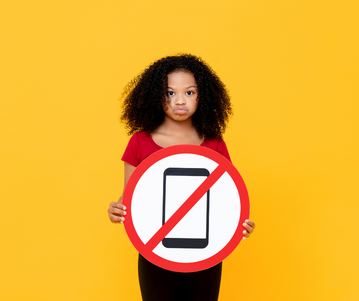
What is this new Executive Order? Executive Order 25-09 is a new statewide directive aimed at creating school environments with fewer distractions and more room for learning and student connection. The governor’s office says the order was driven by mounting evidence that heavy phone use is tied to mental health concerns, decreased focus, and lower academic achievement.
Under this new order, districts will designate specific times when students can use their cell phones from the start of the school day, to the end of the school day, but, "may exclude time when students are not on school grounds and not under supervision of school personnel." Some exceptions can be made if a student's IEP (Individualized Education Program) or action plan states they must be allowed to use their phone, or a medical provider states that a student needs their phone for treatment of a medical condition.
Does The Research Support Banning Cell Phones In Schools?
Research on the impact of school phone bans offers mixed findings. A broad review of international studies found that in most cases, non-educational phone use had a negative impact on grades and test scores. However, a 2025 study out of the UK compared students in schools with and without phone bans and found no major difference in well-being or academic success. The study concluded that limiting phone use during school hours might only help if paired with other efforts, like education on digital habits, support for mental health, and better sleep routines.
How Will Oregon Schools Handle This New Ban On Cell Phones?
Under the new order from Governor Kotek, each district must define clear rules for when phones can be used and how exceptions will be handled. Districts must have created and adopted their new phone use policies for students by October of this year, and these policies must be active and enforced in all Oregon schools by January 2026. While it’s too early to tell what the long-term results will be, the policy marks a big step in how schools across Oregon will approach student use of technology during the school day.
More information can be found here.
|
|
By Marie Little, Youth Prevention Education Coordinator
 The “Youth Voice” group launched in May with an introductory meeting where members met Marion County staff, and staff had the opportunity to connect with the youth and their parents. A planning meeting was held in August to ensure all youth had submitted the required paperwork and to get the group going before the start of the next school year. While the group is already underway and and the youth are passionate about developing a mental health campaign, we're still recruiting for a few more high school students to join.
At the September meeting, the group explored the role of Public Health, answering many of the youth's questions about how it works behind the scenes. “Youth Voice” activities and events will center on peer-to-peer messaging, because we know that youth are most influenced hearing directly from their peers, rather than adults.
Peer influence plays a significant role in the decision-making processes of adolescents. While negative peer pressure may lead to unwise choices, positive peer support can improve decision-making skills and promote healthy behaviors. Friendships during this phase can mold a person’s values and beliefs. Adolescents frequently mirror their peers’ emotional reactions, resulting in shared experiences and group norms. Positive peer relationships can enhance empathy and prosocial behaviors, while negative interactions may lead to emotional distress and maladaptive coping strategies. (Read more at psychnewsdaily.com/peer-influence)
At the core of adolescent peer relationships is the need for social validation. During this time, young people are highly influenced by their peers’ opinions, which can either positively or negatively impact their behavior and self-image. Peer groups serve as a powerful source of emotional support, helping individuals navigate the challenges of school, family life, and personal growth. The way adolescents interact with their peers shapes their self-concept—the mental image they have of themselves—and also influences their self-esteem, which is their sense of worth. (Read more at psychology.town/developmental/impact-peer-relationships-adolescent-development)
Published this week in the journal Child Development, the latest research finds that the quality of teen’s relationships with their friends is a better predictor of certain long-term outcomes than their relationships with their parents. That data was compared to earlier interviews involving the same teens, their parents, and their friends to assess relationship quality. The results were clear: strong, positive teen friendships are linked to success later in life.
And what about teens who reported not having strong friendships with teens? According to Joseph Allen, Hugh Kelly Professor of Psychology and Distinguished Psychologist at the University of Virginia, “The flip side is just as you’d expect, which is if you did not have good, quality, best-friend relationships as a teenager, in adulthood, by age 25, 26 and 27, you had worse work performance, you had lower-quality relationships with other adults, you had poor-quality romantic relationships and you were more likely to be depressed.” (Read more at news.virginia.edu/content/peers-or-parents-study-shows-strong-friendships-set-teens-success-later-life)
We aim for “Youth Voice” to positively influence their peers by raising awareness about the dangers of drugs, alcohol, tobacco, and vaping; the risks of problem gambling; and the importance of balancing mental health with healthy behaviors.
If you are a high school teen (or know of one) between the ages of 14 and 18, reach out to Marion County Prevention and come join this exciting new group!
By Kelly Martin, Mental Health Promotion Coordinator
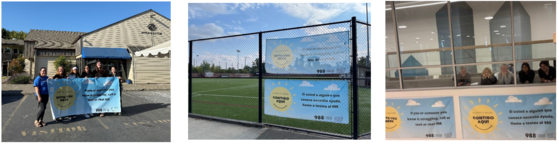
Talking about mental health isn’t always easy — but it’s an important conversation that can save lives. This September, in recognition of Suicide Prevention Awareness Month, local youth organizations and colleges joined forces with the Marion County Mental Health Promotion Program to make those conversations a little easier and to remind our community that help is always available.
Beginning in September, partners displayed banners featuring the message: “Life is Better with You Here.” The goal was to remind everyone that there is hope and help — and that support is just a phone call away through 988, Oregon’s mental health and suicide prevention line.
If you ever need someone to talk to, 988 Oregon is here for you. Whether you’re feeling sad, stressed, struggling with substance use, or just need someone to listen, caring counselors are available 24/7 — free and confidential.
A heartfelt thank-you to our community partners — the YMCA, Boys & Girls Club, Willamette University, Chemeketa Community College, and Corban University — for helping spread this important message of hope and connection.
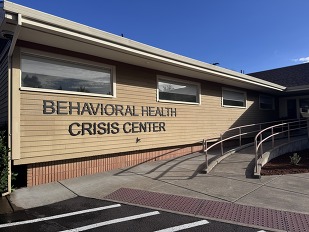
After 30 years of service, the Marion County Behavioral Health Crisis Center (BHCC) has a new home. The BHCC has moved from the Salem Health Campus to 1234 Commercial Street in SE Salem. The BHCC offers 24/7 behavioral health support services for members of our community.
The new crisis center provides a welcoming, safe, and supportive environment for youth and adults experiencing a behavioral health crisis.
If you or a loved one are experiencing a behavioral health crisis you can go to the Crisis Center or call 503-585-4949
|
By Michael Keuler, Environmental Health Resiliency Coordinator - Article material provided by PacificSource
What are health-related social needs?
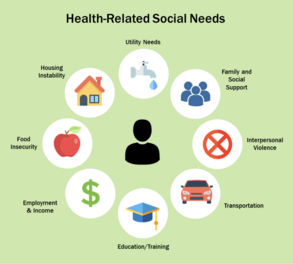
Being healthy requires more than regular check-ups. It also means having access to housing, nutritious food, air conditioning, and other essentials. Some OHP members may be eligible for extra non-medical services through a program called Health-Related Social Needs (HRSN). This program addresses barriers to health—like housing or food insecurity—that can affect overall well-being.
Learn more about the HRSN program below and find more information on the PacificSource Health-Related Social Needs webpage.
Am I eligible?
You may be eligible for some or all HRSN services if you:
- Are an OHP member
- Have a high-risk medical condition
- Are in transition—for example, if you:
- Are homeless or at risk of becoming homeless
- Were in a psychiatric facility, jail, or prison in the past year
- Were ever involved in child welfare services
- Are becoming eligible for Medicare in the next three months or enrolled in Medicare no more than nine months ago
- Are a youth with special healthcare needs
|

Housing Supports
What it does: Help with rent and utilities for up to 6 months, storage fees, medically necessary home modifications like wheelchair ramps or grab bars, remediation services like pest control and deep cleaning, and related hotel costs.
Eligibility: To qualify for rent or utilities assistance, storage fees, and tenancy services, you must:
- Be currently housed
- Need support staying housed
- Have a lease or written agreement with your landlord
- Have an income that is 30% or less than the median income in your area
- Lack sufficient resources or support networks to prevent homelessness
- Have a housing clinical risk factor
To qualify for home modifications and remediation, you must:
- Have a housing clinical risk factor; the home modification or remediation service must prevent, treat, or ameliorate the clinical risk factor
- Be in transition (see examples)
Housing Questions: Marion County HHS Housing Services is also available to answer housing specific questions at HHS-Housing@co.marion.or.us
|
Extreme Weather Device Supports
What it does: Provides no-cost air conditioners, heaters, air-filtration devices, mini-refrigerators, and portable power supply units.
Eligibility: To be qualify for climate-related supports, you must:
- Have a health condition that makes climate events challenging or dangerous
- For air conditioners, a health condition that gets worse during hot weather
- For heaters, a health condition that gets worse when you get very cold
- For air filtration devices, a health condition that gets worse when air quality is poor
- For mini fridges, a health condition that requires temperature-controlled medication
- For portable power supply, a health condition that requires a powered medical device
- Live in a place with electricity, and be able to use the device safely
- Be in transition (see examples)
|
Nutrition Supports
What it does: Medically Tailored Meals with delivery, that align with personal and cultural dietary preferences. Also includes Nutrition Education to help with choosing foods and meal preparation.
Eligibility: To qualify for Medically Tailored Meals or Nutrition Education services, you must:
- Have a health condition that would be improved as a result of the service.
- Be experiencing low or very low food security.
- Be assessed by a Registered Dietitian, or a Primary Care Provider, to develop a medically appropriate nutrition care plan before a member can be approved for Medically Tailored Meals.
|
Getting started
To find out if you’re eligible for HRSN benefits, complete the request form. Your primary care provider, coordinated care organization, caretaker, or another trusted person can also fill out the form on your behalf.
|
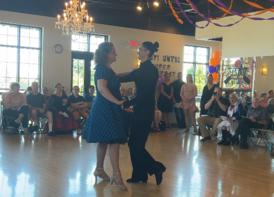
Sally started ballroom dancing because it combines movement, music, social interaction and creativity. She doesn’t have a partner, so she dances with instructors and everyone in the classes. Dancing has given her more body awareness and healing from trauma, improved her social connections, and healed her posture. Social dancing is a protective factor for many health risks of aging and healing trauma.
She especially enjoys rhythm dances, like salsa, cumbia, meringue, and swing because of the wiggling and music. She enjoys smooth dances, such as waltz, lindy hop, tango and foxtrot because of the history of each dance and the skill in learning precise movements with a partner.
In the studio, you can find her smiling or making her instructor laugh. In the wild, you can find her at the many community group dancing classes in Salem.
|
|
Marion County Health Promotion & Prevention will highlight a variety of programs and health topics in our upcoming newsletter to keep you informed about key health promotion issues.
The next edition will be released during the first week of January 2026. If there's a topic you'd like us to cover, please let us know by emailing us at the address below.
|