|
MCHHS Facebook | MCHHS Instagram | Prevention YouTube
 Welcome to the Health Promotion & Prevention Newsletter, released every two months by Marion County's Health Promotion & Prevention Team! In this newsletter, our team shares information, tips, news, and updates on community work being done to promote health and prevent disease in Marion County.
Help us spread awareness by sharing this newsletter with your friends and colleagues!
January is Human Trafficking Prevention Month
January is Human Trafficking Prevention Month and observed nationally to educate communities about the realities of human trafficking and the role we have in preventing and responding to it. Traffickers often use psychological tactics such as manipulation, fear, and coercion to target vulnerable populations such as runaway and foster youth, those with disabilities, migrants, BIPOC and 2SLGBTQIA+ individuals, and those with prior history of abuse. Since 2018, nearly 500 victims have been identified in Marion County (Safety Compass).
Things you can do to make a difference include:
Information provided by the Center for Hope and Safety and Safety Compass.
|
Trainings
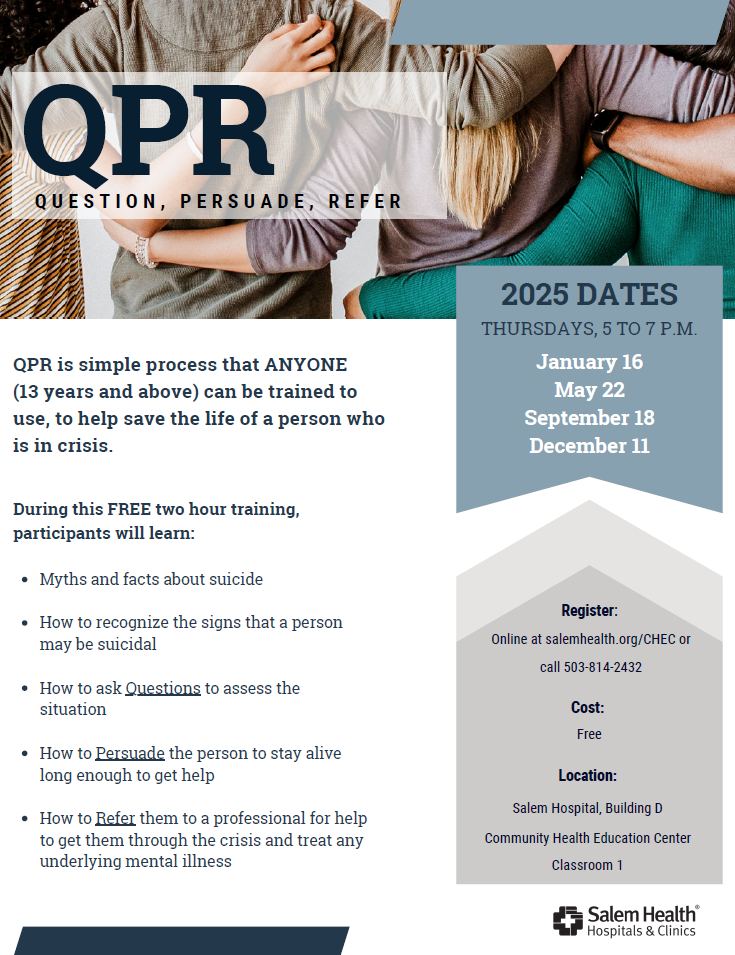
Thursday, January 16: QPR Suicide Prevention Training
Click here for more information and to register for free
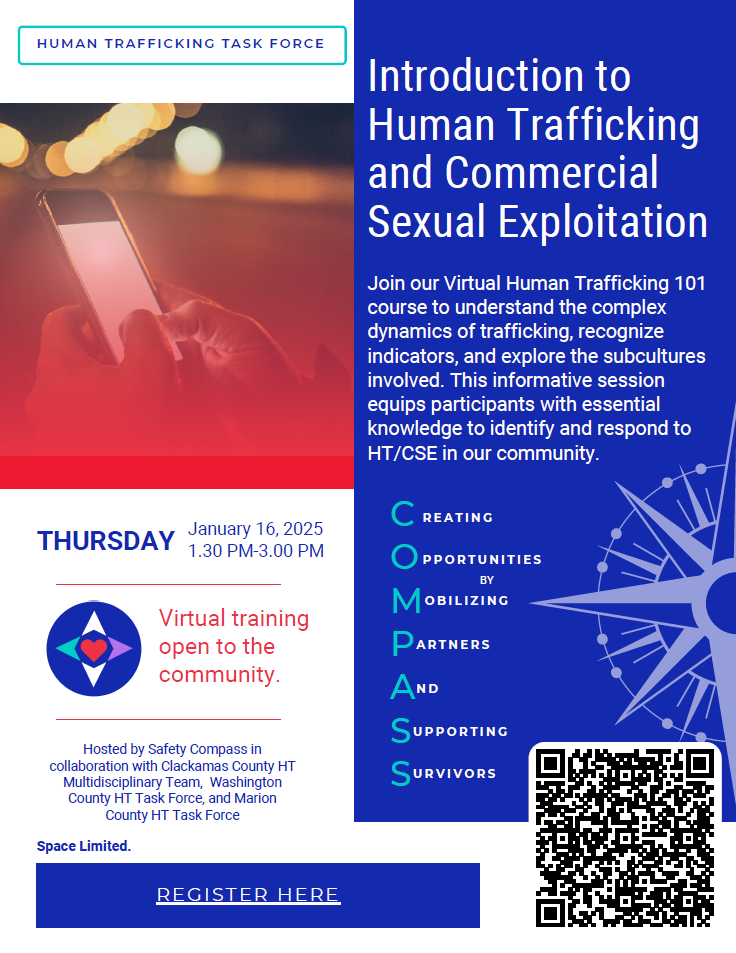
Thursday, January 16: Safety Compass Human Trafficking 101
Click here for more information and to register
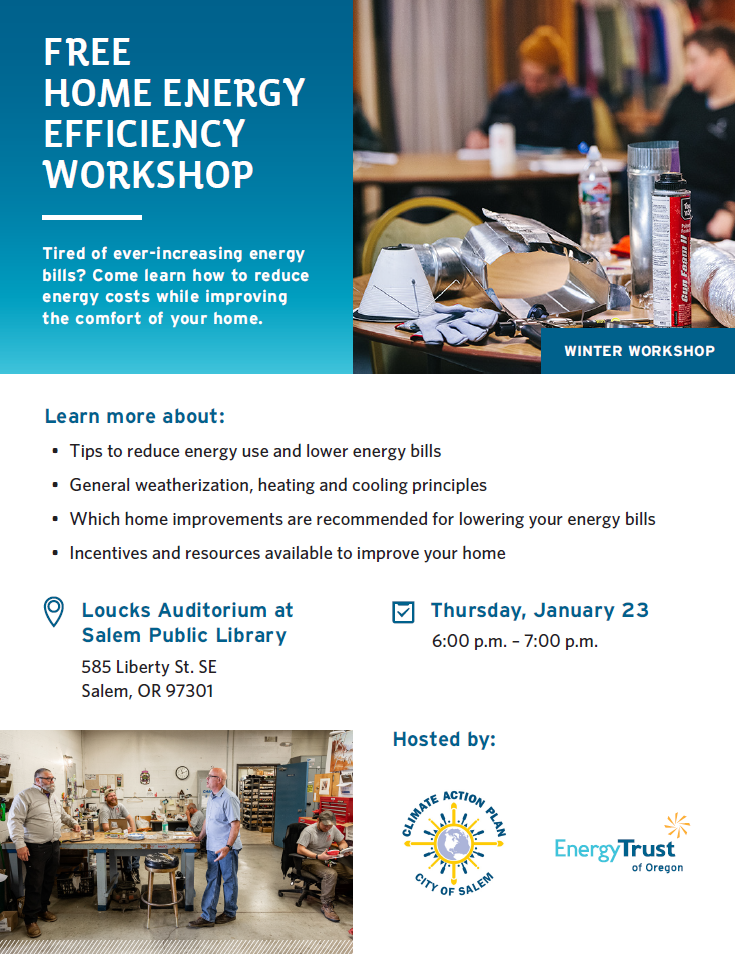
Thursday, January 23: Salem Home Energy Efficiency Workshop
No registration required. Click here for more information.
Following is a list of additional health promotion trainings and education opportunities.
Know of another organization that provides great trainings? We'd love to share them with our network. Let us know at MCHDPrevention@co.marion.or.us.
 |

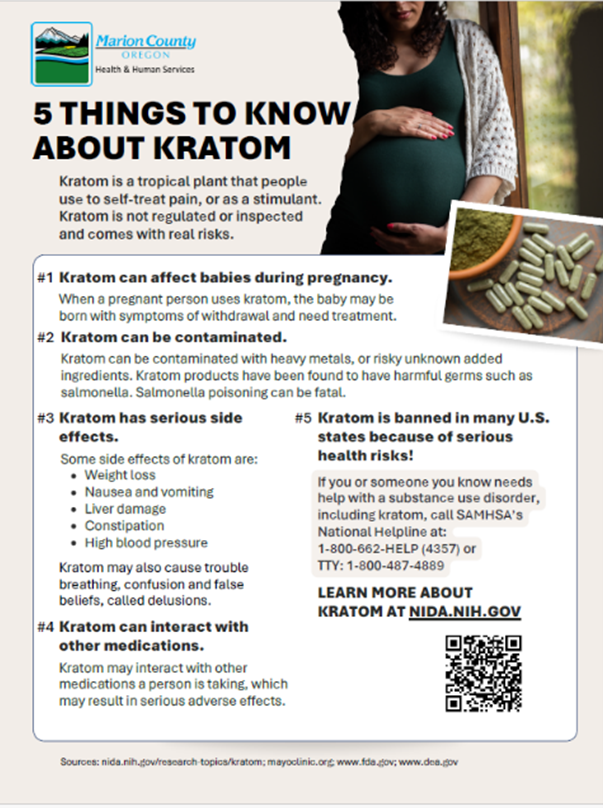
You may have seen kratom or signs for kratom being sold around the community and wondered what kratom is. It is important for people to be aware of what kratom is, that it is not federally regulated or inspected, and that using kratom comes with real risks.
Kratom is a tropical plant that people use to self-treat pain, or as a stimulant. Its two main chemical compounds bind to the same receptors in the brain as opioid drugs. The U.S. Drug Enforcement agency has listed kratom as a Drug and Chemical of Concern.[1]
Kratom use can result in several side effects ranging from nausea and vomiting to liver damage and hallucinations. Without proper testing, kratom sold to consumers can be contaminated with heavy metals, risky unknown added ingredients or salmonella. People should be aware that kratom use during pregnancy can affect babies. When a pregnant person uses kratom, the baby may be born with symptoms of withdrawal and need treatment.
The U.S. Food and Drug Administration (FDA) warns consumers of the risk of developing kratom-related substance use disorder, or addiction. [1] There is currently no FDA-approved medical use for kratom, and the FDA has not approved any drug products containing kratom or its main chemical compounds. There is a lack of research and information on potential long-term health effects of kratom use, the potential for kratom to interact with other drugs, and the impact of driving while under the influence of kratom. [2]
In Marion County, an estimated 28% of tobacco retailers also sell kratom. This includes convenience, grocery stores, and other types of retailers that sell tobacco products.
At least 22 states have passed legislation to regulate kratom. Some states have added kratom to the Schedule I controlled substance list. (Schedule I substances are defined as drugs with no currently accepted medical use and a high potential for abuse. Some examples of Schedule I drugs include heroin, meth and LSD. ) Some states have labeling requirements. For example, Colorado requires labeling that must identify the name and address of the manufacturer and full ingredient list. Tennessee requires a label that contains manufacturer’s information, a warning to not use during pregnancy or nursing, to not combine with alcohol or other medication, and to consult a doctor prior to use if the consumer has specific medical conditions. Utah prohibits flavoring and packaging that appeals to children and requires child-safe packaging. In Oregon, the sale or distribution of kratom to individuals under 21 years of age is prohibited. Additionally, kratom processors and retailers are required to register with the Department of Revenue and comply with testing requirements.
We recently created “5 Things to Know about Kratom” posters and flyers. The message focuses on the risks of kratom use, especially during pregnancy. If you serve women of childbearing age with healthcare or community resources and would like posters or flyers, you can send a request to MCHDPrevention@co.marion.or.us. Materials are available in English and Spanish.
|
 |
To learn more about kratom, visit: https://nida.nih.gov/research-topics/kratom
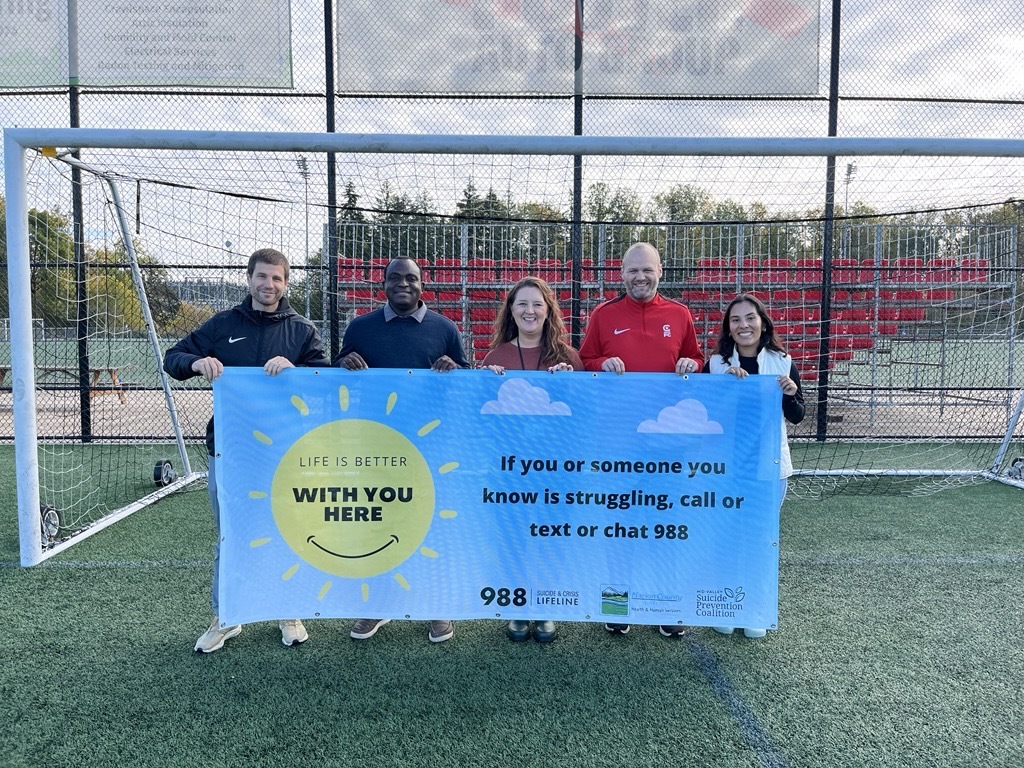
In partnership with the Capital Futbol Club, the Marion County Mental Health Promotion program provided 988 banners in English and Spanish to be hung around the soccer fields. The goal is to ensure that our community knows about 988, the national Suicide and Crisis Lifeline where anyone can call and get free support if they are struggling with their mental health.
We are incredibly grateful to our community partners that are dedicated to the health of our young people!
 The Importance of Social Connection
(Adapted from the U.S Surgeon General’s fact sheet)
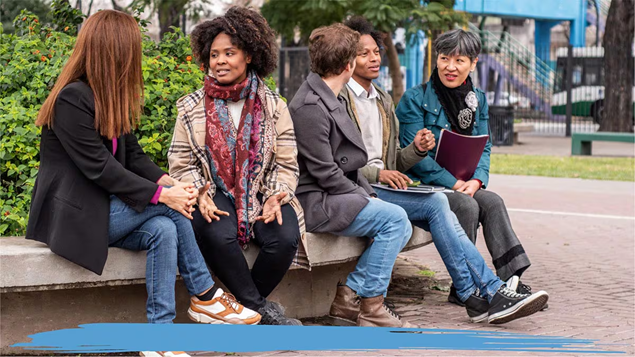
Social connection is a fundamental human need, right up there with food, water and shelter. A person’s mental and physical health can be significantly affected by lack of social connections.
Positive social connection can be associated with:
- Decreased risk of heart disease, stroke, diabetes, anxiety, depression and dementia
- Decreased likelihood of respiratory illnesses
- Higher academic achievement and improved work performance.
According to the U.S. Surgeon General the U.S is facing an epidemic of loneliness. The good news is there are simple steps that we can take to increase our connection.
-
Focus on building relationships - be intentional about reaching out to others. Consider participating in the Surgeon General’s 5-for-5 Challenge.
-
Participate in social and community groups - find a group that fits your interest such as a fitness, religious, or a group that focuses on your favorite hobbies.
-
Find ways to serve others - this could be volunteering or helping a family member or friend with a project.
-
Reduce time spent on activities that make you feel disconnected from others - such as excessive use of social media.
-
Seek help during times of struggle - reach out to a friend, counselor or health care provider. The 988 Suicide Crisis Lifeline is also available 24/7 if you need someone to talk to.
For more information on social connection visit the Surgeons Generals website.
2024 Marion-Polk Regional Environmental Scan Report
By Michael Keuler, Environmental Health Resiliency Coordinator
Willamette University conducted the 2024 Marion-Polk Regional Environmental Scan Report. This process was completed to see how environmental hazards like extreme heat, extreme cold, winter storms, wildfires, wildfire smoke, poor air quality, and more have affected the health of residents. Through extensive research, interviews, focus groups, surveys, and more - Marion County and Polk County have a greater understanding of how environmental hazards have affected vulnerable priority communities, what various organizations are doing to improve resiliency, and recommendations for future action.
Click here to checkout the Environmental Scan!
|
New Public Health Emergency Preparedness and Resiliency Website!
 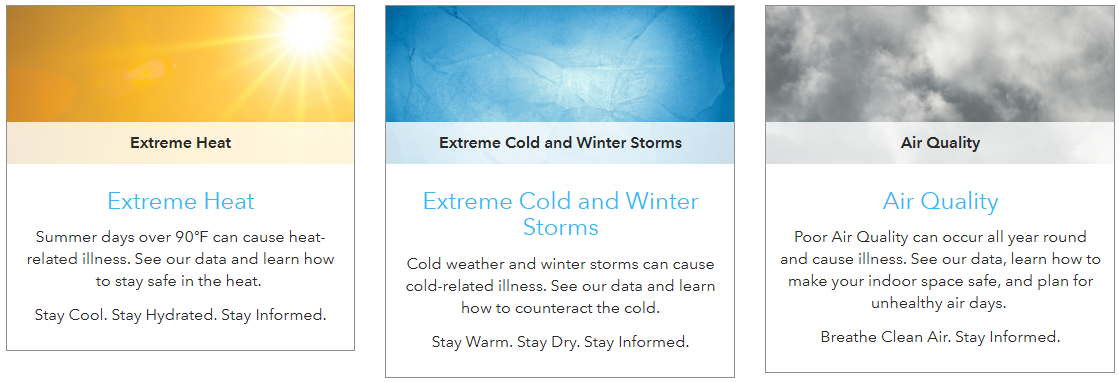 Public health and environmental emergencies have occurred in our local area in recent years. This includes COVID-19, measles, extreme heat, ice storms, wildfires, and smoke. Be prepared for whatever comes your way. Make a plan, know the facts, and keep your family and loved ones safe when an emergency occurs.
Go to our new website to learn the facts, navigate our health and environment dashboards, and find resources in various languages. This winter, find warming shelters, ways to cut energy costs, and how to prepare for winter storms on our extreme cold and winter storms webpage!
2025 Climate and Health Adaptation Planning
Marion County Health and Human Services is embarking on a new community driven process to develop a 2025-2030 Climate and Health Adaptation Plan. This plan will bring organizations and experts working in health, emergency preparedness, environment, and social services together to improve the health and resiliency of Marion County residents to environmental hazards. This includes creating goals and actionable steps to improve long-term health outcomes to extreme heat, ice storms, and poor air quality.
Between January and May 2025, a collaborative community stakeholder group will meet to create a plan by the end of June 2025. If you would like to know more about the Climate and Health Adaptation Plan and process, please reach out to us at MCHDPrevention@co.marion.or.us
By Michael Keuler, Environmental Health Resiliency Coordinator
Is your city, school, or organization interested in improving community health through environmental projects? Two grant opportunities are available that may interest you!
-
Heat Resilient Communities Grants: Open! Two NIHHIS grant opportunities available until January 17 and January 24, 2025. Local municipalities, academic institutions, and nonprofit organizations may qualify to receive one of two $10,000 microgrants to improve heat resilient communities and monitoring heat resilience. If you or your organizations qualifies and is interested in applying, please reach out to us at the email below.
-
Environmental Justice Thriving Communities Grant: Open! Various grants available until 2026. Philanthropy NW and the EPA have grant funding available to improve local environmental and/or public health issues for historically underinvested communities. Funding includes $150,000 for Assessment Projects, $250,000 for Planning Projects, $350,000 for Project Development and Implementation, and a $75,000 non-competitive award for severely capacity-constrained community-based organizations. Eligible organizations include non-profits, community based organizations, tribal governments, local governments, and institutes of higher education. Click here for more information!
If your organization plans to apply for any of these opportunities, please notify Michael Keuler at mkeuler@co.marion.or.us! We may be able to provide a letter of support.
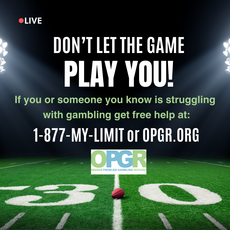
With the Super Bowl approaching, we will start to see more advertisements for sports gambling. While many people gamble for entertainment, it’s important to remember that gambling comes with risks. Adults who choose to gamble should do so for entertainment, set a spending limit, and keep in mind that betting on sports is not a special skill. Winning or losing is entirely random. If you or someone you know is gambling more than intended, there is hope and free help at https://www.opgr.org/
|
1. My Worth: Classroom Guest Speakers for Middle School Classrooms

FREE 6th grade curriculum to support health programs, that engages students in conversations about peer pressure, online safety, social media and healthy choices. For more information visit irespectandprotect.com/for-orgs or contact Max Gutfreund, Prevention Education Project Coordinator: MGutfreund@LibertyHouseCenter.org or (503) 510-0299
|
2. Sesame Workshop: Parent and Classroom learning materials for young children

Free videos, storybooks, lessons, and more for parents, daycare, and classrooms for young children. Learn social-emotional skills, health, hygiene, science, building resilience, and much more. Resources in various languages. Go to sesameworkshop.org
|
3. Doing Good Together:
Doing good together helps parents raise kids who care and contribute! Browse their catalog of games, DIY kindness kit, nature scavenger hunt, book suggestions, and more to increase compassion, kindness, and big-heartedness in the next generation. Resources available in English and Spanish. Go to doinggoodtogether.org.
|
In honor of pets being health heroes, the Prevention Team at Marion County Health and Human Services is highlighting their amazing pets.
Susan McLauchlin’s pets are not merely animals kept in a household; they are undisputed members of the family, offering unconditional love, companionship, and a sense of belonging that enriches their lives. Her 5 labs, cat and a variety of small animals (guinea pigs, ducks, chickens, birds…) play a vital role in emotional well-being and fostering a strong sense of community within the home.
She and her husband live on a small farm in Mehama, and feel caring for their furry and feathered friends (all 35+) means always being greeted with wagging tails, twitching noses, flapping wings, and purrs. Their pets offer a constant source of affection, readily showing love and attention regardless of circumstances, and without judgement. They provide companionship and comfort during stressful times and lift their mood with their presence.
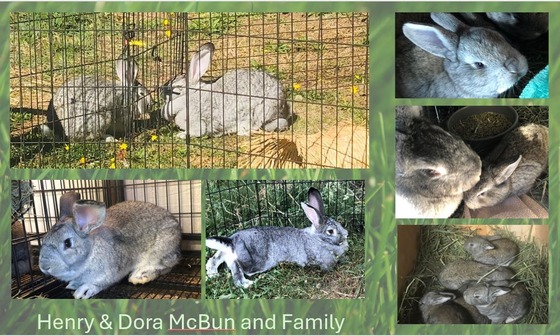
The most recent addition to their farm has been a growing family of rabbits. Dora came first, followed soon by Henry. They are Giant American Chinchillas and are one of the most gentle and friendly breeds. The two were instantly “Twitterpated” with each other, and after a fence-hopping incident, welcomed their first litter in November, having five little cuties. Susan finds everything about them “cute”, while her husband rolls his eyes and says she is obsessed. She admits that he may be right - it’s going to be tough adopting them out in January.
By Jessica Keene, Executive Director (Operation Lifesaver Railroad Safety Educator for Oregon) and Sally Cook, MCHHS Prevention Health Educator
Marion County has plenty of railroad tracks and crossings. Most people may not think that much about trains until they wait at crossings- then it’s an inconvenience.
1. What is Operation Lifesaver?
Operation Lifesaver is a nonprofit in rail safety education, committed to preventing collisions, injuries, and fatalities on and around railroad tracks and highway-rail grade crossings, with the support of public education programs in states across the US, since 1972. Our mission is to promote the 3 E’s: Education about the dangers of rails, Enforcement of traffic laws relating to crossing signs and signals, and engineering research to improve the safety of railroad crossings. Operation Lifesaver has educational resources for school safety from pre-k through 12th grade. Teacher resources can be used with lesson plans or PSA components for parent newsletters, and bulletin boards. https://oli.org/materials I love my job, because I love trains, and I love people!
2. I’ve been reading a lot about train collisions, what should we know about risks in Marion County around railroad tracks?
|
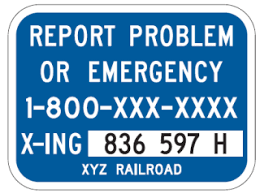
Trains have been part of the landscape longer than most neighborhoods and communities. The most important thing is to stay off the tracks, obey the signals and signs at crossings, and use that 1-800 number on the blue signs (ENS signs) if there is anyone or anything on the tracks. Report incidents along or near the tracks by locating the blue and white Emergency Notification Sign (ENS) posted at every crossing. These signs have all the information you need to give railroad dispatch if there is an emergency on the tracks. These signs are federally required at each crossing because they are the fastest way to stop a train in an emergency or if trespassers are on or near the tracks. Look for them the next time you cross the tracks. If there is an emergency on the tracks, this should be your first call before contacting local authorities. It connects to the railroad and can give the crew the best chance to get notice to stop the train in time. The average freight train traveling 55 miles per hour can take a mile or more to stop, about the length of 18 football fields. Help stop track tragedies is our focus for 2025.
3. Trains do so much in our community. What is important to remember every time you see a railroad track?
Tracks are privately owned and trespassing on the tracks is against the law. Trains can come from any direction at any time. They are often much quieter and faster for their size. Trains can overhang the tracks by 3 feet on each side, remember to stay at least 15 feet back from the train so that anything on the train, like a tie-down strap, or chain that has come loose can’t strike you. Look for blue signs (ENS) every time you cross. When there is an emergency on the tracks, this is the first number you should call because it is the only way to contact the train.
4. How much do the railroads contribute to our health in Marion County?
|
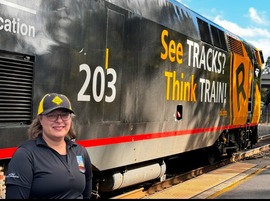
If you purchase an item locally made, the materials used were more than likely on a train at some point. Goods helping people live healthier lives in Marion County are often moved by rail at one point of the journey to and from our hospitals and clinics, our farms, and small businesses. People travel by rail and hazardous goods are kept off the roads by secure rail transport. Anything you need for your health can also be transported more efficiently by rail. Trains can carry much more at a time, depending on the weight of the materials, each train car can carry the load of roughly two and a half trucks. Using this math, if you have a train that is 80 cars in length, that is keeping, again depending on the weight being carried, 200 trucks off the roads, creating better traffic for you in the long haul. You can find information about crossings and safety in Marion County at OLI.Org.
5. What should people know when they live close to railroad tracks?
|
|
People should remember tracks can be used anytime, so it is never safe to walk or trespass on the tracks. People can make a difference by knowing where these blue signs are and how to use them. They can always report unsafe behavior, even if a train is stopped on the tracks , Also, someone can become a volunteer with Operation Lifesaver to help keep the community safe.
- To report concerns about someone’s safety on railroad tracks call the 800 number on the blue sign and the local authorities.
-
Remember that substance misuse around railroad tracks can lead to increased risk of accident or injury.
-
To learn more about Operation Lifesaver visit: https://oli.org/
|
|
By Sydney Bowers with Center for Hope and Safety, interviewed by Michael Keuler, MCHHS Prevention Coordinator
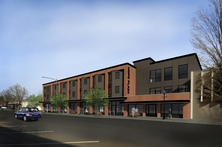
Open since 1973, Center for Hope & Safety (CHS) provides confidential advocacy to survivors and victims of domestic violence, sexual assault, stalking, and human trafficking in Marion and Polk counties. CHS operates a 24-hour bilingual crisis line supporting survivors in safety planning, emergency shelter, housing navigation, support groups, and resource referrals. During the 23-24 fiscal year, CHS had over 38,000 contacts to their program and provided more than 10,000 nights of shelter to 194 adults and children. With the recent opening of HOPE Plaza in downtown Salem, CHS offers 20 units of fully accessible, low-income permanent housing for survivors. Learn more here.
Safety Compass offers free and confidential advocacy services for survivors of commercial exploitation and human trafficking in Northwest Oregon. They are a community of survivors and allies. Survivors and their lived experiences are Safety Compass' focus to support them in their healing journey. They believe each survivor holds wisdom as they take steps on the path towards safety and healing. They send trained advocates into the community 24/7 at the request of law enforcement, juvenile intake centers, and DHS, to meet with survivors ages 25 and under, in need of support. They also have a 24/7 support line. Learn more here.
1. How can human trafficking be prevented?
|
The biggest driver of human trafficking is demand. Based on structural inequalities of oppression, marginalized communities are at greater risk of experiencing trafficking. It is important for individuals, and especially youth, to understand healthy relationships and boundaries, know the potential indicators of trafficking, and how to be safe online. Increased access to safe, affordable housing and mentorship for at-risk populations are major protective factors.
2. How does the media get it wrong?
Human trafficking is commonly believed to include elements of kidnapping, abduction, and travel. This is because the media surrounding human trafficking is sensationalized, provoking public interest at the expense of accuracy. When society believes these myths, it perpetuates violence as communities fail to recognize when human trafficking is taking place. Most often, a trafficker is someone known to the victim, either an intimate partner, family member, or employer who uses trust in the relationship to coerce and manipulate the victim into exploitative activities. Human trafficking does not always involve travel, though it may be used as a tactic of isolation. Someone can be trafficked without ever leaving their home or community.
3. What challenges does your organization face?
|

In Marion County, challenges include a lack of trafficking-specific funding streams for culturally responsive support services and a lack of safe housing options for minors. In addition to needing more foster homes, there is a great need for more beds for unhoused populations and
programming for youth and adults with mental health and substance use-related needs. Lastly, there is a gap in prevention services, such as mentorship for at-risk youth and young adults.
4. Are there any campaigns or initiatives that you are involved in that you would like our readers to be aware of?
Both Safety Compass and CHS are members of the Marion County Human Trafficking Task Force, a collaboration of local, state and federal agencies and organizations to provide comprehensive services to trafficking victims. Its mission is to 1) identify and serve victims of human trafficking and 2) to proactively investigate, identify, apprehend and prosecute those engaged in human trafficking. It is one of 14 task forces throughout the state of Oregon. For more information, contact claire@safetycompass.org or visit the ODOJ website.
5. Where can I learn more about human trafficking and support our community?
|
|
By Conor Foley, Tobacco Prevention & Education Program Coordinator
On November 15th, the U.S. Surgeon General released the latest report on smoking and tobacco use. The first report by the Surgeon General’s Advisory Committee on Smoking and Health was released in 1964 and since then, there have been 35 reports that document the effects of smoking on health. This latest report focuses specifically on addressing smoking and tobacco use disparities.
While the full report spans 837 pages, but key findings are also summarized in a 28-page Executive Summary, two easily shareable fact sheets, and a short video. These resources are also available in Spanish and everything can be found on the CDC website.
Quick Links for Resources:
Photo credit: www.CDC.gov
Marion County Health Promotion & Prevention will highlight various programs and health topics in our upcoming newsletter to keep you informed about important health promotion issues. Our next newsletter will be released in the first week of March 2025. If there is a subject you would like us to cover, please let us know by emailed us at the address below.
|