|
Replies to this message are sent to an unmonitored mailbox.
To contact me, please click here: Rep.JulieFahey@oregonlegislature.gov
Hello Friends,
It’s starting to feel like summer! The legislature may not be in session, but last week, legislators returned to Salem for three days of committee hearings, meetings, bill signings, and eve. Read on for my thoughts on our June Legislative Days, new laws going into effect, resources for constituents, and more.
Last week, lawmakers gathered at the Capitol for Legislative Days, when interim committees meet to receive important updates from state agencies, stakeholders, and community leaders about the impact our work is having around the state. Many of these hearings were focused on the implementation of past legislation and on oversight of state agencies to ensure our investments in key services like education, transportation, and behavioral healthcare are delivering real results. This press release offers an overview of committee hearings last week, but here are a few of the highlights:
The House Interim Committee on Education heard an update from the Oregon Department of Education on the implementation of 2025’s Education Accountability Act (SB 141). The law streamlined Oregon’s education accountability system and ensured state investments translate into high-quality instruction for every student. It's still early in the implementation process, but the systems the bill set up are already gathering key data to inform teaching strategies and providing technical assistance to help school districts keep their students on the path to success. You can view ODE’s presentation here.
The House Interim Committee on Climate, Energy & Environment heard presentations about Oregon’s goal to reach its clean electricity targets (100% below baseline emissions by 2040). They also got an update about the POWER Act (HB 3546) — a bill Democrats championed last year that will ensure data centers are paying their fair share for the power they use and the future infrastructure they require, while protecting residential ratepayers.
The House Interim Committee on Commerce & Consumer Protection heard a presentation from the Division of Financial Regulation. In 2025 alone, they recovered over $7 million for Oregon consumers and protected access to safe and fairly-priced utility services.
The House Interim Committee on Health Care heard from experts about the Affordable Care Act in Oregon, as well as strategies to strengthen health care in the rural parts of our state.
The House Interim Committee on Agriculture, Land Use, Natural Resources, & Water received an update from Oregon Bee Project about its work protecting pollinators. Bees keep our food growing and sustain the unique ecosystems that make our state so special. But as the use of pesticides increased in the 20th and 21st centuries, there was a startling decline in their population. In response, the Legislature passed HB 3362 (2015), which provided funding to protect pollinators and started the Oregon Bee Project. Those efforts are paying off—during the committee hearing, they reported that since 2020, there have been zero confirmed bee deaths attributable to pesticides. That’s some buzzworthy news worth sharing!
 The Senate President and I accepting former Governor Kate Brown's portrait on behalf of the Legislature during June Legislative Days. The portait is located in the lobby of the House Chamber.
Emergency Board
During Legislative Days, I presided over a meeting of the Legislative Emergency Board, the joint committee that manages the emergency funds the legislature sets aside for issues that arise outside of official legislative sessions. In anticipation of a hot and dry summer, the Emergency Board made investments to help set us up for immediate disaster preparedness. Those allocations included funding for a statewide evacuation planning and management system, as well as to support a program that helps repair or replace household water wells in areas affected by drought or wildfire. At the same time, we preserved the vast majority of our available funds to use for wildfire suppression, in what is forecasted to be a very active wildfire season.
In addition to emergency preparedness funding, the Emergency Board authorized the addition of 16 new positions in the Oregon DOJ’s antitrust unit, expanding the agency’s capacity to take on investigations and enforcement to protect consumers. These positions will help stop illegal mergers and monopolies that can drive up the cost of living for Oregon families and push out small, local businesses from our communities. Resourcing these positions helps fill a void left by the Trump administration, which has stepped back from enforcing the laws that hold these big corporations accountable.
And finally, the Emergency Board also released previously-approved funds to help stabilize Southern Oregon University. These funds will help SOU restructure and plan an orderly transition that will protect current students, preserve access to higher education, and prevent economic disruption in southern Oregon.
New state laws that took effect earlier this month will help keep more money in Oregonians’ pockets, safeguard state services like education and healthcare, prevent predatory lenders and data brokers from taking advantage of working Oregonians, and shield our immigrant neighbors from attacks by federal immigration agents. Here are a few highlights of bills that became law this month.
Affordability
-
Stops out-of-state predatory lenders from exploiting loopholes in our laws to charge Oregonians exorbitantly high interest rates on loans. (HB 4116)
-
Prevents Oregon from copying and pasting the massive tax loopholes for corporations and the very wealthy that were included in Trump and Congressional Republicans’ “Big Ugly Bill” (HR 1)—allowing us to preserve critical state services like education, healthcare, and public safety. (SB 1507)
Federal Immigration Response
-
Bans landlords from disclosing the citizenship or immigration status of applicants to anyone – including federal immigration authorities – without a warrant. (HB 4123)
-
Ensures everyone can seek medical care without fear by banning federal immigration agents from entering a hospital without a warrant. (SB 1570)
-
Prohibits state and local government agencies from selling or sharing personal records with data brokers if the information would be shared with federal immigration enforcement. (SB 1587)
After four years of construction at the Capitol, the Capitol Plaza at the front of the building is open! I recently had the honor of helping to dedicate the reopening of the space and the installation of “Oregon Voices,” an art display by Dr. Phillip Cash Cash that pays tribute to the native tribes of Oregon. The display includes 11 natural boulders chiseled with messages from tribal leaders, elders, and culture bearers. It’s a powerful reminder of Oregon’s history from long before we were a state and a tribute to the tribes’ role in shaping the place we all call home.
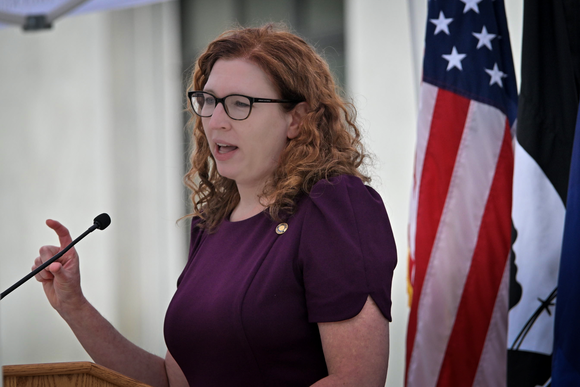 Speaking at the Capitol Plaza dedication.

IMPORTANT UPDATE:
New eligibility requirements for SNAP
|
Starting June 1st, there are new rules and requirements that Oregonians on SNAP must fulfill to remain eligible for benefits, because Trump’s “Big Ugly Bill” mandated stricter rules to qualify for benefits. If you or your family relies on SNAP, please look over these updates carefully so your coverage isn't interrupted:
SNAP
All SNAP households must now complete an interview when they apply for or renew their monthly food benefits. During the COVID-19 pandemic, some households were allowed to skip renewal interviews – this temporary flexibility has now ended. In addition, households that previously did not need an interview, must complete one – including those where all adults are age 60+ or meet the SNAP definition of disability, or those where no one in the household has income from work. What you can do now:
-
Watch for mail, email, text messages or phone calls from ODHS about your interview
-
Respond to messages from ODHS to avoid delays
-
Connect with ODHS in the way that works best for you: Use your ONE online account, call 800-699-9075 or 711 (TTY), visit a local ODHS office
Help registering or applying for SNAP can be found here.
Between June 5th and September 1st, 2026, many families with a school-age child are eligible for a one-time payment of $120 to help buy groceries while school is out for the summer. Eligibility and application information can be found here.

Changes coming to Medicaid and the Oregon Health Plan (OHP) in 2027
|
Starting in 2027, new federal rules will also require Oregonians on the Oregon Health Plan (OHP) to complete more frequent renewals to maintain health coverage. Here are a few important details for people on OHP:
-
Most adults ages 19 through 64 will need to renew every six months
-
Everyone else will renew once per year. This will include children and adults age 65 and over. Six-month renewals will not apply if:
-
You are American Indian/Alaska Native
-
You have Medicare or have OHP based on a disability
-
You are on OHP Bridge. OHP Bridge renews once a year.
The federal government has not shared all the details about the new rules, such as when they will begin requiring more frequent renewals in Oregon, but we expect the change to 6-month or annual renewals to start sometime in 2027. Please check for updates or learn more at: OHP.Oregon.gov/HR1.
state of emergency due to the imminent threat of wildfires and also declared a drought emergency in nearly half of Oregon’s counties. Here in Lane County, our seasonal outdoor burn ban is in effect. Since the outlook for summer 2026 is shaping up to be hot and dry, it is vital that we work together to protect our community and our neighborhoods.
You can find helpful safety tips on how to protect your home from wildfires and learn prevention techniques on Lane County’s webpage.
Lane County also has resources available for disaster and wildfire preparedness for residents and businesses.
Public safety agencies in Lane County use Lane Alerts to send evacuation notices, wildfire updates, and weather warnings.
To sign up, visit the official portal at www.LaneAlerts.org to create a free profile. Quick Text Option: You can quickly opt-in by texting your ZIP code to 888777.
Whether in session or out, I encourage you to stay engaged and reach out for assistance navigating state government or to share your thoughts on the issues that matter most to you.
 Capitol Phone: 503-986-1414
Capitol Address: 900 Court St. NE, H-271, Salem, Oregon 97301
Email: Rep.JulieFahey@oregonlegislature.gov
Website: http://www.oregonlegislature.gov/fahey
|