* “I am only one, but still I am one. I cannot do everything, but still I can do something; And because I cannot do everything I will not refuse to do the something that I can do.”
—Helen Keller
Replies to this message are sent to an unmonitored mailbox.
To contact me, please click here: Sen.JeffGolden@oregonlegislature.gov
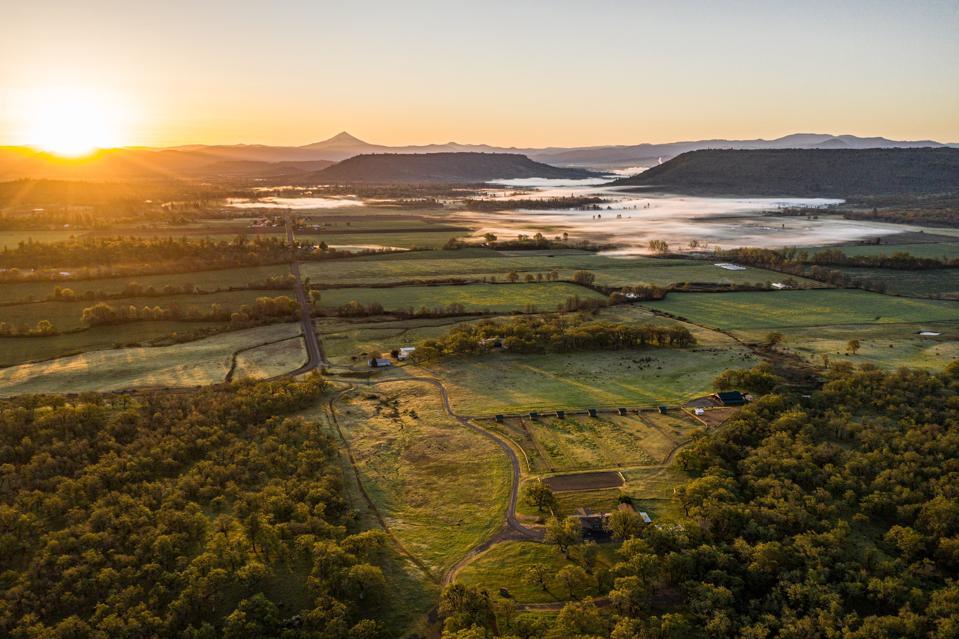 Life’s been quiet and inward since the last edition of this newsletter. Days after the 2026 legislative session adjourned I had long-scheduled knee replacement surgery, which still has me mostly off my feet and my game. It’ll all be fine in time, but more time than I’d like. I’m not a very patient patient. My thanks to those of you who’ve sent good wishes.
By now there have been dozens of summaries of the 2026 session, by far the most packed of any short session I’ve attended. Legislators knew far too little about some of the complex measures they passed, which is not the way most of us want our state to be governed. I’ll cover two that concern me the most. Both passed just before our deadline for adjournment. Both, as I see things, will do Oregon more harm than good in coming years. Then I‘ll turn to a win: last-minute passage of a bill that finally secures permanent funding for a slice of state services we’ve been neglecting for a long time.
The biggest single reason I first ran for the Senate in 2018 was to do something about the huge damage that unregulated campaign funding was, and is, doing to politics and governance. We can't expect much progress towards solving major problems until and unless we pare back the power of Big Money in Salem.
In 2019, my first session, I was asked to chair the brand new Senate Committee on Campaign Finance. We wrote a ballot measure asking voters to add to the Oregon Constitution language that explicitly gives the Legislature, and the people by way of the initiative process, the power to regulate campaign financing. This was important because of an Attorney General opinion years before that suggested that limits on campaign contributions might violate our constitutional right of free speech.
In 2020, Oregon voters said yes to that ballot measure by a record-breaking margin of 78-22%. OK, then—Oregonians want campaign finance reform. Beyond that unsurprising result, agreement was hard to find. I brought a reform bill to every session. It was designed to make sure that no person or group could make donations big enough to distract us from our responsibility to legislate in the best interest of Oregonians, and to be simple enough that any interested citizen could follow the money—no strange and complicated pathways that would obscure who’s giving how much to which candidate. My proposals were heard in committee but never got far.
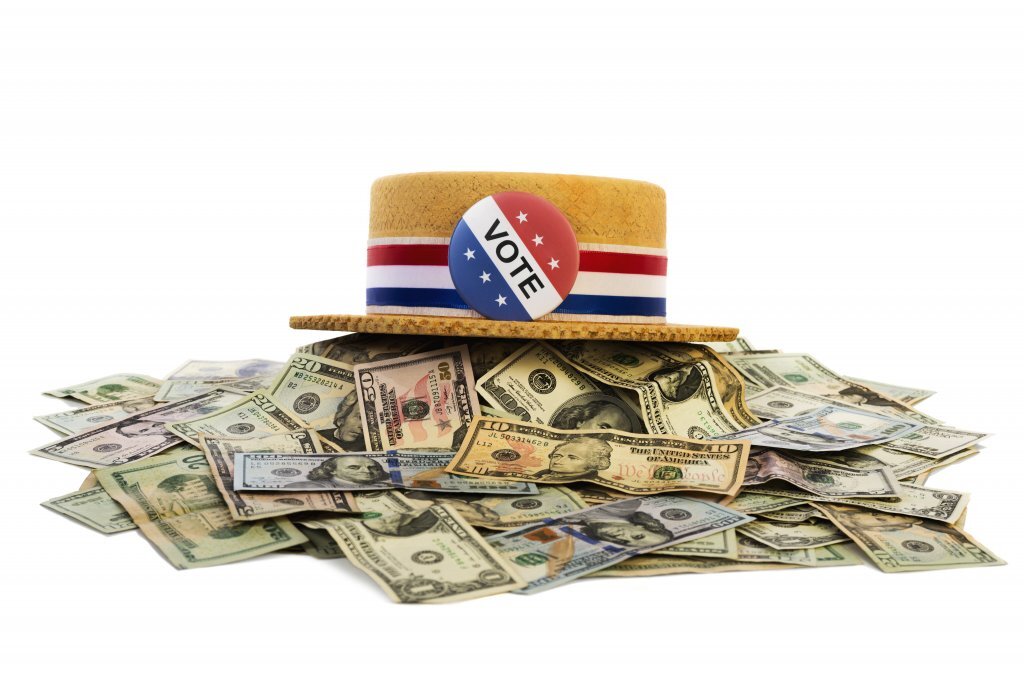 Fast forward to 2024, when a coalition of good government groups—Common Cause, League of Women Voters and Honest Elections Oregon—gathered thousands of signatures for a ballot measure that would have given us effective, sensible campaign finance reform. Because this coalition easily won campaigns for similar measures in Portland and Multnomah County, Oregon’s dominant campaign funders—the most powerful corporate interests and unions—took them seriously enough to do something they’d never done before: come together as allies to beat back this threat to their primacy in Oregon politics. During the 2024 short legislative session, they bargained around the clock to put together a massive package of campaign finance rules, offering enough concessions to the good government groups that they reluctantly agreed to abandon their ballot initiative, which would likely have led to real and robust reform.
They jointly drafted HB 4024, a measure rushed through both chambers in the final days of the short 2024 session. The product of frantic bargaining among special interests that were at each others’ throats on every other issue, it called for a campaign finance system that put Oregon in a class by itself. None of the other fifty states have a system as convoluted, hard to implement and monitor, and packed with obscure ways to funnel money into campaigns. The negotiated bill came to us in a rush at the very end of session, and I question whether a single legislator substantially understood its content before we had to vote.
But with the strong endorsement of the lawmakers’ dominant funders—corporations for Republicans and unions for Democrats—HB 4024 easily sailed through both chambers. It so clearly broke my two core rules for credible finance reform—contribution limits too low to sway a legislator’s vote, and a structure simple and straightforward enough that an interested citizen could follow the money—that I chose to be the only Senate Democrat to vote no. I just couldn’t imagine how this incoherent jumble of rules and regulations would ever enhance Oregonian’s trust in politics and governance, which I take to be the fundamental goal of finance reform.
A few months later, Oregonians elected Tobias Read to be Secretary of State. It wasn’t long before he told lawmakers that HB 4024, which he was charged to put in place, would take far more time and money to implement than the bill provided. He also said that important sections were contradictory or incomprehensible—not a huge surprise for a sprawling piece of legislation frantically thrown together in a matter of days.
Here’s where the plot thickens for the 2026 session. I’ll leave it to this Oregonian editorial to describe all its twists and turns. It hits the mark exactly. Towards the end it links to the floor speech with which I tried to stop HB 4018, a bill that l honestly believe we’ll come to regret. I didn’t succeed. The script of that speech is here.
HB 4018 was one of the last bills I watched the Senate pass. It was also one of the saddest chapters of my eight years serving in that chamber.

Oregon’s nationally-famous land use system was established with the passage of SB 100 in 1973. It’s generated friction and conflict ever since. While far from perfect, it’s probably led to an Oregon landscape that most of us appreciate more than what we’d have if that law had never passed.
One of SB 100’s cornerstones (and flashpoints) has been fairly stringent protection of our highest quality farm and forestlands. With a few niche exceptions, it’s difficult to build homes and commercial facilities on prime farmland. That’s very much by design—a design that some people have never liked. This session, after decades of debate, we changed the rules on farmland protection more drastically than ever before. To tell that story, I’ll lean into the floor speech I gave to defeat HB 4153…also unsuccessfully. Video here, script here.
My speech was followed by a few from Senators who supported the bill. So much was said that conflicts with the facts as I understand them that I had to rise to speak a second time, here. A few minutes later, the Senate passed the bill, 21-8. The Governor, who’d signaled her support from the beginning, signed the bill into law a month later.
I know that good legislators can honestly disagree about the best balance point on issues like this. And this is far from the only time a vote hasn’t gone my way. But this one particularly bothers me. I believe a number of people were swayed by misinformation that wouldn’t have landed if the bill were thoroughly considered. One reason that didn’t happen was an end run around our normal process of deliberation, which usually includes an open hearing before policy committees in both the House and the Senate.
As Chair of the Senate Committee on Natural Resources and Wildfire, I expected to receive the bill if and when it passed the House. While it was still under discussion in the House committee, an aide to the Governor called me to ask what I thought of the bill. I was straightforward: I think it swings the pendulum too drastically in the direction of commercializing prime farmlands. I wouldn’t pass it without amendments that struck a better balance. Shortly after that, a fiscal impact statement was added to the bill. That’s an official estimate of the cost to the state (usually an enhancement of agency staff) if the bill becomes law. Up until then there’d been no suggestion that the bill would need money for implementation, and no dollar amount was specified; the paperwork simply stated that it would have a “minimal fiscal impact.”
That’s a big deal. Bills tagged with a fiscal impact are passed from a policy committee in either the House or the Senate to the Joint Ways & Means Committee, which is responsible for the entire state budget. If Ways & Means then approves the bill, it moves to the floors of both chambers for final votes without any hearing by a committee in the Chamber that didn’t originate the bill. This is sometimes a procedural strategy to steer clear of a committee chair who’s likely to shine unwanted light on a bill favored by those at the top of the food chain. The end run in this case immediately followed my admission that I was no fan of the bill. That eliminated the normal opportunity for a careful policy discussion in both chambers of the Legislature, supposedly a cornerstone of our lawmaking process. It left Senators poorly informed as they listened to highly dubious comments on the Senate floor just before voting.
Would a thorough hearing in my Natural Resources Committee have changed the outcome? There’s no way to know. But I’ll go out on a limb to suggest that legislators do their jobs better when they accurately understand the bills they’re voting on.
This is not a small problem in Salem today.
 HB 4134: The session’s good news
I’ve saved the best for last. The work of a lot of dedicated people over several sessions culminated this year in a bill that will generate some $37 million in new dollars for the wellbeing of Oregon wildlife.
I carried HB 4134 to the Senate floor with a description of our experience in the Natural Resources Committee, where
Here’s a video of what follows in my floor speech.
The challenge here wasn’t that legislators don’t like wildlife. It was finding a new source of revenue so we no longer had to look to a General Fund so burdened with other service needs that it could never reliably deliver for wildlife. Since surveys consistently list wildlife viewing as a primary reason tourists come to Oregon, attention turned to the Transient Lodging Tax (TLT), the fee applied to the bill for any kind of commercial lodging—hotels, motels, BnBs, campgrounds. HB 4134 increases the state portion of the TLT from 1.5% to 2.75% (the 13-16% tax you’ll see when you stay in top tourism towns—Ashland, Bend, Portland—layers whatever local governments decide to charge on top of the state’s 1.5% portion).
This is the first proposal in decades to overcome stiff opposition from the Oregon Restaurant and Lodging Association, which worries that any TLT increase will open a Pandora’s box of assaults from any number of interests hungry for more funding. There’s reason for that concern. States with a sales tax effectively charge visitors a tiny slice of what’s needed to fund the amenities they’re using—police, roads, fire protection and so on. As an outlier with no sales tax, Oregon’s tool for asking visitors to chip in is the TLT.
That worries tourism professionals more and more as budget pressures increase, which made the campaign for HB 4134 an uphill climb—all the more so because any tax increase requires a 60% majority in both chambers (at least 36 of 60 Representatives and 18 of 30 Senators). The key was the diversity of the coalition that pushed it forward. It began years ago with conservationists, hunting and fishing groups that care about habitat, and outdoor-focused businesses. Funding to help ranchers in wolf country was added to the package last year, which brought some rural Republican legislators onboard. Even so, the measure fell just short in the 2025 session.
That’s when I got fully involved. Since the most serious single threat to Oregon wildlife habitat is wildfire, I strongly believed that an effective total package needed at least one element that supported our wildfire programs. And I knew what that element was. SB 762, the comprehensive wildfire bill we passed in 2021, had one section that fulfilled a campaign pledge I made in 2018: creation of the Oregon Conservation Corps (OCC).
Since then the OCC has become the Northwest’s leading youth-in-the-woods program. You might think of it as a “three-fer”: its work reducing forest fuels is making our neighborhoods much safer, it instills Oregon youth—many from especially challenging backgrounds—with a sense of meaning and achievement (and the skills to embed those in long-term careers), and it develops a qualified workforce for the forest resiliency and wildfire mitigation projects we need to protect our state over time. I think you’ll enjoy watching this video:
Click on the box for a short video on OCC
Even though it quickly proved its value, the OCC quickly ran into trouble competing with Oregon’s other growing needs for funding. Its allocation from the General Fund dropped from $10 million to $5 million in the current budget cycle and there was no guarantee of any funding going forward.
That’s a problem we could solve if we made room for the OCC in the 1.25% for Wildlife package. When it came to be heard in committee in the 2026 short session, we amended HB 4134 to dedicate .1% of that 1.25%, or about one-twelfth of the total increase in the TLT, to the OCC. That will provide something like $7.5 million every biennium to stabilize the program, with no need to come back every two years to beg our overburdened budget committee for funding.
When I leave the Senate in January I’ll take with me satisfaction that I contributed to a few initiatives that made life a little better in Oregon. None of them mean quite as much to me as creating the Oregon Conservation Corps and getting it on solid footing for years to come.
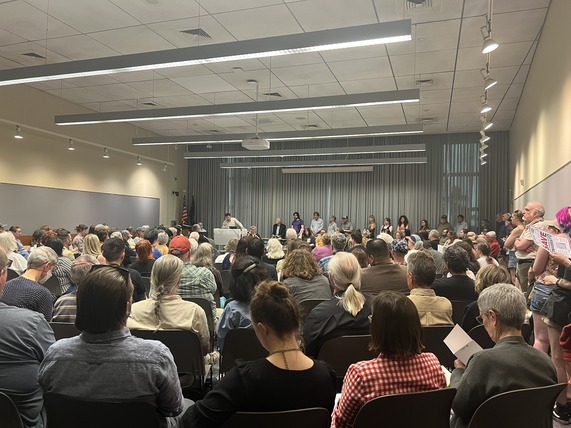
Last Wednesday evening I joined over two hundred people (with more overflowing to the sidewalk outside) at the Medford library for a Town Hall meeting that let a few dozen speakers air their grief and concerns about SOU’s unfolding financial woes.
This is a very big deal for countless people and businesses in Southern Oregon. I’ve read a pile of critiques and analyses in preparation for Legislative Days in June. As a member of the legislative Emergency Board, I’ll be voting on the proposal to approve a $15 million allocation to sustain SOU’s operations until the current biennium ends in June of next year. SOU’s Board of Trustees is charged with producing a game plan for survival before we release those funds. I’m confident that will happen.
You can find lots of the financial details and opinions about this crisis in recent news reports and online forums, so I won’t go there. What I want to do is share some of the thoughts that Wednesday nights speakers stirred in me about state government’s current capacity and financial health, and what that means for all of us going forward. The trigger was a point made by several speakers—students, faculty, worried members of the community. Their view was that this whole problem goes away if Salem just funds higher education at viable levels, as it did for most of the 20th Century. A couple of people urged the crowd to “harass” state legislators continuously until we "do the right thing.”
A few heads turned my way—I was the only state legislator in the big room. It wasn’t my proudest moment. I listened to speakers point out that thirty years ago, Oregon’s public colleges and universities were funded roughly 70% by the legislature and 30% by tuition and scholarships underwritten by private donors. Today those numbers are almost exactly reversed. Others accurately pointed out that Oregon now ranks about 46th among states in per-student funding of higher education.
I arrived in Salem in 2019 with higher education funding increases towards the top of my wish list. This is pretty basic stuff. We’re attached to the idea that we live in a fair country, a place where people born with no economic privilege can lift themselves into secure, prosperous lives. Great. But if those people can’t realistically access higher education, we’re mostly fooling ourselves with happy talk.
I wasn’t able to do anything that increased higher ed funding during my two terms in the Senate. We just haven’t found a way to recover from the fiscal earthquake of Measure 5, passed by Oregonians in 1990. One of its provisions limited local property taxes for public education to $5 per thousand dollars of property taxes, which produced much less money than schools needed to operate. The state stepped in to pick up the slack; in the current biennium, 2025-2027, state government is spending about $11.4 billion on K-12 education. That huge new expenditure had to come from other pockets of the state budget, including higher education.
While I don’t think more tax dollars would completely cure what ails SOU, it’s plainly true that we’re drastically underfunding higher education. That puts it in a bucket shared by other public services. We drastically underfund risk-reduction programs that could protect us from wildfire. We drastically underfund mental health and addiction treatment, giving short shrift to programs we know to be the best way to reduce homelessness and the attendant human suffering. We drastically underfund water infrastructure projects as ongoing drought makes life harder and harder in rural Oregon. We drastically underfund state police; our ratio of 11.7 officers per 10,000 residents is near the bottom of national rankings (New York has about 27 per 10,000; Louisiana is at about 31:10,000). We drastically underfund human services, from child protection to aid to seniors and the disabled; caseloads that most of our DHS staff have to manage are larger than you’ll find in other states. The result is burnout of some of our best state workers, who move on to less brutal ways to make a living elsewhere.
So however many powerful stories we hear from students struggling so hard to make it to graduation, you have to ignore a lot of reality to expect Salem to send SOU, or any of the other universities with similar problems, significantly more money anytime soon. Some students have weighed in to urge us to ramp up taxes on wealthy Oregonians and big businesses—the same testimony I’d probably offer right now if I were still in college.
But at the same time all this is happening, we’re seeing from leading Republicans the most organized and intense pushback in memory against new taxes, along with cries to roll back or eliminate some we have now. We have a case in point right before our eyes: Measure 120 on the ballot that may be sitting on your desk or kitchen table right now (and needs to reach your county clerk’s office by May 19; drop it, already postage paid, in the mail not later than May 15. After that, use one of the designated white drop-off boxes around the county).
Passing this measure would do what a very slim legislative majority tried to do last year when we passed HB 3991, $4.3 billion of funding over ten years to deal with our deteriorating transportation infrastructure after many years of neglect. With stunning speed, Republicans collected signatures of 250,000 Oregon voters who oppose the new taxes. That put Measure 120 on the ballot. Voting “yes” supports a few new taxes and fees to fund higher levels of maintenance, repair and road services; “no” puts us back to square one, with current gas tax revenues, dwindling as more EVs and higher efficiency gasoline vehicles come into service, far too little to keep our roads from deteriorating towards the point where we’d have to rip them out for total replacement.
I voted or this measure in the short session, because I’m tired of handing whopping bills to our kids for amenities that we’ve been enjoying; we’ve done far too much of that already. In your voter’s pamphlet you’ll find arguments from Oregonians who agree with me and some from others who definitely don’t. Many of those channel the old “waste, fraud and abuse” argument: there’s plenty of money in the system if ODOT would just spend it wisely. To my ears, that claim (which you’ll hear in conversations about most state services) is mostly a pleasant fairy tale designed to appeal to those who’d really rather not pay more for services we’re used to receiving, i.e., just about all of us. It doesn’t exactly treat us like grownups, people who are willing to grapple with realities like the drop in gas tax receipts, the global effects of a whole slew of inflationary forces and, perhaps more than anything, the persistent inclination of elected officials to kick essential costs down the road for those who come later to figure out, because tax increases don’t exactly improve the odds for re-election. In so many instances, we haven’t been paying as we go. But our kids and their kids will take care of it, right?
One footnote here: my impatience with the “waste, fraud and abuse” strategy isn’t a denial that government has to find better and leaner ways to deliver services. Those of us in authority haven’t done a good job of demanding that. Very few governments have. It’s politically difficult. Strict scrutiny on the cost efficiency of state services isn’t generally welcomed by the leadership of public employee unions, the primary funders of Democratic candidates.
There’s counter pressure from the other side of the aisle. Consideration of tax increases on Oregon residents and businesses that have prospered (another probable requirement for durable solutions) isn’t welcomed by major corporations and business associations that top the list of donors to Republican legislators.
If you want to zero in on the essential need for campaign finance reform, this gets you pretty close. This is Salem’s political architecture, and it has us chronically underfunding so much that we know we need to fund.
I actually believe that when you get beyond the rhetoric and strategic positioning, legislators who’ve been at this a while would agree with most of what I’ve written here. We all know we haven’t delivered on a bipartisan promise to repair Oregon’s fiscal structure after Measure 5 shattered it. We know why no other state in the country has adopted our income tax kicker: it eliminates the prudent business-like practice of investing extra revenue when times are good to fortify the system so as to survive the bad times. We all know that higher-than-inflation increases in the state budget have to do with a lot more than underperforming agencies. We all know that the wealth and opportunity gaps in Oregon and beyond—staggering today, and steadily widening—call for changing how we fund and deliver state services.
We’re clearly far from having all the answers. We’ll get closer if we find the fortitude to swap some of the political gamesmanship for more respect for Oregonians’ intelligence, and genuine concern for their futures. Let’s look for that impulse when we’re deciding who to send to Salem, this election year and beyond. That’s not a fast way to give institutions like SOU a stable funding base. It’s just the the only one likely to work.
Thanks, if you’ve made it this far, for scrolling all the way down. And please—take care through these perplexing times.
 Senator Jeff Golden, Oregon Senate District 3
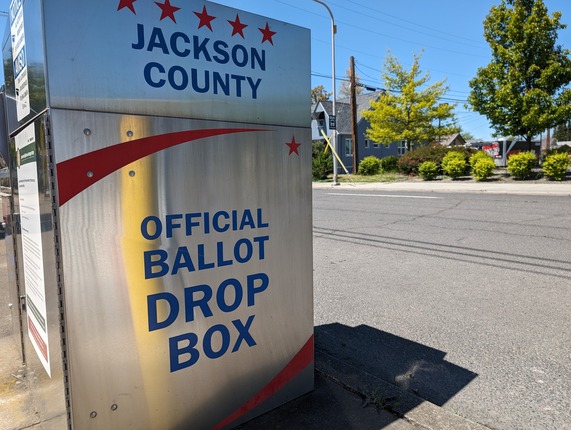
Your ballot needs to reach the county clerk’s office by May 19. Your ballot already has postage paid, so simply drop it in your mailbox. You can also drop it off at a designated box by 8pm, May 19th. To find your closest ballot box location, click here.
|