|
Replies to this message are sent to an unmonitored mailbox.
To contact me, please click here: Rep.JulieFahey@oregonlegislature.gov
Hello Friends,
Every even-numbered year, the Oregon Legislature meets for five weeks in a “short session” to address priority issues and, if needed, to rebalance the state’s two-year budget. This year’s very busy session wrapped on March 6.
Before the session began, we laid out an agenda that was extremely ambitious for a short session. I’m pleased to say that we accomplished what we set out to do and more—far more than many thought possible at the beginning of February.
We approached the session with three major goals: to make Oregon a more affordable place to live, with good jobs and thriving businesses; to insulate Oregonians from blatant overreaches of the Trump administration; and to rebalance our state budget after the federal budget bill (HR 1) significantly cut the resources we have available to us as a state.
In just five weeks, we passed legislation that delivered on every single one of those goals. I’m incredibly proud of the work we did to make Oregon stronger. Read on for highlights from the 2026 session.
Affordability continues to be one of the top concerns I hear about from voters—and this session, we made real progress to address those concerns. We expanded the Earned Income Tax Credit to put more money in the pockets of working Oregonians. We also worked to protect homebuyers, lower health care costs, and strengthen consumer protections. There’s more work to do, but this is real progress – see the links for more information about each of these bills.
In the months leading up to the short session, it was clear that Democrats in Oregon would need to take action to respond to what we’ve seen in the first year of the Trump administration, on everything from increasingly violent immigration enforcement tactics, to clean energy rollbacks, to attacks on Planned Parenthood. Oregon has long been a leader on immigrant rights, and this session, we stepped up to protect our immigrant communities – we strengthened civil rights protections, improved transparency for law enforcement in our state, protected personal data, and ensured people can seek health care without fear.
Immigrant Communities

-
Ensured immigrant and refugee communities help guide state immigration policy updates. (SB 1594)
-
Strengthened consumer protections by preventing the sale or sharing of personal data for immigration enforcement purposes. (SB 1587)
|
Law Enforcement

-
Required law enforcement—including federal immigration agents— to clearly display their agency and badge number and restricted when face coverings can be used. (HB 4138)
|
Healthcare

-
Required health insurers to cover vaccinations with no out-of-pocket costs for those who choose to immunize and authorizes the state to issue recommendations for covered vaccines. (SB 1598)
|
-
Expedited the siting process for renewable energy projects, so they can draw down the expiring federal tax credits as soon as possible, in advance of the deadlines the Trump administration has imposed. (HB 4031)
Last year, President Trump signed a budget bill that gave big tax breaks to billionaires and corporations, while cutting funding for people who rely on Medicaid and food assistance. Because Oregon’s tax code is automatically tied to the federal code, those changes hit our state budget too – reducing our available resources for the 2025-27 budget cycle by $900 million without any input from Oregonians or the legislature.
Unlike the federal government, which can run a deficit, the State of Oregon is required to balance our budget each biennium. To close the deficit created by the Trump budget bill, we knew we would need to take a balanced approach – both tightening agency budgets and closing some of the new tax loopholes, in order protect the essential services that Oregonians depend on.
Part of our plan to balance our budget included passing SB 1507, which will cut taxes for more than 200,000 working households, give a $25 million tax credit for businesses that create good-paying jobs in Oregon, and close some loopholes in the Trump budget that mostly benefit the wealthy and corporations. Passing SB 1507 allowed us to adopt a budget that protected our education budgets, as well as the key programs and services that Oregonians depend on. The remainder of our budget gap was closed by leaving some state agency positions unfilled and reducing or reallocating certain operational costs.
Our work to balance the 2025-27 budget in a responsible manner means that key areas like healthcare, education, childcare, and public safety will avoid cuts that would have impacted Oregon’s working families. This OPB article has more information about the legislature's budget work this session.
While we took action on affordability and on our short-term budget challenges, we know that growing our economy and creating new jobs is key to our state’s prosperity in the long term. This session, we made economic development an intentional focus – streamlining permitting processes to help attract private investments, supporting small business recovery, creating a new Jobs Tax Credit to promote job creation across the state, and building on Oregon's distinctive economic advantages in key industries.
Investments in Oregon Businesses
-
Created a new $1,000-per-job tax credit for businesses that increase net Oregon employment. (SB 1507)
-
Invested in “Industrial Symbiosis” pilot programs, which can turn one facility's waste stream into another's resource and help build more sustainable industrial ecosystems. (HB 4086)
-
Directed Business Oregon to evaluate and consolidate its 90+ grant, loan, and tax incentive programs to reduce administrative burdens and improve efficiency. (HB 4062)
-
Created a corporate income tax credit (up to $1 million annually for three years) for newly chartered Oregon banks to encourage new community banking institutions, especially in underserved areas. (HB 4052)
|
Permitting Reform
Regulatory Reform
-
Established clear rules allowing recreation providers to use liability waivers for ordinary negligence in inherently risky activities, while preserving liability for gross negligence, safety failures, and other prohibited areas. (SB 1517)
-
Supported family farms and rural communities by allowing farm stores to sell locally produced products, prepared foods, and beverages. The bill also allows agritourism activities and on-site kitchens licensed to serve farm-to-table meals. (HB 4153)
|
Oregon's diverse wildlife populations face threats from habitat loss, invasive species, poaching, and climate change, yet the state's wildlife conservation programs remain chronically underfunded. HB 4134 increases Oregon's state transient lodging tax (a tax paid for by people staying in hotels or other short-term lodging) from 1.5% to 2.75%, dedicating additional resources to the Recovering Oregon's Wildlife Fund Subaccount. The fund supports multiple conservation priorities, including the State Wildlife Action Plan, species recovery and management, wildlife stewardship, invasive species control, poaching prevention, and the Oregon Conservation Corps. This bipartisan bill was a major priority for environmental organizations this session and was championed by Rep. Ken Helm (D) and Rep. Mark Owens (R).
Expediting Credentialing for Behavioral Health Workers (HB 4083)
To help reduce administrative barriers for behavioral health workers, HB 4083 directs the Oregon Health Authority to establish a uniform electronic credentialing process for behavioral health providers. The bill also prevents coordinated care organizations from adding credentialing requirements and allows certain cross-license supervision among provider types.
Protecting Minors from AI Companion Chatbots (SB 1546)
As technology evolves, we must build guardrails that help keep people safe–especially children. SB 1546 requires AI companion platform operators to disclose to users when they are interacting with AI, develop protocols to detect and respond to users experiencing thoughts of self-harm by referring them to crisis services, and prohibit manipulation and inappropriate content for minors.
Balancing Tourism Promotion with Community Resilience Funding (HB 4148)
Local governments in Oregon are allowed to improse their own transient lodging tax – the majority of the funds generated from those local TLTs have historically been spent on tourism promotion. At the same time, rural communities that rely on tourism increasingly need these revenues to fund essential services. HB 4148 allows local governments to use a greater share of local transient lodging tax revenues to fund services, with transparency requirements and a future study to evaluate how the tax structure serves both tourism and community needs.
Improving School Attendance Data and Transparency (HB 4154)
Regular attendance at school is a key predictor of student success – and yet in the 2024-2025 school year, 34% of Oregon students were chronically absent. HB 4154 requires the Oregon Department of Education to publish quarterly attendance data, beginning in the 2026-2027 school year, providing communities with more frequent visibility into school attendance trends.
During the 2026 session, I’m proud to have secured funding for important priorities in our community, including:
-
$5 million for infrastructure on Clear Lake Rd. to grow strategic manufacturing industries and family-wage jobs in our community.
-
$1 million for the Eugene Airport to modernize airport infrastructure to support future growth, including improving operational efficiency, passenger experience, and energy performance.

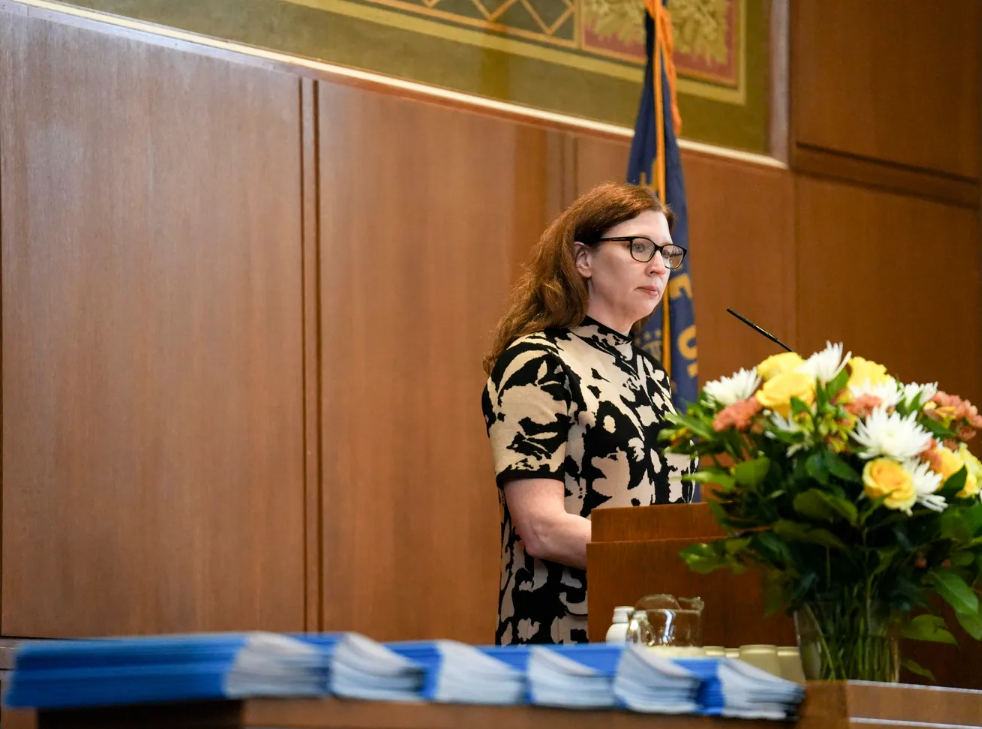
“We accomplished everything we set out to do and more — far more — than any of us thought was possible at the beginning of February," House Speaker Julie Fahey, D-Eugene, said Friday afternoon.
"[I’m] incredibly proud of the work we were able to accomplish to make Oregon stronger," Fahey said.
Whether in session or out, I encourage you to stay engaged and reach out for assistance navigating state government or to share your thoughts on the issues that matter most to you.
 Capitol Phone: 503-986-1414
Capitol Address: 900 Court St. NE, H-295, Salem, Oregon 97301
Email: Rep.JulieFahey@oregonlegislature.gov
Website: http://www.oregonlegislature.gov/fahey
|