|
Replies to this message are sent to an unmonitored mailbox.
To contact me, please click here: Rep.LisaFragala@oregonlegislature.gov
Dear Friends and Neighbors,
The 2026 legislative session flew by, ending on the evening of March 6th. It was a fast and intense 35 day short session and marks the end of my first term as House District 8’s State Representative. I’ve found the work both rewarding and challenging. Challenging because of the chaotic times we live in and because of attacks from the federal government on our economy, community, and democracy. Rewarding because I get to fight for this community and protect what my constituents communicate is important–priorities like civil rights, public education, our environment, and ensuring we have an economy that supports working families and local businesses.
Typically short sessions, like the one we just had, are geared toward technical legislative fixes, budget updates and simple policy ideas that can be vetted in a short time frame. Many of the bills introduced in the 2026 legislative session were just that. Yet, there was also a significant need to address a budget deficit while still protecting essential services and programs, and there was the moral obligation to respond to threats from the federal government. We set a high goal for this session–I’m proud of the work we accomplished on legislation that is meaningful for Oregonians and protects our community. This work is hard but it is also rewarding.
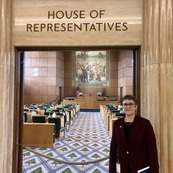
A special thank you to all of the constituents and advocates who visited me at the Capitol during this past session, who wrote or called my office, or who provided testimony in public hearings. Your voice makes a difference and we are stronger together. No matter the long hours or the challenging conversations, I feel fortunate to represent HD 8 and I’m deeply committed to making Oregon a better and more secure place for everyone to live. The following is an update on the Oregon 2026 legislative session.
|
Wins for Healthcare–Strengthening Access & Affordability
Many of this session's legislative healthcare wins were essential responses to the federal government and their on-going attacks on Oregonians’ bodily autonomy and access to medically necessary healthcare. The work to protect our state’s healthcare system from control by large corporations also continues to be a critical on-going effort. I’m committed to protecting healthcare in future sessions and ensuring all Oregonians have access to affordable and live saving care.
We still have more work to do in ensuring access to high quality, affordable healthcare in our state, but the following legislation will safeguard Oregonians until we successfully establish a universal healthcare system:
Patient and Provider Privacy–Stronger Shield Law (HB 4088)
This bill, which I personally carried, strengthens Oregon’s Shield Law and protects healthcare providers and patients receiving care for reproductive and gender affirming healthcare.
-
Why it Matters: Oregon has long been a safe haven for individuals seeking access to reproductive and gender affirming care. However, attacks by the current federal administration, and other state governments, on doctors and patients has exposed gaps in Oregon’s Shield Law. HB 4088 strengthens this law to ensure safe and continued access to these medically necessary forms of healthcare.
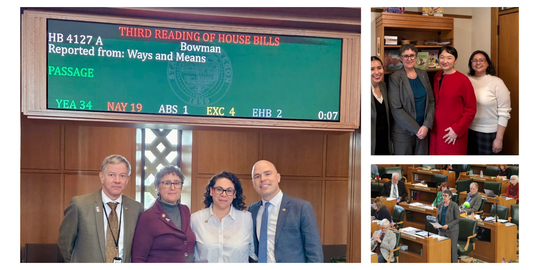
 Funding for Planned Parenthood & Reproductive Care (HB 4127)
This bill allows the Oregon Health Authority (OHA) to adopt a payment mechanism to pay Planned Parenthood for services provided to Medicaid patients. Last summer the federal administration prohibited “specific healthcare entities” from receiving federal dollars as part of HR-1. This was a direct attack on Planned Parenthood even though the Hyde Amendment already prohibits federal funds to pay for abortions.
-
Why it Matters: This legislation protects access to affordable, comprehensive healthcare by ensuring patients can continue receiving services without political interference. Planned Parenthood health centers across our state provide thousands of Oregonians preventative screenings for cancer, contraception, treatments for STDs, and general reproductive healthcare. This bill helps keep essential healthcare available and stable for Oregonians who rely on it every day.
 Low Cost Cervical Cancer Screenings (SB 1527)
Current insurance law makes initial screenings for cervical cancer cost-free, but without this legislation, additional tests often require co-pays or full payment. Now all cervical cancer exams, testing, or follow-up will be fully covered by insurance plans, with no deductibles, co-pays or fees.
-
Why it Matters: Oregon patients are missing opportunities for early detection and intervention to treat a common and deadly cancer. This legislation will help to identify cervical cancer early, ensure access to care, increase the affordability of care, and save lives.
Protecting the Dying Act (SB 1575)
Patients enter hospice at the end of their lives when they cannot advocate for themselves. This legislation strengthens Oregon’s hospice services by preventing bad actors from taking advantage of patients. It strengthens vetting for hospice licenses and protects the integrity of the licensing process.
-
Why it Matters: Mega-corporations are increasingly buying up community hospices. Corporate owners maximize profits by reducing staff and services by spending less on patient care. SB 1575 protects vulnerable patients and ensures they get the quality care they deserve at the end of their lives.
Wins for Education–Ensuring Students Thrive
I was honored to serve on the House Education Committee in this last session. This committee focuses on both K-12 and Higher Education policy decisions. Ensuring Oregon has quality education systems for students to thrive is a top priority for me. Our education system is a critical pathway for people to be successful in their lives.
In the last session, I played an active role in balancing the budget and advocating for the impacts on education funding to be limited. We were successful in closing the budget gap with only limited impacts on agencies. K-12 school districts, community colleges, and universities did not see impacts to general fund allocations which is important for the stability of these institutions. The affordability of higher education also continues to be a significant concern of mine and something I’m hoping we can address in upcoming sessions.
I’m proud to have worked with other legislators on passage of the following bills for strengthening Oregon’s education systems for students and families:
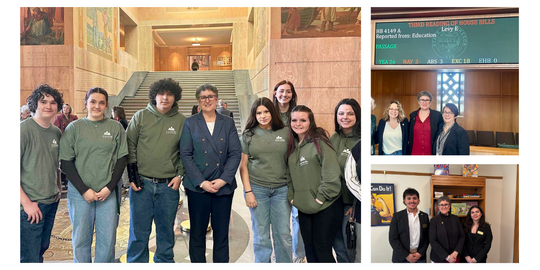
Support for Students Experiencing Homelessness (HB 4149)
This measure safeguards and affirms Oregon school districts’ longstanding protections for students experiencing homelessness and ensures these vulnerable students can enroll and fully participate in school without facing systemic barriers.
-
Why it Matters: The federal McKinney-Vento Homeless Assistance Act is vulnerable to federal attacks and funding cuts. This uncertainty has underscored the need for state-level protections. School stability improves academic outcomes, graduation rates and long-term wellbeing for students experiencing housing instability. HB 4149 is a good example of how codifying federal regulations is necessary as we confront roll backs of critical protections at the federal level.
Addressing Chronic Absenteeism (HB 4154)
This bill increases transparency for student attendance data statewide and increases the accessibility of information for districts and the frequency of reporting for up to date information.
-
Why it Matters: In my classroom, I saw that when students are in school consistently, they are more successful. Regular attendance is a foundation for learning and we can’t support students to thrive if they aren’t in school. Access to timely and accessible information will help districts create supportive interventions for families earlier and help to ensure students can be successful . placeholder text.
Oregon Higher Education Assessment (HB 4124)
This legislation directs the Higher Education Coordinating Commission (HECC) to conduct a study of our state’s higher education system and to identify ideas for safeguarding a sustainable and resilient higher ed system in Oregon.
-
Why it Matters: Demographic and enrollment trends, along with a highly competitive higher education landscape, are threatening the sustainability and affordability of Oregon’s public universities and community colleges. We need to identify the mechanisms and strategies that will help keep our higher education system accessible and affordable for future generations of Oregon students.
Protecting Education Access for All Students (SB 1538)
By explicitly adding immigration and citizenship status to the list of protected categories in Oregon’s nondiscrimination statutes, we successfully strengthened access to our state education system for all families. This law builds on the promise that all children are entitled to a public education and represents another way in which we are responding to threats from the federal government.
-
Why it Matters: This legislation creates a safe learning environment where students are able to focus on their education. As a former elementary teacher, I know how important it is that our students feel safe and supported in their learning environments. This update provides clarity to schools and protects against federal overreach.
Wins for Families–Expanding Housing Security
Affordable housing continues to be a priority for me as a state representative and I’m honored to serve on the House Committee for Housing and Homelessness. Throughout the last legislative session this committee took steps to guarantee our state is a place where diverse and affordable housing types are available to everyone. Significant policy efforts for addressing homelessness and access to housing were hampered by Oregon’s revenue and budget challenges, yet we still found opportunities to make investments and to protect Oregonians from venture capital impacting first time homebuyers.
The following bills offer a snapshot of what was accomplished and also represent positive momentum on ensuring we have access to affordable housing in our state:
HomeBuyers Before Billionaires (HB 4128)
This bill creates restrictions on the purchase of single-family residences by large corporate real estate investors. It requires that the residence is publicly listed for sale for at least three months before an offer can be made by multinational investors. This allows Oregon families the first shot at purchasing a home.
-
Why it Matters: National data demonstrates that not only are working families losing out on opportunities to purchase homes, but in many cities corporate real estate market involvement is also driving up rental prices. HB 4128 guarantees single-family homes are prioritized for Oregon families, not multinational investors. Oregonians should have the opportunity to purchase a home without competition from massive out-of-state corporations.
Accessible Housing Act (SB 1576)
This bill expands housing opportunities that meet the needs of people with disabilities and older adults. It requires that 10% of new housing built with state funds meets accessibility standards. It will require Oregon to build more wheel-chair accessible housing for an often overlooked community.
-
Why it Matters: There is a critical shortage of accessible housing for people with disabilities and older adults and the need for accessible housing is growing as our population ages. This shortage leaves thousands of Oregonians without access to housing options that meet their basic needs. To address Oregon’s housing crisis we must build diverse types of housing that meet the needs of all community members. Accessible housing is also about dignity and autonomy.
Creating & Preserving Affordable Housing (HB 4036)
This committee bill establishes the Housing Opportunity, Longevity, and Durability (HOLD) Fund and invests $100 million to create and preserve affordable housing. This is a bond-financed program to preserve critical at risk affordable housing in our state. Funding for this program is tied to an additional $25 million for housing preservation in SB 5702.
-
Why it Matters: This legislation focuses on maintaining existing housing stock as an alternative to building new units, particularly for vulnerable tenants in manufactured homes or expiring subsidized units. Preserving Oregon’s existing supply of affordable housing is an efficient and cost effective way to ensure more housing units are available. Preservation is also essential to keeping tenants safe, healthy and in stable housing.
Incentivizing Local Housing Production Strategies (HB 4108)
This personal bill creates a voluntary, owner-initiated annexation pathway for qualifying non-contiguous residential property. This is legislation I worked on closely with the City of Eugene and Better Housing Together to expand opportunities for housing production in our community
-
Why it Matters: HB 4108 creates an opportunity for property owners to annex their property into the City of Eugene and utilizes the infrastructure our community already has in place. It also opens a pathway for cities to increase middle housing supply through the use of incentives without additional costs for infrastructure development. This bill will allow residents to have better access to city services and to participate in local elections for both mayor & city council if this is important to them.
Wins for Our Community–Protecting Our Neighbors
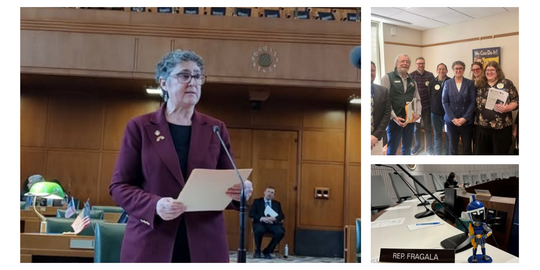
Over the last six weeks, I’ve written frequently about legislative efforts to push-back against threats from the federal government and protect against attacks on our immigrant neighbors. Faced with the harm that federal agents have been inflicting on our communities, I’m proud to have led on and advocated for the success of Oregon’s 2026 Legislative Session Immigrant Justice Package. This work has been a top priority for me, and similar to legislation to reduce the cost of living for every day Oregonians, the work to protect our immigrant neighbors has stretched across many policy areas–including our justice system, healthcare, housing, and both K-12 and Higher education.
This series of bills will ensure we support immigrant and refugee communities and defend basic civil rights. I’m committed to continuing these efforts as long as it takes to ensure all Oregonians are safe:
The Safeguarding Students & Families Act (HB 4079)
HB 4079 implements ICE notifications in Oregon education systems, including both K-12 and higher education. It protects families, students, and educators by requiring K-12 schools, community colleges, and universities to notify parents and students when ICE has been confirmed on school campuses.
-
Why it Matters: This legislation establishes clear expectations around transparency, communication and responses so that schools are accountable in moments when ICE shows up in Oregon’s education settings. Families and students will receive information from a trusted organization and can make informed decisions about their family’s safety and well being.
Protecting Immigrant Tenants (HB 4123)
Landlords routinely collect highly sensitive personal information from tenants during the rental application process. This information can include Social Security numbers, immigration or citizenship status, and other protected class information. This legislation will fill a gap in Oregon’s Landlord Tenant Law to prohibit landlords from sharing or disclosing sensitive information without consent.
-
Why it Matters: Tenants deserve to feel safe in their homes and confident that their personal information will not be misused or disclosed without explicit consent. It also prevents intimidation or coercion of immigrant tenants in a time when this community is under attack.
Immigrant Anti-Discrimination Protections (HB 4111)
This bill strengthens anti-discrimination protections based on citizenship status and prohibits law enforcement officers from profiling a person based on immigration status. It also prohibits an employer from taking an adverse action against an employee based on their efforts to update immigration status paperwork.
-
Why it Matters: This bill increases legal protections for immigrants so they can work, access the legal system, and participate in their workplace and communities without fear. By preventing immigration status from being used to intimidate Oregonians, this law will ultimately strengthen access to justice for everyone.
Law Enforcement Accountability & Visibility Act (HB 4138)
LEAVA increases visibility, transparency, and accountability in law enforcement activities by requiring officers to clearly identify themselves. It also limits the use of masking practices. HB 4138 enables a person to seek a court order against an agency for violations to this state law.
-
Why it Matters: This legislation responds directly to the threats Oregon communities are facing from federal immigration agents by requiring all law enforcement actions in Oregon are transparent, visible, and accountable. It establishes guardrails for masking and officer identification that protect Oregonians from federal overreach.
Defend the Door Act (HB 4114)
This legislation creates a civil cause of action against individuals who enter certain properties without a warrant or legal exception. It empowers Oregonians to sue federal agents for violating their constitutional rights when there is an intrusion or violation of their home, as well as other specifically identified properties.
-
Why it Matters: HB 4114 provides a clear, legally defensible pathway to address situations where federal law enforcement actions exceed lawful authority and threaten Oregonians. It reinforces long-standing requirements around warrants and due process while giving Oregonians clear legal authority to fight back against unlawful entry. It is an important step in protecting the civil rights of all community members and protecting against threats to our immigrant neighbors.
Immigrant Data Privacy (SB 1594)
This bill prohibits public bodies from disclosing personally identifiable information to data brokers if that information will be shared with federal immigration enforcement.
-
Why it Matters: SB 1594 strengthens statewide standards for protecting data on immigrant and refugee Oregonians. It seeks to ensure that public agencies are not contributing to immigration enforcement through third-party data sharing. It strengthens and increases the Sanctuary State protections Oregon already has in place.
Healthcare Without Fear Act (SB 1570)
This legislation restricts the presence of federal immigration enforcement (ICE) in hospitals, protects patient data, and prevents retaliation against employees sharing immigration rights info. It requires hospitals to have policies and procedures in place that address how the hospital will respond if federal law enforcement agents enter the hospital and allows them to designate which areas of the hospital are not open to the public.
-
Why it Matters: Earlier this year, an entire family was taken into custody by federal law enforcement agents when simply trying to seek medical care for their child at a Portland hospital. Oregonians should be able to visit a hospital without fear of immigration enforcement. Healthcare spaces must remain safe, trusted environments where people can seek care without fear or confusion. This policy upholds patients rights and protects healthcare providers.
Wins for the Environment–Protecting Our Planet
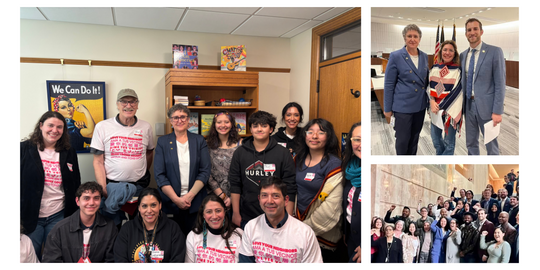
The 2026 session had successful legislation designed to protect our environment and ensure Oregonians continue to have access to beautiful outdoor spaces. This is one reason so many people choose to call our state home and why so many people visit here.
One facet of legislative work that is important to mention, is that it’s not only what laws we pass successfully that matter, but it’s also what bills we prevent from becoming law that is important. This past session included several pieces of legislation that would have damaged Oregon’s water and forest resources, in addition to allowing the development of valuable agricultural land for data centers. These bills ultimately did not pass and demonstrate that sometimes the work we do to protect our state includes what we stop from happening.
Protecting our environment and passing transformative climate policy are priorities for me in future legislative sessions. I am thrilled to have received a 100% rating from the Oregon League of Conservation Voters for both the 2025 & 2026 legislative sessions. The following are a few highlights of what we did pass successfully to protect our state’s environment in the 2026 legislative session:
1.25% for Wildlife (HB 4134)
This landmark legislation set a record for the number of emails with constituent support sent to my office. It generates crucial funding for preservation of Oregon’s wild places and protecting the animals that live there. It will enable implementation of the State Wildlife Action Plan (SWAP) by increasing the state lodging tax by 1.25% ($1.88 on a $150/night stay).
-
Why it Matters: The SWAP includes strategies to preserve and restore more than 300 species that face extinction due to habitat loss, pollution and invasive species in Oregon. It also dedicates resources to anti-poaching, wildlife connectivity, wildlife rehabilitation centers and invasive species prevention. These resources can also be utilized to support wildfire risk reduction and natural resource workforce development. It is a landmark decision to invest in protecting Oregon’s wild and natural places, and an investment in the top reason tourists visit our state.
Oregon Battery Producer Responsibility Program (HB 4144)
This bill creates a statewide battery recycling program, funded by battery producers, with the goal of reducing fires by properly discarding lithium batteries. It will also improve access to recycling systems for Oregonians who will have access to a battery collection site within 15 miles of their home.
-
Why it Matters: During a visit to Short Mountain, our local landfill, I heard about significant increases in fires related to lithium batteries or lithium battery powered products. This is a huge concern, since landfill fires can be difficult to extinguish once started and can be devastating for local communities. This legislation will decrease the threat of battery fires at landfills or waste processing centers, provide recycling resources for local governments, and help recover valuable materials contained in batteries.
Public Lands Promise (SB 1590)
This measure prohibits state government, local government and special government bodies from assisting the federal government in selling or transferring federal lands until January 2, 2032.
-
Why it Matters: Approximately 53% of Oregon is federal public land. SB 1590 ensures local and state governments in Oregon will not collaborate with federal efforts to sell off public lands and privatize national parks or monuments. It helps safeguard public lands if the federal government tries to sell them off but puts no restrictions on Tribes, the original stewards of Oregon lands.
Wins for Our State–Improving Affordability
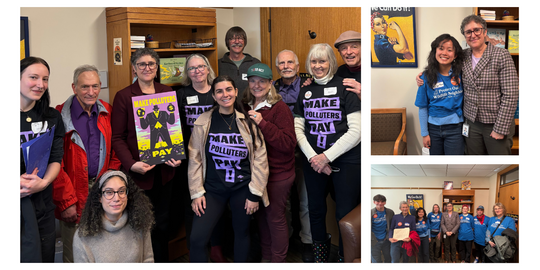
I’ve heard from community members that one of their primary concerns is lowering the cost of living in our state. I also know many families and seniors on fixed incomes are making tough financial decisions to make ends meet and that small business owners are facing increased costs due to tariff driven inflation. No one should have to decide between paying rent and putting food on the table. I’m committed to building an economy that benefits working families and small businesses in Oregon.
House Democrats started the 2026 legislative session thinking about ways to lower the cost of living for every day Oregonians as a top legislative priority. We successfully passed a comprehensive affordability package to put working families first, support local businesses, and protect more than $300 million in funding for schools, healthcare, food security programs, and public safety. Many of the successful bills I mentioned earlier in this newsletter focus on affordability efforts, such as reducing financial barriers for families trying to access healthcare and housing.
Here are some examples of legislation from the 2026 session that focused on making affordability a priority in our state:
Expanding the Earned Income Tax Credit (SB 1507)
This legislation disconnects Oregon from portions of the federal tax code in HR-1, federal legislation that provided significant tax breaks to billionaires and large corporations. SB 1507 preserves important tax breaks for working families and delivers the largest expansion in state history for the Earned Income Tax Credit (EITC). It also creates a new tax credit for businesses that creates new job opportunities in Oregon.
-
Why it Matters: The Earned Income Tax Credit lowers taxes for low and moderate-income families in Oregon and puts money back into the pockets of working families. This historic expansion will lower taxes for over 200,000 families in our state. I was thrilled to be able to take leadership in negotiations between the Senate and House on this legislation.
Eliminating Predatory Lending Loopholes (HB 4116)
Current legislation allowed lenders to partner with out-of-state banks to sidestep Oregon’s 36% consumer interest rate cap and to charge interest rates of up to 225%. HB 4116 closes the loophole which gave a pass to predatory lenders, addresses the systemic issue of high-interest loans, and reaffirms Oregon’s longstanding 36% ceiling on consumer loans.
-
Why it Matters: When financial emergencies arise, Oregonians are too often pushed toward predatory online loan products that promise relief but ultimately cause long-term difficulties. This bill does not prohibit access to credit, but rather eliminates predatory practices that keep consumers in debt and guarantees that loans made to Oregonians are transparent and consistent with Oregon law. Out-of-state digital loan sharks will no longer be able to prey on vulnerable customers with triple-digit interest rates
Cracking Down On Speculative Ticket Scams (HB4024)
HB 4024 expands consumer protections in the arts and entertainment industries by banning unscrupulous practices that put fans at risk of arriving at a venue only to learn that their ticket never existed. It prohibits ticket sellers from reselling tickets unless they actually have possession of the ticket or explicit authorization to obtain the ticket.
-
Why it Matters: I’ve heard numerous stories from community members and the local entertainment industry who have struggled with this pervasive issue in the live event marketplace. This bill helps put a stop to fraudulent practices and inflated prices, protecting both consumers and local businesses in the arts and entertainment industry. Oregonians should have the peace of mind that when they spend their money, they won’t be subjected to predatory and deceptive practices.
More on our significant consumer justice accomplishments here.
The 2026 Budget Rebalance
Balancing the 2026 Budget
In previous newsletters, I’ve discussed the significant budget challenges we faced in this session and the constitutional responsibility to balance our state budget. Oregon faced a nearly $800 million budget deficit in the 2026 session due to the federal budget bill, HR-1 or the “Big Ugly Bill.” We did identify solutions for a balanced budget for the time being, but we will still face challenges in the next biennium.
I mentioned Senate Bill 1507 earlier in this newsletter and the important ways that it increases Oregon’s EITC for working families. SB 1507 also closes tax loopholes for billionaires and large out-of-state corporations by selectively disconnecting from HR-1. Every dollar we disconnected from the federal budget bill meant additional revenue to help balance Oregon’s budget in the 2026 session. This allowed us to decrease the impact of budget cuts on the valuable services and programs Oregonians rely upon. Outcomes could have been much worse.
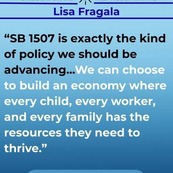
It was a big responsibility, but I was honored to take a leadership role in identifying the right combination of strategies in the federal disconnect bill. I was also a strong voice for protecting funding for education, healthcare, and other essential programs. Senate Bill 1507 successfully passed along party lines. Fortunately, we were able to take critical steps this year to protect the programs and services we know community members rely upon; however, future bienniums will likely be filled with difficult revenue and spending choices as we face further cuts at the federal level to Medicaid and SNAP benefits. I will continue to advocate for ensuring we don’t balance the budget on the backs of working families.
|
Addressing ODOT’s Budget Challenges
This session, it was necessary to fix the Oregon Department of Transportation budget and stabilize funding for services statewide in this budget cycle. I remain deeply committed to safe and resilient transportation systems in Oregon. In order to maintain infrastructure and modernize our transportation systems, we require stable, sustainable, and diversified funding for transportation. We also need strong accountable measures in place for programs and funding.
The ODOT budget rebalance was the result of a bipartisan process. It pauses specific transportation projects across Oregon and temporarily re-allocates this funding to necessary operations and maintenance. There is no question that the funding decisions we made were necessary but they will also be a painful compromise for communities across our state. I worry that these cuts will reduce ODOT’s capacity to both maintain our highways & bridges and ensure Oregonians have a safe transportation system.
It is important to note this is a temporary solution for the ODOT Budget. It does not provide any changes to the structural, long-term imbalance between costs and resources in this agency. Absent a sustainable funding solution, or other strategies, ODOT will face another fiscal crisis in the next biennium. I am committed to being part of identifying lasting solutions that stabilize, improve, and modernize Oregon's transportation system. |
|
 |
Back in Eugene and Already Busy!
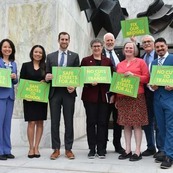
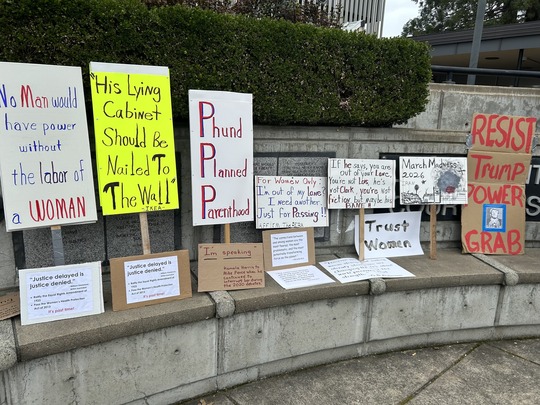
Now that the session is over, I am excited to be back in Eugene engaging with our community and the many wonderful local organizations we have. Last weekend, I was honored to speak on International Women’s Day and to stand in solidarity with immigrant women, gender diverse women, and all women confronting oppression or discrimination.
Women have been central to social justice movements and to holding communities together throughout history. It is important to remember, recognize, learn from, and celebrate women’s centrality in these efforts. It also informs my work as a state representative.
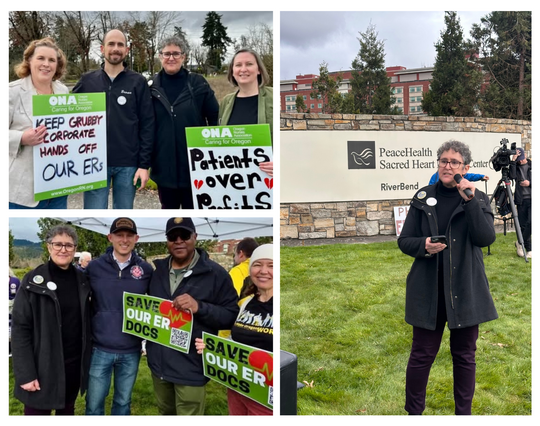
 Late last week, I also attended and spoke at a rally in support of the Eugene Emergency Physicians (EEP) at PeaceHealth Riverbend Hospital. I continue to closely track the situation at PeaceHealth and their decision to discontinue services with EEP. We know takeovers of local healthcare services by large out-of-state corporations result in diminished access to care, a decrease in the quality of healthcare, and increased costs. This is not what we want for Eugene and Springfield, or the larger region the hospital serves. Together with other elected leaders, I’ve been vocal about the need for PeaceHealth to reverse their decision. We are also in communication with the Oregon Health Authority (OHA) about our community’s opposition to this change. I will continue to stand up for local, physician controlled healthcare and plan to stay engaged with this issue as the situation develops.
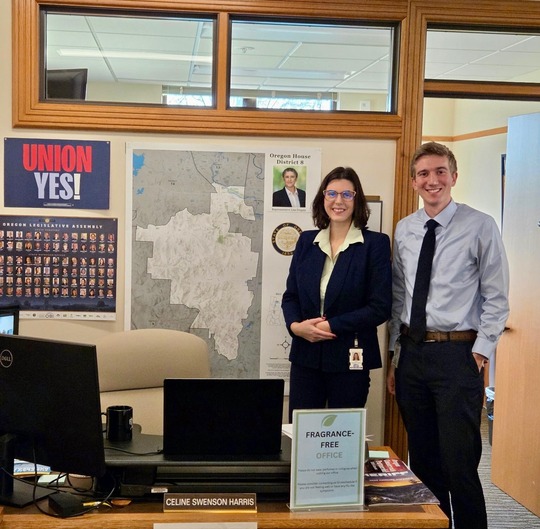
I am incredibly proud of the work my office did this past session and want to take a moment to appreciate my staff, Celine and Mathias, for all of their efforts on behalf of House District 8. My team worked hard to stay responsive to constituents and to help with casework requests, such as unemployment, paid leave, or agency challenges. They keep our office running smoothly amidst tight timelines, and are essential partners in the policy work I do.
I’m also honored to work with many wonderful Representatives, Senators, and stakeholder groups whose passion and commitment to the legislative process make positive outcomes possible. These collaborative relationships increase the capacity we all have for positive change and ensure Oregon continues to be a great place to live, work and play.
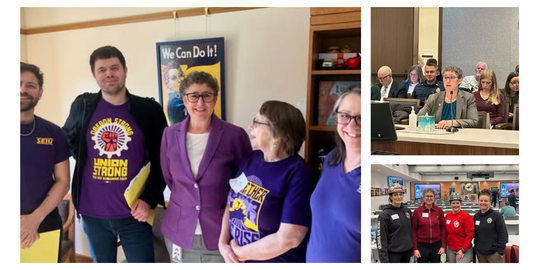
Thank you again to everyone who reached out, testified, and made your voices heard during this session. Your engagement is an essential part of the legislative process. It is truly an honor to represent you in Salem. When I sit at my desk in the Capitol House Chamber, I’m reminded of Oregon’s history and the responsibility I have to serve our community well.
As always, please reach out if you have questions, ideas, or concerns about issues affecting our community. We are stronger together!
Sincerely,
Representative Lisa Fragala
  email: Rep.LisaFragala@oregonlegislature.gov I phone: 503-986-1408
address: 900 Court St NE, H-484, Salem, OR, 97301
website: https://www.oregonlegislature.gov/fragala
|