|
Replies to this message are sent to an unmonitored mailbox.
To contact me, please click here: Rep.PamMarsh@oregonlegislature.gov
March 11, 2026
Dear friends and neighbors,
The 2026 short session flew by, ending on Friday, March 6. I’ve been a state representative for nearly ten years, and I’ve found that our state workload increases exponentially in times when the federal government is in tumult. That theory was confirmed over the past five weeks, as legislators grappled with a mountain of must-dos.
The good news is that we checked off nearly all of the items on the pre-session agenda. A few highlights:
- We fixed a billion-dollar budget deficit with a combination of tax changes, program cuts, and conservative financial management. The adjusted budget avoids substantive cuts to K-12, higher education, and safety net programs.
- In response to concerns over abusive immigration enforcement, we passed a package of bills to hold federal agents accountable and to protect Oregonians.
- On the housing front, we approved legislation assuring tenants that sensitive personal information will be kept confidential by their landlords, and we ensured that tenants who don’t use technology can still apply for an apartment or pay their rent by other means. We also approved $100 million in bonding for new affordable rental developments and for preservation and modernization of existing affordable projects.
- We passed the Governor’s prosperity initiative to invest in industrial-ready land, expedite project permitting, and expand local incentives for business expansion or relocation.
- We drafted a budget to keep the Oregon Department of Transportation functioning while we figure out stable long-term funding.
Perhaps the biggest news for our region is the allocation of $15 million in emergency funding to stabilize Southern Oregon University. In a challenging budget year, the allocation represents a huge commitment from the Governor and legislative leaders in SOU’s future. However, this funding comes with a directive to the university to assess long term fiscal sustainability. We know that there is difficult work ahead. I have full confidence in President Bailey, the Board of Trustees, and the university community as we take on this assignment.
As I was driving home from Salem on the last day of the session, I started thinking about the issues we need to take on in 2027. Many of those are known, and others will emerge as community needs become evident. I look forward to working with many of you in the coming months as we develop legislative answers to the big—even existential—questions facing us.
My best,
 State Representative
Oregon House District 5 - Southern Jackson County
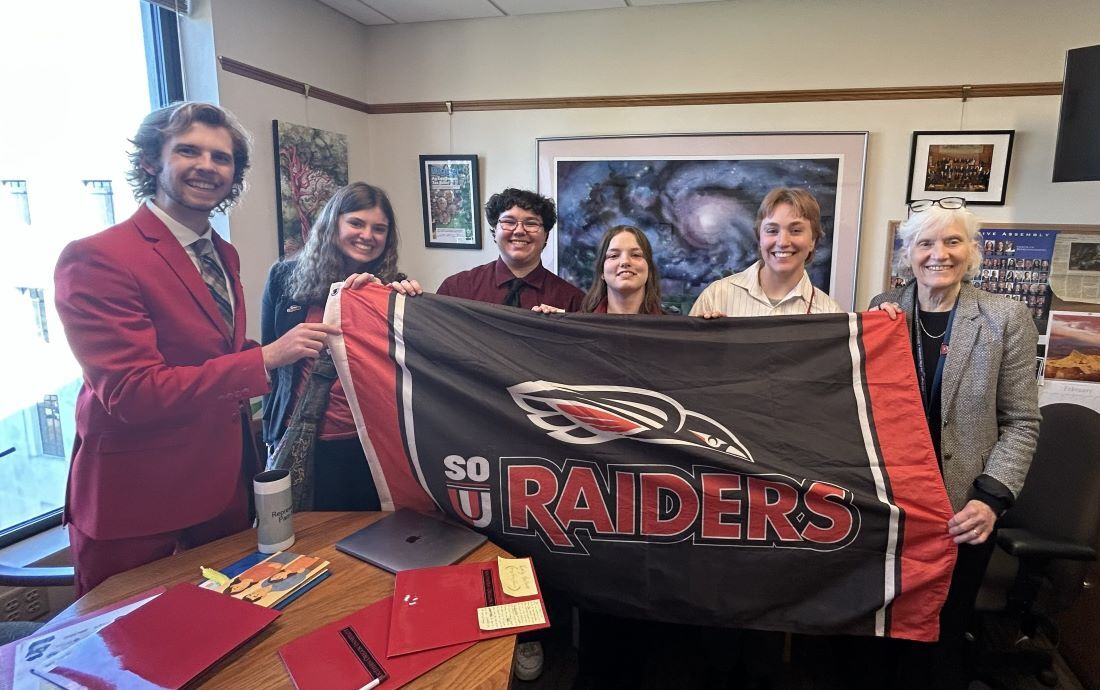
It was wonderful to visit with SOU Raiders in my office and discuss priorities for supporting student success.
Here are a few of the many bills introduced this session with wide-ranging benefits for Oregonians:

HB 4124 | Initiates an Oregon Higher Education Assessment
Demographic and enrollment trends, along with a highly competitive landscape, threaten the financial and enrollment sustainability of Oregon’s public universities and colleges. HB 4124, one of my two short session bills, requires the Higher Education Coordinating Commission (HECC) to conduct a study of Oregon’s higher education system and to develop recommendations for a sustainable framework. The HECC will evaluate the distinct objectives and missions of post-secondary institutions and opportunities for collaboration, restructuring, or integration within the system.
|

HB 4123 | Establishes Landlord Confidentiality/Tenant Protections
Tenants share a broad range of private information with their landlords and property managers, including financial and banking data, social security or ITIN numbers, immigration status, status as a victim of domestic or sexual violence, disability status, driver license number, and more. Tenants need to know that private information is secure, and landlords need legal clarity to protect them from liability.
HB 4123 (also one of my two personal bills this session) creates critical privacy protections by legislating that personally identifying, financially sensitive, and other private information may not be disclosed without the written consent of the tenant, unless in response to a court order, with exceptions, including for credit or background checks or for routine management needs. This bill passed with broad bipartisan support.
|

Immigrant Justice Package
My colleagues in the Democratic caucus prioritized a package of legislation to protect immigrant communities, restrict ICE actions, and strengthen Oregon’s sanctuary laws. I am proud of Oregon's response to the intensification of federal immigration enforcement.
- HB 4079 | Safeguarding Students and Families
- HB 4111 | Anti-Discrimination Protections
- HB 4114 | Protect Your Door Act
- HB 4138 | LEAVA: Law Enforcement Accountability and Visibility Act
- SB 1538 | Protect Immigrant Students’ Right to Attend Public School
- SB 1570 | Healthcare Without Fear Act
- SB 1587 | Stop Data Brokers from Sharing Our Info
|

HB 4134 | Creates "1% for Wildlife" Funding
This landmark legislation, which garnered an enormous volume of support from my constituents, generates crucial resources for Oregon's wildlife. It will enable implementation of the State Wildlife Action Plan (SWAP) by increasing the state lodging tax by 1.25% ($1.88 on a $150/night stay). The SWAP includes strategies to preserve and restore more than 300 species that face extinction due to habitat loss, pollution, and invasive species. HB 4134 also dedicates resources to anti-poaching efforts, wildlife connectivity, wildlife rehabilitation centers, and invasive species prevention. It includes stable funding for Oregon’s wolf management compensation and proactive trust fund, and supports wildfire risk reduction and natural resource workforce development.
After ten years of hard work by Representative Ken Helm and wildlife advocates statewide, the bill passed with bipartisan support in the House and Senate, and it will benefit generations of wildlife and humans in the decades ahead.
|

SB 1590 | Safeguards Public Lands
As part of Oregon’s legislative defense against Trump administration overreach, SB 1590 pushes back on federal efforts to privatize national parks, monuments and other public lands. The bill bars state and local agencies from cooperating with the federal government if it tries to sell off public property managed by the Bureau of Land Management, U.S. Fish and Wildlife Service, U.S. Forest Service, or the National Park Service.
Approximately 53 percent of our state is federal public land, comprising over half of the landscape and natural places we treasure. Thanks to the efforts of Senator Anthony Broadman and support from colleagues in both chambers, this bill takes a balanced approach and ensures our government can continue to protect Oregon's interests in federal properties.
|

HB 4024 | Bans Speculative Ticket Sales
During my work on the Fan Fairness & Transparency Act in 2025 (HB 3167, which banned deceptive marketing of ticket sales in Oregon), I heard countless stories from people across the state who have been duped by a pervasive issue in the live event marketplace—the sale of speculative tickets that are offered before the seller actually possesses them. HB 4024 expands consumer protections in the arts and entertainment industry by banning this unscrupulous practice that puts fans at risk of arriving at a venue only to discover their ticket never existed or was never secured by the reseller.
I am especially proud that both HB 4024 and HB 3167 were spearheaded by Britt Music & Arts Festival, our beloved—and small but mighty!—venue located in Jacksonville. Drawing on firsthand experience, Britt helped elevate the voices of independent venues and consumers across the state, demonstrating that organizations rooted in local communities can also shape meaningful statewide policy.
|

SB 1546 | Creates Protections for Chatbot Users
This measure establishes safeguards for users of rapidly developing technology by requiring AI operators to clearly disclose when a user is interacting with AI rather than a human. It also mandates the implementation of safety protocols designed to prevent AI from encouraging or reinforcing suicidal or self-harm ideations, including requirements to interrupt conversations if that risk is detected. Introduced by Senator Lisa Reynolds, a pediatrician, SB 1546 requires special disclosures and safeguards for minors, and public disclosure of minimum safety standard protocols. These consumer protections will make AI companies more transparent and accountable for user safety.
|

HB 4149 | Codifies McKinney-Vento Act into State Law
When a child’s housing situation is unstable, school can be one of their few sources of consistency and support. The federal McKinney-Vento program provides important protections for students who are experiencing homelessness, including the ability to remain in their school of origin.
Due to uncertainties at the federal level, there were concerns that this program might be dismantled. To protect Oregon’s most vulnerable students, including over 1,600 students in Jackson County who are covered by McKinney-Vento, HB 4149 establishes protections for homeless students in state statute. Staff at the Medford-based Maslow Project were the first to call out the need for state level protections. I am grateful to Representative Emerson Levy for leading the work on this bill, and I was pleased to sign on as a co-chief sponsor.
|

HB 4154 | Tackles Chronic Absenteeism
Oregon has one of the highest chronic absenteeism rates in the nation, with about one-third of students missing at least 10 percent of the school year. The Oregon Department of Education currently reports attendance and absenteeism rates once a year, in the fall, for the previous school year. HB 4154 requires school districts and the department to report and publish attendance data four times a year, starting this fall. This information will provide state and local administrators an opportunity to intervene with strategies that keep students in school, and before they fall through the cracks.
Sponsored by Representative Lamar Wise, passage of this bill honors the legacy of the late Representative Hòa Nguyễn, an educator and champion for strengthening student attendance systems.
|

HB 4127 | Protects Reproductive Healthcare Access
Last year, the federal administration enacted a budget provision that effectively defunded Planned Parenthood by blocking reimbursements to the agency for cancer screenings, prenatal and postpartum care, birth control, and other essential health services for Oregonians enrolled in Medicaid/the Oregon Health Plan.
HB 4127 prevents closures and preserves access by establishing a state-funded fee-for-service reimbursement system, which allows these health centers to be reimbursed for the critical services they provide. Introduced by Representative Ben Bowman, this was a highly partisan bill, and I am thankful that my Democratic colleagues united to ensure uninterrupted reproductive and preventive health care in our state.
|

HB 4135 | Designates March 4 as HPV Awareness Day in Oregon
HPV, or human papillomavirus, is the most common sexually transmitted infection and is responsible for the vast majority of cervical, vaginal, vulvar, anal, and penile cancers. The HPV vaccine prevents more than 90 percent of cancers caused by the virus. HB 4135 will save lives by encouraging statewide efforts to increase awareness of HPV vaccination and routine cervical cancer screening with an annual awareness day on March 4. Representative Annessa Hartman, who is undergoing treatment for Stage 3 cervical cancer, introduced the bill reflecting her own difficult experience, and in response to heartfelt conversations with families across Oregon.
|

HB 4132 | Supports Veterans' Mental Health
On average, a veteran in Oregon dies by suicide every three days. This comprehensive bill strengthens mental health care and expands support services for Oregon’s veterans. Championed by Representative Paul Evans, an Air Force veteran himself, HB 4132 establishes a Suicide Prevention Program within the Oregon Department of Veterans Affairs. It also enhances the Veterans Service Officer Program, modernizes the Bridge Grant Program, and directs the Oregon Judicial Department to explore expanding Veterans Treatment Courts across all judicial districts.
|
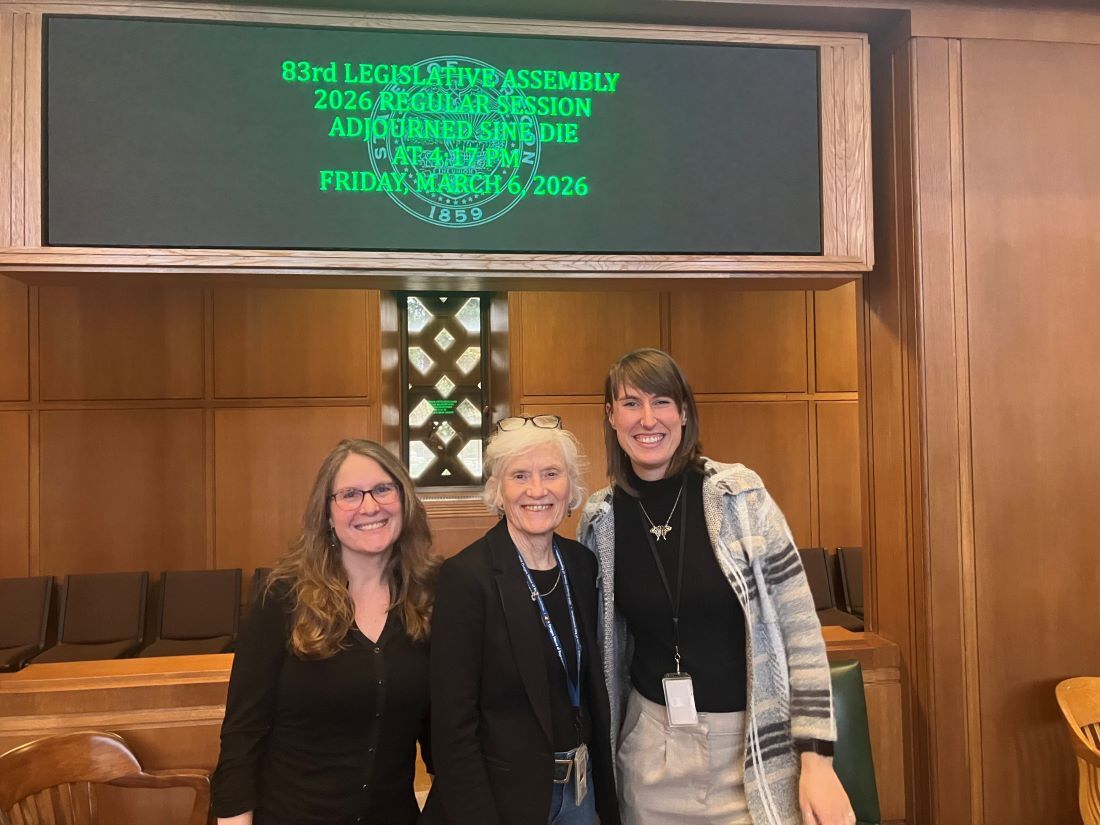
I’m forever grateful to my team—Chief of Staff Paige Prewett and Legislative Aide Selena Blick—for their tremendous competence and consistent good spirits. These two women make the work happen.
Capitol Phone: 503-986-1405
District Phone: 541-282-4516
Capitol Address: 900 Court St. NE, H-375, Salem, Oregon 97301
Email: Rep.PamMarsh@oregonlegislature.gov
Website and e-Subscribe: http://www.oregonlegislature.gov/marsh
|