|
Replies to this message are sent to an unmonitored mailbox.
To contact me, please click here: Rep.RickLewis@oregonlegislature.gov
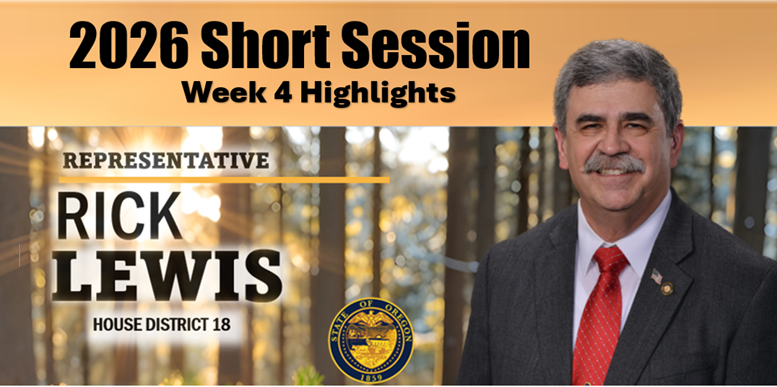
Dear Friends and Neighbors,
Today, we reached the second chamber deadline for bills to move out of policy committees so they can continue their way through the legislative pipeline. Today, also closed out week four, leaving us nine days left to finish our work for the 2026 Short Session. The Speaker and the Senate President announced earlier this week that Sine Die is imminent – signaling that the session is nearing its official end.
There have been speed-ups and slowdowns over the last 26 days, as well as a couple of strategic pauses in both the Senate and the House. As mentioned in last week’s update, the Senate minority members initiated a pause, delaying action on SB 1599, the transportation tax ballot referendum bill. This week, that measure passed off the Senate floor after multiple opportunities for the majority party to correct course and to honor the overwhelming number of Oregonians that oppose the transportation gas tax, as well as the bill's proposal to move the ballot referendum to the May election, rather than the November general election. The measure is expected to come before the House for a vote on Monday.
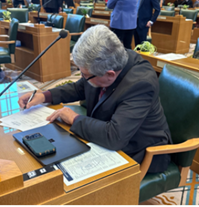
Monday this week, House Minority members also initiated a pause to floor proceedings in response to the majority party's failure to fully investigate a complaint against one of their members that caused a hostile work environment. This incident occurred in my House Judiciary Committee during a vote on a firearms bill, HB 4145, which I covered (linked a video) in last week’s House Judiciary Committee update.
This 35-day road trip through the 2026 Short Session came with unnecessary bumps and potholes that could have been avoided with good governance. Our roads and crumbling transportation infrastructure did not get where it is over night, and one-party rule has left taxpayers holding the bill for decades of government overreach and mismanagement. We must do better.
Come Monday, we step into a new month and into our last week of the session. The week will move quickly – unfortunately, it may not be painless.
I appreciate each and every one of you who have shown up this session, those that submitted testimony, and those of you who came to YOUR Capitol to visit with lawmakers. Thank you for exercising your right to be heard in the legislative process. Please know, I see you… I hear you… and I value your voice.
Sincerely,
 Rick Lewis
State Representative
House District 18
Oregon’s Christmas Tree District
In this Issue:
View previous newsletters here.
This week, lawmakers debated some of the most highly contentious measures of the session in both chambers thus far. Here are my highlights on two bills that passed in the House:
HB 4145 – Firearm Permit Provisions – Measure 114 (2022)
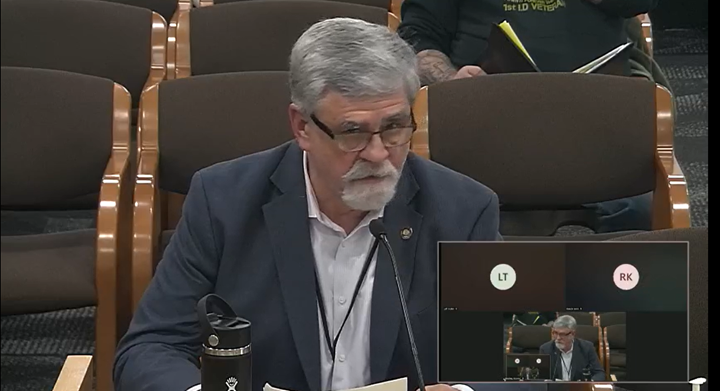
As mentioned, HB 4145 came through my Judiciary committee this session. I oppose this firearm measure due to serious concern about personal liberty, fairness, and government overreach.
The passage of this bill, while Oregon’s Ballot Measure 114 (2022) remains tied up in the courts, with its constitutionality still awaiting a final decision is premature. Measure 114 proposed a permit-to-purchase system and additional firearm regulations. HB 4145 advances similar policies even as the state’s highest courts have yet to determine whether those earlier provisions are lawful.
The bill requires Oregonians to submit fingerprints for federal background checks, significantly increases permit fees, and doubles the review timeline, placing greater burdens on law-abiding citizens while doing nothing to deter criminals.
HB 4145 also creates special exemptions for current and retired law enforcement while denying comparable treatment to concealed handgun license holders, and it limits legal challenges to a single county’s court. These provisions expand government authority, create unequal treatment under the law, and restrict access to justice. I was a “No” vote in committee and a “No” vote on the floor.
It is time to put a stop to the proliferation of gun bills designed to target law-abiding citizens in their exercise of a CONSTITUTIONAL RIGHT and, instead, work to take guns away from criminals who have no right to possess firearms. A case in point is a gun bill that I wholeheartedly supported this session - HB 4096 which was sponsored by Democrat Legislator Ricki Ruiz at the request of the Multnomah County District Attorney. The bill was killed in committee, but it would have increased the penalty for convicted felons who engage in human trafficking, illegal firearms and other heinous crimes and are found in possession of multiple firearms. If the goal is going after criminals – as is often stated – then that is not the bill that should have died.
SB 1507 – Federal Tax Code Disconnect
The recent passage of Senate Bill 1507, which disconnects portions of Oregon’s tax code from the federal tax framework, raises serious concerns about the direction of our state’s fiscal policy. Supporters argue the measure gives the state greater control over tax policy, but it also moves Oregon further away from the transparency and consistency provided by federal alignment and may open the door to higher taxes and more complex compliance for Oregon families.
At a time when Oregonians are struggling with rising costs of living, this shift comes amid a troubling pattern: state government continues to expand spending without demonstrating strong fiscal accountability or measurable results. Before asking taxpayers to shoulder more burden or accept greater state control over tax policy, Oregonians deserve confidence that their tax dollars are being managed responsibly.
Unfortunately, recent history shows repeated examples of costly government failures within our state that have burdened taxpayers and eroded public trust.
Oregonians still remember the failed Cover Oregon health exchange, one of the most expensive technology failures in state history, which cost taxpayers more than $300 million before being abandoned. During the pandemic, the Oregon Employment Department’s outdated computer systems failed to deliver timely unemployment benefits to thousands of residents, while hundreds of millions of dollars in improper or questionable payments were issued due to weak oversight and poor preparation.
The state has also committed billions in homelessness and housing spending in recent years, yet measurable reductions in homelessness remain limited, raising serious questions about accountability and program effectiveness. Similarly, the rollout of Measure 110 drug treatment programs faced significant delays in distributing hundreds of millions of dollars to treatment providers, with audits identifying weak oversight and insufficient performance measures.
Oregon’s long-standing public pension liabilities continue to place tens of billions of dollars in long-term obligations on taxpayers and local governments, while ongoing challenges within child welfare services, the Oregon Youth Authority, behavioral health programs, and wildfire preparedness further highlight systemic oversight concerns across multiple agencies.
The state’s most recent and glaring transportation policy decisions before us have further intensified public concern. The passage of the 2025 transportation tax package drew significant pushback from Oregonians worried about rising costs, increased fees, and whether new revenue will be managed responsibly. Oregonians overwhelmingly question the need for additional taxes and fee increases when the state has struggled to demonstrate effective stewardship of existing transportation dollars. The debate underscores broader concerns about transparency, accountability, and public trust in how funding decisions are made.
At the same time, the Oregon Department of Transportation (ODOT) has faced criticism over project cost overruns, delayed infrastructure improvements, and growing operational budget pressures that have raised questions about long-term planning and financial oversight. Similarly, ongoing service delays and implementation challenges at the Department of Motor Vehicles (DMV), including backlogs, Real ID rollout delays, and customer service issues, have fueled frustration among Oregonians seeking reliable access to basic government services.
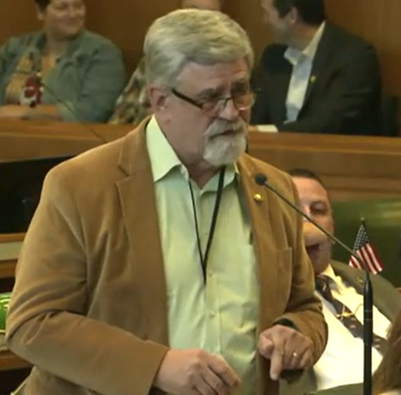
During the floor debate, I spoke out in opposition to SB 1507. The examples listed point to a fundamental issue: Oregon does not have a revenue problem — it has a spending and accountability problem. Expanding state tax authority without first strengthening oversight, improving performance metrics, and ensuring responsible stewardship of public funds risks repeating the same costly mistakes. The old axiom applies that the definition of insanity is doing the same thing over and over and expecting a different result.
As Oregon moves forward, lawmakers must prioritize transparency, fiscal discipline, and measurable outcomes. Taxpayers deserve governance that manages existing resources effectively before seeking greater control over their hard-earned dollars.
I was hopeful that we would do the right thing and not pass this bill. Because that did not happen, I fully support a referendum on this issue to let Oregonians have a say.
You can watch a video clip of my floor remarks here.
Click on the following links to view the House floor agendas, watch floor debates, remonstrances, and see what measures moved through the House chamber this week.
|
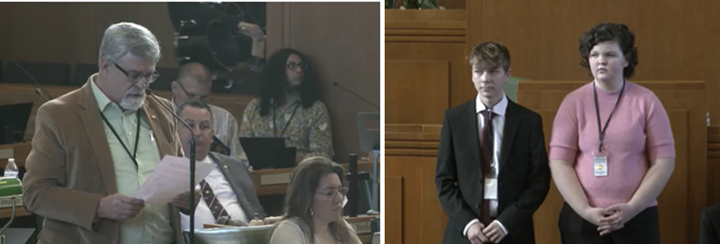
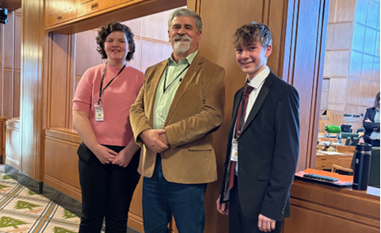
To shine a brighter light on the House floor, this week we were honored to welcome two outstanding students from House District 18 who served as Honorary Pages. The Honorary Page Program gives students a unique opportunity to observe the legislative process firsthand, assist with duties on the House floor, and experience state government in action.
Raegen Fleck, a freshman at St. Paul High School joined us. She is actively involved in leadership and service at her school. She serves as Treasurer for the St. Paul FFA and Treasurer for the No Place for Hate group, and she is the Assistant Media Manager for the Social Key Club. She is also a member of the Fellowship of Christian Athletes. Outside of school, she enjoys spending time hunting with her dad. Her welcome at the Capitol was joined by her proud grandmother, Jodie Fleck, who serves as my Constituent Services Director.
Kealan Leisman also represented St. Paul High School as an Honorary Page. He serves as President of the Freshman Class and is an active member of St. Paul FFA. Kealan is a proud Christian and American who enjoys playing lacrosse and has memorized every U.S. President.
I want to recognize Raegen and Kealan for their leadership, dedication, and willingness to engage in the civic process. Their participation reflects the strong character and bright future of students in our community.
|
|
 |
The wheels on legislative policy committees came to a grinding halt this week on Thursday, as we hit our second-chamber deadline for bills to be voted to the floor. Some committees held informational hearings, while others have finished their work entirely for the session. The following are highlights from my committees this week.

Tuesday’s informational hearing of the House Committee On Emergency Management and Veterans where were scheduled to receive a presentation by the Oregon Military Department and the Oregon Department of Veterans’ Affairs related to the Oregon’s National Guard services in our state. The meeting was cancelled due to the extended floor debate on HB 4138 A. We were later informed that the committee will not meet again for the remainder of the session.
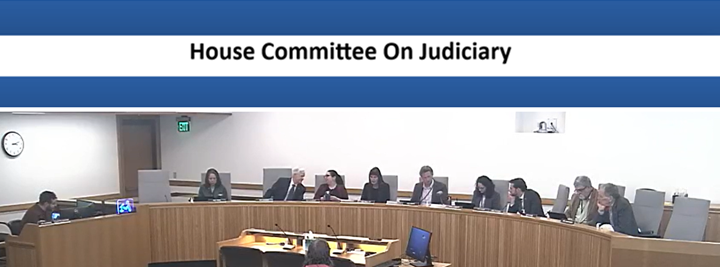
The House Committee On Judiciary held public hearings and work sessions on two measures this week:
SB 1556 A consolidates statutes governing the representation of parties before the magistrate division of the Oregon Tax Court.
SB 1557 A modifies provisions relating to contempt proceedings.
The remaining Senate bills that were destined for this committee were sent off to the Committee on Rules, thereby ending the work of the Judiciary Committee for the session.
Watch a replay of the committee meetings and access meeting materials here.
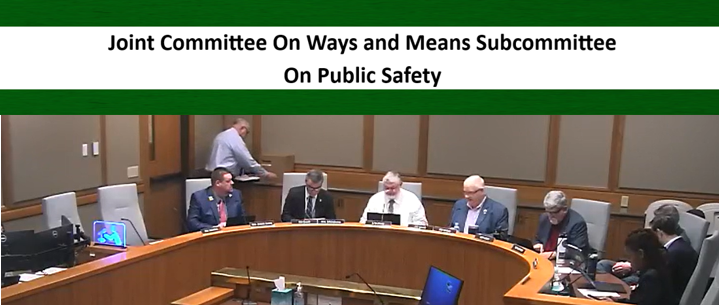
Yesterday, the Joint Subcommittee On Public Safety met for work sessions on two policy measures that I previously heard, one in my Emergency Management-Veterans committee, and the other in my Judiciary committee. Both measures have fiscal implications and were passed out of this committee to the full Ways and Means for consideration in the budget process.
HB 4033 A Oregon Volunteers in Disaster (ORVID) Database
HB 4043 A Bonds to Finance Renovation or Expansion of Courthouses
Watch a replay of the committee meetings and access meeting materials here.
Capitol Phone: 503-986-1418
Capitol Address: 900 Court St. NE, H-385, Salem, Oregon 97301
Email: Rep.RickLewis@oregonlegislature.gov
Website: http://www.oregonlegislature.gov/lewis
|