Replies to this message are sent to an unmonitored mailbox.
To contact me, please click here: Rep.PamMarsh@oregonlegislature.gov
February 14, 2026
Dear Friends and Neighbors,
The 2026 legislative session began on Groundhog Day, February 2, and fittingly, it felt quite familiar to be back in the Capitol. The state constitution limits the every-other-year short session to 35 days, which means we are already nearly halfway through this year’s assembly.
Many topics are getting attention, but our work centers on three huge issues:
First, we need to re-balance the 2025-2027 budget. Passage of significant federal legislation, HR 1, created tax breaks at the federal level that flow through to the state. If not adjusted, those tax breaks will impact the state budget by just under a billion dollars. HR 1 also upended some key programs, including SNAP and Medicaid. Maintaining these services will require additional investment by the state in programs that have traditionally been funded by the federal government.
During the 2025 legislative session, we had anticipated that federal actions could impact Oregon, so the 2025-2027 budget retained a healthy ending balance that will help cushion the HR 1 blow. I expect the balance of our budget gap to be covered through a combination of increased revenue generated by eliminating a select list of tax breaks, and by budget cuts. We will do our best to minimize the impact of cuts on vital services, but there’s no getting around our need to trim the budget.
Second, we need an immediate fix to the Oregon Department of Transportation budget. Last summer, the legislature convened a special session to consider and pass a revenue proposal to fund ODOT, support our transit systems (in our county, that’s Rogue Valley Transportation District), and to provide revenue for transportation needs managed by local governments.
That package would have sustained programing through the biennium. However, the special session package was challenged in a successful referendum, and voters will now decide the fate of those recommendations, placing all proposed revenue increases on hold unless approved in an upcoming election.
But ODOT still needs money for operations. Those of us in southern Oregon know it's not hyperbole that ODOT’s ability to run plows and clear roads can be a matter of life and death when snow covers our region. Our mission during the session will be to cobble together a budget that keeps ODOT functioning for the remainder of the biennium. Transit systems and local governments will see no relief.
Long-term, depending on referendum outcomes, we will revisit options to ensure that the state has adequate and predictable funding for a transportation system that supports all kinds of users, including those who walk, bike, drive, or ride a bus.
Third, we're working to resist the overreach by the federal administration and the upsurge of immigration enforcement with a suite of bills that strengthen civil rights and protect our immigrant neighbors and their families. More details are below.
This session, I continue to serve as Chair of the House Committee on Housing and Homelessness, guiding work on preservation of existing affordable housing, land expansion opportunities for housing development, and implementation of a variety of technical fixes.
Finally, the recent news that Southern Oregon University is predicting a significant budget gap is evidence of our need to figure out what a sustainable higher education system could look like. I am doing everything I can to address SOU’s issues and keep the university stable.
We can’t leave this report without noting that today, February 14, is the 167th anniversary of Oregon’s statehood. To celebrate, we’ve compiled below a summary of notable, pioneering policy produced in our state over time. And I encourage you to test your mastery of fun facts in this Oregon Trivia Quiz.
My best,
 State Representative
Oregon House District 5 - Southern Jackson County
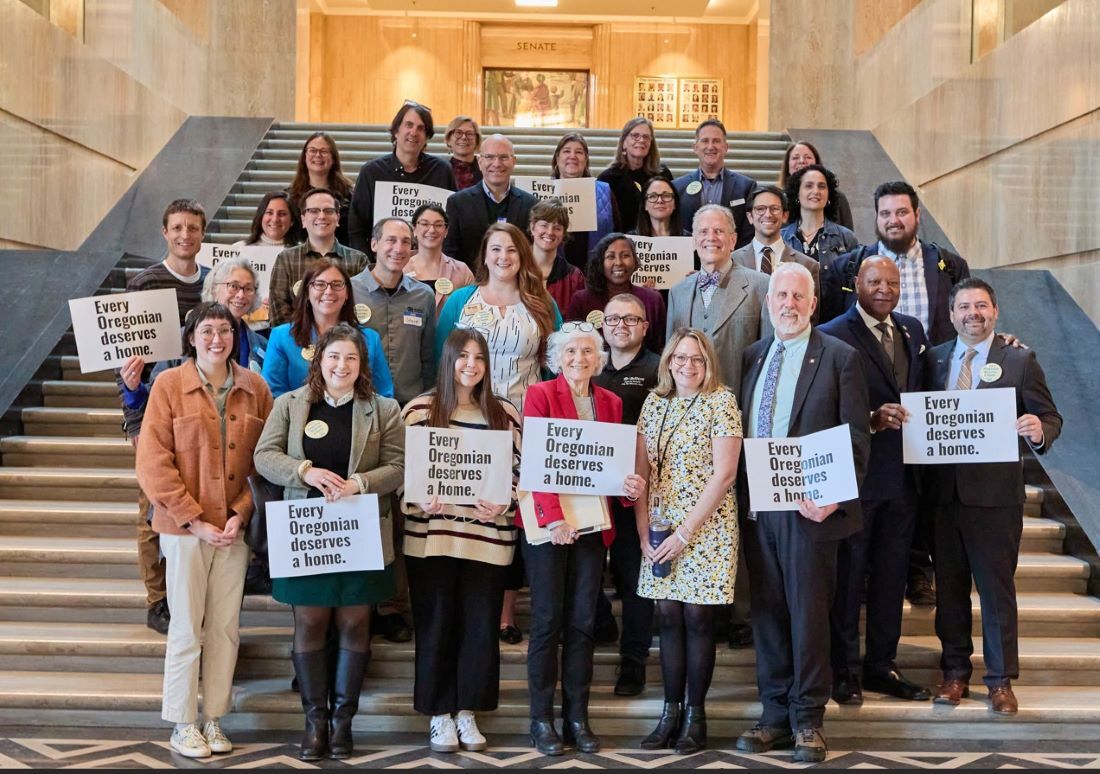
I am grateful for advocates working to advance safe, stable, and affordable housing policy for Oregonians state-wide.
On February 14, 1859, Oregon became the 33rd state in the U.S. Most years, we celebrate this milestone at the Capitol with cupcakes and cheer, but since it’s on a Saturday this year, we are celebrating by acknowledging innovative legislation that makes Oregon unique.
Oregon began passing trailblazing policy soon after statehood, via both the legislature and voter initiatives. In 1902, voters approved establishment of the initiative and referendum process in the Oregon constitution. We can thank ballot initiatives for granting Oregon women the right to vote in 1912; codifying the Death with Dignity Act in 1994; and establishing Vote by Mail in 1998—just a few of the 377 ballot initiatives on the ballot since 1902. Oregon passed both Death with Dignity and Vote by Mail over a decade before any other state enacted similar legislation.
From the coast to the desert and the mountains and valleys in between, Oregonians have always treasured our extraordinary landscape. In 1913, Governor Oswald West established the state’s 362 miles of shorelines as a public highway. In 1967, the state legislature passed the Beach Bill, expanding public access to sixteen vertical feet above the low tide mark.
In 1969, the legislature approved SB 10, the first law in the nation to mandate local governments to zone all of the land within their jurisdictions, but the law was limited by lack of enforcement. Recognizing that the state’s precious farm and forestland remained vulnerable to development, in 1973, Governor Tom McCall called on the legislature to do better. SB 100 established a unique, statewide framework to protect farm and forest land and manage growth through mandatory Urban Growth Boundaries (UGBs), and created the Land Conservation and Development Commission to oversee compliance of local planning with statewide goals. This law protects Oregon’s farms, forests, and beautiful landscapes from development to this day.
In 1971, Oregon passed the nation’s first Bottle Bill, encouraging recycling for single-use beverage containers through a deposit system, leading the way for nine other states to follow suit. Today, over 2 billion containers, around 88 percent of beverages sold, are returned through the BottleDrop system.
In 1987, in a bi-partisan vote, Oregon led the nation again by becoming the first Sanctuary State, prohibiting state and local law enforcement from helping federal authorities with immigration enforcement. Since then, ten other states have passed similar laws. In 2018, voters affirmed the state’s sanctuary status by rejecting Measure 105 by a 2-1 vote, which would have repealed the law. Legislators strengthened the law in 2021.
Sometimes, as in the example above, innovation can be traced to a singular piece of legislation, while other times, it’s a reflection of work conducted over years. The establishment of the Oregon Health Plan in the early 1990’s, and subsequent efforts to focus health care dollars on wellness to reduce long term medical costs, has positioned Oregon as a national leader on health care policy. Similarly, passage of housing initiatives and programs to promote density, infill, and expedited development has set a course for other states to emulate.
During a legislative short session, which takes place in even-numbered years, each legislator is allotted two bills. This year, my two bills focus on the confidentiality of sensitive information held by landlords, and the development of a study to ensure our higher education system is stable for the long term.
HB 4123 | Landlord Confidentiality/Tenant Protections
In the process of applying for, securing, and maintaining housing, tenants share a range of private information with their landlords and property managers. Information that may be in a tenant’s file includes financial data, banking, income, employer and wage information, social security or ITIN numbers, immigration status, status as a victim of domestic or sexual violence, disability status, driver license number, and more.
Tenants need to know that private information is secure, and landlords need legal clarity to protect them from liability. HB 4123 creates critical privacy protections legislating that personally identifying, financially sensitive, and other private information may not be disclosed without the written consent of the tenant, unless in response to a court order (with exceptions, including for credit or background checks).
HB 4124 | Oregon Higher Education Assessment
Current and projected demographic and enrollment trends, coupled with the competitive landscape, including from online and out-of-state programs, threaten the financial and enrollment sustainability of Oregon’s public universities and community colleges. At the same time, market competition has eroded cross-institutional collaboration, impaired focus on regional and state economic needs, and undermined public confidence in the system as a good investment. This is all happening at a time when the state is facing a significantly constrained budget environment that is likely to persist for a while.
HB 4124 requires the Higher Education Coordinating Commission (HECC) to conduct a study of Oregon’s postsecondary education system and to develop recommendations for a sustainable framework. Specifically, HECC will evaluate the distinct objectives and missions of post-secondary institutions and opportunities for collaboration, restructuring, or integration in the post-secondary education system.
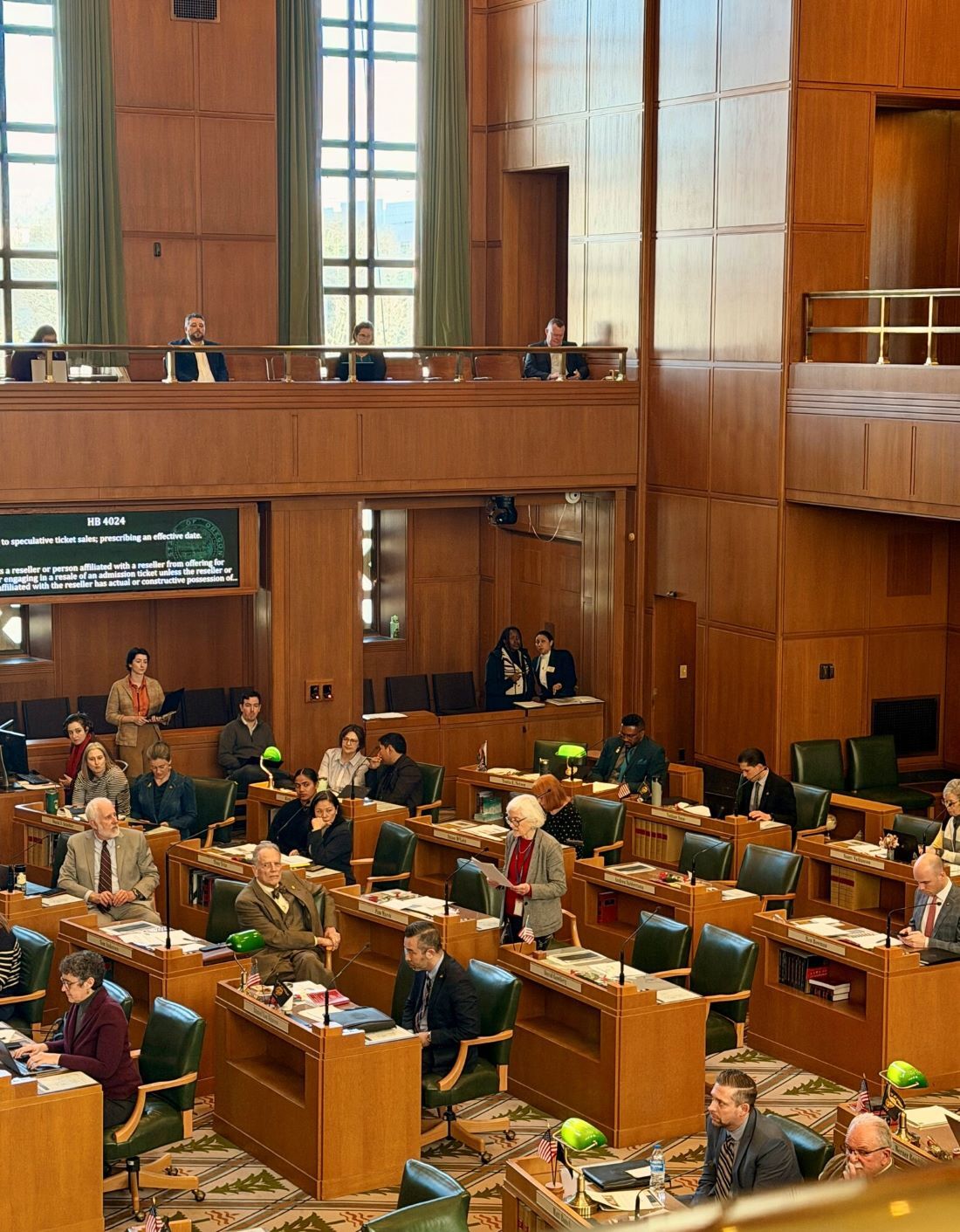
On Feb 10, I testified on HB 4024 to ban the sale of speculative tickets in Oregon, which passed out of the House Chamber with strong bipartisan support.
Immigrant Justice Package
In response to the horrendous intensification of federal immigration enforcement, my colleagues in the Democratic caucus are prioritizing a package of legislation to protect immigrant communities, restrict ICE actions, and strengthen Oregon’s sanctuary laws. Numerous bills are now moving through the legislative process—a few I am particularly interested in are:
-
HB 4111 | Anti-Discrimination Protections for Immigrants
Strengthening legal protections for immigrants so they can work, access the legal system, and participate in their communities without fear.
-
HB 4114 | Protect-Your-Door Act
Requires the federal government to register deportation operations in advance with the Oregon DOJ, mandates visible agency ID, and provides an ability to receive compensation ($10,000–$100,000) for victims of violations of this law.
-
HB 4079 | Safeguarding Students and Families
Protecting families, students, and educators by requiring schools to notify parents and guardians when ICE has been confirmed on school campuses.
HB 4024 | Ban on Speculative Tickets
Our community is home to stellar venues, including the Britt Music & Arts Festival and Oregon Shakespeare Festival. During my work on the Fan Fairness & Transparency Act in 2025, I heard countless stories from people across the state who have been duped by predatory actors and deceptive practices. HB 4024 expands consumer protections in the arts and entertainment industry by addressing a pervasive issue in the live event marketplace—the sale of speculative tickets that are offered before the seller actually possesses them. This practice puts consumers at risk of “main gate heartbreak,” when fans arrive at a venue only to discover their ticket never existed or was never secured by the reseller. By prohibiting this practice, Oregon will join other states across the nation in protecting consumers and venues.
HB 4127 | Protecting Reproductive Healthcare Access
In July 2025, the federal administration enacted a federal budget provision that targeted and effectively defunded Planned Parenthood by blocking Medicaid reimbursements for cancer screenings, prenatal and postpartum care, birth control, and other essential health services for Oregonians enrolled in Medicaid.
In Oregon, this policy threatens thousands of patients and puts critical health centers at risk of closure. Without intervention, health care costs and wait times would increase dramatically for both patients and the state, particularly given that Planned Parenthood affiliates provide nearly 100,000 patient visits annually—care that other providers cannot absorb without severe statewide disruptions.
To prevent closures and preserve access, HB 4127 establishes a state-funded fee-for-service reimbursement system, allowing these health centers to be reimbursed for the critical services they provide to ensure uninterrupted reproductive and preventive health care for Oregonians.
HB 4134 | 1% for Wildlife
After decades of underinvestment, this historic legislation would provide badly needed resources to implement the State Wildlife Action Plan (SWAP) by increasing the state lodging tax by 1.25% ($1.88 on a $150/night stay). The SWAP includes strategies and actions to preserve and restore natural resources across the state, and to stabilize more than 300 species of greatest concern that face extinction due to threats like habitat loss, pollution, and invasive species.
HB 4134 also dedicates resources to anti-poaching efforts, wildlife connectivity, wildlife rehabilitation centers, and invasive species prevention. It includes stable funding for Oregon’s wolf management compensation and proactive trust fund, and supports wildfire risk reduction and natural resource workforce development, increasing resilience for both wildlife and communities across the state.
HB 4149 | Codifying McKinney-Vento Act into State Law
The federal McKinney-Vento program establishes important protections for homeless students. Last year we started to worry that this program might be dismantled, which would leave districts on their own to manage homeless students. To protect Oregon’s most vulnerable students, HB 4149 will codify the program into state law.
Among other protections, McKinney-Vento allows students who are experiencing homelessness to remain in their school of origin, helping preserve stability during tumultuous times. Jackson County has 1,647 students who are covered by McKinney-Vento, the 5th largest count of McKinney-Vento students in Oregon. When a child’s housing situation is unstable, school can be one of the few sources of consistency and support in their life.
In the wake of uncertainties at the federal level, HB 4149 will formally establish protections for homeless students in statute, thereby providing clarity and consistency for students, families, and school districts, and ensuring these rights do not reflect shifting federal priorities.

Oregon’s anniversary is a good time to test what you know and to learn fun facts about this incredible place we call home. Here's an opportunity to challenge your friends, family, and colleagues, and find out who knows the most about our beloved state!
OREGON TRIVIA QUIZ LINKED HERE
Credit to Ashland AAUW and the wonderful staff at the Ashland library for creation of this Oregon brainteaser.
|
Capitol Phone: 503-986-1405
District Phone: 541-282-4516
Capitol Address: 900 Court St. NE, H-474, Salem, Oregon 97301
Email: Rep.PamMarsh@oregonlegislature.gov
Website and e-Subscribe: http://www.oregonlegislature.gov/marsh
|