|
Replies to this message are sent to an unmonitored mailbox.
To contact me, please click here: Rep.JulieFahey@oregonlegislature.gov
Hello Friends,
The 2026 session is officially underway! In even-numbered years, our session lasts just 35 days, and typically focuses on budget adjustments, emergent issues, and technical fixes to laws passed in the previous long session. That’s challenging work in a short timeframe, even in the best of times. But this year, we also must do our best to insulate our state from the actions of our federal government – from the campaign of fear and intimidation that ICE is waging in our streets to the impacts that Republicans’ Big Ugly Bill will have on healthcare, anti-hunger programs, and more.
Our job this session is to both respond to those challenges responsibly and to continue moving forward on reining in the cost of living for Oregon families, which remains one of the biggest issues on Oregonians’ minds. It’s an important moment, and we must stay focused on doing the work voters sent us here to do. Read on for more information about the House Democrats' 2026 agenda, our governing priorities, and a sampling of press coverage ahead of the session.
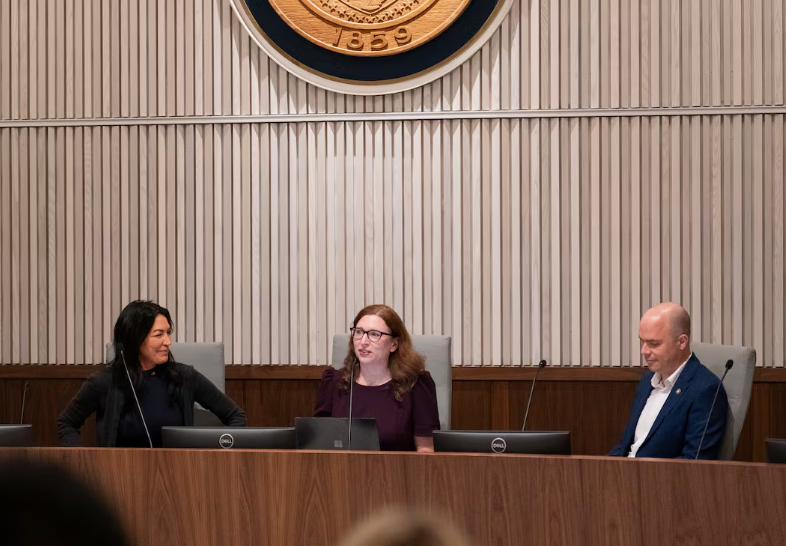
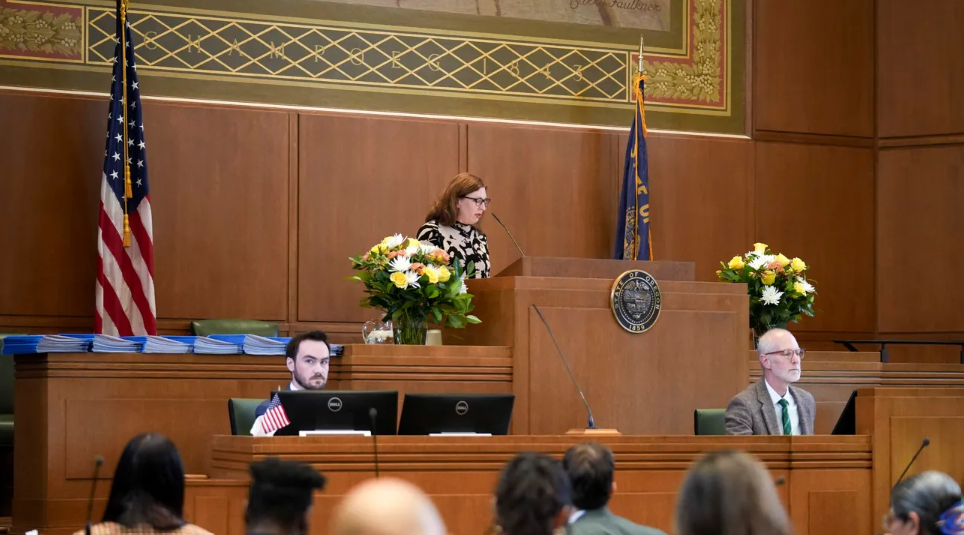 Presiding over the first day of the 2026 legislative session. Photo Credit: Statesman Journal
As federal policies threaten health care, food assistance, clean energy, and immigrant communities, Oregon House Democrats are stepping up this session. We’re protecting Medicaid and SNAP, defending privacy and reproductive freedom, growing good-paying jobs, and balancing the budget.
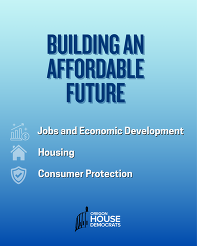
Building an Affordable Future
Housing
In my time in the legislature, I’ve focused on the need to build more housing so that every Oregonian can afford a place to call home. We’ve passed bipartisan laws to cut red tape and remove barriers; given more tools to cities and counties; and helped build or finance thousands of new homes.
|
Consumer Protection
Oregonians are losing millions of dollars to scammers, predatory lenders, and corporations that cut corners or refuse to honor their commitments. Consumers should get what they paid for and not be taken advantage of by dishonest tactics.
Healthcare
Under Trump's budget bill, up to 400,000 Oregonians could lose their Medicaid coverage. With more people uninsured, rural hospitals and clinics will close, wait times will increase, and medical costs will rise for all Oregonians.
This session, we will protect Oregon's historically high insurance coverage rate and ensure that all Oregonians, no matter what part of the state they live in, maintain access to affordable, high-quality care. We will also defend access to reproductive health care and protect Oregonians' medical information and right to privacy.
Environment
While the federal government continues to roll back environmental protections and slash support for clean energy, Oregon will protect our natural environment, continue our work to fight climate change, and help expedite renewable energy projects to keep Oregon green.
Protecting Oregon’s Values
Americans are seeing with their own eyes the campaign of fear and intimidation that’s being waged by federal agents – citizens being detained, forced to show their papers, violently pulled from their cars. Immigrant and refugee families afraid to send their kids to school or bring them to a doctor when they need medical care. Americans being shot dead in the streets.
The Trump administration is saying that they’re deporting violent criminals, but the truth is, by any accounting, the majority of immigration detainees have no criminal record—they're workers trying to get to their job, or parents dropping their kids off at school.
|
In response, Oregon House Democrats have prepared a federal response package aimed at reining in federal overreach and strengthening protections for targeted communities in Oregon. Those proposals include:
-
Strengthen data privacy to safeguard sensitive health and immigration information (SB 1587)
-
Limiting the sale of our personal data by data brokers (SB 1587)
-
Empower Oregonians to sue federal agents for violating their constitutional rights (HB 4114)
-
Protect families, students, and educators by requiring schools to notify parents and guardians when ICE has been confirmed on school campuses (HB 4079)
-
Prohibit state contracts with businesses that participate in deportations to ensure no Oregon tax dollars support ICE enforcement activities (HB 4150)
-
Demand accountability and visibility from law enforcement by establishing guardrails on masking and officer identification practices, and protecting Oregonians from federal overreach (HB 4138)
-
Strengthen legal protections for immigrants so they can work, access the legal system, and participate in their communities without fear (HB 4111)
-
Ensuring hospitals remain safe places for Oregonians to access medical care (SB 1570)
-
Prevent the federal government from unlawfully withholding much-needed resources from Oregon communities (HB 4143)
These will be some of the most important topics we take on in this session, but we also know some of these proposals will likely face legal challenges down the road, as they have in other states. Protecting Oregon communities and upholding our state’s values will be a top priority for me this session, and I’m committed to working with my Democratic colleagues to pass legislation that achieves those goals.
During the 2025 legislative session, as we worked to craft our two-year 2025-27 state budget, the Republicans in Congress were debating reducing funding to states and give tax breaks to corporations and the wealthy through what ultimately became HR 1, Trump’s “Big Ugly Bill”. So, without knowing exactly what would be in the bill, we budgeted conservatively to protect core services like schools, wildfire prevention, and rural hospitals and maternity centers. We intentionally left a surplus to prepare for what might be coming.
Unfortunately, just days after our session ended, the Big Ugly Bill was signed into law, eliminating that surplus and then some. Worse, this isn’t a one-time hit—it’s a long-term challenge that we’ll be confronting for years. The federal bill had three main effects on state budgets:
-
Cutting funding for programs Oregonians depend on, like the Oregon Health Plan (OHP) and SNAP, to the tune of $15 billion in funding over the next 6 years.
-
Pushing massive new administrative costs—$300+ million in this biennium alone—onto the state to implement things like more frequent eligibility checks and work requirements for Medicaid and SNAP.
-
Massive tax giveaways, particularly to corporations and the wealthy, decreasing state revenue by hundreds of millions of dollars.
Oregon leaders are responding by finding inefficiencies in critical programs, making careful reductions to agencies, and closing tax loopholes for big corporations and the wealthy. We are committed to balancing the state budget in a way that prioritizes Oregon families, small businesses, and the services they rely on, while growing our economy for a brighter future.
Revenue Forecast
This week, the Legislature received a final revenue forecast for the 2026 session, which gives us a clearer picture of the work ahead of us to ensure that our budget is balanced. The good news is that revenues are up slightly, but not enough to offset the impacts of HR 1. We know the stakes are high this session as we address the challenges facing our state, and the steps we are taking will protect Oregon’s most critical services, now and in the years to come.
In Oregon—and in states across the country—we’re seeing more fuel-efficient vehicles and more electric vehicles on the road. That progress is good news for our climate goals. But because our transportation system relies heavily on gas taxes for basic maintenance and operations, it also means fewer dollars to keep roads and bridges safe. This funding gap affects not only state highways, but city and county roads as well.
In response, transportation leaders in the Legislature spent many months traveling the state and talking with communities about how to address this challenge. Those conversations led to a transportation package passed last fall that provided short-term funding stability for state and local roads, secured support for transit systems, and began modernizing how we pay for our roads and bridges in the long term. It was a modest, balanced proposal—designed to keep Oregonians moving while recognizing that rising costs are straining households across the state.
Unfortunately, a group of Republican lawmakers launched a signature-gathering effort to refer the bill to the ballot. As a result, the package is now on hold, and much-needed funding for city, county, and state roads will not arrive on the timeline necessary to avoid cuts to maintenance and safety work this year.
That means that this session, our biggest responsibility in the legislature is to balance the ODOT budget. I’ll be frank: there are no easy choices here. In order to keep our roads, bridges, and highways safe this winter, it may mean pausing some projects or redirecting funds from other programs that are doing good work. And because the funding that is on hold would have also gone to cities and counties, it means that they will also need to make similar tough choices.
The long-term challenges here aren’t going away, and the transportation needs facing every corner of the state won’t fix themselves. I’m committed to working with Governor Kotek to chart a responsible path forward in the future that keeps Oregonians safe on their way to work and to school and keeps our economy moving.
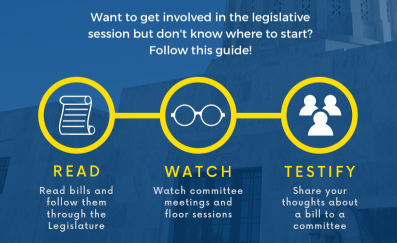
This session, Oregonians have both in-person and virtual opportunities to provide testimony in support or opposition of proposed legislation. My office has prepared this testimony guide to help you navigate the process of submitting testimony on a bill.
If you’ve never testified in a legislative committee, know that you don’t need to be a policy expert or lawyer. Legislators prioritize hearing from members of the public whose lives are impacted by the policy they are considering. The most important thing is to talk about is how the issue affects you, your family, or your community.
In the weeks leading up to the session, I had the chance to have conversations with a number of media outlets and community organizations about our work this session and the key issues facing Oregon this year. Check out the links below for recent articles and interviews I’ve been featured in:
 The joint pre-session press conference with House Republican Leader Elmer and House Democrat Leader Bowman. Photo Credit: OPB
As always, please don’t hesitate to reach out to my office if you need help navigating local or state government services or if you have thoughts about bills for the 2026 legislative session.
Yours truly,
 Capitol Phone: 503-986-1414
Capitol Address: 900 Court St. NE, H-271, Salem, Oregon 97301
Email: Rep.JulieFahey@oregonlegislature.gov
Website: http://www.oregonlegislature.gov/fahey
|