|
The 2026 Legislative short session convenes on February 2, 2026, and I will be sharing weekly updates with you on the work happening at the Capitol. These updates will highlight the legislation I am introducing, tracking, and actively working on throughout the session.
In other news, after several years of major renovations, the Capitol Building is nearing completion and is almost restored to its former glory. While some construction is still underway, there is much to see and experience - so I encourage you to visit and see it for yourself.
During the short session, if you would like to look up proposed legislation, register to testify in a committee, or subscribe to follow specific bills, additional information and step-by-step instructions are available online.
Stay tuned - and stay engaged.
- Shelly
As the Legislature gavels in for a fast‑paced February short session next week, I wanted to share what I’ll be fighting for – and what I’ll be fighting against – on your behalf. But first, I want to set the stage for you:
The Politics Behind This Short Session
This short session is happening in the shadow of the Democrats’ transportation tax package – the gas tax, payroll tax, and vehicle fee hikes that 250,000 voters forced onto the ballot as a referendum after lawmakers jammed it through last year. Democrats initially acted as if they could simply repeal or rework the law and make the referendum go away, only to be told they can’t just erase a valid citizen challenge once signatures are certified. That didn't work, so now their latest move is to change the date of the referendum election itself, trying to tuck it onto a lower‑turnout May election instead of facing voters head‑on in the November general election where the tax hike they passed would be on the same ballot as they are.
That same instinct shows up in how they are handling Oregon’s larger budget problems. After years of record revenues and rapid spending growth, the state is now wrestling with shortfalls and “structural” gaps that are the direct result of decisions Democrats made when times were good. But don't worry. They haven't taken accountability, they have found their scapegoat: H.R. 1, the "Big Beauty," the federal tax cuts package passed in Congress last year.
Democrats are crying bloody murder about a supposed $888 million “budget gap” they blame on "those tax cuts. What they never say out loud is that this is not money disappearing from Oregon’s economy – it’s money staying in the hands of Oregon families, small businesses, and job creators instead of being siphoned into Salem’s coffers. In other words, their problem isn’t that Oregonians are worse off; it’s that they can’t grow government as fast as they planned. To make the process more entertaining is to watch Democrats figure out how they try to sell why Oregon should keep taxing taxes on tips and overtime. Those are the two most popular provisions from H.R. 1. My guess is they know that, so will try to go after lesser known provisions to get their money (Your money). They are going to have a hard time making that math work, but it reveals that their decision making process is purely political.
Remember, I introduced a bill last session to explicitly exempt overtime pay from state taxes. I joined other Republicans in sponsoring a bill to exempt tips also, but the Democrats didn't give either one a single hearing. So when they try to tell you they are on the side of workers for letting those two provisions go into effect in Oregon, just remember, it required the federal government to force their hand. They were never eager to help workers save a little more of their money.
Instead of tightening belts, setting priorities, and fixing agencies that are burning through cash with poor results, they are looking for quiet ways to raise more from you – like pushing to disconnect from key parts of the federal tax cuts passed last year so that when Washington gives you relief, Salem can claw more of it back on your state return.
That tells you everything about their priorities. For years, Democrats have built bigger and bigger budgets on the assumption that your taxes would always go up and never down. Now that federal tax relief means more money in your pocket and less automatic growth in state revenues, they treat it as a “crisis” instead of an opportunity to right‑size government and demand better results from the dollars they already collect. Their singular priority is maximizing government revenue, not making life more affordable, our schools more accountable, or our streets safer.
Only Two Bills In the Short Session
During short sessions, Legislators are only allowed to introduce two bills. Mine are focused on working families, farmers, and lower fuel prices.
HB 4129 – Capping Oregon’s hidden gas tax and protecting fuel reliability
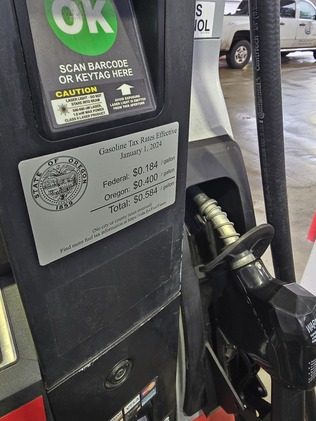
You know this little gas tax sticker you see on every time you fill up your tank?
Did you know you are paying up to 22 cents MORE per gallon that isn't listed on there?
It's called Oregon's Low Carbon Fuel Standard (also called Oregon's Clean Fuels Program [CFP]), and it's a hidden gas tax you are paying every time you fill up. In essence, you're paying extra because of policies passed in Salem that limit the kinds of fuels that can be sold in Oregon.
Studies estimate that this program costs you an extra 22 cents per gallon. While DEQ’s claims that number is closer to 8 cents, those costs are being directly passed on to families and small businesses. You ever wonder why the west coast always has higher gas prices? This is why.
When the Legislature first adopted Clean Fuels, they wrote into statute a specific target: by 2025, fuel sold in the state needed to have 10% lower carbon intensity than it did in 2015. But former Governor Kate Brown and now Tina Kotek and her DEQ have pushed those numbers even higher and as a result will push gas prices higher.
Oregon consistently has one of the highest gas prices in the state, but Kotek's new December executive order sets a new benchmark. She wants fuel to have a 50% lower carbon intensity by 2040. That's impossible with current technology. Guess who is going to pay for their climate fever dreams? You are - at the gas pump.
HB 4129 would cap the program at its original 10% target, roll back the extra reductions imposed by liberal executive orders and bar further expansions unless the Legislature explicitly votes for them – putting accountability back where it belongs. I believe that fuel taxes should be going to roads and bridges and I'll bet you do, too.
HB 4129 also protects Oregon’s fuel supply by preempting local governments from unilaterally restricting fuel storage and distribution at critical hubs like Northwest Portland’s Critical Energy Infrastructure (CEI) Hub, where roughly 90% of the state’s liquid fuel is stored.
The Portland City Council is moving forward a proposal that would gradually force a drawdown of that storage facility, risking higher prices and disruptions if a local decision chokes off a statewide fuel lifeline.
My bill says fuel reliability is a statewide concern: one clear statewide standard, not a patchwork of local rules that could drive up costs at the pump and leave communities stranded in an emergency. The message is clear: DON'T LET PORTLAND JACK UP OUR GAS PRICES!
HB 4130 – Keeping farms in business
This bill is pretty technical, but what we are trying to do it give Oregon farms a tax break.
Since 2017, Oregon has lost more than 2,000 farms. We need to reverse that trend. This bill alone won't do that, but it will be a great step in the right direction.
The result of this bill would be to ensure that the land underneath a preparing or processing facility is taxed as agricultural land, not personal property. Right now, that vague line can push a family farmer’s building off farm tax deferral just because they clean, sort, or package their own crops, driving up property taxes and pushing farms closer to the brink.
HB 4130 says that buildings that conduct ag activities can remain eligible for farm tax assessment and aren’t treated like a non farm industrial use.
This bill is about keeping family farms viable instead of consolidating land into a few out of state mega operations.
Short sessions have tight deadlines. Things move fast. Sign up for immediate updates on both of these bills here, delivered right to your inbox:
HB 4129
HB 4130
Bad Bills That Raise Costs
and Undercut Common Sense
Democrats are again advancing bills that make life more expensive, weaken public safety and education. Here are several I’m watching closely:
1) SJR 201 - Kicker Raid
SJR 201 raids people’s kicker tax refund. Most Oregon taxpayers will be receiving an average of $300 to $600 Kicker Refunds on their taxes this April. The Kicker Refund comes from over-collected surplus tax funds, but the politicians wish to abolish this law and steal your future refunds. Because the Kicker Tax Refund law is in the Constitution, this bill, Senate Joint Resolution 201, refers it to the people for a vote.
2) SB 1507 - Sales Tax
SB 1507 prepares the groundwork for a new sales tax in Oregon, something voters have rejected multiple time. The bill would lower some other taxes in the event a sales tax is ever passed in Oregon.
3) HB 4088 – Transgender and Abortion Sanctuary State
HB 4088 formally states that Oregon’s public policy is to protect people and organizations engaged in specified reproductive health care and gender‑affirming treatment that is legal in Oregon, and it prohibits state and local entities from cooperating with out‑of‑state investigations or penalties.
It expands taxpayer funding of abortions and permanent transgender procedures on minors.
4) HB 4114 & HB 4138 – Making immigration enforcement more difficult and more dangerous
HB 4114 allows Oregonians to sue federal immigration agents.
HB 4138 expands Oregon's sanctuary state status and makes it harder for law enforcement, federal, state, or local, from assisting in apprehending criminals.
5) HB 4015 - Federal Tax Disconnect
This is the bill that would effectively hike taxes on Oregonians by depriving us of taking advantage of the federal tax cuts passed last year.
How to Track These Bills and Stay Engaged
You can track every bill mentioned here – good and bad – through OLIS, the Oregon Legislative Information System. Just click on the link of the bill number, then click "e-Subscribe."
When you do that, you will get alerts when the bills get scheduled for a public hearing, which then allows you to sign up to testify or submit written testimony.
As these bills move, my office will send out more detailed action alerts so you know when to speak up, testify, or contact key legislators. In a short session where everything moves at sprint speed, your voice can be the difference between higher taxes and more overreach – or a course correction toward affordability, accountability, and common sense.
During the 2026 legislative session my office will continue to keep you updated and informed - and is always at your service. Please don’t hesitate to reach out to my office if you have any community event announcements, legislative questions, or concerns.
Talk soon,

Capitol Phone: 503-986-1415
Capitol Address: 900 Court St NE, H-389, Salem, OR 97301
Email: Rep.ShellyBoshartDavis@oregonlegislature.gov
Website: http://www.oregonlegislature.gov/boshartdavis

|