* “I am only one, but still I am one. I cannot do everything, but still I can do something; And because I cannot do everything I will not refuse to do the something that I can do.”
—Helen Keller
Replies to this message are sent to an unmonitored mailbox.
To contact me, please click here: Sen.JeffGolden@oregonlegislature.gov
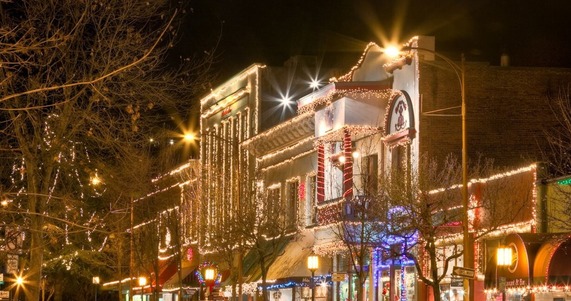 Ashland's Festival of Light
I don’t think that 2025 was a favorite year for many Oregonians. Most of us are ready for a reset that could help us face our challenges with a fresh perspective and sense of possibility. We need both to take on what lies ahead.
I hope to bring fresh thinking to Salem February 2, when the Legislature convenes to begin the 2026 session. As is true in every even-numbered year, that session is constitutionally limited to 35 calendar days, which means we’ll wrap up by March 8. Those days fly by in a blur; getting anything worthwhile done calls for a lot of focus and discipline. This year we’ll walk into the Capitol with two big problems hanging over our heads.
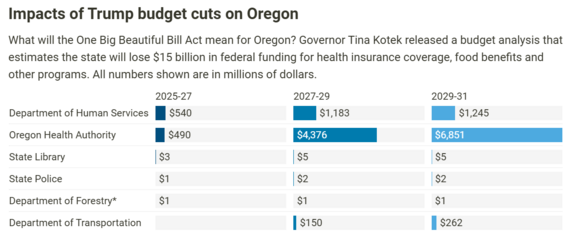 Chart from OPB coverage
1) The hole that H.R. 1 (Trump’s famous “Big Beautiful Bill”) blasts in our state budget: Whether “beautiful” sounds accurate or sarcastic to you, the basic math is clear: the continuation of Trump’s income tax cuts, flowing mostly to global corporations and their shareholders, will turn Oregon’s finances upside down. What we know now is that the 2025-2027 budget we approved last year will lose about $1 Billion—real money by Oregon standards. That deficit will grow in future years, towards the right of the chart above, in uncertain amounts. But unless the legislature takes action, we know budgets for critical state services will shrink in ways that will hurt Oregonians.
The action we can choose to take is called disconnection. Oregon is one of many states whose tax system mirrors, or “connects,” to the federal system. That’s why your Oregon income tax return is mostly finished when you complete your federal return, though you do have to run through a list of very specific questions to subtract or add income from what you reported in your federal filing. All of those questions reflect past decisions by the legislature to disconnect from the federal code provisions for one reason or another.
We’ve been analyzing ways to disconnect from H.R. 1 that could keep Oregon’s budget from hemorrhaging. Much of the lost revenue would go into the coffers of massive corporations that juggle profits among foreign subsidiaries with complex accounting maneuvers. If you have ten minutes and a little tolerance for digging in the weeds, this article does a good job explaining the basics of how the state could recover revenue with no damage to our business environment.
Along with a partial disconnection from H.R. 1, we’d like to advance simple measures that ease taxes for Oregonians working at or near minimum wage. Right now many of those people are in the 9% tax bracket, close to the highest we have. Tax reform that would leave more money in their pockets—money they’d spend on the basics for their families—would be one of the surest ways to stimulate Oregon’s economy.
All of which is to say that the crisis that H.R. 1 brings us could turn out to be a pivot point that leads to a more robust and productive economy. That might be rosier than things turn out, but that’s the vision I’ll hold as we make key decisions in February.
The ripple effects on our state from H.R. 1 goes beyond the budget. Towards the top of a long list is the increasing danger that brown Oregonians face on the street because, in the eyes of federal authorities, their skin color provides reasonable cause to suspect they’re undocumented and have no right to be here. One incident from last month is described here.
This is where we find ourselves in America as the year ends. Conditions haven’t been as intense in Oregon as in other states, but that may be changing. In recent weeks I’ve heard from more of our Hispanic neighbors that they’re doing all they can to avoid going out in public.
Many of us in the Senate are ready to take action. I know of at least one bill in the works that requires anyone interacting with citizens for alleged law enforcement purposes to wear clear identification, and forbids the use of masks to hide their identity. I’ll sign on as a co-sponsor.
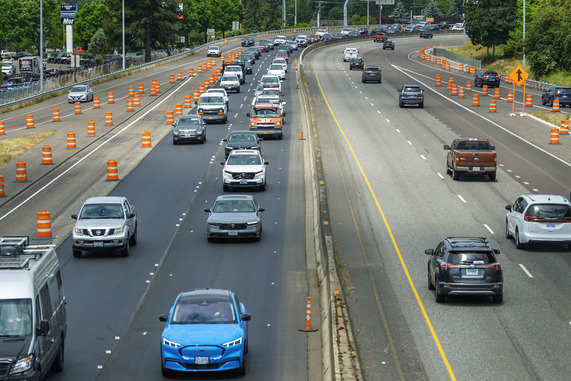 2) The transportation deadlock: You likely know that the opponents of HB 3991 have gathered enough signatures for a ballot measure to repeal it. This is the bill we passed in September to enhance accountability at the Oregon Department of Transportation and fund basic services going forward.
I voted for HB 3991 because facts convinced me that the claim that Oregon’s transportation needs can be met without additional funding is a wishful fairy tale. I won’t join the ranks of legislators who created this mess over time by kicking the troublesome can of taxation down the road again and again. We plainly owe it to our kids to do a better job of paying as we go, instead of handing them overdue bills as we walk out the door for all the services we’ve enjoyed.
It’s not clear how we’ll address the pending ballot measure in the coming session. We have options to repeal or amend the bill through legislation or let the repeal process play out one way or another in a 2026 election. And how we reconcile the widespread resistance to any tax or fee increases with what I hold as a solemn obligation to the next generation is a puzzle that hasn’t been solved.
The short session rules allow every legislator to introduce two bills, and every committee to submit three bills at the Chair’s discretion, one of which needs the Vice Chair’s concurrence. My personal bills are:
- A measure that would make it easier to know the client list of registered lobbyists in the Capitol, and which bills lobbyists are working to pass or defeat. This addresses incidents where a particular lobbyist might be representing clients with conflicting positions on a given issue. That can create murky conflicts of interest that clients might not realize. This bill replicates legislation passed recently in Colorado.
- A measure that would require Oregon’s Investor Owned Utilities (Pacific Power, Portland General Electric, and Idaho Power) to create “Inclusive Utility Investment” programs (IUIs). These are arrangements where the utility company extends a low-interest loan to a homeowner they serve for specific energy-efficiency projects—insulation, weather-stripping, multi-paned windows. The loan is repaid by the resulting energy savings. A homeowner whose power bill ran, say $200 each month before the improvement might see the energy cost drop to $125. That $75 difference would go towards repaying the company for the loan. Once it’s paid off, the homeowner would start enjoying the smaller bill. In a time when more conservation is vital for grappling with climate change, and the state budget has no room for cash incentives, this could be an elegantly simple strategy.
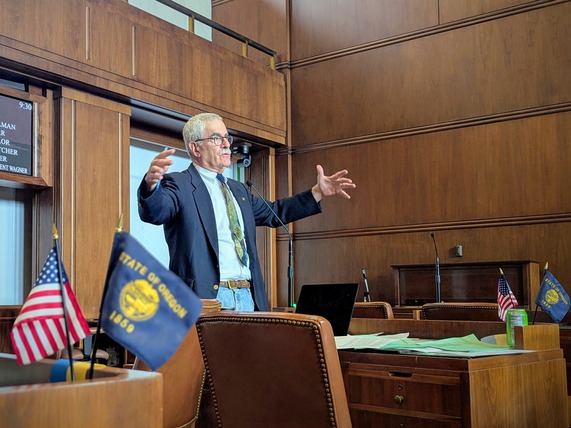 The bills I’ll introduce in the Senate Committee on Natural Resources and Wildfire are:
- The Climate Superfund Bill I co-sponsored last session, where it received a crowded and powerful hearing in the Senate Energy and Environment Committee. With this proposal we’re joining a national movement of states advancing the “Polluter Pays” principle: the largest fossil fuel corporations, which knew the likely climate impacts of its products decades ago and pretended otherwise, should use some of their massive profits to fund recovery from climate disasters (wildfire, hurricanes, floods, etc) that have ravaged the country for the last twenty-five years. Despite massive disinformation about the concept, successful Climate Superfund bills in Vermont and New York drew bipartisan support because of their fairness and practicality. Lawmakers understand that these huge costs keep mounting; they’ll fall either on the shoulders of citizens in the form of higher taxes, insurance premiums and utility bills, or on the phenomenally lucrative industry that knew their products would eventually take this heavy toll on all of us. Which is fairer? You’ll hear more about this historic struggle in weeks to come.
- A replica of recent Colorado legislation that requires insurers to give some consideration in their rate-making to homeowners’ efforts to reduce wildfire risk on their property. This would be a big step towards achieving a clear long-term goal: adequate, affordable insurance should be available for Oregonians who take every reasonable step to keep their property safe from fire.
- (Filed at the request of Committee Vice Chair Senator Todd Nash) A new version of last session’s SB 976, which allows individuals without veterinary licenses to check cattle for pregnancy. This bill was vetoed after passing both chambers in the regular 2025 session.
All of this taken together, along with two proposed bills from the other 89 legislators and dozens from other committees, is more than we’ll be able to handle in a 35-day session. Many will die and others will be carried forward to the 2027 long session. But we’ll get a broad temperature check of what’s top of mind for Oregonians across the state. That's important guidance going forward.
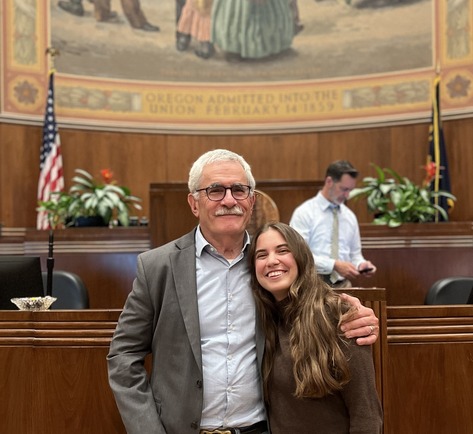
Jeff and Sarah wish you a happy New Year
A new year invites us to reflect. Beyond all the noise and distress of our times, what do we most want for our family, our community, for Oregon and the world? What’s most important to us? If you can answer that clearly, chances are there are one or more groups near you that are working to bring about change that you’d like to see…change that could make 2026 and years to follow brighter and more hopeful than today. You might want to seek these people out; you can recharge one another’s hope and sense of possibility. They are heartily living out the wisdom of former Oregon Governor Tom McCall:
“Heroes are not giant statues framed against a red sky.
They are people who say ‘This is my community
and it’s my responsibility to make it better.’”
My wish for all of us is a New Year full of that kind of heroism…full of more connection with the people in our lives, more grace for the people we’ve been struggling with (including ourselves), and the courage to stand up with respectful strength for what we believe in, and for a healthier world that we still know is possible.
Take good care—
 Senator Jeff Golden, Oregon Senate District 3
|