|
Replies to this message are sent to an unmonitored mailbox.
To contact me, please click here: Rep.EmersonLevy@oregonlegislature.gov
Hello Friends,
As the seasons change, we're reminded how lucky we are to live in a place where autumn brings vibrant colors, crisp weather, and new opportunities for community connection. I hope you're enjoying all the beauty that fall in Oregon has to offer.
This past week, I was in Salem with my colleagues for Legislative Days, a time for us to gather, share updates, and preview what’s ahead for the upcoming session. While I usually avoid sports metaphors, think of Legislative Days as the season preview for our work in the Capitol. It’s a chance to lay the groundwork for the policies we’re pursuing and to hear from experts and agencies across the state. Each legislator gets two bills in the upcoming short session, I can’t wait to share what I am working on in our next newsletter.
The Capitol renovations are almost complete! We got to walk through the rotunda and see parts of the Capitol that have been closed for 3 years. You can see a photo below!
📜 Legislative Updates
In my four committees, a major topic of conversation was the ongoing impacts of HR 1, also known as the Big, Beautiful Bill. Whatever name you use, I see this bill and the associated tariffs as a fundamental misunderstanding of economic levers and, frankly, an assault on the middle class. I’ll continue advocating for policies that support working families and small businesses instead.
Another big takeaway from our discussions was the shift in federal energy policy. We’re seeing a pullback from investments in clean energy—particularly wind and solar—and a renewed emphasis on coal and oil. That said, there’s a silver lining: marine energy is gaining attention, and Oregon is well-positioned to lead the way in this exciting field. With our incredible coastline and strong bipartisan support, we have a real opportunity to innovate.
🌟 Community Highlights
I was honored to serve as the keynote speaker at this month’s Oregon Equity Justice Luncheon, where we raised an amazing $43,000 for legal aid in Oregon. It was a powerful event, and I’m grateful to have taken part in supporting access to justice for all.
We also celebrated the ceremonial signing of SB 1137, a bill that expands access to breast reconstruction surgery options. This was a meaningful moment for so many Oregonians, and I was proud to stand alongside advocates and survivors to mark this step forward.
Thank you all who came to our Legislative Town Hall, hosted by Bend City Club. You can read more about it here.
📌 In This Newsletter:
- Community Photos
- Flat Fire Update
- Special Legislative Session Wrap-Up
- Housing Accountability and Production Office News
- Energy Policy Updates
As always, my door is open. Please don’t hesitate to reach out if you have questions, concerns, or ideas. My team and I are here to serve you.
Warmly,
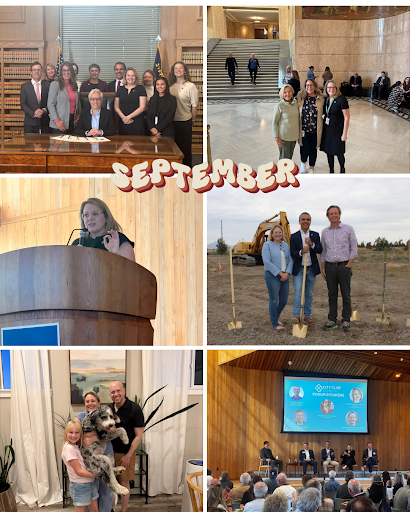
September was a great month of community events - including a groundbreaking for Heart of Oregon Corp! Checking out the open rotunda at the Capitol! Celebrating Rosh Hashanah with my family, and more!
Flat Fire Update: Progress, Response, and What Comes Next
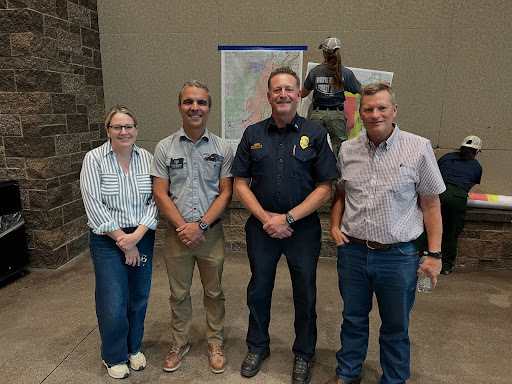
I want to extend my deepest gratitude to the thousands of first responders around the state that came together to protect our community. I was able to attend the Flat Fire Cooperators meetings every morning since the fire broke out on August 21, to hear updates and progress being made on the front lines of the fire. The incredible coordination, organization, and tireless work I witnessed is the reason this fire is on its way to containment. Thank you.
 |

So far this year, about 259,011 acres have been burned in Oregon. This is drastically lower than the numbers we had last year. In late September of 2024, an estimated 1.9 million acres had burned. I have been so grateful for the clear skies and fresh, clean air.
The Oregon Department of State Fire Marshal mobilized over 85 agencies around the state to contain this fire and protect our homes, our family’s, our community, and our natural resources. I could not be more grateful for the tireless work of our crews. The coordination between wildland and structure crews helped preserve hundreds of homes and critical infrastructure in central Oregon.
Fall is here but the season is NOT OVER! Two things ahead, prevention and what do you need to do if you need to file a claim. Go to Disasters | Oregon Law Help if you need help replacing ID’s, FEMA claims, etc. Always feel free to reach out to our office for help.
|
Climate, Energy, and the Federal Rollbacks That Could Impact Oregon
During legislative days, the House Committee on Climate, Energy, and Environment focused on two big topics: recent federal actions that could affect Oregon’s clean energy future, and how we can stay on track despite these challenges.
What’s Happening at the Federal Level?
Many of you ask how federal decisions impact us locally. Last week, we dug into exactly that.
We heard from the directors of the Oregon Department of Energy and Department of Environmental Quality, as well as legal expert Greg Dotson, who also serves on the Federal Oversight and Accountability Cabinet.
Here’s the concern: Several recent and proposed federal actions could roll back Oregon’s energy plan - what does this mean for Oregon?
-
Loss of $86.6 million in federal grants for Oregon’s Solar for All program
- Over 1,800 low-income families could miss out on solar installations, losing $40 million in lifetime savings
- Another 2,000 multi-family homes could miss out on solar projects—losing an additional $48 million
-
More than 4,000 households could be affected by stalled community solar projects
- A loss of nearly $3 million in job training and workforce development
New State Housing Office Is Up and Running
In the House Committee on Housing and Homelessness, we received an update from the Housing Accountability and Production Office (HAPO), a new state office created earlier this year by Senate Bill 1537 (2024). You can watch it here.
HAPO was created to help streamline housing development across Oregon by supporting cities, developers, and property owners, and making sure everyone follows state housing laws.
What HAPO Does:
HAPO is a joint effort between the Department of Land Conservation and Development (DLCD) and the Building Codes Division (BCD). It helps by offering:
- Technical support for implementing housing policies
- Funding and guidance for updating local codes
- A centralized place to ask questions, file complaints, or get help with housing law
What We Learned:
Since opening, HAPO has already received nearly 1,800 inquiries, mostly related to building codes and land use. Here’s how they’re helping different groups:
For Property Owners- Before HAPO, getting clear answers on building an ADU or navigating local housing rules often meant hiring a lawyer or going to court. Now, HAPO offers:
- Clear guidance on state housing laws
- Support for siting ADUs, duplexes, and other small-scale housing
- Help navigating legal and permitting processes
- Outreach to connect property owners with the right professionals
For Developers HAPO provides:
- Help with permits and zoning questions
- Technical assistance for middle housing and affordable housing projects
- A path to report violations of state housing laws
- Help coordinating with state agencies and accessing funding
For Local Governments- Some local jurisdictions haven’t yet updated their codes to meet new state housing requirements. HAPO helps by:
- Providing hands-on technical assistance
- Funding local code updates
- Developing a model housing code (coming by the end of the year) that any city can adopt to comply with the law
HAPO is already proving to be a valuable resource, breaking down barriers to housing development and making sure state laws are followed consistently, whether you're a homeowner trying to build an ADU, a developer planning a new project, or a city updating its housing rules.
Special Session Recap: What Happened in Salem
In late August 2025, Governor Tina Kotek convened a special legislative session in Salem to tackle the massive shortfall in the state’s transportation budget. As I’m sure you’ve seen in the news, this budget shortfall has led to the threat of loss of core services and jobs at the Oregon Department of Transportation (ODOT). Simply put: it’s not good.
Why Special Session Was Called
- ODOT is being forced to make some tough cuts, putting hundreds of jobs at risk and scaling back key transportation and maintenance services that people across Oregon count on every day.
- Governor Kotek postponed the first wave of layoffs until September 15, allowing for more time to reach a funding solution. Those layoffs, and a second wave of layoffs, will take place in January 2026 if additional revenue is not secured.
- Absent a funding solution, ODOT must close 12 maintenance facilities across the state, meaning slower response times for emergencies and weather-related maintenance. Two stations on the list to close are Sisters and Detroit.
Key Proposals in this Package
Governor Kotek's package proposed multiple funding avenues:
- 6-cent increase in the gas tax
- Ensuring EVs and hybrid vehicles pay their fair share
- Doubling the payroll tax that supports public transit (from 0.1% to 0.2%), which sunsets in 2028
- Increased title fee’s
-
Most importantly: Accountability measures for each dollar spent at ODOT
Why Now?
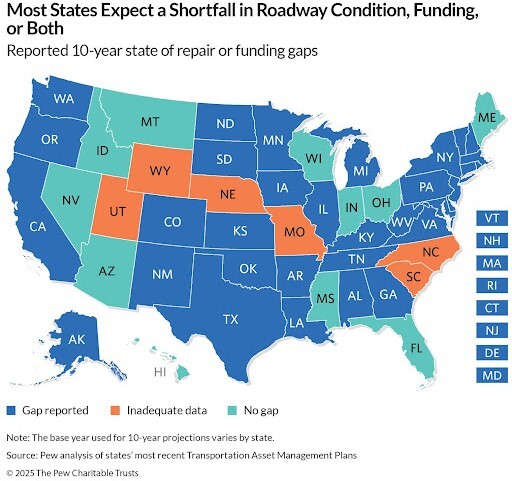
We pay for road maintenance with our state's fuel tax. Due to more fuel-efficient cars on the market and on our roads, we have seen drastic declines in gas tax revenue, leaving us with less dollars for repairs. Every cent of the gas tax increase will go to maintenance. EV drivers account for six percent of the cars on the road, and through this bill they will be paying their fair share of road maintenance through road-use charges. For every dollar we don’t spend on maintenance now, it will cost at least 700% more later in reconstruction. We simply can’t afford to defer maintenance projects any longer. Oregon isn't alone. Most states in the U.S. expect a budget shortfall over the next decade in their ability to repair, rehabilitate, and preserve their roads and bridges.
Without adequate funding, the ODOT Sisters and Detroit Maintenance Stations will close. The ODOT Sisters Maintenance Station not only employs many good, hard-working people in our region, they are the ones getting the snow off the roads at 3am and keeping our wildfire evacuation routes clear. Closing these Maintenance Stations means not having the level of road maintenance that our community expects and deserves, and it means our evacuation routes are put in jeopardy.
|
Moving Forward
ODOT has lost the trust of the legislature and the people. I am not referring to the hard workers in orange vests we see fixing our roads, I am referring to the top level of ODOT, who need to be held accountable for every dollar spent. I will be looking forward to seeing the results of the independent audit on ODOT and following up on how every dollar is spent. We need to restore trust.
I share the frustration with you. We need to rethink how transportation is funded. These are expensive times and there is an opportunity to do better. This is a bare minimum package to keep our roads safe and open. After a delay due to a serious health issue of a Senator, the package has now passed the Senate.
Capitol Phone: 503-986-1453
Capitol Address: 900 Court St. NE, H-486, Salem, Oregon 97301
Email: Rep.EmersonLevy@oregonlegislature.gov
Website: https://www.oregonlegislature.gov/levye
|