|
Replies to this message are sent to an unmonitored mailbox.
To contact me, please click here: Rep.LisaFragala@oregonlegislature.gov

Dear Friend,
It is hard to believe it is already autumn. This is definitely one of my favorite times of year as the air gets crisper and the leaves turn colors. The end of September also brings Legislative Days at the Capitol. This past week we had three days of committee meetings as part of Legislative Days, in addition to the State Legislature finishing the Transportation Funding Special Session.

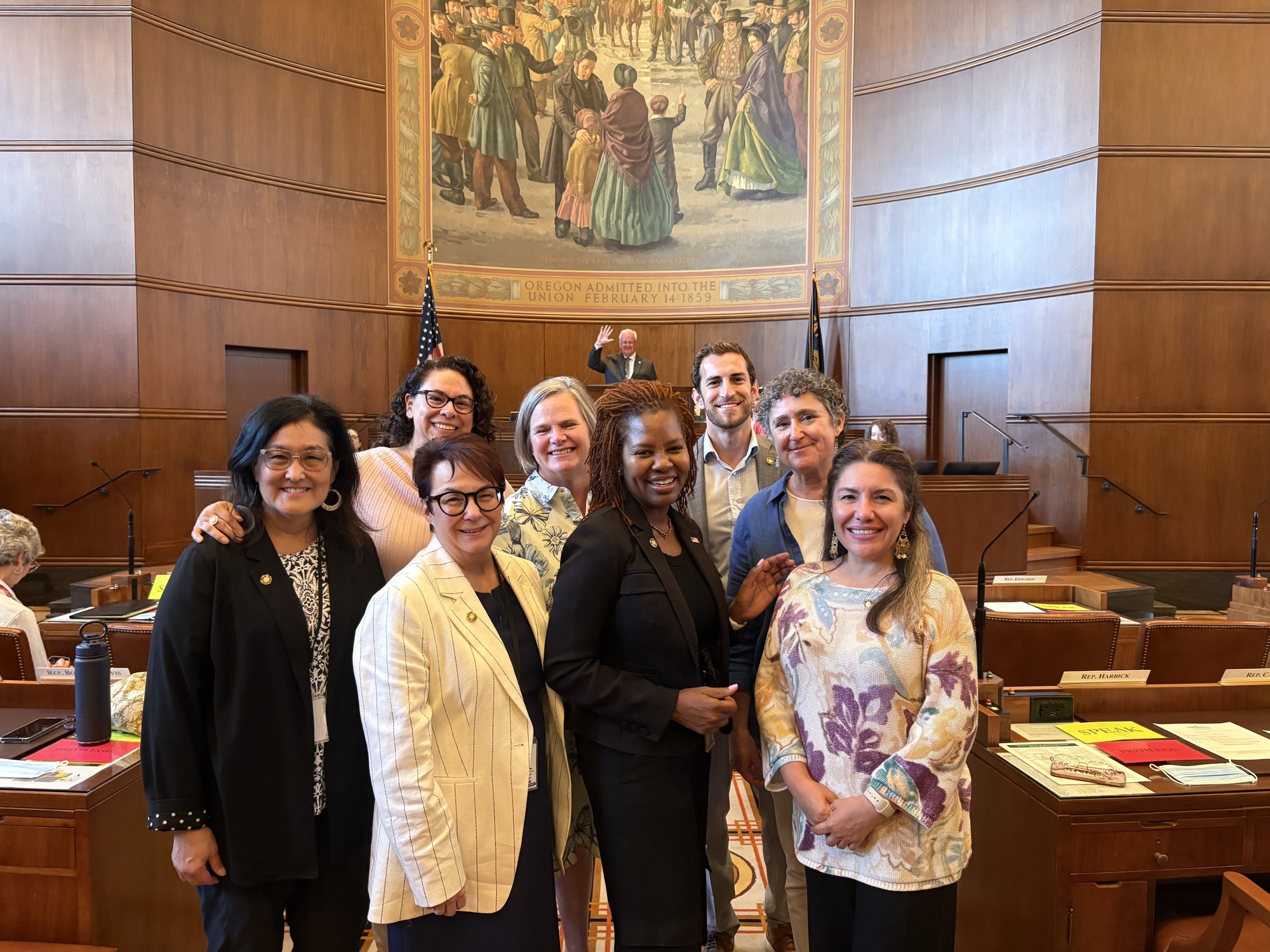
However, what really made the week special in Salem is that, for the first time in many years, parts of the Capitol Building were open again after being closed for renovation and construction since 2021. There is still work to be completed, but reopened sections included what many people think of as the heart of the State Capitol, the Rotunda. We are all excited for renovation to be finished completely and for the remainder of the building to be open once the 2026 session starts in February.
|

What Happens During Legislative Days?
Legislative Days happen quarterly and are when legislators gather in the Capitol to hold informational committee meetings as well as to work on policy ideas for upcoming sessions. This past week was the first time House members were in committees since the passage of HR-1, the federal administration’s consequential budget legislation.
HR-1 takes federal tax dollars away from critical programs like the Oregon Health Plan and SNAP benefits, and provides large tax breaks to the wealthiest Americans. 1 in 3 Oregonians rely on the Oregon Health Plan, the state’s Medicaid program. This includes 50% of children across the state. 1 in 6 Oregonians rely on federal food assistance to feed themselves or their family. The money that helps Oregonians see a doctor or put dinner on the table for their family is now going into the pockets of those who need it the least and to fund attacks on immigrant communities.
A major focus of all committee meetings throughout Legislative Days was the significant impacts these federal cuts will have on health care, food benefits, education, and other critical programs Oregonians depend on. HR 1 presents some of the most dire fiscal problems our state will have faced in decades, and Oregon as a state will not be able to make up the difference in lost federal revenue.
As we move forward, myself and others in the state legislature are already working to shield Oregon families from the worst impacts of this federal legislation. While there are incredibly difficult decisions ahead, we will work to identify every tool available to us to protect our communities, provide access to healthcare, and safeguard our climate future.
September 2025 Legislative Days Recap
In the upcoming 2026 Session, I will continue to serve on the Housing and Homelessness Committee, the Labor and Workforce Development Committee and I will also serve on a newly formed Education Committee. For the time being, the K-12 education committee and the higher education committee have been combined. I’m fortunate to be able to continue to serve on this larger education committee. Here is an update from the September 2025 Legislative Days for the committees I serve on:
Housing and Homelessness Committee
Housing affordability is one of the top concerns I hear from constituents throughout our district and we have a shortage of housing at every level. While we are facing major challenges from the federal government, we won’t let this distract us from the critical work Oregonians are counting on us to do to increase housing production, create opportunities for affordable housing, and ensure stable shelter services. In this committee, we discussed policy and financial strategies to boost housing production throughout the state and reviewed innovative housing policy approaches nationwide. Over the past few months I have been connecting with municipalities and organizations that are working on solutions to our housing crisis in Oregon. It was helpful to hear new ideas that are working well across the country.
The most concerning policy area we discussed on this committee was the threats and challenges our affordable housing supply is facing throughout the state.
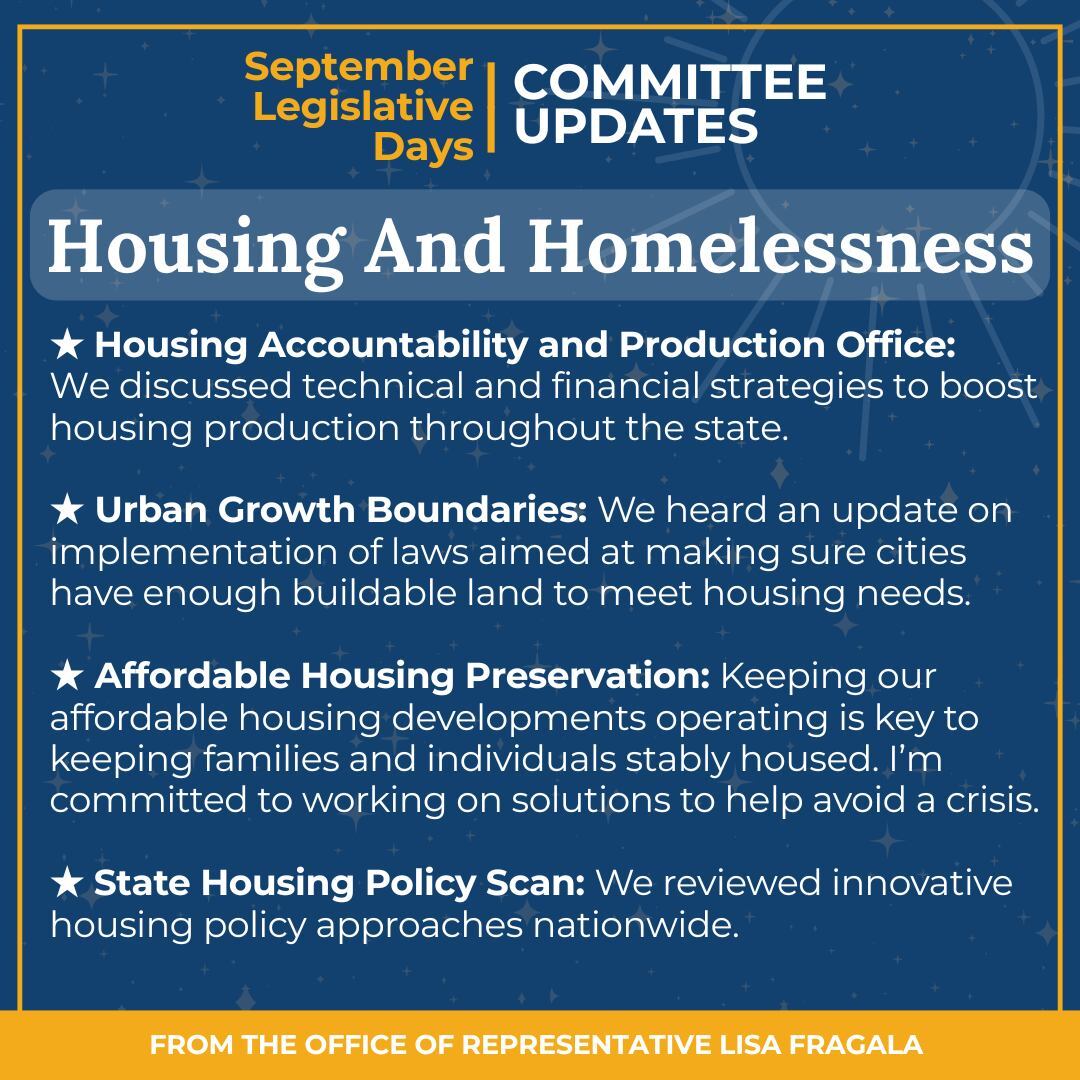
Many of our affordable housing nonprofit providers are facing serious financial pressures in the form of increasing operating and maintenance expenses. These challenges are a direct outcome of a lack of funding at the federal level and from the impacts of the current tariff recession on our state economy. These economic impacts also make it difficult for families to make ends meet. Keeping our affordable housing developments operating is key to keeping families and individuals housed. Preserving affordable housing is a critical tool in this endeavor and one I will continue to focus on.
Labor and Workforce Development Committee
The current federal administration is once again attacking critical protections that Oregon workers depend on for workplace safety and the prevention of workplace discrimination. In committee, we heard about threats to safety and civil rights protections for some of our most vulnerable workers. This is happening with multiple rule making efforts in the U.S. Department of Labor, with as many as 66 separate rulemaking efforts this year targeting safety requirements and nondiscrimination provisions in federal rules.
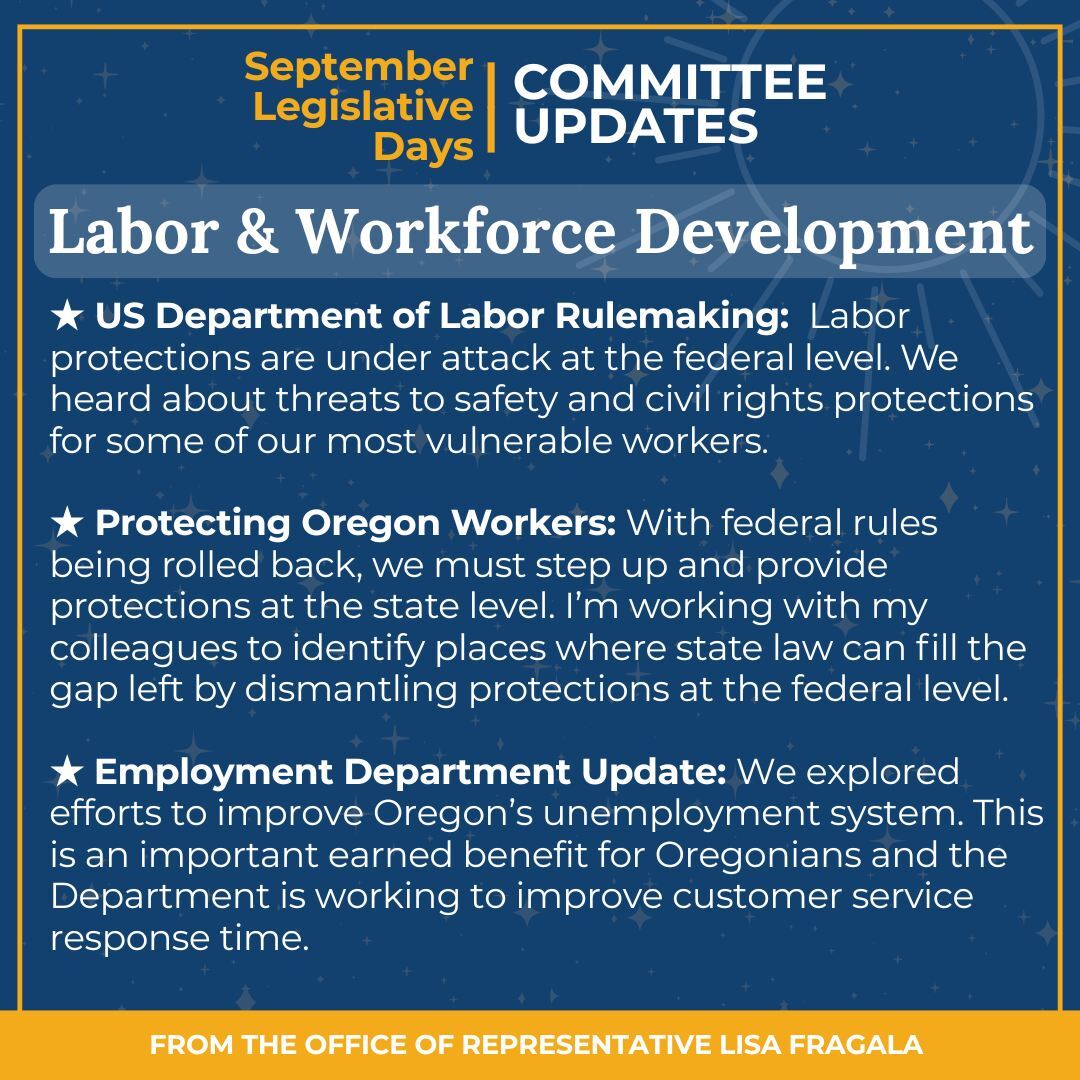
The Oregon House Labor and Workforce Development Committee explored how state legislators can respond to these federal attacks and ensure Oregonians' safety and civil rights continue to be protected.
With federal rules being rolled back, we must step up and provide protections at the state level and identify places where state law can fill the gaps left by the dismantling of protections at the federal level. Last week's committee meeting was just the beginning. In the coming months, we will review the impacts of each proposed federal rule in Oregon and look for opportunities to enact stronger protections.
|
Education Committee
HR1, the federal administration's budget bill, removes federal tax dollars from critical education programs at the expense of children, families, and school communities. In the Education Committee, we heard just how significant these cuts are to the resources students and families depend on. Oregon children will be hungrier and have less access to the support they need to be successful at school. Higher Education will become more expensive and less accessible to a diverse range of students.
Cuts to SNAP benefits will have significant impacts on K-12 students. These reductions go beyond the increase of food insecurity at home and will result in a decrease of eligibility for free and reduced school lunches for families. Currently, 1 in 5 children in Oregon depend on SNAP to get enough food. Changes in eligibility will impact which schools qualify for programs aimed at providing support to communities with highest levels of food insecurity. School districts will see a disruption in their ability to provide free and reduced school meal programs and that means more children will be hungry at school while trying to learn.
Cuts to Medicaid will also have significant impacts on public schools. Funding for school counselors, social workers, special education services, speech pathologists, school nurses, and school based health centers are all at risk. Currently, Oregon is able to provide services students depend on through School Medicaid. As the federal government makes it harder for families to receive the benefits, access to programs will be in jeopardy. Once again some of our most vulnerable populations in school will be at risk for access to the programs and services they need to be successful in school.
Our community colleges and university students will also be significantly impacted by the federal budget legislation.New loan limits in HR 1 will make it more difficult for some students to access financial aid and pay for their education. Caps for student loans will force some students to rely on more costly options, be exposed to predatory practices, and put further education or job training out of reach for many Oregonians.
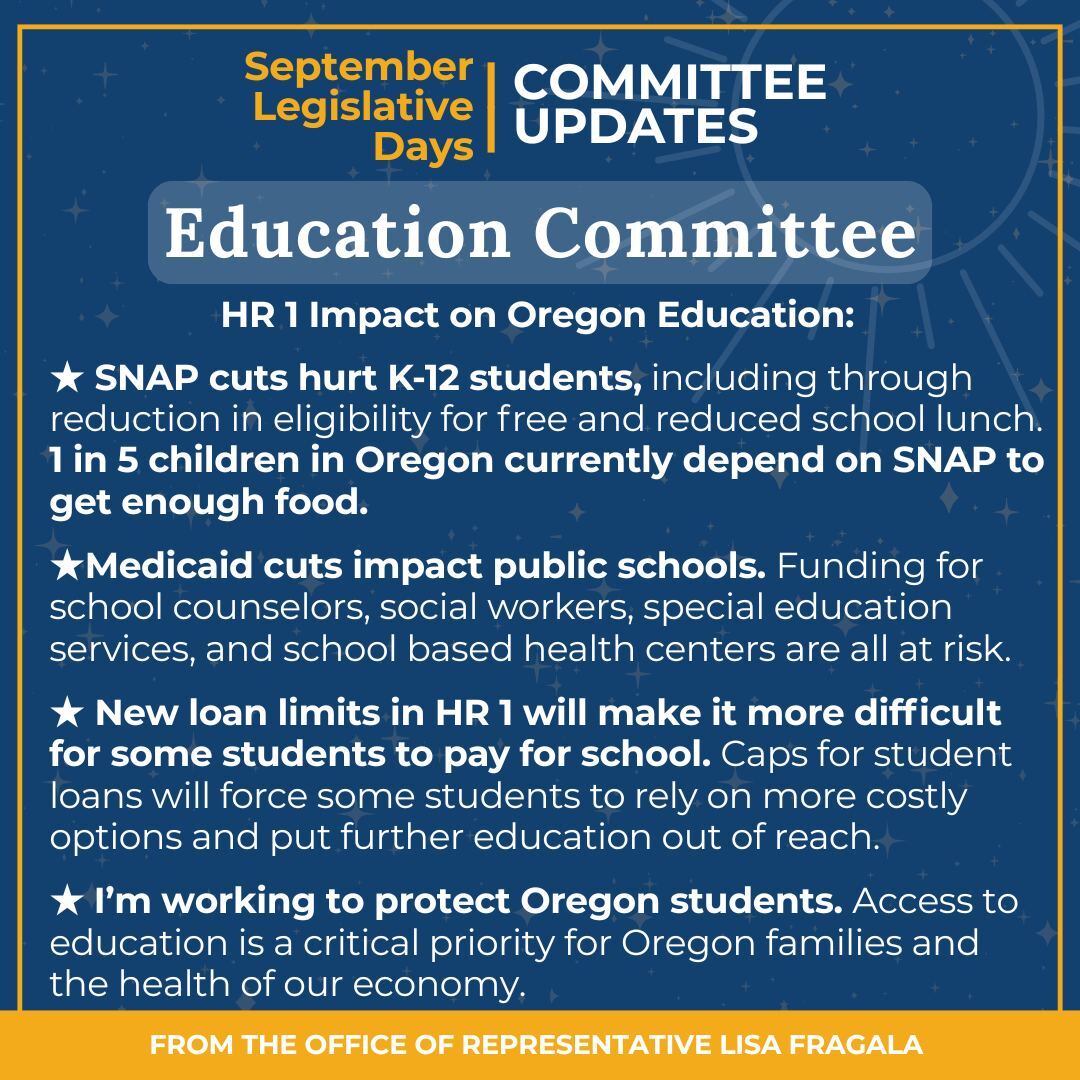
The rule changes for student loan repayment in HR-1 also mean that there are fewer protections and less flexibility for borrowers, including requiring graduates to repay loans prior to finding stable employment. These changes also mean higher education institutions will see a decline in enrollment at a time when they are already struggling to balance their budgets.
I will keep working to protect Oregon students. Access to education is a critical priority for Oregon families and the health of our economy.
I know this is a lot to take in and not a very uplifting newsletter. I also recognize how worried and fearful Oregon communities are. Please know myself and other legislators are already working together to explore all options available to push back against the federal administration and to tackle these negative impacts.
For all of these challenges, in housing, education, and worker protections, state legislators are exploring all options available to us to tackle the problems we will be facing, including:
- Calling workgroups to hear straight from communities and partners what they need–including a federal response workgroup. I am currently a member of this group and we expect these groups to propose legislation in the short session.
- Considering our tax options including disconnecting from the federal tax system to reduce impacts to the budget
- Rethinking ways for the state to generate revenue
Oregon’s 2025 Special Session for Transportation Funding
|
On Labor Day weekend the State Legislature began a Special Session to provide funding for our communities’ transportation needs and to ensure critical services continue across the state. The House passed HB 3991, a transportation funding bill, on September 1st on Labor Day itself. This past week on September 29th the Senate passed HB 3991, concluding the work of the special session, and providing funding that represents a step forward for Oregon’s transportation system.

Half of the funding in HB 3991 will go directly to cities and counties, giving them the tools they need to make the repairs that matter most in their communities. Cities and counties have been struggling to keep up with basic maintenance of local roads for critical safety and maintenance projects for years and an important component of the legislation will provide resources for local communities. The bill will also infuse funding into statewide transit systems, helping to stabilize local bus services, especially connectivity to rural areas. Another important feature of this package creates stronger accountability measures to help ensure every dollar ODOT spends is spent wisely. Finally HB 3991 takes a step towards more stable funding for our transportation system to ensure our state can keep state highways, roads, and bridges safe.
|
I recognize this legislation doesn’t solve every problem or address every need. Oregon’s transportation system still faces long-term challenges and there is more work to be done, especially to build a clean energy transportation system for the future. But this legislation takes a step in the right direction and will make a real difference in our local communities. It will help improve safety for Oregonians getting to school, going to a doctor’s appointment, or taking a trip to the Oregon Coast. It will make sure buses are still running for those community members who need them. It will prevent the layoff of hundreds of workers at ODOT who do the work critical to keeping roads and highways functioning. This is a win for every Oregonian who relies on a safe, reliable transportation system.
|
Out and About in Our Community
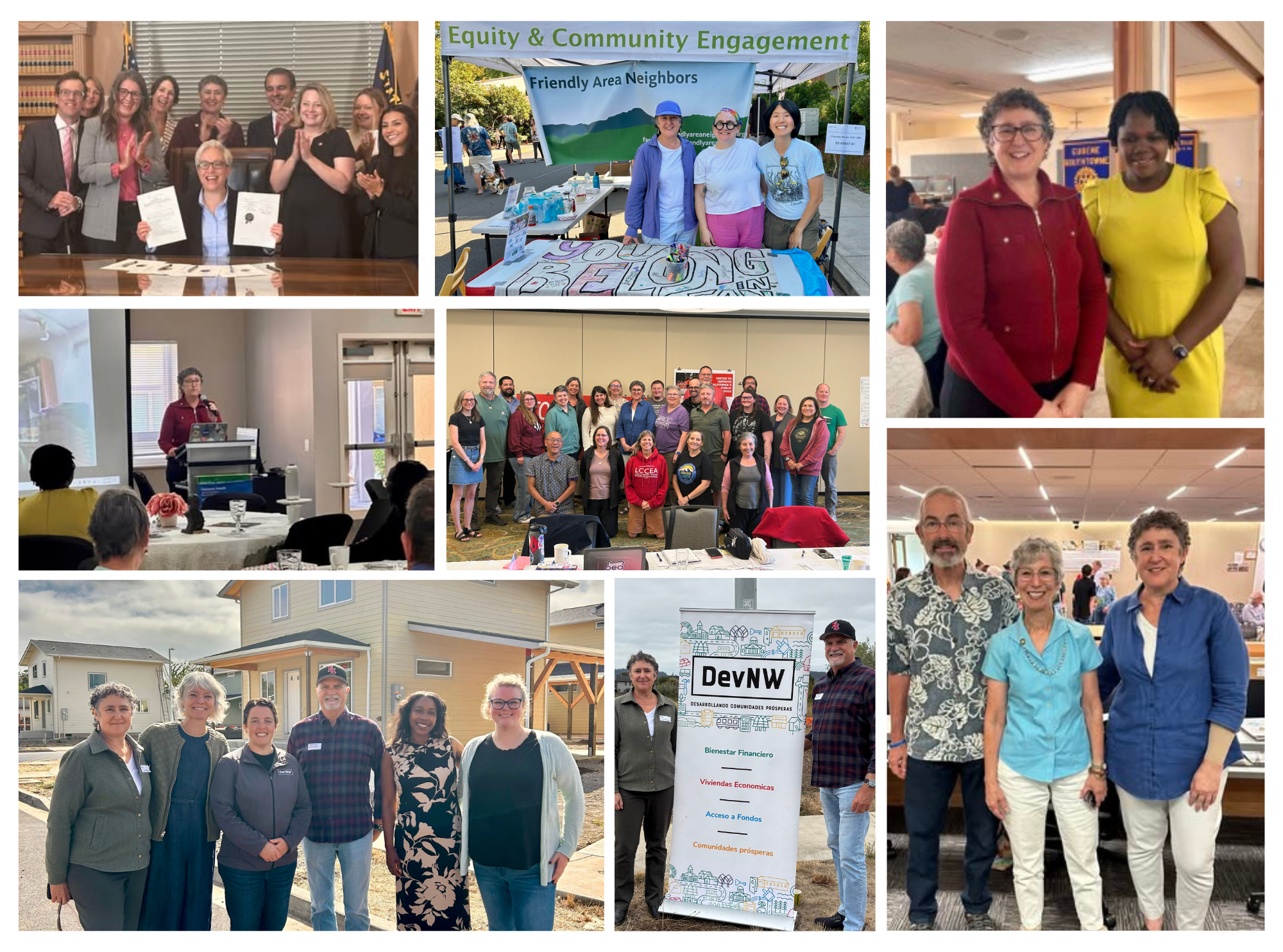
You’ve probably heard me say this before, but one of my favorite parts of being a state representative is getting out locally and talking to community members. Over the summer and into this fall, I’ve been busy meeting with community groups, talking to local nonprofits about their work, going to community celebrations, and meeting with advocates to develop ideas for future legislation. Thank you to everyone who has been so generous in sharing your thoughts and concerns with me–as well as your thoughtful feedback.
|
Upcoming October Constituent Gathering
Sunday, October 19th
My last constituent gathering was the summer pizza party, and a lot has happened since then. I’ll be having a constituent gathering in mid-October. This event will be similar to many of my past constituent gatherings where I’d like to hear from you about your priorities, your concerns, and your ideas. I hope that you can join us on Sunday, October 19th for a conversation about both challenges and opportunities for our local community, and about the upcoming 2026 legislative session and beyond. Keep an eye out for future information about the location for this event.
The best way to stay updated during the interim is by following me on social media. This is where I'll announce special events first.
Click the icons here to be taken to my social media profiles!
  
Even though we are not at the State Capitol, my office will still continue to be here for you! We are available to help with communicating with state agencies, to answer your questions about the state legislature, and to support other constituent needs. As always, we love to hear what you are thinking about. See my contact info below to get in touch!
As we head further into Fall, I look forward to staying connected and to continuing conversations. This is an important time for us to come together to protect and support all community members and to think about how we can move our community and our state forward. Thank you for the opportunity to represent you in Salem. I’m committed to continuing to serve in the Oregon State Legislature and to actively work on behalf of our community.
Sincerely,

Representative Lisa Fragala
House District 8
|
My Office Is Here For You
Email: Rep.LisaFragala@oregonlegislature.gov I Phone: (503) 986-1408
Address: 900 Court St NE, H-484, Salem, OR, 97301
Website: https://www.oregonlegislature.gov/fragala
Facebook | Instagram
Please get in touch if you need assistance!
Click here to access my full compilation of resources!
|


